The Ultimate Moist Sour Cream Pound Cake with Buttery Crumb Topping
Moist Sour Cream Pound Cake With Crumb Topping Recipe
Experience the perfect marriage of a dense, velvety cake crumb and a crunchy, cinnamon-spiced streusel in this ultimate dessert. This sour cream pound cake is incredibly moist, rich in flavor, and practically melts in your mouth, making it the star of any brunch or coffee break.
20 minutes
60 minutes
1 hour 20 minutes
2 Loaves (16 servings)
Dessert
Baking
American
Vegetarian
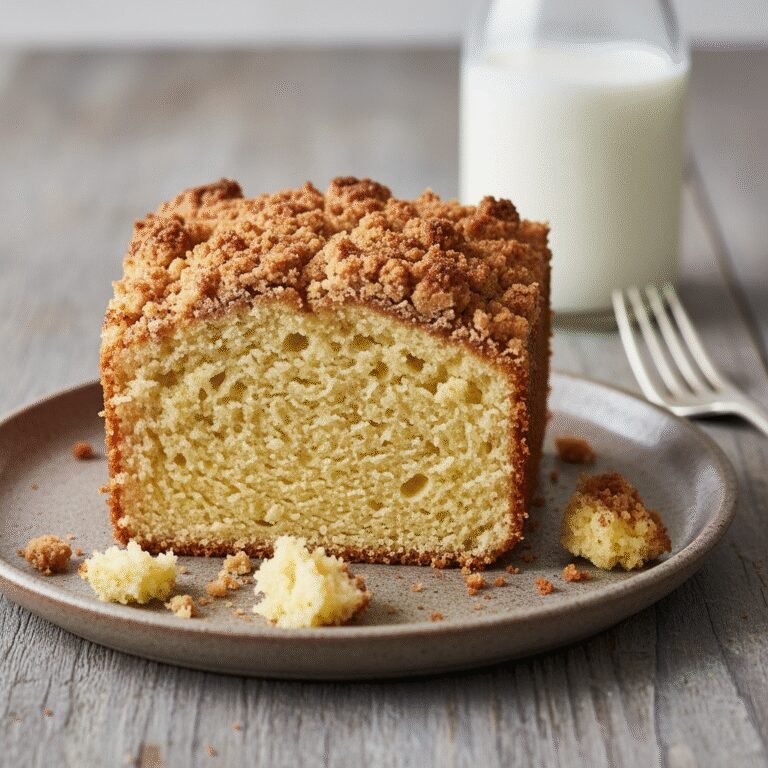
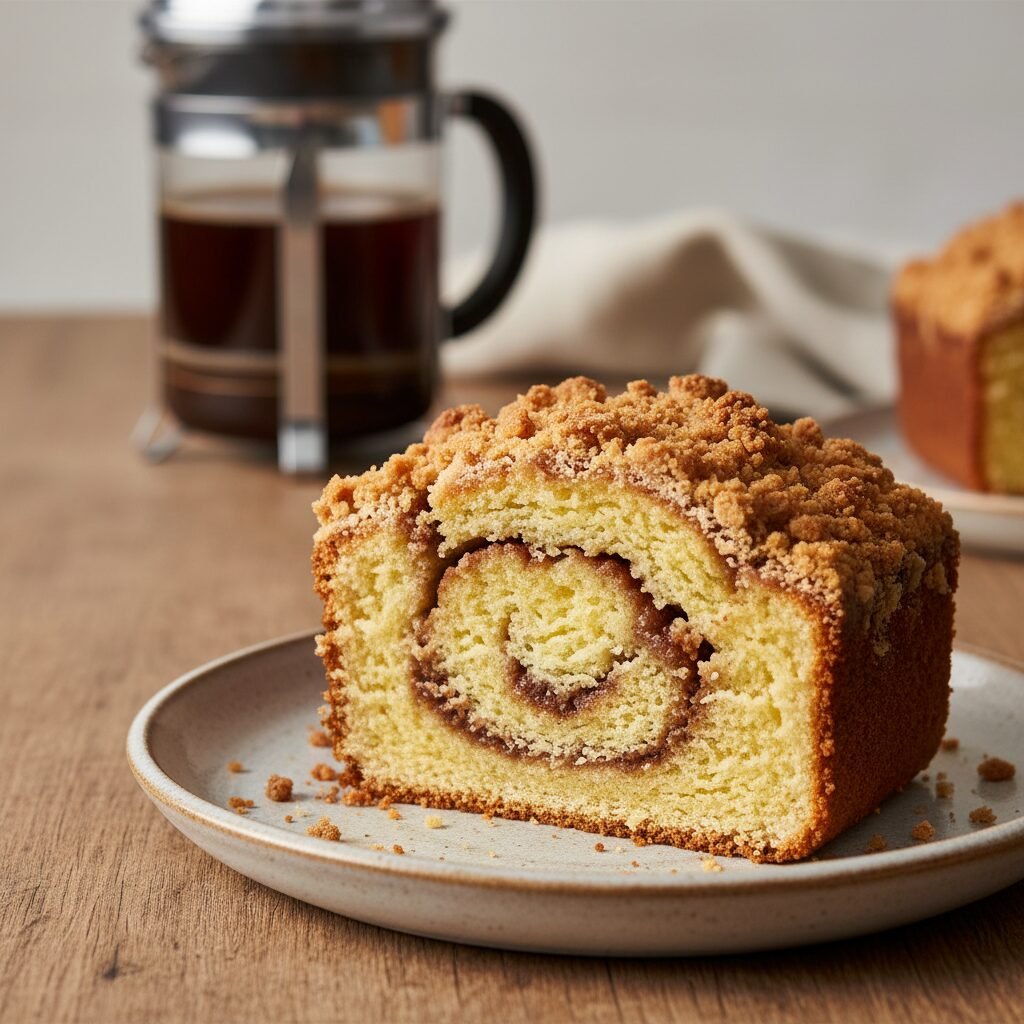
There are few things in the culinary world as comforting, reliable, and universally adored as a well-executed pound cake. But when you elevate that classic foundation with the tang of rich sour cream and crown it with a mountain of buttery, cinnamon-spiced crumb topping, you enter a realm of baking bliss that is hard to surpass. This Moist Sour Cream Pound Cake with Crumb Topping is not just a dessert; it is a celebration of texture and flavor. The cake itself is a masterpiece of density and tenderness—a hallmark of the best pound cakes—where the crumb is tight yet incredibly soft, owing its luxurious texture to the generous addition of full-fat sour cream. Unlike airy sponge cakes that disappear in a bite, this cake has a satisfying heft that demands to be savored slowly, ideally alongside a steaming cup of strong coffee or tea.
What truly sets this recipe apart, however, is the contrast. While the cake provides a smooth, vanilla-infused canvas, the crumb topping offers a chaotic, delightful crunch. We aren’t talking about a light dusting of sugar here; we are talking about substantial, golden-brown nuggets of butter, flour, and brown sugar that caramelize in the oven to create a jagged, sweet landscape on top of the loaf. The aroma that fills your kitchen while this bakes—a heady mix of toasted butter, caramelized sugar, and warm vanilla—is enough to wake up the entire household. Whether you are serving this for a decadent Sunday brunch, wrapping slices for a thoughtful neighborly gift, or simply treating yourself to a midnight snack, this recipe promises to deliver a bakery-quality experience right from your own oven. It is a timeless classic, refined for the modern palate, ensuring that every bite is moist, flavorful, and utterly unforgettable.
History & Origins
The history of the pound cake is a fascinating journey through culinary evolution, dating back to the early 1700s in Northern Europe. The original recipe was incredibly simple, deriving its name from the easy-to-remember ratio of ingredients: one pound each of flour, butter, eggs, and sugar. This massive recipe would produce multiple cakes and was a staple in households because it required no chemical leaveners—the lift came solely from the arduous task of beating air into the batter, often for over an hour. As the recipe migrated to America and evolved through the 19th century, bakers began experimenting with lighter variations. The introduction of chemical leaveners like baking soda and baking powder in the mid-1800s changed the game, allowing for a lighter crumb without the back-breaking labor.
The addition of sour cream, however, is a more recent innovation, likely gaining popularity in the United States during the mid-20th century. As dairy processing advanced and ingredients became more readily available in supermarkets, home cooks in the South and Midwest began adding acidic dairy products like buttermilk and sour cream to their cakes. They discovered that the acidity tenderized the gluten, resulting in a moistness that the original ‘pound’ recipe often lacked. Meanwhile, the crumb topping draws its lineage from the German ‘Streuselkuchen’ (crumb cake), a tradition brought over by German immigrants who settled in Pennsylvania and the Midwest. This recipe represents a beautiful convergence of these histories: the sturdy, butter-rich foundation of the British pound cake, the tenderizing ingenuity of American Southern baking, and the textural sweetness of German streusel traditions.
Why This Recipe Works
This recipe succeeds where many others fail due to the precise balance of fat, acidity, and sugar. The ‘hero’ ingredient, sour cream, serves a dual purpose. First, it adds a significant amount of fat, which coats the flour proteins and shortens the gluten strands. This prevents the cake from becoming tough or rubbery, ensuring that velvety, ‘melt-in-your-mouth’ texture. Second, the acidity of the sour cream reacts with the baking soda. This reaction creates carbon dioxide bubbles that help lift the heavy batter, preventing it from becoming a dense brick while maintaining that signature pound cake closeness.
Furthermore, the method of ‘creaming’ the butter and sugar until pale and fluffy is non-negotiable. This mechanical leavening incorporates microscopic air bubbles into the fat, which expand during baking. By using room-temperature ingredients, we create a stable emulsion. If the eggs or sour cream were cold, they would shock the butter, causing the batter to curdle and resulting in a greasy, uneven cake. Finally, the crumb topping works because of the high ratio of butter to dry ingredients. We use melted butter or very soft butter worked in until ‘clumps’ form. This ensures the topping doesn’t just melt into the cake or stay as a dusty powder, but rather bakes into crunchy, cookie-like nuggets that provide the necessary textural contrast to the soft interior.
Why You’ll Love This Recipe
- ✓Incredibly moist texture that stays fresh for days.
- ✓Rich, buttery flavor enhanced by premium vanilla.
- ✓Thick, crunchy cinnamon-streusel topping.
- ✓Freezes beautifully for make-ahead convenience.
- ✓Versatile: perfect for breakfast, brunch, or dessert.
- ✓No fancy decorating skills required.
Equipment You’ll Need
- ✓Two 9×5 inch Loaf Pans
- ✓Stand Mixer or Electric Hand Mixer
- ✓Large Mixing Bowl
- ✓Medium Mixing Bowl (for crumb)
- ✓Rubber Spatula
- ✓Cooling Rack
- ✓Measuring Cups and Spoons
- ✓Parchment Paper
Ingredients
- ✓3 cups All-Purpose Flour (spooned and leveled)
- ✓1/2 teaspoon Baking Soda
- ✓1/2 teaspoon Baking Powder
- ✓1/2 teaspoon Salt
- ✓1 cup Unsalted Butter, softened to room temperature
- ✓2 1/2 cups Granulated Sugar
- ✓6 large Eggs, room temperature
- ✓1 cup Full-Fat Sour Cream, room temperature
- ✓2 teaspoons Pure Vanilla Extract
- ✓For the Crumb Topping: 1/2 cup Unsalted Butter, melted
- ✓For the Crumb Topping: 3/4 cup All-Purpose Flour
- ✓For the Crumb Topping: 3/4 cup Light Brown Sugar, packed
- ✓For the Crumb Topping: 1 tablespoon Ground Cinnamon
- ✓For the Crumb Topping: 1/2 cup Chopped Pecans or Walnuts (Optional)
Instructions
- 1. Preheat your oven to 325°F (163°C). Grease two 9×5 inch loaf pans generously with butter or non-stick spray, and line the bottoms with parchment paper for easy removal.
- 2. In a medium bowl, prepare the crumb topping. Combine the 3/4 cup flour, brown sugar, cinnamon, and optional nuts. Pour in the melted butter and use a fork to mix until moist clumps form. Set aside.
- 3. In a separate medium bowl, whisk together the 3 cups flour, baking soda, baking powder, and salt until well combined. Set this dry mixture aside.
- 4. In the bowl of a stand mixer fitted with the paddle attachment (or using a hand mixer), beat the softened butter and granulated sugar on medium-high speed for about 5 minutes. The mixture should look pale yellow and fluffy.
- 5. Reduce the mixer speed to medium-low. Add the eggs one at a time, beating well after each addition and scraping down the sides of the bowl as needed. Stir in the vanilla extract.
- 6. Reduce speed to low. Add the flour mixture and the sour cream alternately, starting and ending with the flour (3 additions of flour, 2 additions of sour cream). Mix only until just combined to avoid overworking the gluten.
- 7. Divide half of the batter evenly between the two prepared loaf pans, smoothing the tops.
- 8. Sprinkle half of the crumb topping evenly over the batter in both pans.
- 9. Top with the remaining batter, spreading it gently to cover the crumb layer. Finally, sprinkle the remaining crumb topping over the very top of both loaves.
- 10. Bake for 60 to 75 minutes, or until a toothpick inserted into the center comes out clean or with just a few moist crumbs attached. If the topping starts to brown too quickly, tent the pans loosely with aluminum foil after 40 minutes.
- 11. Remove from the oven and let the cakes cool in the pans for 15-20 minutes. Then, run a knife around the edges and carefully invert them (then re-invert) onto a wire rack to cool completely before slicing.
Expert Cooking Tips
- ✓Room temperature ingredients are crucial for a smooth emulsion; take butter, eggs, and sour cream out 1 hour before baking.
- ✓Do not overmix the batter once the flour is added; stop as soon as the white streaks disappear to keep the cake tender.
- ✓Spoon and level your flour; scooping directly from the bag packs it down and can lead to a dry cake.
- ✓Tent with foil if the crumb topping gets dark before the center is cooked.
- ✓Use full-fat sour cream for the richest flavor and texture; low-fat versions have higher water content.
- ✓Let the cake cool completely before slicing to prevent it from crumbling apart.
- ✓To check for doneness, test the center of the cake, not just the top, as pound cakes take a long time to bake through.
Substitutions and Variations
This recipe is quite adaptable if you find yourself missing an ingredient. If you don’t have sour cream, full-fat Greek yogurt is the best substitute as it has a similar consistency and acidity; buttermilk can also work, though the batter will be thinner. For the flour, cake flour can be used for an even lighter crumb, but increase the volume by 2 tablespoons per cup. If you want to make this gluten-free, a high-quality 1:1 gluten-free baking flour blend (like King Arthur or Bob’s Red Mill) works surprisingly well, though the texture may be slightly less dense. For the sugar, you can reduce the granulated sugar slightly, but don’t cut it by more than 25% or you will affect the moisture and structure. In the topping, you can swap walnuts or pecans for oats if you want a nut-free crunch, or simply omit the add-ins entirely for a classic sugar streusel.
Common Mistakes to Avoid
The most common mistake with pound cake is rushing the ‘creaming’ process. If you don’t beat the butter and sugar long enough (aim for 5 full minutes), the cake won’t have enough air incorporated to rise properly, leading to a dense, heavy bottom. Another issue is temperature; using cold eggs in creamed butter causes the fat to seize and the batter to look curdled, which affects the final texture. Over-baking is also a risk; because pound cakes have a long bake time, people often leave them in until they are dry. Trust the toothpick test—a few moist crumbs are better than a clean dry stick. Finally, opening the oven door too frequently in the first 45 minutes can cause the cake to collapse due to the sudden drop in temperature.
Serving Suggestions
This cake is rich enough to stand on its own, but it pairs beautifully with accompaniments. Serve a warm slice with a dollop of lightly sweetened whipped cream and fresh berries (strawberries or raspberries work best) to cut through the richness. For a cozy breakfast, serve it toasted with a smear of salted butter. It is also exceptional when paired with a dark roast coffee or an Earl Grey tea. If you want to turn it into a dessert for a dinner party, warm the slices and serve with a scoop of vanilla bean ice cream and a drizzle of caramel sauce.
Storage and Reheating Tips
Pound cake actually improves in flavor and moisture the day after baking as the fats settle. Store the cake in an airtight container at room temperature for up to 4 days. Do not refrigerate it, as the cold air will dry out the crumb and make the butter harden, leaving the cake feeling stale. For long-term storage, this cake freezes exceptionally well. Wrap the fully cooled loaves (or individual slices) tightly in plastic wrap, then in a layer of aluminum foil. Place in a freezer-safe bag. It will keep for up to 3 months. Thaw overnight on the counter before serving.
Nutrition Facts (Estimated)
| Serving Size | 1 Slice |
| Calories | 420 |
| Fat | 22g |
| Saturated Fat | 13g |
| Unsaturated Fat | 8g |
| Trans Fat | 0.5g |
| Cholesterol | 85mg |
| Sodium | 180mg |
| Carbohydrates | 52g |
| Fiber | 1g |
| Sugar | 28g |
| Protein | 5g |
Frequently Asked Questions
Can I bake this in a Bundt pan instead of loaf pans?
Yes, you can! This recipe yields enough batter for one standard 10-12 cup Bundt pan. However, since the crumb topping will end up on the bottom if you invert it, you should put about 2/3 of the batter in, sprinkle a layer of crumb, add the rest of the batter, and bake. The cook time may increase to 70-85 minutes.
Why did my crumb topping sink to the bottom?
If the batter is too thin or the crumb pieces are too heavy/large, they may sink. Ensure your batter is thick (don’t overmix or let ingredients get too warm) and try to crumble the topping into smaller, lighter pieces rather than large heavy chunks.
Can I add fruit like blueberries to the batter?
Absolutely. Toss 1.5 cups of fresh or frozen blueberries in a tablespoon of flour (to prevent sinking) and fold them gently into the batter at the very end. Note that this may add moisture and slightly increase baking time.
My cake is dark on the outside but raw in the middle. What happened?
Your oven temperature might be running high. Invest in an oven thermometer to check accuracy. If it’s browning too fast, tent the pan with foil and ensure you are baking on the middle rack, not too close to the heating element.
Can I use salted butter instead of unsalted?
Yes, but reduce the added salt in the recipe to 1/4 teaspoon. Using unsalted butter gives you more control over the final flavor, but salted butter won’t ruin the cake.
How do I know when the butter is properly creamed?
The mixture should transform from yellow and gritty to pale ivory and fluffy, resembling the texture of frosting. When you rub a bit between your fingers, the sugar granules should be mostly dissolved.
Can I make the batter ahead of time?
It is not recommended to make the batter ahead of time because the baking soda begins reacting as soon as it hits the sour cream. For the best rise, get the cake into the oven immediately after mixing.
Why is my pound cake dry?
Dryness is usually caused by over-baking or measuring flour incorrectly. Always spoon flour into the cup and level it off rather than scooping. Also, ensure you didn’t skip the sour cream or reduce the sugar, as both provide moisture.
Conclusion
This Moist Sour Cream Pound Cake with Crumb Topping is the kind of recipe that becomes a family heirloom. It strikes the perfect balance between the rustic, homey feel of a coffee cake and the elegant, dense richness of a traditional pound cake. Whether you are an experienced baker or a novice in the kitchen, the detailed steps provided here will guide you to success. The smell of cinnamon and vanilla wafting through your home is a reward in itself, but the first bite—warm, buttery, and sweet—is pure magic. Don’t wait for a special occasion to bake this; make it this weekend and watch it disappear slice by slice. Happy baking!