The Ultimate Moist Sour Cream Pound Cake for Afternoon Tea
Moist Sour Cream Pound Cake For Afternoon Tea Recipe
Discover the secret to the most velvety, melt-in-your-mouth pound cake you have ever tasted. This classic recipe uses rich sour cream to ensure a tender crumb and golden crust, making it the perfect centerpiece for your next afternoon tea gathering.
20 minutes
1 hour 15 minutes
1 hour 45 minutes
12-16 servings
Dessert
Baking
American / British
Vegetarian
There is something profoundly comforting about a slice of classic pound cake. It is the kind of dessert that doesn’t need to hide behind layers of frosting or complex garnishes; its beauty lies in its simplicity and its texture. When we talk about the perfect afternoon tea, we often imagine delicate finger sandwiches and scones, but a substantial, buttery slice of pound cake is the true anchor of the table. This Moist Sour Cream Pound Cake recipe is a love letter to traditional baking, elevated by the inclusion of full-fat sour cream. The sour cream is the magic ingredient here, transforming what could be a dry, heavy brick into a moist, dense, and incredibly tender masterpiece. As the cake bakes, the kitchen fills with the intoxicating aroma of caramelized sugar and pure vanilla, a scent that promises warmth and hospitality.
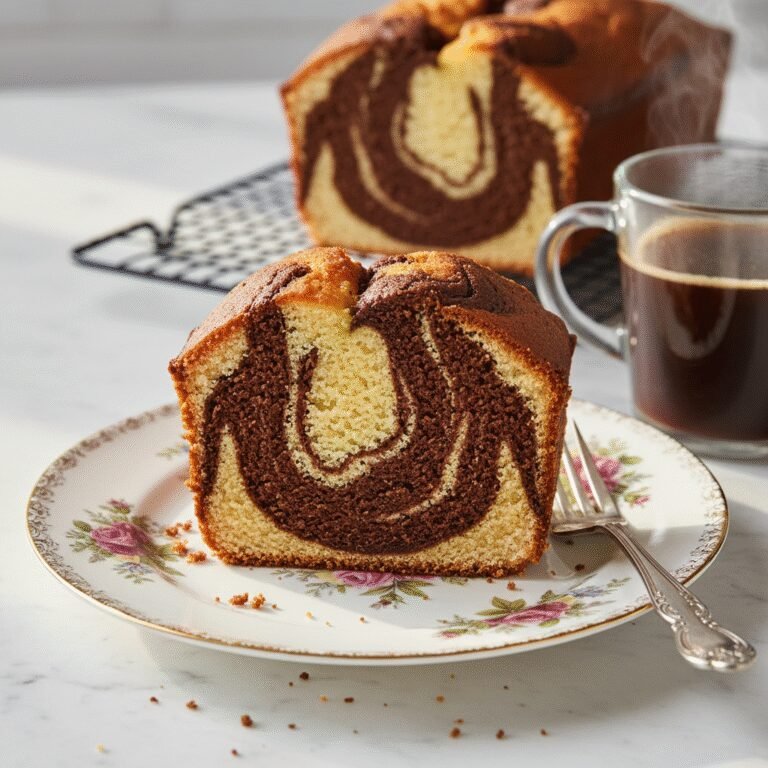
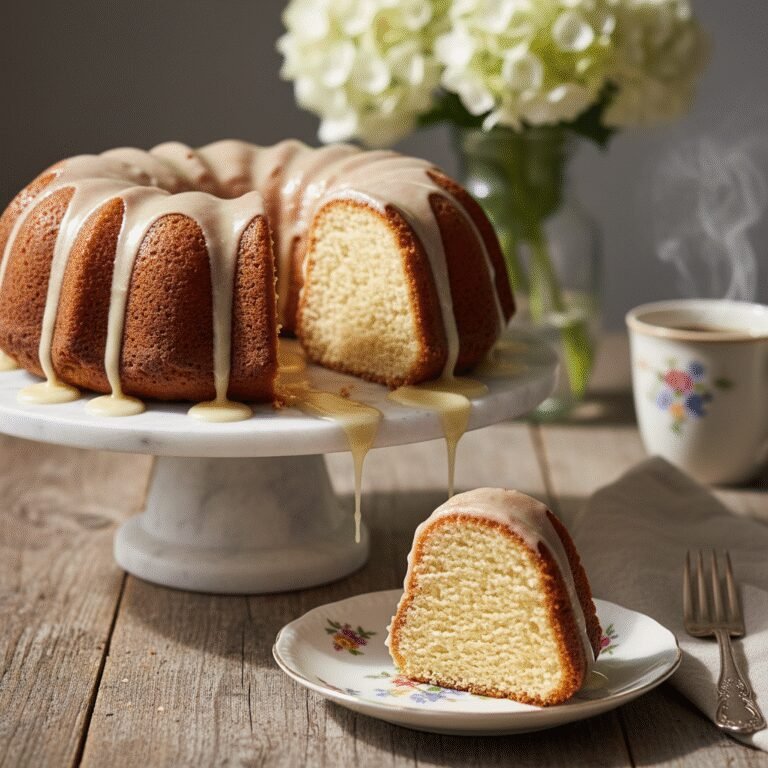
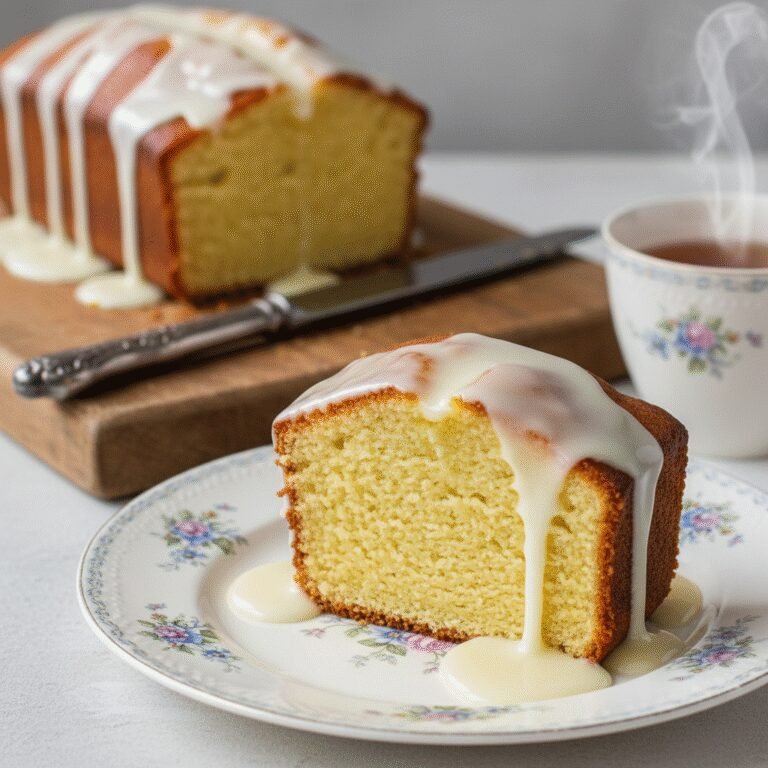
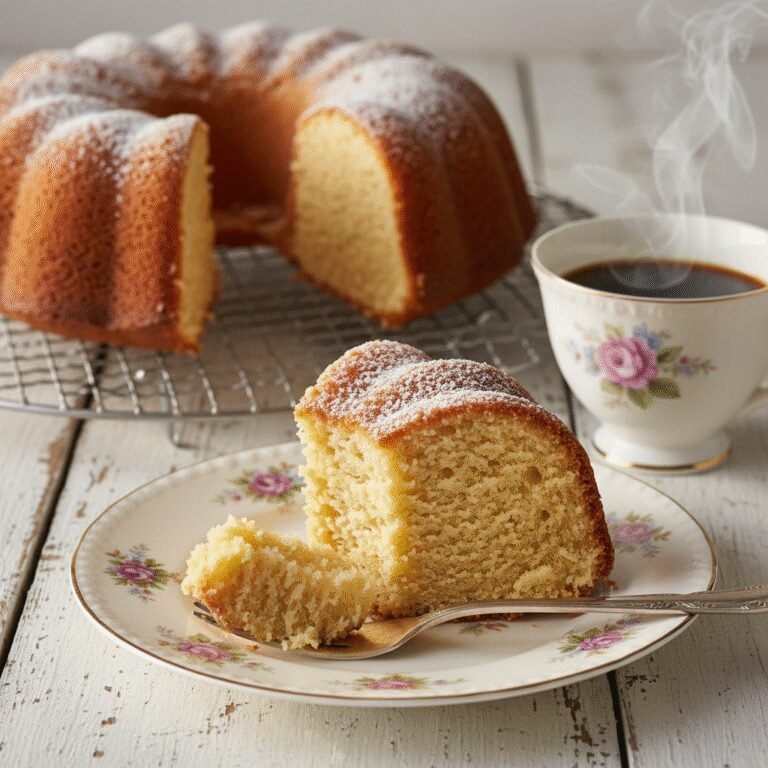
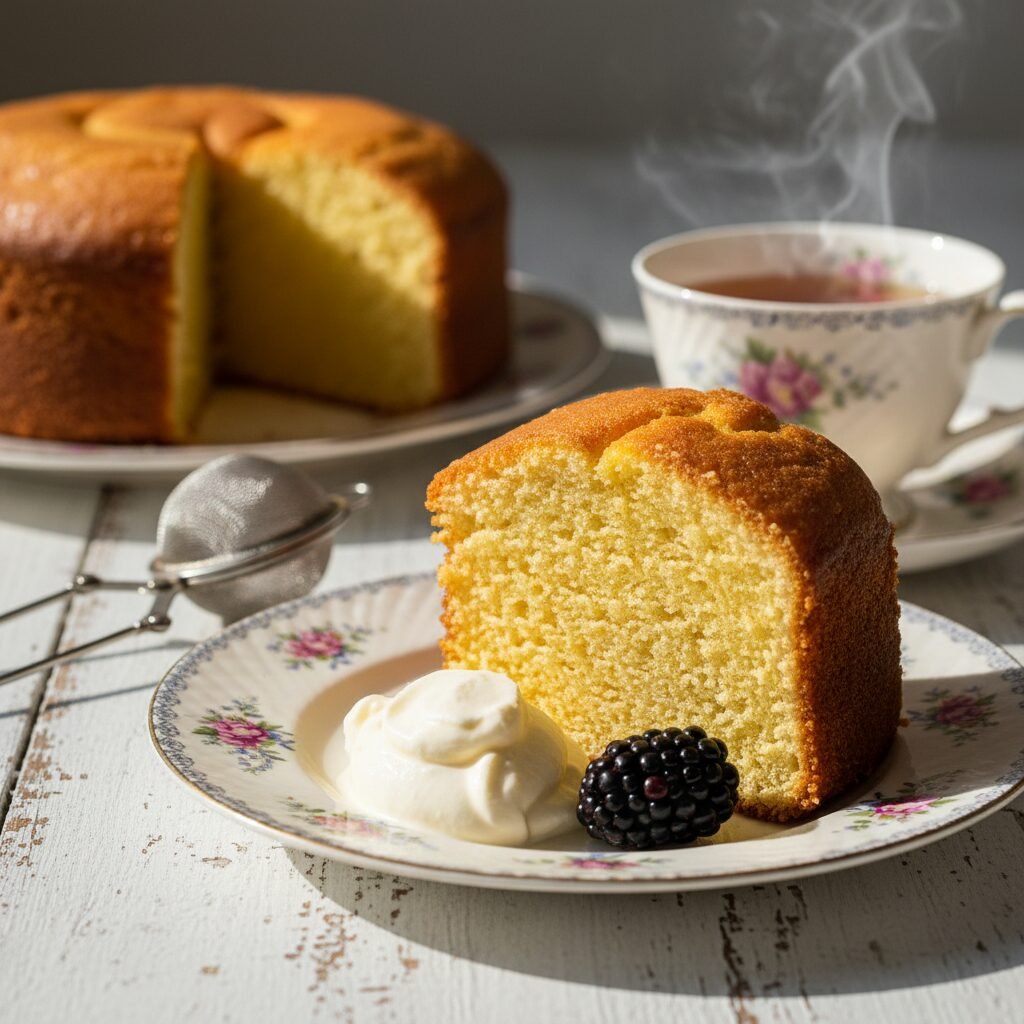
This cake boasts a golden, slightly crisp exterior that gives way to a tight, velvety crumb—the hallmark of a superior pound cake. It is sturdy enough to be held in hand yet soft enough to melt on the tongue. Whether you are hosting a formal high tea, looking for a comforting companion to your morning coffee, or simply craving a nostalgic treat, this recipe delivers on every front. We have meticulously tested the ratios of flour to fat to ensure that ‘moist’ isn’t just a buzzword, but a promise. The flavor is rich and buttery, with a subtle tang from the sour cream that cuts through the sweetness, creating a sophisticated profile that appeals to both children and adults alike. Get ready to bake a cake that will likely become a family heirloom recipe, passed down through generations of tea lovers.
History & Origins
The history of the pound cake is as rich and dense as the cake itself, dating back to the early 1700s in Northern Europe. The name ‘pound cake’ was originally quite literal, serving as a mnemonic device for bakers in an era before standardized measuring cups. The original recipe called for exactly one pound each of four ingredients: flour, butter, eggs, and sugar. This 1:1:1:1 ratio produced a massive, heavy cake that could feed a large gathering and kept well for days, which was essential in times before modern refrigeration. As the recipe migrated to America and evolved over the centuries, bakers began to tweak the ratios to produce a lighter, more palatable texture.
By the mid-19th century, leavening agents like baking powder and baking soda were introduced, allowing the heavy brick-like consistency to give way to a lighter crumb. However, the most significant evolution in the pound cake’s lineage was the introduction of moistening agents in the American South. Southern bakers, known for their hospitality and decadent desserts, began incorporating dairy products like buttermilk, cream cheese, and, most notably, sour cream. This innovation was a game-changer. The addition of sour cream didn’t just add moisture; it added a complexity of flavor and a tenderness that the original ‘pound of each’ recipe lacked. Today, the Sour Cream Pound Cake is considered a staple of Southern cuisine and a classic component of British-style afternoon tea, representing the perfect marriage of Old World tradition and New World innovation.
Why This Recipe Works
This recipe succeeds where many others fail due to the specific scientific interaction between the ingredients, primarily the sour cream. Traditional pound cakes rely heavily on the mechanical aeration of butter and sugar (creaming) to provide lift. While we still employ that crucial step, the addition of sour cream serves a dual purpose that guarantees a superior texture. First, sour cream has a high fat content. Fat shortens gluten strands in the flour, which prevents the cake from becoming tough or chewy. This results in that desirable ‘tender’ crumb that feels soft rather than bready.
Secondly, sour cream is acidic. This acidity helps to tenderize the gluten even further, but it also controls the browning of the crust, ensuring a beautiful golden hue without burning. The thickness of the sour cream adds viscosity to the batter, which helps suspend the air bubbles created during the creaming process. This structure prevents the cake from collapsing while it bakes, which is a common pitfall with dense cakes. We also use room temperature ingredients strictly. When the eggs, butter, and sour cream are all at the same ambient temperature, they emulsify into a smooth, homogenous batter much more easily. A broken or curdled batter often leads to a greasy or flat cake. By respecting the chemistry of the emulsion, this recipe yields a cake with a fine, uniform grain and a richness that lingers pleasantly on the palate.
Why You’ll Love This Recipe
- ✓Incredibly moist texture due to the addition of full-fat sour cream.
- ✓Develops a perfectly golden, slightly crunchy crust.
- ✓Simple ingredients found in any standard pantry.
- ✓Freezes beautifully, making it excellent for making ahead.
- ✓Versatile base that pairs with fruit, whipped cream, or stands alone.
- ✓Dense yet tender crumb, perfect for dunking in tea or coffee.
Equipment You’ll Need
- ✓10-inch Bundt pan or Tube pan
- ✓Stand mixer or electric hand mixer
- ✓Large mixing bowl
- ✓Medium mixing bowl
- ✓Silicone spatula
- ✓Wire cooling rack
- ✓Measuring cups and spoons
- ✓Sifter
Ingredients
- ✓3 cups (360g) all-purpose flour, sifted
- ✓1/2 teaspoon baking soda
- ✓1/2 teaspoon baking powder
- ✓1 teaspoon salt
- ✓1 cup (226g) unsalted butter, softened to room temperature
- ✓2 1/2 cups (500g) granulated sugar
- ✓6 large eggs, room temperature
- ✓1 cup (240g) full-fat sour cream, room temperature
- ✓1 tablespoon pure vanilla extract
Instructions
- Preheat your oven to 325°F (165°C). Thoroughly grease a 10-inch Bundt pan or tube pan with butter or non-stick baking spray, ensuring every crevice is coated. Lightly dust with flour, tapping out the excess.
- In a medium bowl, sift together the all-purpose flour, baking soda, baking powder, and salt. Whisk gently to combine and set aside.
- In the bowl of a stand mixer fitted with the paddle attachment (or using a large bowl with a hand mixer), cream the softened butter and granulated sugar together on medium-high speed. Beat for 5-7 minutes until the mixture is very pale, light, and fluffy. Scrape down the sides of the bowl as needed.
- Reduce the mixer speed to medium. Add the eggs one at a time, beating well after each addition. Ensure each egg is fully incorporated before adding the next. Scrape down the bowl again to ensure the butter mixture at the bottom is mixed in.
- Stir the vanilla extract into the sour cream.
- Reduce the mixer speed to low. Add the flour mixture and the sour cream mixture alternately, beginning and ending with the flour (Flour -> Sour Cream -> Flour -> Sour Cream -> Flour). Mix only until the flour acts as if it has just disappeared. Do not overmix.
- Remove the bowl from the mixer and give the batter a final gentle fold with a silicone spatula to ensure no flour pockets remain at the bottom.
- Pour the batter into the prepared Bundt pan. Smooth the top with the spatula. Gently tap the pan on the counter a few times to release any large air bubbles.
- Bake in the preheated oven for 70 to 85 minutes. The cake is done when the top is golden brown and a wooden skewer inserted into the thickest part of the cake comes out clean or with just a few moist crumbs attached.
- Remove the cake from the oven and let it cool in the pan on a wire rack for exactly 15 minutes. This resting period allows the cake structure to set.
- After 15 minutes, invert the pan onto the wire rack to release the cake. Allow it to cool completely before slicing or glazing.
Expert Cooking Tips
- ✓Room temperature ingredients are non-negotiable; cold ingredients will break the emulsion.
- ✓Grease the pan generously; Bundt pans are notorious for sticking.
- ✓Do not rush the creaming process; this step builds the cake’s structure.
- ✓Weigh your flour if possible; scooping can lead to a dry, heavy cake.
- ✓Cool in the pan for exactly 10-15 minutes; too hot and it breaks, too cold and it sticks.
- ✓Use full-fat sour cream for the best texture; low-fat versions contain too much water.
Substitutions and Variations
Baking is a science, so substitutions should be made with care. If you do not have sour cream, full-fat plain Greek yogurt is the best alternative as it has a similar consistency and acidity. Buttermilk can be used, but because it is thinner, you may need to slightly increase the flour by a tablespoon or two to maintain the batter’s viscosity. If you only have salted butter, omit the additional teaspoon of salt called for in the recipe. For a gluten-free version, use a high-quality 1:1 gluten-free baking flour blend that includes xanthan gum; however, note that the texture may be slightly less dense. You can substitute vanilla bean paste for the extract for a more intense vanilla flavor and visible specks. Avoid using margarine or vegetable oil spreads, as they lack the flavor and structure-building properties of real butter.
Common Mistakes to Avoid
The most common mistake when making pound cake is overmixing the batter once the flour is added. Overmixing develops the gluten too much, resulting in a tough, rubbery cake rather than a tender one. Another frequent error is opening the oven door too early. Pound cakes are heavy and take a long time to set; opening the door causes a temperature drop that can make the cake collapse or ‘fall’ in the center. Improperly greasing the Bundt pan is also a tragedy waiting to happen—ensure every nook is covered. Finally, using cold ingredients will prevent the batter from emulsifying properly, leading to a dense, greasy layer at the bottom of your baked cake.
Serving Suggestions
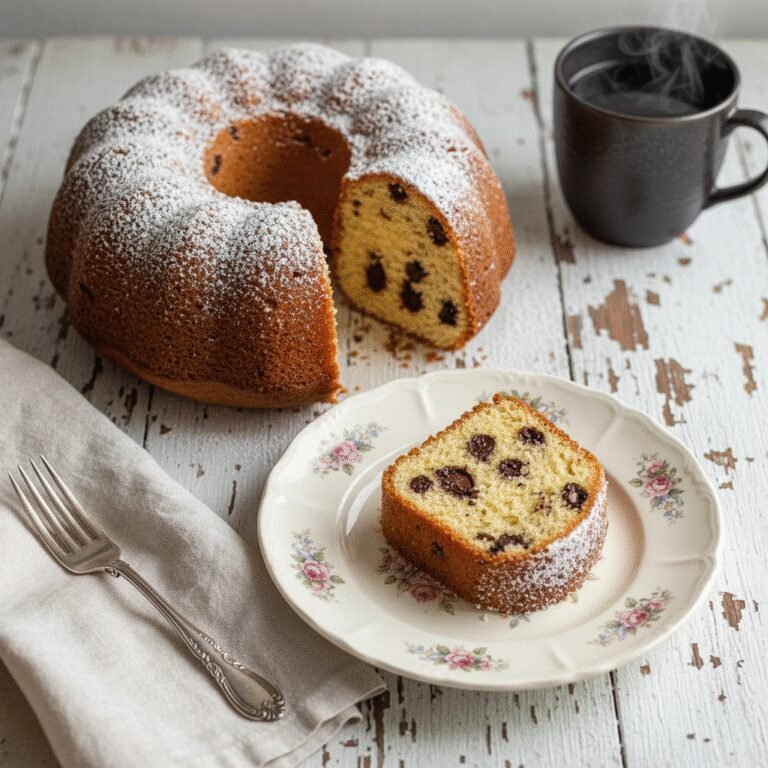
This cake is stunningly versatile. For a classic afternoon tea presentation, dust the cooled cake lightly with powdered sugar and serve slices on delicate china plates. It pairs beautifully with Earl Grey or English Breakfast tea. For a dessert course, serve thick slices with a dollop of freshly whipped cream and macerated strawberries or a warm berry compote. In the autumn, a drizzle of warm caramel sauce and a side of vanilla bean ice cream elevates it to a comforting evening treat. You can also grill slices of the cake slightly and top with stone fruit for a unique summer twist.
Storage and Reheating Tips
Pound cake is one of those rare baked goods that actually tastes better the next day as the flavors have time to meld and the moisture distributes evenly. Store the cake in an airtight container or cake dome at room temperature for up to 4 days. Do not refrigerate it, as the cold environment will dry out the crumb and make the butter harden, resulting in a stale texture. For longer storage, wrap individual slices tightly in plastic wrap, then in aluminum foil, and freeze for up to 3 months. Thaw frozen slices at room temperature for an hour before serving.
Nutrition Facts (Estimated)
| Serving Size | 1 slice |
| Calories | 420 |
| Fat | 22g |
| Saturated Fat | 13g |
| Unsaturated Fat | 8g |
| Trans Fat | 0g |
| Cholesterol | 85mg |
| Sodium | 180mg |
| Carbohydrates | 52g |
| Fiber | 1g |
| Sugar | 28g |
| Protein | 5g |
Frequently Asked Questions
Can I bake this in a loaf pan instead of a Bundt pan?
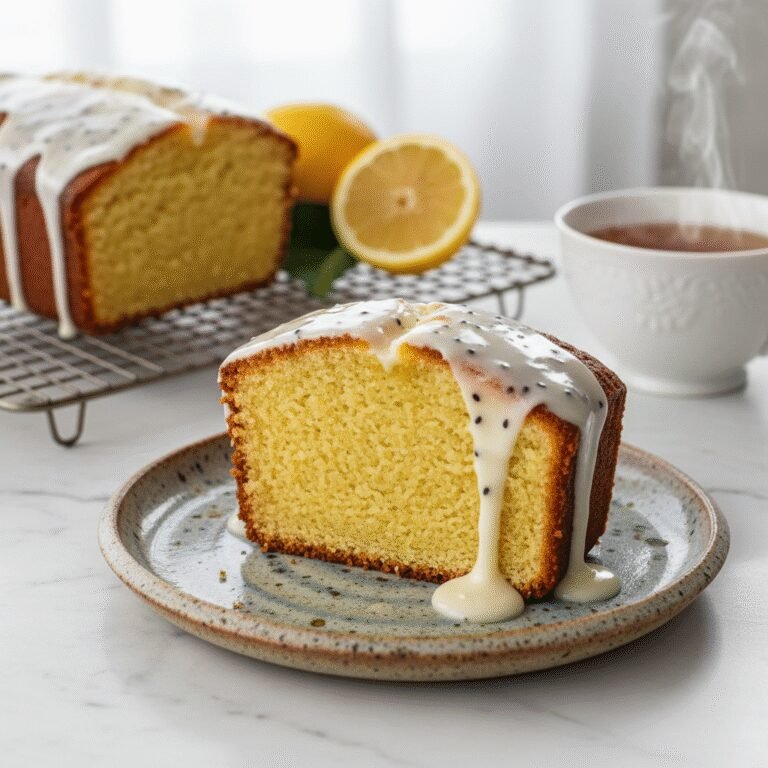
Yes, you can. However, this recipe makes a large amount of batter. You will likely need two 9×5 inch loaf pans. The baking time will need to be adjusted, likely reduced to 50-60 minutes. Check for doneness early.
Why did my pound cake crack on top?
Cracking is actually very normal and even desirable for a classic pound cake! It happens because the exterior sets before the interior finishes rising. It gives the cake a rustic, homemade charm.
Can I add mix-ins like blueberries or chocolate chips?
Absolutely. Toss your mix-ins (about 1 to 1.5 cups) in a tablespoon of flour before folding them into the batter at the very end. This helps prevent them from sinking to the bottom of the heavy batter.
My cake came out dry. What happened?
The most common culprit is over-measuring the flour. If you scoop flour directly with the cup, you pack it down. Always spoon the flour into the cup and level it off, or use a kitchen scale.
Can I use low-fat sour cream?
Technically yes, but it is not recommended. Low-fat dairy has more water and less fat, which can affect the richness and tenderness of the cake. For the best result, stick to full-fat.
How do I know exactly when it is done?
The skewer test is best. Insert a wooden skewer into the deepest part of the cake. It should come out clean or with a few moist crumbs. If it has wet batter, keep baking.
Can I make this cake ahead of time?
Yes, this cake is excellent for making ahead. Baking it a day before you plan to serve it allows the moisture to settle, often resulting in a better texture and flavor on day two.
Why does my cake have a dense, gummy streak at the bottom?
This is usually caused by under-creaming the butter and sugar, or by using cold eggs/sour cream that didn’t emulsify properly. Ensure everything is room temperature and beat the butter/sugar until very pale.
Conclusion
In a world of trendy, complicated desserts, the Moist Sour Cream Pound Cake stands as a testament to the power of simplicity and quality ingredients. It is a recipe that rewards patience and precision with a flavor that is undeniably homey yet sophisticated enough for the finest afternoon tea spread. Whether you are a novice baker looking for a foolproof win or a seasoned pro searching for the ultimate base recipe, this cake is sure to earn a permanent spot in your repertoire. So brew a pot of your favorite tea, slice a generous piece of this golden delight, and savor the timeless joy of homemade baking.