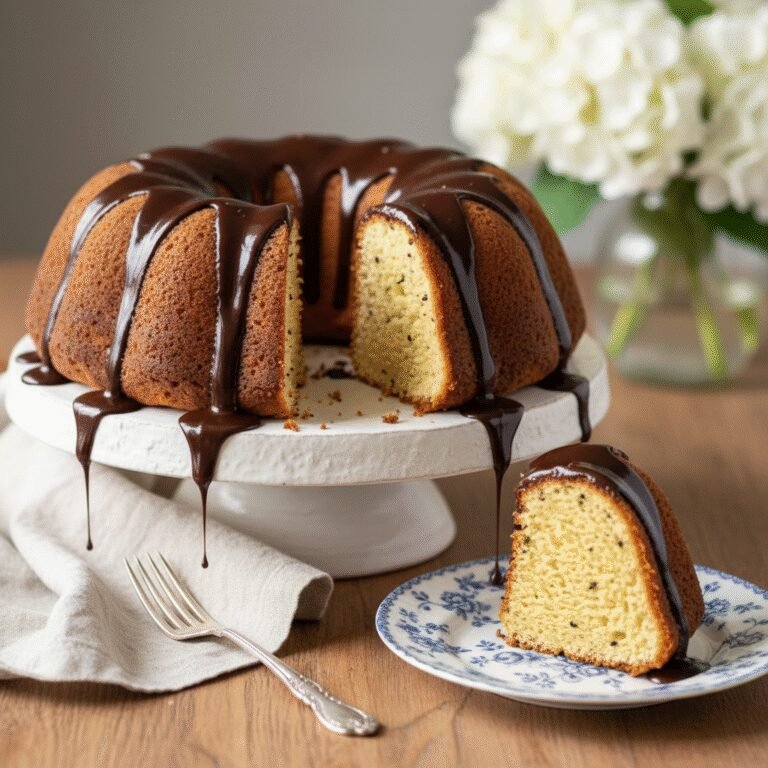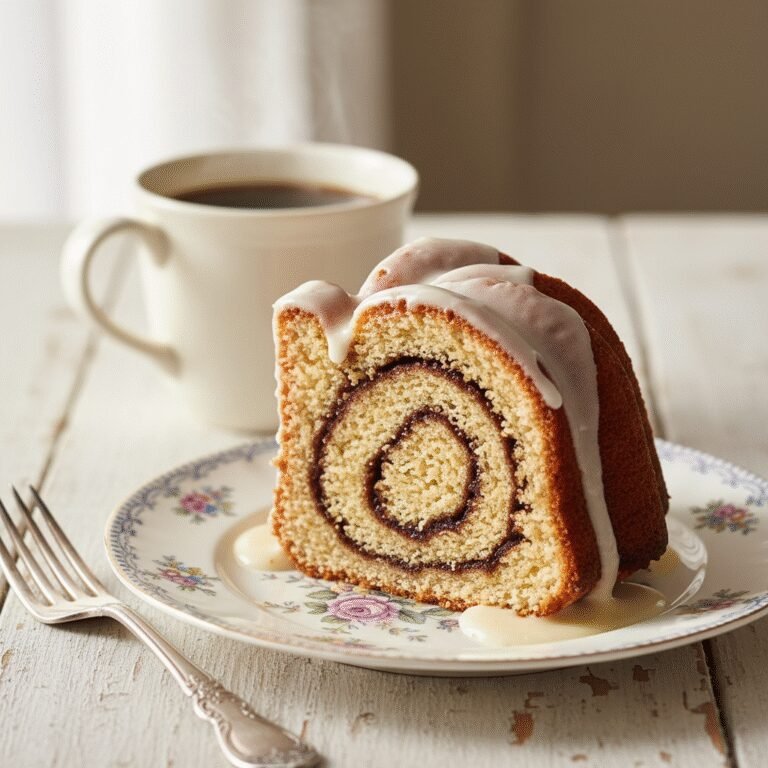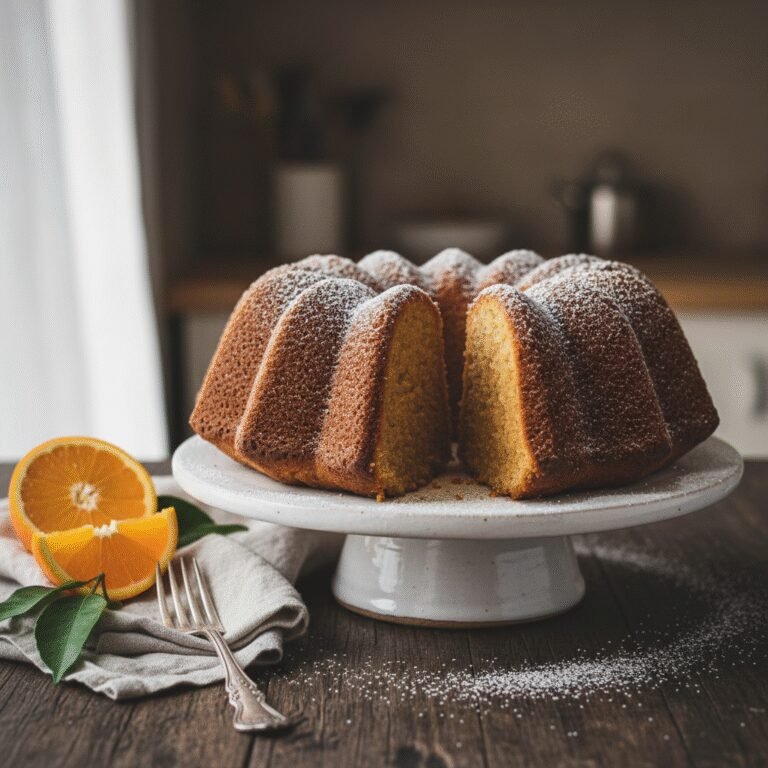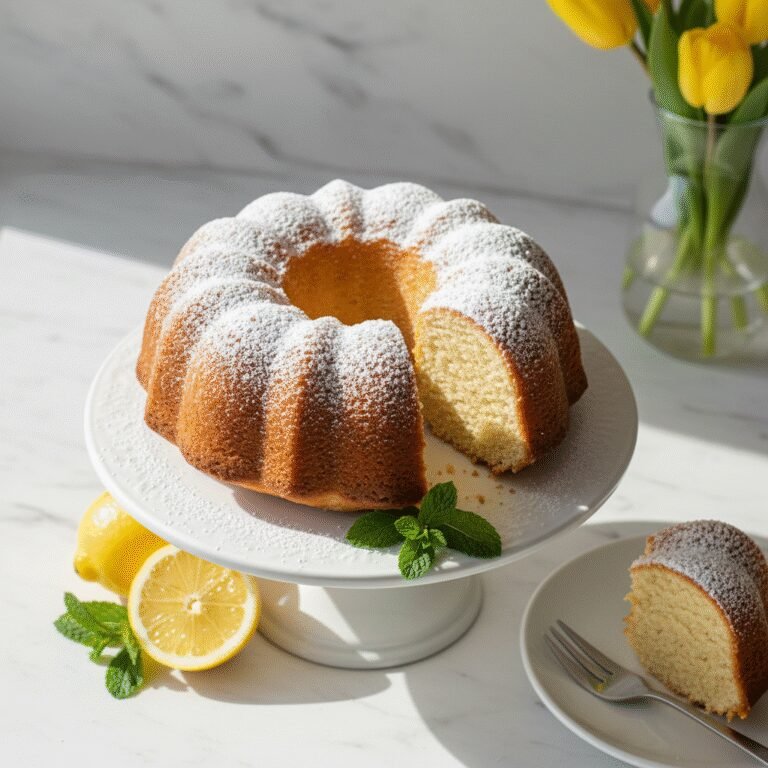
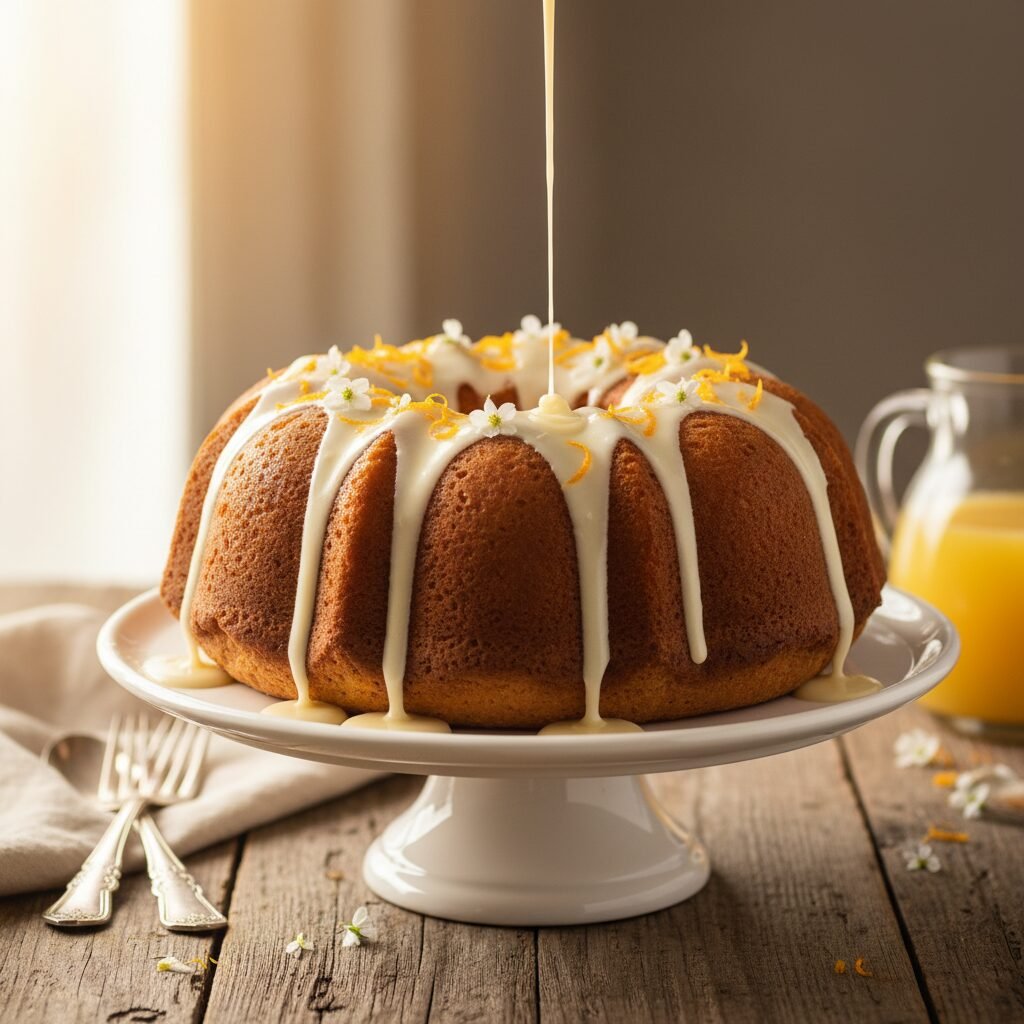
The Ultimate Moist Orange Bundt Cake With Vanilla Bean Glaze
Moist Orange Bundt Cake With Vanilla Glaze Recipe
Bring a burst of sunshine to your kitchen with this incredibly moist Orange Bundt Cake. Infused with fresh orange zest and topped with a silky vanilla bean glaze, this recipe is the perfect balance of sweet, tangy, and buttery flavors.
20 minutes
55 minutes
1 hour 15 minutes
12-14 servings
Dessert
Baking
American
Vegetarian
If you are looking for a dessert that literally tastes like sunshine on a plate, look no further than this Moist Orange Bundt Cake. There is something undeniably nostalgic and comforting about a Bundt cake. It doesn’t require the fussy layering or frosting skills of a layer cake, yet it presents itself with such elegance and grandeur that it instantly becomes the centerpiece of any table. This particular recipe is the result of years of tweaking to find the absolute perfect balance between a dense, pound-cake-like crumb and a fluffy, light texture. The secret lies in the saturation of citrus flavor; we aren’t just adding a splash of juice here. We are rubbing freshly grated orange zest directly into the sugar until it resembles wet sand, releasing those potent essential oils that often get lost in the baking process.
When you take your first bite, you are greeted with a bright, zesty punch that cuts through the richness of the butter and sour cream base. The vanilla glaze serves as the perfect counterpoint, adding a creamy, sweet finish that drizzles down the ridges of the cake, creating little pools of sugary delight. Whether you are serving this for a Sunday brunch, a holiday dessert spread, or simply as a treat to enjoy with your afternoon coffee, this cake delivers on all fronts. It is robust enough to hold its shape yet tender enough to melt in your mouth. Plus, the aroma that fills your kitchen while it bakes—a mix of caramelized sugar, warm butter, and floral citrus—is worth the effort alone. This isn’t just a cake; it’s an experience in citrus perfection.
History & Origins
The history of the Bundt cake is a fascinating journey that intertwines European tradition with American innovation. The style of cake actually descends from a European fruit cake known as ‘Gugelhupf,’ which was popular in Germany, Austria, and Alsace. These cakes were traditionally brioche-based, studded with nuts and dried fruits, and baked in distinctive ring-shaped pans that allowed heat to penetrate the center of the dense dough. However, the modern ‘Bundt’ cake as we know it is a distinctly American phenomenon, largely thanks to H. David Dalquist, the founder of Nordic Ware. In 1950, at the request of a group of Jewish women in Minneapolis who wanted to recreate the traditional Gugelhupf, Dalquist designed a cast aluminum pan with fluted sides and a center hole. He coined the name ‘Bundt,’ likely derived from the German word ‘Bund,’ meaning an alliance or gathering, fitting for a cake meant to be shared.
For over a decade, the pan sold poorly, until the 1966 Pillsbury Bake-Off, where Ella Helfrich’s ‘Tunnel of Fudge’ cake won second place and catapulted the Bundt pan into stardom. Since then, the Bundt cake has become a staple of American baking. Citrus cakes, specifically, have their own lineage, often rooted in Mediterranean cuisines where oranges and lemons are abundant. The combination of the sturdy, architectural Bundt shape with the bright, sunny flavors of fresh oranges creates a modern classic that pays homage to both the mid-century American baking boom and centuries-old European fruit cake traditions. Today, the Orange Bundt Cake is celebrated for its simplicity, longevity, and ability to transport eaters to warmer climates with a single bite.
Why This Recipe Works
This recipe succeeds where many others fail because it meticulously addresses the two biggest complaints about Bundt cakes: dryness and lack of flavor. First, to combat dryness, we utilize a ‘dual-fat’ method. We use butter for that unmistakable rich, creamy flavor, but we also incorporate a neutral oil. Oil remains liquid at room temperature, which ensures the cake stays moist and tender for days, whereas an all-butter cake can sometimes firm up too much as it cools. Furthermore, the addition of full-fat sour cream (or Greek yogurt) introduces acidity. This acidity tenderizes the gluten strands in the flour, resulting in a crumb that is soft and velvety rather than tough or rubbery.
Secondly, we maximize flavor through a technique called ‘sugar rubbing.’ By manually massaging the orange zest into the granulated sugar before adding any wet ingredients, we use the abrasive texture of the sugar crystals to rupture the oil glands in the zest. This infuses the entire batter with a deep, floral orange essence that extract alone cannot achieve. Finally, the glaze isn’t just a topping; it acts as a seal. Pouring the glaze while the cake is still slightly warm allows some of it to seep into the crust, locking in moisture and adding an extra layer of vanilla-orange sweetness to the exterior.
Why You’ll Love This Recipe
- ✓Incredibly moist crumb thanks to a blend of butter, oil, and sour cream.
- ✓Intense orange flavor achieved by rubbing zest into the sugar.
- ✓Beautiful presentation with a simple vanilla bean glaze.
- ✓Stays fresh and moist for several days at room temperature.
- ✓Freezer-friendly, making it perfect for making ahead.
- ✓Requires standard pantry ingredients and basic equipment.
Equipment You’ll Need
- ✓10-12 cup Bundt pan
- ✓Stand mixer or electric hand mixer
- ✓Microplane or fine grater
- ✓Mixing bowls
- ✓Wire cooling rack
- ✓Whisk
- ✓Measuring cups and spoons
- ✓Silicone spatula
Ingredients
- ✓2 1/2 cups all-purpose flour
- ✓1/2 teaspoon baking soda
- ✓1/2 teaspoon salt
- ✓1 cup unsalted butter, softened
- ✓2 cups granulated sugar
- ✓3 tablespoons fresh orange zest (approx. 3 oranges)
- ✓4 large eggs, room temperature
- ✓1 teaspoon pure vanilla extract
- ✓1/2 cup vegetable oil (or canola)
- ✓1 cup full-fat sour cream, room temperature
- ✓2 cups powdered sugar (for glaze)
- ✓3-4 tablespoons fresh orange juice (for glaze)
- ✓1/2 teaspoon vanilla bean paste or extract (for glaze)
Instructions
- Preheat your oven to 350°F (175°C). Thoroughly grease your Bundt pan with butter or non-stick baking spray, ensuring every nook and cranny is coated. Dust with flour and tap out the excess.
- In a medium bowl, whisk together the flour, baking soda, and salt. Set aside.
- In the bowl of a stand mixer, combine the granulated sugar and fresh orange zest. Use your clean fingers to rub the zest into the sugar until it is fragrant and resembles wet sand.
- Add the softened butter to the sugar mixture. Beat on medium-high speed for 4-5 minutes until the mixture is pale, light, and fluffy. Do not rush this step; aeration is key.
- Add the eggs one at a time, beating well after each addition. Scrape down the sides of the bowl as needed. Mix in the vanilla extract and vegetable oil until combined.
- Reduce the mixer speed to low. Add half of the flour mixture, mixing just until the flour streaks disappear.
- Add the sour cream and mix until combined. Then, add the remaining flour mixture, mixing only until just incorporated. Do not overmix.
- Pour the batter into the prepared Bundt pan and smooth the top with a spatula. Tap the pan gently on the counter to release any large air bubbles.
- Bake for 50-60 minutes, or until a toothpick inserted into the thickest part of the cake comes out clean or with a few moist crumbs.
- Remove from the oven and let the cake cool in the pan for exactly 10 minutes. Then, carefully invert it onto a wire rack to cool completely.
- While the cake cools, prepare the glaze. Whisk together powdered sugar, orange juice, and vanilla bean paste until smooth. Adjust consistency with more juice or sugar as needed.
- Drizzle the glaze over the cooled cake, allowing it to drip down the sides. Garnish with extra zest if desired before serving.
Expert Cooking Tips
- ✓Room temperature ingredients are non-negotiable; cold eggs or dairy can curdle the batter.
- ✓Grease the pan right before filling to prevent the oil from sliding down the sides.
- ✓Measure flour by spooning it into the cup and leveling it off, rather than scooping directly, to avoid a dense cake.
- ✓Don’t skip the cooling time in the pan; the cake structure needs 10 minutes to set before flipping.
- ✓Use a microplane for zesting to get the fluffy outer peel without the bitter white pith.
- ✓If the top of the cake is browning too quickly in the oven, tent it loosely with aluminum foil.
Substitutions and Variations
This recipe is quite forgiving if you need to make swaps. For the flour, you can use cake flour for an even lighter crumb, though all-purpose provides a nice structure. If you need to go gluten-free, a high-quality 1:1 gluten-free baking flour blend works wonderfully. For the fat, you can substitute the sour cream with full-fat Greek yogurt or even buttermilk, though the batter will be slightly thinner with buttermilk. If you prefer to avoid vegetable oil, you can use melted coconut oil or increase the butter, but the cake may not stay moist for quite as long. For the citrus, blood oranges, tangerines, or lemons make excellent alternatives if you want to change the flavor profile entirely. Just ensure you keep the ratios of zest and juice consistent.
Common Mistakes to Avoid
The most heartbreaking mistake with Bundt cakes is the cake sticking to the pan. This usually happens because the pan wasn’t greased thoroughly or the cake was left to cool in the pan for too long (creating steam that makes it sticky) or too little (where it’s too fragile). Stick to the 10-minute rule. Another common error is overmixing the batter after adding the flour. Once the flour hits the liquid, gluten begins to form. Too much mixing creates a tough, rubbery cake rather than a tender one. Finally, ensure your baking powder/soda is fresh; expired leaveners will result in a dense, flat cake that fails to rise properly.
Serving Suggestions
This Moist Orange Bundt Cake is versatile enough for various settings. Serve it slightly warm with a dollop of whipped cream and fresh berries for an elegant dessert. It pairs beautifully with a hot cup of Earl Grey tea or a dark roast coffee, as the citrus notes complement the tannins in the beverages. For a summer brunch, serve slices alongside a mimosa or a chilled glass of prosecco. If you want to dress it up for a holiday table, garnish with candied orange slices and edible flowers for a show-stopping presentation.
Storage and Reheating Tips
Store the cake in an airtight container at room temperature for up to 3-4 days; the oil in the batter keeps it moist. If you live in a very hot or humid climate, you may want to refrigerate it, but bring it back to room temperature before serving for the best texture and flavor. This cake freezes exceptionally well. Wrap individual slices or the whole unglazed cake tightly in plastic wrap, then a layer of foil, and freeze for up to 3 months. Thaw overnight on the counter. It is best to glaze the cake after thawing if freezing the whole cake.
Nutrition Facts (Estimated)
| Serving Size | 1 slice |
| Calories | 420 |
| Fat | 22g |
| Saturated Fat | 12g |
| Unsaturated Fat | 9g |
| Trans Fat | 0g |
| Cholesterol | 85mg |
| Sodium | 210mg |
| Carbohydrates | 54g |
| Fiber | 1g |
| Sugar | 32g |
| Protein | 5g |
Frequently Asked Questions
Can I use store-bought orange juice instead of fresh?
While you can use store-bought juice for the glaze, fresh is vastly superior for flavor. However, the zest in the cake batter is mandatory for the orange flavor, so you will need fresh oranges anyway.
Why did my Bundt cake sink in the middle?
Sinking usually happens if the oven door was opened too early, causing a temperature drop, or if the cake was underbaked. It can also be caused by over-leavening (too much baking soda). Check your oven temperature with an external thermometer.
Can I make this recipe in a regular cake pan?
Yes, this batter can be divided into two 9-inch round pans or a 9×13 rectangular pan. You will need to reduce the baking time to approximately 30-40 minutes. Check for doneness early.
How do I know when the cake is fully baked?
Insert a wooden skewer into the deepest part of the cake. It should come out clean or with just a few moist crumbs attached. If it has wet batter, it needs more time.
My glaze is too runny, what should I do?
Simply add more powdered sugar, a tablespoon at a time, whisking until you reach your desired thickness. If it’s too thick, add a teaspoon of juice or milk.
Can I add poppy seeds to this recipe?
Absolutely! Add about 2 tablespoons of poppy seeds with the dry ingredients for a classic lemon-poppyseed style variation using orange.
Why is my cake dense?
Density often comes from not creaming the butter and sugar long enough (which incorporates air) or measuring flour incorrectly by packing it into the cup.
Do I have to use a Bundt pan?
Technically no, but the ratio of crust to interior is optimized for a Bundt pan. If using a loaf pan, you will likely need two pans and the bake time will vary significantly.
Conclusion
There are few things in baking as satisfying as turning out a perfect Bundt cake—the defined ridges, the golden crust, and the anticipation of that first slice. This Moist Orange Bundt Cake with Vanilla Glaze is a recipe that rewards you with minimal effort and maximum flavor. It is a reliable, crowd-pleasing classic that feels right at home on a holiday table or a casual Tuesday afternoon. By following the tips on temperature and mixing, you are guaranteed a cake that is tender, aromatic, and utterly delicious. So, grab your oranges, preheat your oven, and get ready to fill your home with the scent of sweet citrus warmth. Happy baking!