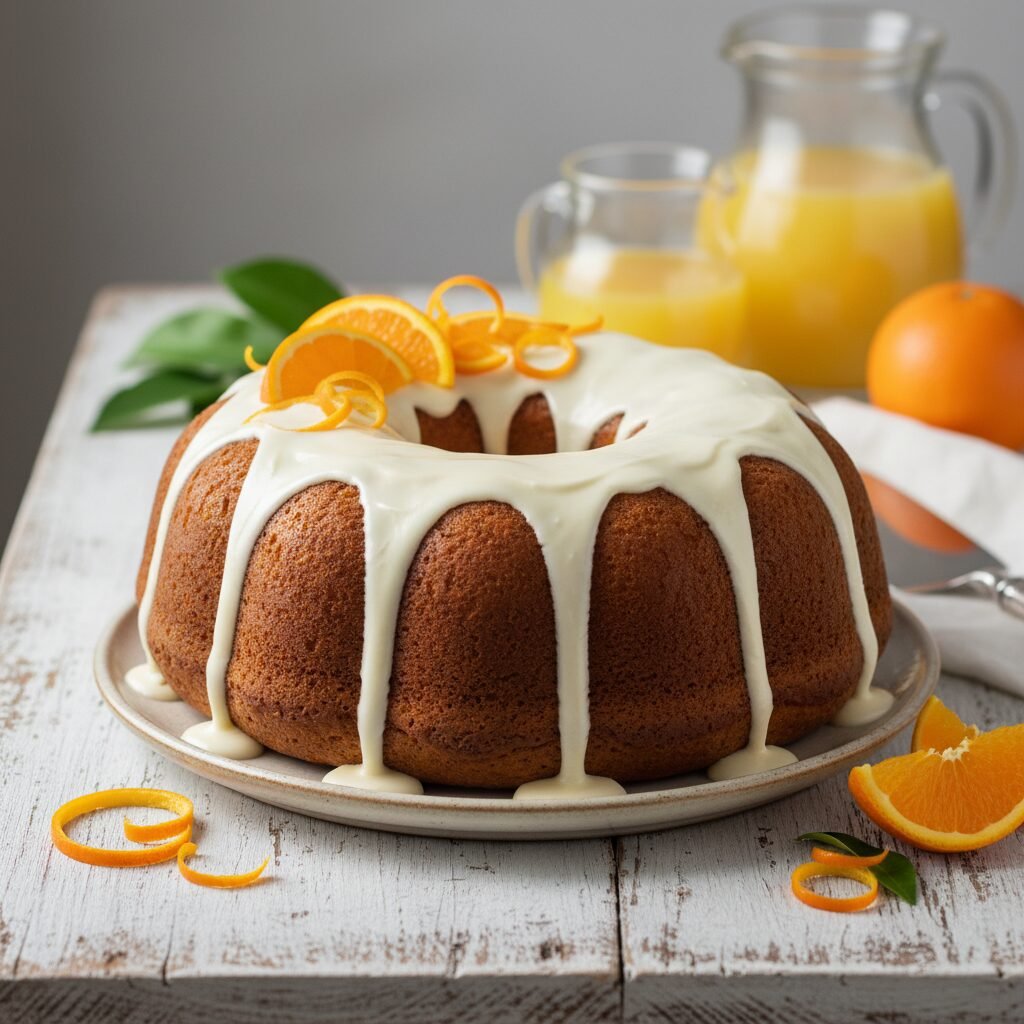
The Ultimate Moist Orange Bundt Cake With Cream Cheese Glaze
Moist Orange Bundt Cake With Cream Cheese Glaze Recipe
Bring a burst of sunshine to your kitchen with this incredibly moist Orange Bundt Cake. Infused with fresh citrus juice and zest, and topped with a velvety, tangy cream cheese glaze, this recipe is the perfect balance of sweet and bright flavors for any occasion.
20 minutes
55 minutes
1 hour 15 minutes
12-16 servings
Dessert
Baking
American
Vegetarian
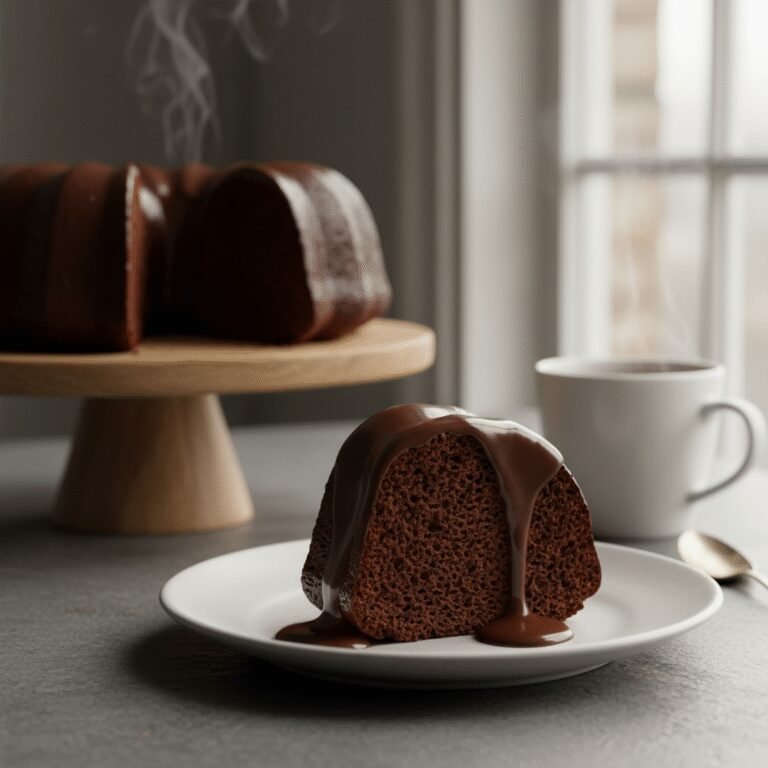
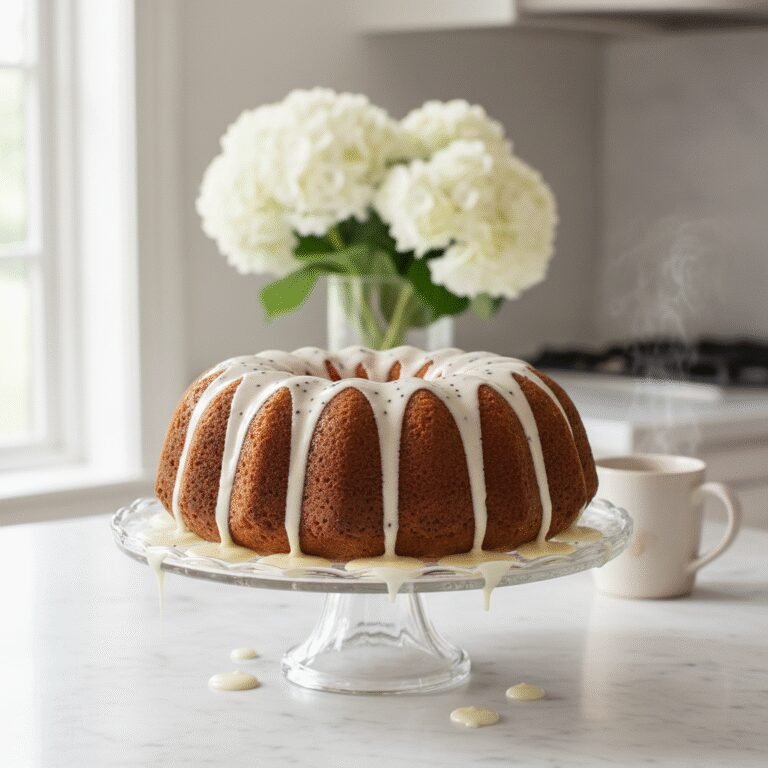
There is something undeniably cheerful about citrus desserts. When the weather is grey, or when you simply need a pick-me-up, a slice of this Moist Orange Bundt Cake acts like a ray of edible sunshine. Unlike delicate sponge cakes that disappear in a bite, this bundt cake boasts a satisfyingly dense, tight crumb that remains incredibly tender and moist for days. The secret lies in the harmonious marriage of fresh orange juice, aromatic zest, and the richness of sour cream, which work together to create a texture that is substantial yet melt-in-your-mouth soft. But the cake itself is only half the story. The crowning glory is the thick, luscious cream cheese glaze that cascades down the fluted sides of the bundt. It is not just a sugary topping; the tang of the cream cheese cuts through the sweetness of the cake, while a hint of vanilla and more orange juice in the glaze ties the flavor profile together perfectly. This cake is designed to be a showstopper. Whether you are hosting a spring brunch, looking for a comforting holiday dessert, or simply baking for the joy of it, this recipe delivers on all fronts. It fills your home with the intoxicating aroma of warm vanilla and bright orange oils, promising a delicious reward for your efforts. It is elegant enough for a dinner party but sturdy enough to pack for a picnic. If you have been searching for that one reliable citrus cake recipe that never comes out dry and always impresses a crowd, you have finally found it.
History & Origins
The history of the Bundt cake is a fascinating journey that bridges European tradition with American innovation. The cake’s lineage can be traced back to the European ‘Gugelhupf’ or ‘Kugelhopf,’ a yeast-based brioche-style cake popular in Germany, Austria, and Alsace. These cakes were traditionally baked in distinctive ring-shaped molds with a central tube, which allowed heat to penetrate the dense dough more evenly. However, the Bundt cake as we know it today is a distinctly American icon, thanks to H. David Dalquist, the founder of Nordic Ware. In 1950, Dalquist was approached by a group of Jewish women from the Hadassah Society in Minneapolis who wanted a modern aluminum version of the heavy ceramic Kugelhopf molds used by their mothers. Dalquist created the cast aluminum ‘Bundt’ pan—trademarking the name by adding a ‘t’ to the German word ‘Bund’ (meaning an alliance or bond). For over a decade, the pan sold poorly and was nearly discontinued. The turning point came in 1966 during the Pillsbury Bake-Off, when a contestant named Ella Helfrich used the pan to create the ‘Tunnel of Fudge’ cake. She won second place, but the unique shape of her cake captured the imagination of home bakers across the country. Nordic Ware was suddenly inundated with orders, producing 30,000 pans a day at the height of the craze. Since then, the Bundt cake has become a staple of American baking, beloved for its architectural beauty and the fact that it requires no complex frosting techniques—just a simple glaze or dusting of sugar. This orange variation pays homage to that history while incorporating the American love for bright, fruit-forward desserts that gained popularity in the mid-20th century alongside the rise of accessible fresh produce.
Why This Recipe Works
This recipe succeeds where many other citrus cakes fail—specifically in the realms of moisture retention and depth of flavor. First, let’s talk about the fat source. While butter provides flavor, oil is superior for texture in cakes like this. Oil remains liquid at room temperature, which means the cake stays sensationally moist and soft on the palate, whereas butter-based cakes can firm up and feel drier once cool. To ensure we don’t lose that buttery taste, we rely on the glaze and the inclusion of sour cream. The sour cream is a miracle ingredient here; its acidity tenderizes the gluten strands in the flour, preventing the cake from becoming tough, while its high fat content adds a rich, creamy mouthfeel. Flavor-wise, this recipe utilizes the ‘power of two’: fresh orange juice and orange zest. The juice provides the acidic backbone and sweetness, but the zest is where the essential oils live. By rubbing the zest into the sugar before mixing (a technique called maceration), we release those oils directly into the sweetener, ensuring the orange flavor permeates every single crumb rather than just sitting on the surface. Finally, the glaze is formulated to be thick. A runny glaze simply slides off a warm bundt, disappearing into the plate. This cream cheese glaze has enough structure to cling to the ridges of the pan’s design, providing a creamy, tangy contrast to the sweet cake in every bite.
Why You’ll Love This Recipe
- ✓Stays moist for up to 5 days thanks to the oil and sour cream base.
- ✓Uses fresh orange juice and zest for a natural, non-artificial citrus flavor.
- ✓The cream cheese glaze adds a cheesecake-like richness that balances the sweetness.
- ✓No mixer required for the cake batter—just two bowls and a whisk.
- ✓Beautiful presentation with minimal decorating effort required.
- ✓Freezes exceptionally well, making it perfect for make-ahead entertaining.
Equipment You’ll Need
- ✓10-12 cup Bundt Pan
- ✓Large mixing bowl
- ✓Medium mixing bowl
- ✓Whisk
- ✓Rubber spatula
- ✓Microplane or citrus zester
- ✓Citrus juicer
- ✓Wire cooling rack
- ✓Electric hand mixer (for the glaze)
Ingredients
- ✓3 cups All-Purpose Flour
- ✓2 1/2 cups Granulated Sugar
- ✓1 teaspoon Salt
- ✓1 teaspoon Baking Powder
- ✓1/2 teaspoon Baking Soda
- ✓3 large Eggs, room temperature
- ✓1 cup Vegetable Oil (or Canola Oil)
- ✓1 cup Sour Cream, room temperature
- ✓3/4 cup Freshly Squeezed Orange Juice (approx 2-3 oranges)
- ✓2 tablespoons Fresh Orange Zest
- ✓1 teaspoon Vanilla Extract
- ✓4 oz Cream Cheese, softened (for glaze)
- ✓2 tablespoons Unsalted Butter, softened (for glaze)
- ✓2 cups Powdered Sugar (for glaze)
- ✓2-3 tablespoons Fresh Orange Juice (for glaze)
- ✓1/2 teaspoon Vanilla Extract (for glaze)
Instructions
- Preheat your oven to 350°F (175°C). Thoroughly grease your Bundt pan with baking spray (the kind with flour in it) or butter and flour, ensuring every crevice is coated to prevent sticking.
- In a medium bowl, combine the granulated sugar and orange zest. Use your fingers to rub the zest into the sugar until it becomes fragrant and looks like wet sand. This releases the essential oils.
- In a large mixing bowl, whisk together the flour, salt, baking powder, and baking soda. Set aside.
- Add the eggs, vegetable oil, sour cream, orange juice, vanilla extract, and the orange-sugar mixture to a separate large bowl. Whisk vigorously until the mixture is smooth and well combined.
- Pour the wet ingredients into the dry ingredients. Using a rubber spatula, gently fold the mixture together just until the flour streaks disappear. Do not overmix, or the cake will be tough.
- Pour the batter into the prepared Bundt pan, smoothing the top with your spatula. Tap the pan firmly on the counter 2-3 times to release any trapped air bubbles.
- Bake for 50-60 minutes, or until a toothpick inserted into the thickest part of the cake comes out clean or with just a few moist crumbs attached.
- Remove from the oven and let the cake cool in the pan for exactly 10 minutes. Then, invert the pan onto a wire cooling rack and lift the pan off. Allow the cake to cool completely before glazing.
- To make the glaze: In a medium bowl, beat the softened cream cheese and butter until smooth and creamy. Gradually add the powdered sugar, alternating with the orange juice and vanilla, beating until you reach a thick but pourable consistency.
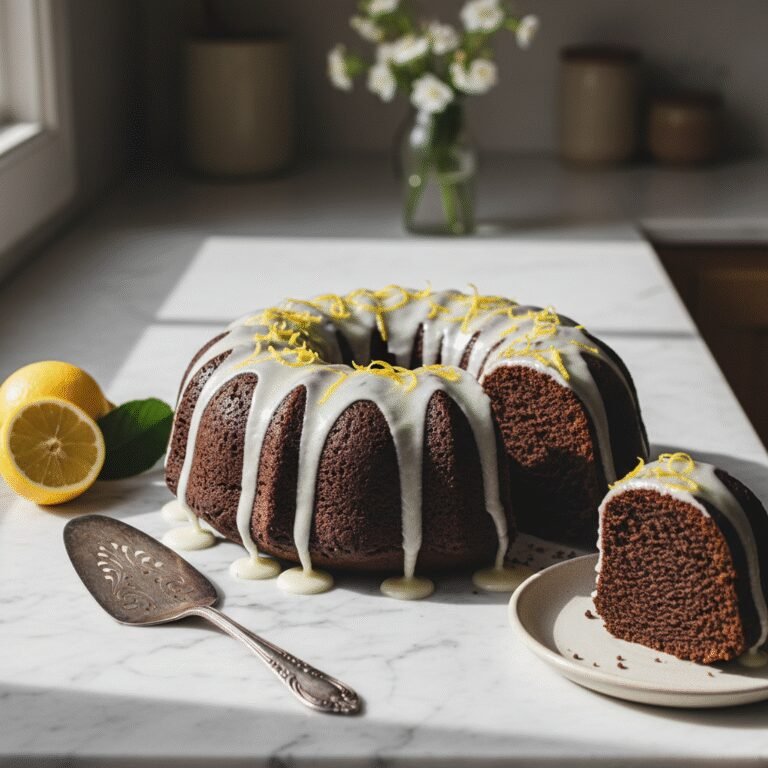
- Spoon or pour the glaze over the completely cooled cake, letting it drip down the sides. Garnish with extra zest or orange slices if desired.
Expert Cooking Tips
- ✓Room temperature ingredients are non-negotiable. Cold eggs or sour cream can shock the batter and cause it to curdle or bake unevenly.
- ✓Grease the pan right before filling it. If you grease it too early, the oil can slide down the sides and pool at the bottom, leaving the top edges exposed to sticking.
- ✓Do not rely solely on the timer. Ovens vary greatly. Start checking the cake at the 50-minute mark.
- ✓Zest the oranges before you juice them. It is nearly impossible to zest a squishy, juiced orange.
- ✓If the top of the cake is browning too quickly before the inside is done, tent a piece of aluminum foil loosely over the top for the last 15 minutes of baking.
- ✓Measure flour by spooning it into the measuring cup and leveling it off, rather than scooping directly from the bag, to avoid packing too much flour and creating a dry cake.
Substitutions and Variations
This recipe is quite robust, but there are several substitutions you can make depending on your dietary needs or pantry stock. For the fat, you can substitute the vegetable oil with melted coconut oil or a light olive oil, though olive oil will impart a slight savory note. If you don’t have sour cream, full-fat plain Greek yogurt is an excellent 1:1 substitute that provides similar acidity and moisture; buttermilk can also work, though the batter will be thinner. For the citrus, while navel oranges are standard, blood oranges create a stunning color and a berry-like flavor profile, and Cara Cara oranges offer a sweeter, less acidic taste. If you need to make this gluten-free, use a high-quality 1:1 gluten-free baking flour blend that contains xanthan gum. Avoid using almond flour or coconut flour alone as they absorb moisture differently and lack the structure needed for a large bundt cake.
Common Mistakes to Avoid
The most heartbreaking mistake with Bundt cakes is the cake sticking to the pan. This usually happens because the pan wasn’t greased thoroughly enough, or the cake was left to cool in the pan for too long. If the cake cools completely in the pan, the sugars solidify and act like glue. Stick to the 10-minute cooling rule strictly. Another common error is overmixing the batter. Once the wet and dry ingredients meet, gluten begins to form. Mixing too vigorously creates a tough, rubbery cake rather than a tender one. Finally, applying the glaze while the cake is still warm is a mistake; the heat will melt the butter and cream cheese in the glaze, causing it to turn into a translucent liquid that runs off the cake entirely. Patience is key—wait until the cake is cool to the touch.
Serving Suggestions
This Moist Orange Bundt Cake is incredibly versatile. For a sophisticated brunch, serve slices alongside a fresh fruit salad of berries and melon, accompanied by hot Earl Grey tea or a mimosa. The citrus notes in the cake pair beautifully with the floral notes of the tea. For an indulgent dessert, serve a slice slightly warmed in the microwave for 10 seconds and top it with a scoop of vanilla bean ice cream or a dollop of freshly whipped cream. It also makes a fantastic gift; wrap the whole cake in cellophane with a festive ribbon for holidays or housewarmings. The sturdy nature of the cake makes it excellent for transporting to potlucks or picnics.
Storage and Reheating Tips
Because of the cream cheese in the glaze, this cake is best stored in the refrigerator if it won’t be consumed within 24 hours. However, for the first day, it is safe to keep it at room temperature in an airtight container, which preserves the texture best. In the fridge, it will keep for up to 5 days; just be sure to let slices come to room temperature before eating to revive the soft texture. This cake also freezes beautifully. You can freeze the unglazed cake whole by wrapping it tightly in plastic wrap and then foil for up to 3 months. Alternatively, freeze individual slices (glazed or unglazed) separated by parchment paper in an airtight container. Thaw on the counter for an hour before serving.
Nutrition Facts (Estimated)
| Serving Size | 1 slice |
| Calories | 460 |
| Fat | 24g |
| Saturated Fat | 9g |
| Unsaturated Fat | 14g |
| Trans Fat | 0g |
| Cholesterol | 65mg |
| Sodium | 210mg |
| Carbohydrates | 58g |
| Fiber | 1g |
| Sugar | 38g |
| Protein | 5g |
Frequently Asked Questions
Can I use store-bought orange juice instead of fresh?
Technically yes, but it is not recommended. Store-bought juice often contains added sugars and lacks the bright, floral acidity of fresh squeezed juice. Fresh juice and zest are key to the authentic flavor of this cake.
Why did my cake sink in the middle?
Sinking usually happens if the cake was underbaked (the structure wasn’t set) or if the oven door was opened too frequently during baking, causing a temperature drop. It can also be caused by too much leavening (baking powder/soda).
How do I get the cake out if it’s stuck?
If it’s stuck, try placing the pan in a sink filled with a few inches of hot water for a minute (don’t get the cake wet) to melt the grease slightly. Then, gently loosen the edges with a flexible plastic knife and try inverting again.
Can I make this in a regular cake pan?
Yes. You can split this batter between two 9-inch round cake pans or a 9×13 rectangular pan. The baking time will need to be reduced to approximately 30-40 minutes. Keep an eye on it and test with a toothpick.
Is the glaze necessary?
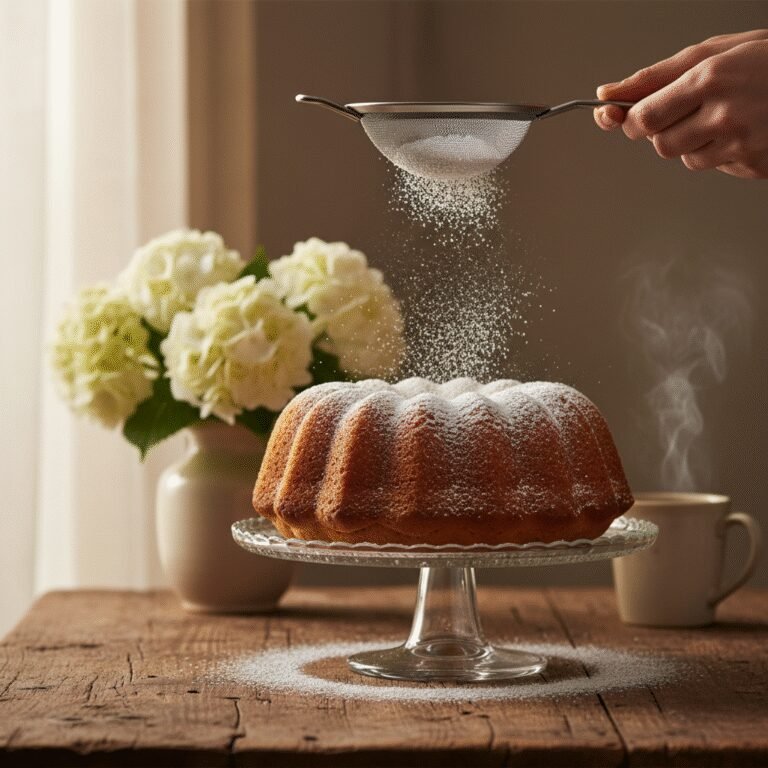
The cake is delicious on its own as a ‘coffee cake’ style snack. If you want to skip the glaze, a simple dusting of powdered sugar before serving is a lovely, lighter alternative.
Can I use a different citrus fruit?
Absolutely! This recipe works wonderfully with lemons, limes, or grapefruits. If using lemons or limes, you might want to slightly increase the sugar in the glaze to balance the sharper acidity.
Why is my glaze lumpy?
Lumpy glaze usually comes from cream cheese or butter that wasn’t soft enough before mixing. Ensure they are truly at room temperature. Sifting the powdered sugar before adding it also helps prevent lumps.
Can I use butter instead of oil in the cake?
You can, but the texture will change. Butter makes a denser, slightly drier cake that hardens more in the fridge. If you must use butter, melt it first and let it cool slightly.
Conclusion
This Moist Orange Bundt Cake with Cream Cheese Glaze is more than just a dessert; it’s a celebration of bright flavors and comforting textures. Whether you are an experienced baker or a novice in the kitchen, this recipe is forgiving, reliable, and guaranteed to result in empty plates and happy smiles. The combination of the tender, citrus-infused crumb and the rich, tangy glaze creates a harmony that is hard to beat. So, grab your oranges, preheat your oven, and get ready to fill your kitchen with the happiest smells imaginable. Don’t forget to leave a comment below and let us know how your bundt turned out!