The Ultimate Moist Marble Bundt Cake with Powdered Sugar Dusting
Moist Marble Bundt Cake With Powdered Sugar Recipe
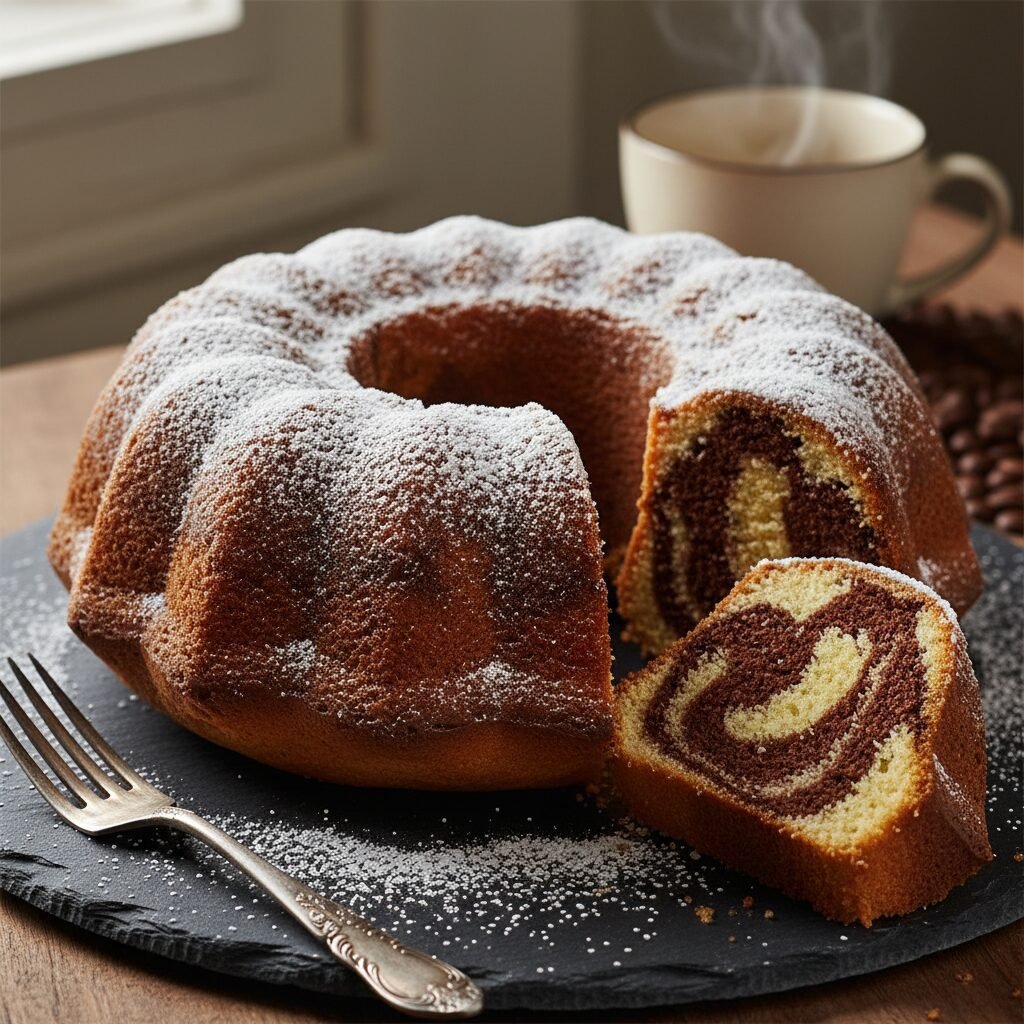
Experience the perfect marriage of rich chocolate and fragrant vanilla in this visually stunning Moist Marble Bundt Cake. With a tender, velvety crumb and a delicate dusting of powdered sugar, this classic dessert is as beautiful as it is delicious, making it the ultimate centerpiece for any gathering.
25 minutes
60 minutes
1 hour 45 minutes
12-16 servings
Dessert
Baking
American / German
Vegetarian
There is something undeniably magical about a marble cake. It captures the best of both worlds—the deep, comforting richness of chocolate and the aromatic, buttery sweetness of vanilla—swirled together in an artistic dance that ensures no two slices are ever exactly the same. This Moist Marble Bundt Cake with Powdered Sugar is not just a dessert; it is a nostalgic trip back to grandma’s kitchen, elevated with a texture so tender it practically melts on your tongue. Unlike dry, dense pound cakes of the past, this recipe relies on a specific balance of fats and dairy to ensure a crumb that remains soft for days.
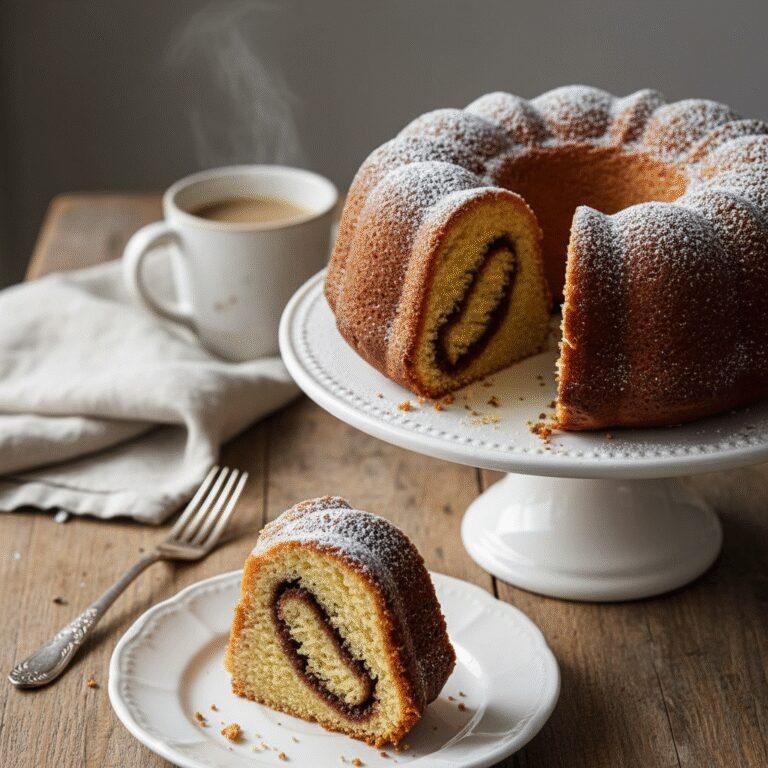
The beauty of the Bundt shape adds an inherent elegance that requires very little decoration. While heavy glazes can sometimes overpower the delicate nuances of the vanilla and cocoa, a simple, snowy dusting of powdered sugar highlights the cake’s architectural curves without masking its flavor. Whether you are serving this alongside a steaming cup of dark roast coffee for breakfast, presenting it as the finale to a Sunday dinner, or simply slicing off a sliver for a midnight snack, this cake delivers comfort in every bite. It is robust enough to hold its shape yet delicate enough to feel sophisticated. In this post, we will dive deep into the secrets of achieving distinct swirls, preventing your Bundt from sticking, and baking a cake that defines the word ‘moist’. Get ready to bake the best marble cake of your life.
History & Origins
The origins of the marble cake, or ‘Marmorkuchen’ as it is known in its homeland, can be traced back to 19th-century Germany. Originally, these cakes were not the chocolate and vanilla hybrids we know today. Early versions, often referred to as ‘Harlequin cakes,’ utilized spices and molasses to create the dark swirls against a light, egg-heavy batter. It wasn’t until chocolate became more accessible and affordable in the late Victorian era that bakers began incorporating cocoa into the mix, creating the distinct high-contrast look that defines the modern marble cake.
Jewish immigrants played a pivotal role in bringing this beloved tradition to the United States, where it quickly became a staple in American bakeries and households. However, the vessel in which we bake this recipe—the Bundt pan—has a history all its own. In the 1950s, H. David Dalquist, the founder of Nordic Ware, created the Bundt pan at the request of a group of Jewish women in Minneapolis who wanted a lighter, modern version of the traditional ceramic Gugelhupf mold used in Europe. Initially, the pan saw slow sales, but after a Bundt cake won the Pillsbury Bake-Off in 1966, the pan became an icon of American baking. Today, the marriage of the German marble technique with the American Bundt pan represents a culinary cross-pollination that has stood the test of time, symbolizing hospitality and home baking at its finest.
Why This Recipe Works
This recipe succeeds where many others fail because it addresses the two most common complaints about Bundt cakes: dryness and indistinct marbling. First, the texture. To achieve a crumb that is dense enough to slice beautifully but moist enough to be luxurious, we use a ‘power couple’ of fats: butter and oil. Butter provides that classic, milky flavor that shortening simply cannot mimic, while a neutral oil ensures the cake stays soft even after cooling, as oil remains liquid at room temperature. We essentially create a modified pound cake batter enriched with sour cream. The acidity in the sour cream tenderizes the gluten strands in the flour, resulting in a velvety mouthfeel, while its thickness adds body to the batter.
Secondly, the marbling technique. Many recipes simply have you add cocoa powder to half the batter, which can dry out the chocolate portion and make it crumbly compared to the vanilla side. In this recipe, we bloom the cocoa powder in a small amount of hot milk and butter before folding it into the batter. This blooms the cocoa flavor, making it more intense, and ensures the hydration levels of both batters are identical. This means both swirls bake at the same rate and have the same texture, preventing the chocolate swirls from separating or becoming dry pockets. Finally, the dusting of powdered sugar instead of a heavy ganache allows the crust’s slight caramelization to shine through, offering a textural contrast to the soft interior.
Why You’ll Love This Recipe
- ✓Incredible moisture retention due to the butter-oil-sour cream trio.
- ✓High-contrast, beautiful chocolate and vanilla swirls.
- ✓Simple decoration requiring only a sieve and powdered sugar.
- ✓Freezer-friendly, making it perfect for make-ahead holiday baking.
- ✓Uses common pantry staples with no obscure ingredients.
- ✓Sturdy structure perfect for dipping in coffee or tea.
Equipment You’ll Need
- ✓10-12 cup Bundt pan
- ✓Stand mixer with paddle attachment (or hand mixer)
- ✓Large mixing bowl
- ✓Medium mixing bowl
- ✓Small microwave-safe bowl
- ✓Silicone spatula
- ✓Wire cooling rack
- ✓Fine mesh sieve (for dusting)
Ingredients
- ✓2 1/2 cups granulated sugar
- ✓1 cup unsalted butter, softened to room temperature
- ✓1/2 cup neutral vegetable oil (canola or grapeseed)
- ✓4 large eggs, room temperature
- ✓1 tablespoon pure vanilla extract
- ✓3 cups all-purpose flour
- ✓2 teaspoons baking powder
- ✓1 teaspoon salt
- ✓1 cup full-fat sour cream, room temperature
- ✓1/2 cup unsweetened cocoa powder (Dutch-processed preferred)
- ✓1/4 cup whole milk, warm
- ✓2 tablespoons unsalted butter, melted (for chocolate mixture)
- ✓1/4 cup confectioners’ sugar (powdered sugar) for dusting
Instructions
- Preheat your oven to 350°F (175°C). Thoroughly grease your Bundt pan with baking spray containing flour, or butter it generously and dust with flour, tapping out the excess. This is the most critical step to prevent sticking.
- In the bowl of a stand mixer fitted with the paddle attachment, beat the 1 cup softened butter, vegetable oil, and granulated sugar on medium-high speed for 5-7 minutes. The mixture should look pale, fluffy, and aerated.
- Add the eggs one at a time, beating well after each addition and scraping down the sides of the bowl to ensure everything is incorporated. Stir in the vanilla extract.
- In a separate bowl, whisk together the flour, baking powder, and salt.
- Reduce the mixer speed to low. Add half of the flour mixture to the butter mixture, mixing just until combined. Add the sour cream and mix. Finish by adding the remaining flour mixture, mixing only until the flour streaks disappear. Do not overmix.
- Remove about 2 cups of the batter and place it into a medium bowl. This will become your chocolate batter.
- In a small bowl, whisk together the cocoa powder, warm milk, and 2 tablespoons of melted butter until smooth and glossy. Pour this chocolate mixture into the reserved 2 cups of batter and fold gently until the color is uniform.
- To assemble, spoon about one-third of the vanilla batter into the prepared Bundt pan. Top with half of the chocolate batter. Repeat with another layer of vanilla, the remaining chocolate, and finish with the remaining vanilla batter.
- Using a butter knife or a skewer, gently swirl the batters together. Do not over-swirl, or the colors will muddy together; a simple ‘figure-8’ motion around the pan once or twice is sufficient.
- Bake for 55-65 minutes, or until a wooden skewer inserted into the thickest part of the cake comes out clean or with just a few moist crumbs attached.
- Remove the cake from the oven and let it cool in the pan for exactly 10 minutes. This allows the structure to set.
- Invert the cake onto a wire cooling rack and lift the pan off. Let the cake cool completely to room temperature.
- Once fully cooled, place the confectioners’ sugar in a fine mesh sieve and generously dust the top of the cake before serving.
Expert Cooking Tips
- ✓Room temperature ingredients are non-negotiable. Cold eggs or sour cream will cause the butter to seize, breaking the emulsion and leading to a dense cake.
- ✓Grease every nook and cranny of the Bundt pan. Use a pastry brush to ensure the release agent gets into the sharp crevices of the design.
- ✓Weigh your flour if possible (approx 120g per cup). If using cups, spoon the flour in and level it off; scooping directly packs the flour and dries out the cake.
- ✓Bloom the cocoa. Mixing cocoa with hot liquid helps release its flavor oils, making the chocolate part taste more chocolatey.
- ✓Don’t open the oven door before the 45-minute mark. Drafts can cause the rising cake to collapse.
- ✓Set a timer for cooling. If you try to flip the cake too soon, it will break. If you wait too long, the sugars will solidify and stick to the pan.
- ✓Tap the pan on the counter before baking to release large air bubbles, ensuring a smooth surface.
Substitutions and Variations
This recipe is versatile, but careful substitutions are required to maintain the texture. If you don’t have sour cream, full-fat plain Greek yogurt is the best alternative as it has a similar protein and acidity profile. In a pinch, buttermilk can work, though the batter will be slightly thinner. For the fat, you can use all butter for a denser, traditional pound cake texture, or swap the vegetable oil for melted coconut oil (though this will add a coconut flavor). If you prefer a darker chocolate flavor, use Dutch-processed cocoa; for a lighter, reddish hue, use natural cocoa powder. For a gluten-free version, use a high-quality 1:1 gluten-free baking flour blend that contains xanthan gum. Do not use almond flour or coconut flour as direct 1:1 substitutes, as they absorb moisture differently and lack the structure needed for a large Bundt cake.
Common Mistakes to Avoid
The most heartbreaking mistake is the cake sticking to the pan. This usually happens because the pan wasn’t greased thoroughly or the non-stick coating on an old pan has worn off. Another common error is over-swirling the batter. It is tempting to keep mixing the colors in the pan, but too much movement blends them into a light brown mush rather than distinct marble layers. Additionally, over-baking is a frequent issue. Because Bundt pans are deep, the top can look done while the middle is raw, or the edges can burn. Trust the skewer test rather than the timer alone. Finally, using cold ingredients prevents the batter from aerating properly during the creaming stage, resulting in a heavy, greasy brick rather than a fluffy cake.
Serving Suggestions
This marble Bundt cake is elegant enough to stand on its own, but it pairs beautifully with simple accompaniments. Serve thick slices with a dollop of lightly sweetened whipped cream and fresh raspberries or strawberries to cut through the richness. For a warmer, cozier vibe, serve slightly warmed slices with a scoop of vanilla bean ice cream and a drizzle of salted caramel sauce. It is also the perfect ‘coffee cake’—enjoy a slice mid-morning with a cappuccino or a latte. The powdered sugar dusting makes it look snowy and festive, making it an excellent choice for winter holiday dessert tables or gifts.
Storage and Reheating Tips
Because of the oil and sour cream, this cake stays moist for several days. Store it at room temperature in an airtight cake carrier or wrapped tightly in plastic wrap for up to 4 days. Refrigeration is not recommended as it can dry out the crumb and alter the texture of the butter. For longer storage, this cake freezes exceptionally well. You can freeze the whole cake or individual slices. Wrap the cake tightly in two layers of plastic wrap followed by a layer of aluminum foil. It will keep in the freezer for up to 3 months. To thaw, unwrap it and let it come to room temperature on the counter for a few hours before serving.
Nutrition Facts (Estimated)
| Serving Size | 1 slice |
| Calories | 420 |
| Fat | 22g |
| Saturated Fat | 12g |
| Unsaturated Fat | 8g |
| Trans Fat | 0g |
| Cholesterol | 85mg |
| Sodium | 210mg |
| Carbohydrates | 52g |
| Fiber | 1g |
| Sugar | 28g |
| Protein | 6g |
Frequently Asked Questions
Why did my Bundt cake stick to the pan?
Sticking usually occurs due to insufficient greasing or un-molding too early or too late. Use a baking spray with flour included, or butter and flour the pan meticulously. Let the cake cool for exactly 10 minutes before flipping.
Can I make this cake ahead of time?
Absolutely. In fact, the flavors often meld and improve the day after baking. Just keep it wrapped tightly at room temperature.
Why is my marble cake dry?
Dryness is often caused by over-measuring flour (scooping instead of spooning) or over-baking. Ensure you check the cake for doneness a few minutes before the timer goes off.
Can I add nuts or chocolate chips?
Yes! You can fold in up to 1 cup of chopped walnuts, pecans, or mini chocolate chips into the batter before swirling. Toss them in a teaspoon of flour first to prevent sinking.
Do I have to use a Bundt pan?
While this recipe is designed for a Bundt pan, you can bake it in two 9×5 inch loaf pans. Adjust the baking time to roughly 45-55 minutes.
How do I get the powdered sugar to stay?
Wait until the cake is completely cool before dusting. If the cake is warm, the steam will melt the sugar and it will disappear.
Can I use salted butter?
Yes, but reduce the added salt in the recipe to 1/2 teaspoon to maintain the correct flavor balance.
My chocolate batter is too thick, what happened?
Cocoa powder absorbs liquid. Make sure you added the milk and melted butter to the cocoa mixture as instructed. If it’s still stiff, add another tablespoon of milk.
Can I use a glaze instead of powdered sugar?
Certainly. A simple ganache (equal parts heavy cream and chocolate) or a vanilla glaze (powdered sugar and milk) works lovely if you prefer a sweeter finish.
Conclusion
There are few things in the baking world as satisfying as turning out a perfect Bundt cake—smooth, golden, and intricate—onto a serving platter. This Moist Marble Bundt Cake with Powdered Sugar is a testament to the fact that you don’t need fancy piping bags or complex techniques to create a showstopping dessert. It brings together the nostalgic comfort of vanilla and chocolate in a way that feels both homey and luxurious. Whether you are a seasoned baker or trying your first Bundt, this recipe is designed to guide you to success. So, preheat your oven, grease that pan well, and get ready to enjoy a slice of pure, marbled bliss. Happy baking!