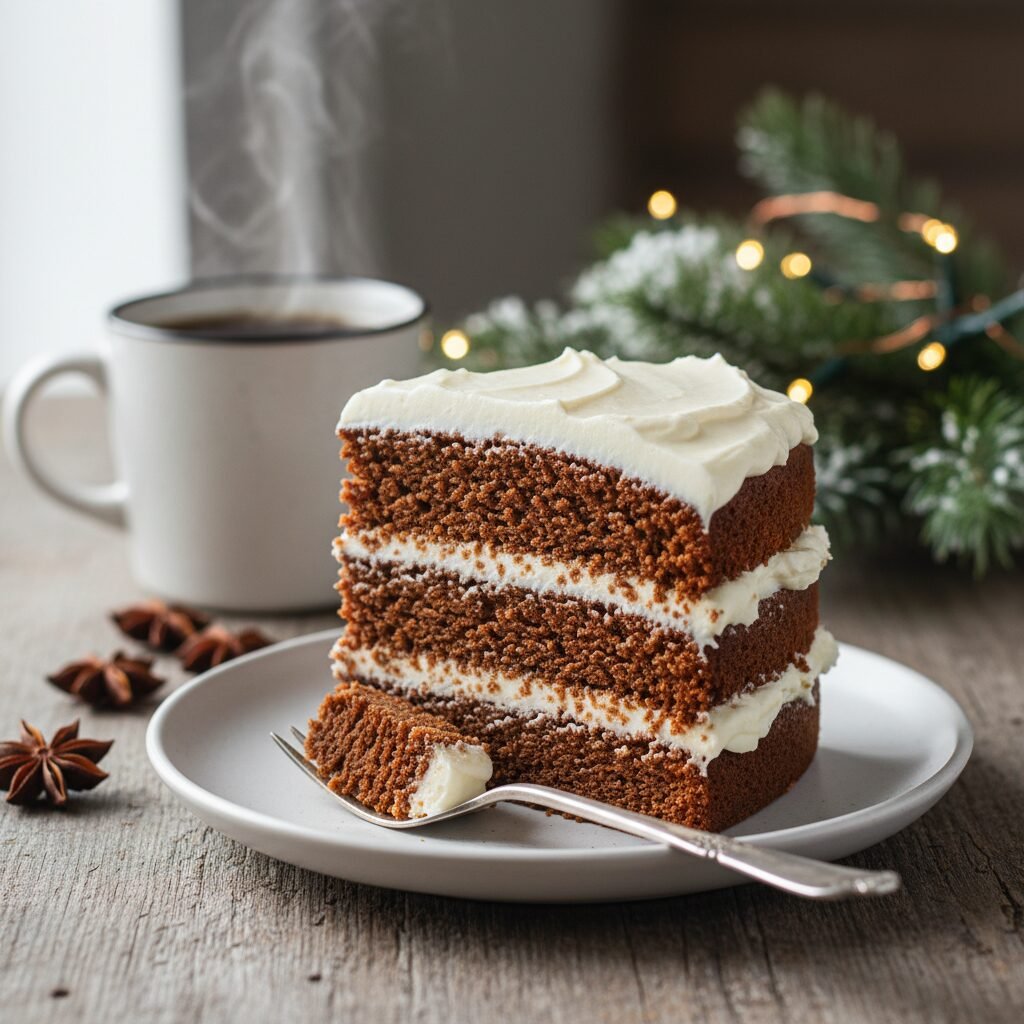
The Ultimate Moist Gingerbread Layer Cake with Tangy Cream Cheese Frosting
Moist Gingerbread Cake Layer Cake Recipe
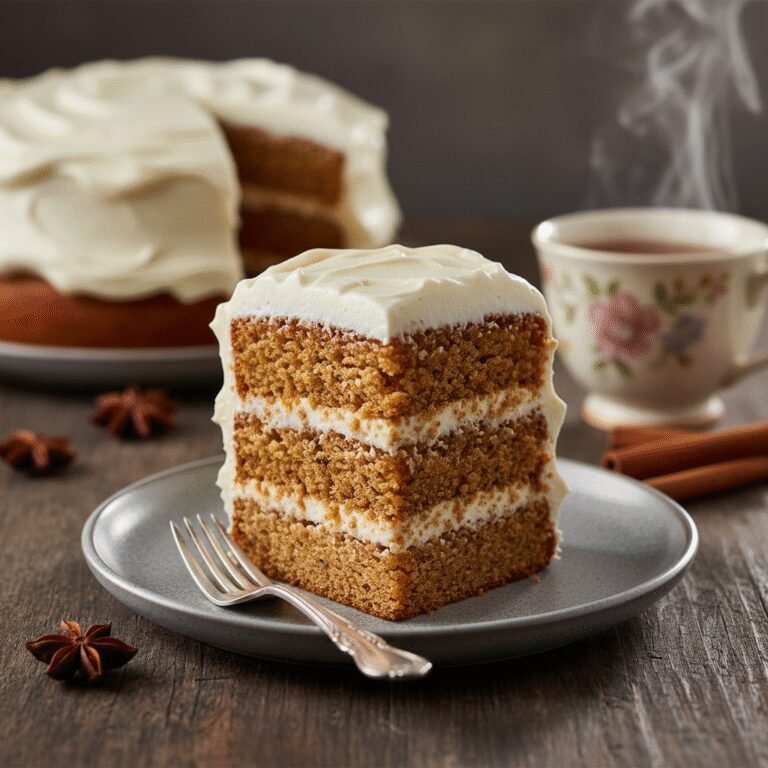
Embrace the festive season with this show-stopping gingerbread layer cake, featuring three tiers of incredibly moist, spice-infused sponge. Perfectly balanced with a velvety, tangy cream cheese frosting, this recipe guarantees a tender crumb and deep molasses flavor that defines the holidays.
45 minutes
35 minutes
1 hour 20 minutes
12-16 servings
Dessert
Baking
American / European
Vegetarian
There is something undeniably magical about the aroma of warm spices wafting through the kitchen on a crisp winter afternoon. It signals the arrival of the holidays, evoking memories of cozy gatherings, crackling fires, and the comfort of tradition. While gingerbread cookies often steal the spotlight, this Moist Gingerbread Layer Cake is the true unsung hero of the seasonal dessert table. Unlike the dry or overly dense fruitcakes of the past, this recipe has been meticulously crafted to ensure a texture that is remarkably soft, tender, and moist, bordering on pudding-like decadence while maintaining enough structure to stack tall.
The secret lies in the robust blend of dark molasses and a symphony of spices—ground ginger, cinnamon, nutmeg, and cloves—which bloom beautifully when mixed with hot water, releasing their essential oils before the baking even begins. The resulting flavor profile is deep, complex, and warming, striking the perfect balance between sweet and spicy. But a great gingerbread cake needs a counterpoint, and that is where the frosting comes in. We pair this dark, rich cake with a light, tangy cream cheese buttercream that cuts through the heaviness of the molasses, creating a harmonious bite that is neither too sugary nor too savory.
Whether you are baking for a grand Christmas dinner, a casual holiday potluck, or simply to treat yourself during the snowy season, this cake is a celebration on a plate. It is rustic enough to feel homemade yet elegant enough to serve as a centerpiece. Prepare to fall in love with gingerbread all over again, not as a snap-hard cookie, but as a luxurious, melt-in-your-mouth cake that will have your guests asking for seconds before they’ve finished their first slice.
History & Origins
The history of gingerbread is as rich and layered as the cake itself, spanning centuries and continents. The root of the story begins with ginger, a spice cultivated in ancient China and India. It was revered not only for its flavor but for its medicinal properties, often used to treat ailments ranging from indigestion to the plague. Ginger arrived in Europe via the Silk Road, and by the Middle Ages, it became a culinary staple for the wealthy. The first European ‘gingerbread’ was not a cake at all, but rather a dense mixture of breadcrumbs, boiled honey, and heavy spices, pressed into intricate wooden molds to create edible art and religious symbols.
It is said that Queen Elizabeth I of England was responsible for the invention of the gingerbread man, delighting her courtiers with likenesses of themselves. However, the transition from a hard, biscuit-like confection to the soft, cake-like dessert we know today is largely credited to American culinary evolution. In colonial America, where molasses was more affordable and available than refined sugar, soft gingerbread became a household favorite. In fact, Mary Ball Washington, the mother of George Washington, was famous for her soft gingerbread recipe, which she notably served to the Marquis de Lafayette.
Over the 19th and 20th centuries, the introduction of chemical leaveners like baking soda revolutionized the texture, allowing for a lighter, fluffier crumb that transformed the dish into a true cake. Today, gingerbread cake stands as a testament to this global journey, combining the ancient love of spice with modern baking science to create a dessert that honors its medieval roots while delivering the comfort of contemporary American baking.
Why This Recipe Works
This recipe succeeds where many others fail because it specifically targets the most common complaint about gingerbread: dryness. To combat this, we utilize a three-pronged approach to moisture retention. First, we use oil instead of butter for the cake batter. While butter adds flavor, it contains water that evaporates during baking; oil is 100% fat and remains liquid at room temperature, coating the flour proteins to prevent gluten formation and ensuring the cake stays moist for days. Second, the inclusion of dark molasses and brown sugar introduces hygroscopic properties, meaning they actively attract and hold onto moisture from the air.
Furthermore, the method involves adding boiling hot water to the batter at the very end. This technique serves two critical functions: it ‘blooms’ the cocoa powder (if using) and spices, intensifying their flavor instantly, and it raises the temperature of the batter, which helps the baking soda react immediately upon hitting the oven heat. This creates a superior rise and an airy, open crumb structure. Finally, the acidity in the molasses and buttermilk reacts vigorously with the baking soda, providing the necessary lift to support the heavy, sugar-rich batter, resulting in a cake that is fluffy rather than brick-like.
Why You’ll Love This Recipe
- ✓Stays moist for up to 5 days thanks to the oil and molasses base.
- ✓Perfect balance of spices creates a warming, festive flavor profile.
- ✓Tangy cream cheese frosting cuts through the richness of the cake.
- ✓Can be made ahead of time; the flavors improve after resting.
- ✓Stable structure makes it easy to stack and frost for beginners.
Equipment You’ll Need
- ✓Three 8-inch round cake pans
- ✓Stand mixer or electric hand mixer
- ✓Large mixing bowls
- ✓Whisk
- ✓Rubber spatula
- ✓Measuring cups and spoons
- ✓Wire cooling rack
- ✓Parchment paper
- ✓Offset spatula for frosting
Ingredients
- ✓3 cups All-Purpose Flour
- ✓1 tbsp Ground Ginger
- ✓2 tsp Ground Cinnamon
- ✓1 tsp Ground Cloves
- ✓1/2 tsp Ground Nutmeg
- ✓1 tsp Baking Soda
- ✓1/2 tsp Baking Powder
- ✓1/2 tsp Salt
- ✓3/4 cup Vegetable Oil (or Canola Oil)
- ✓1 cup Granulated Sugar
- ✓1 cup Dark Brown Sugar, packed
- ✓3 Large Eggs, room temperature
- ✓1 cup Unsulfured Molasses (Grandma’s brand recommended)
- ✓1 cup Buttermilk, room temperature
- ✓1 cup Boiling Water
- ✓16 oz Full-Fat Cream Cheese, softened (for frosting)
- ✓1 cup Unsalted Butter, softened (for frosting)
- ✓5 cups Powdered Sugar, sifted (for frosting)
- ✓1 tsp Pure Vanilla Extract (for frosting)
- ✓Pinch of Salt (for frosting)
Instructions
- Preheat your oven to 350°F (175°C). Grease three 8-inch round cake pans generously with butter or cooking spray and line the bottoms with parchment paper rounds. Dust the sides with flour and tap out the excess.
- In a large bowl, whisk together the flour, ginger, cinnamon, cloves, nutmeg, baking soda, baking powder, and salt until well combined and no lumps remain. Set aside.
- In the bowl of a stand mixer fitted with the paddle attachment (or a large bowl using a hand mixer), beat the vegetable oil, granulated sugar, and brown sugar together on medium speed for about 2 minutes until the mixture looks wet and sandy.
- Add the eggs one at a time, beating well after each addition. Scrape down the sides of the bowl as needed.
- Mix in the molasses and vanilla extract until fully incorporated. The mixture will look dark and syrupy.
- Reduce the mixer speed to low. Add the dry ingredients in three parts, alternating with the buttermilk in two parts, starting and ending with the dry ingredients. Mix only until just combined to avoid overworking the gluten.
- With the mixer on the lowest speed, carefully pour in the boiling water. The batter will become very thin and liquid; this is normal. Mix gently until smooth.
- Divide the batter evenly among the three prepared cake pans. Using a kitchen scale can help ensure even layers.
- Bake for 30-35 minutes, or until a toothpick inserted into the center comes out clean or with just a few moist crumbs attached. Be careful not to overbake.
- Allow the cakes to cool in the pans for 10 minutes, then run a knife around the edges and invert them onto a wire rack to cool completely before frosting.
- To make the frosting: Beat the softened cream cheese and butter together on high speed until smooth and creamy (about 3-5 minutes).
- Add the powdered sugar one cup at a time, mixing on low speed until incorporated. Add the vanilla and a pinch of salt. Increase speed to high and whip for 2 minutes until fluffy.
- Assemble the cake: Place one cake layer on a serving stand. Spread a thick layer of frosting over the top. Repeat with the second and third layers. Frost the outside of the cake with the remaining frosting. Garnish with sugared cranberries or rosemary if desired.
Expert Cooking Tips
- ✓Ensure your molasses is ‘unsulfured’. Blackstrap molasses is too bitter and will alter the taste significantly.
- ✓Room temperature ingredients are crucial. Cold eggs or buttermilk can seize the batter and prevent proper emulsification.
- ✓Don’t skip the parchment paper. Gingerbread is sticky due to the sugar content, and parchment guarantees a clean release.
- ✓Measure flour correctly by spooning it into the measuring cup and leveling it off, rather than scooping directly from the bag, to avoid a dense cake.
- ✓If your frosting is too runny, refrigerate it for 15-20 minutes to stiffen up before piping or spreading.
- ✓The boiling water step is essential—do not use lukewarm water. The heat activates the baking soda immediately.
Substitutions and Variations
If you do not have buttermilk on hand, you can make a quick substitute by adding 1 tablespoon of lemon juice or white vinegar to a cup of whole milk and letting it sit for 5 minutes until it curdles. For the vegetable oil, melted coconut oil or grapeseed oil are excellent alternatives that won’t impact the flavor. If you prefer a less spicy cake, reduce the ginger and cloves by half, though this will result in a milder ‘spice cake’ flavor profile. Gluten-free all-purpose flour blends (specifically those containing xanthan gum) work surprisingly well in this recipe due to the moisture from the molasses, though the texture may be slightly denser. For the frosting, if you find cream cheese too tangy, a standard vanilla buttercream or a cinnamon-spiced Swiss meringue buttercream are delicious alternatives.
Common Mistakes to Avoid
The most common mistake with gingerbread cake is overbaking. Because the batter is dark, it is hard to judge doneness by color alone. Rely on the toothpick test and start checking at the 30-minute mark. Another error is overmixing the batter after adding the flour; this develops gluten and leads to a tough, rubbery texture rather than a tender crumb. Using ‘Blackstrap’ molasses instead of standard unsulfured molasses is a flavor-killer; blackstrap is much lower in sugar and has a harsh, metallic taste that is unpleasant in cakes. Finally, attempting to frost the cakes before they are completely cool will result in a sliding disaster, as the cream cheese frosting is heat-sensitive and will melt instantly.
Serving Suggestions
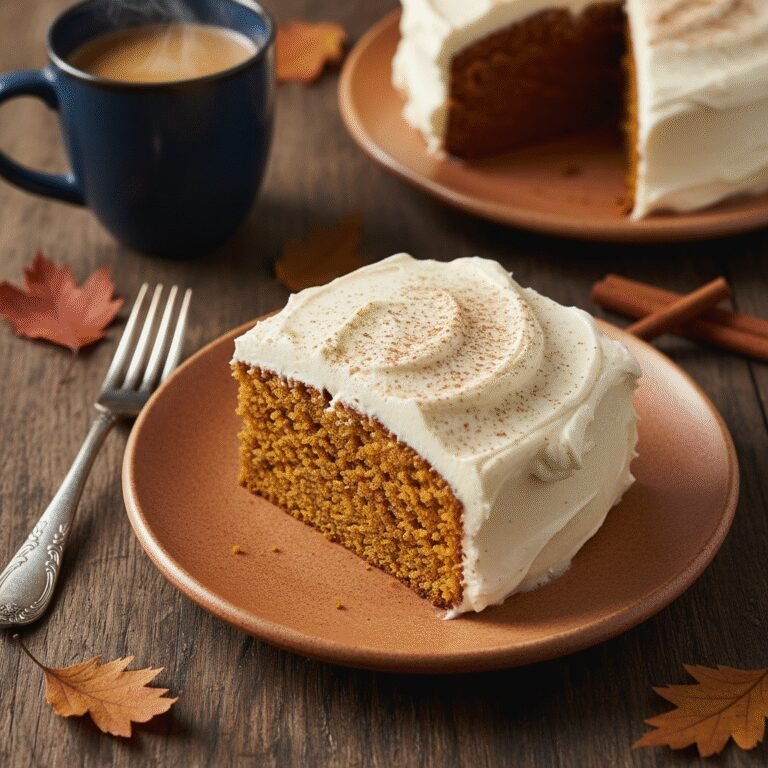
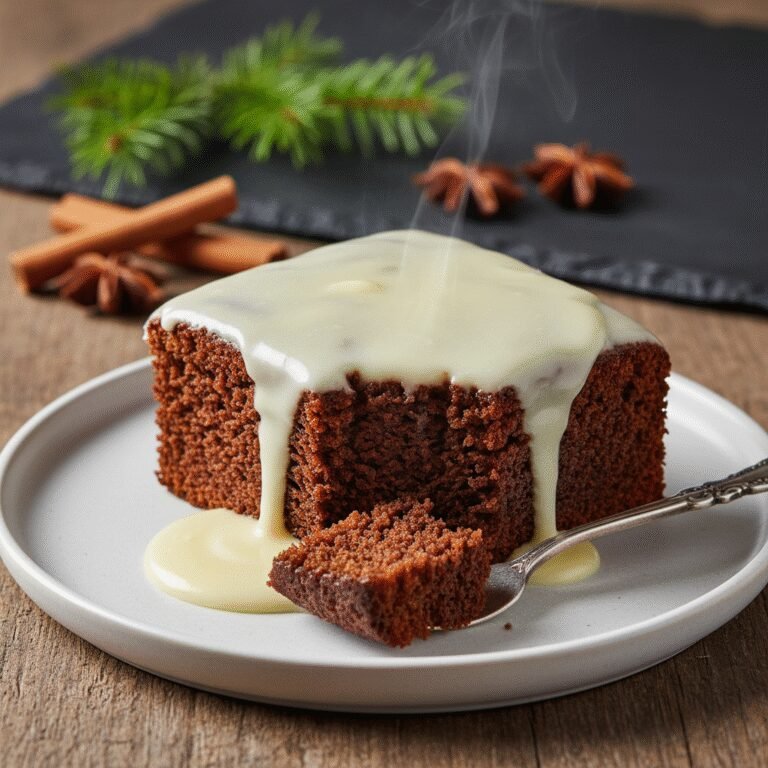
This cake is a stunner on its own, but it looks particularly festive when garnished with sugared cranberries, cinnamon sticks, or fresh sprigs of rosemary to resemble evergreen branches. For an extra touch of indulgence, serve each slice with a drizzle of warm salted caramel sauce or a dollop of lightly sweetened whipped cream. It pairs beautifully with hot coffee, a chai tea latte, or a glass of eggnog. If serving for a dinner party, plating it on dark ceramic dishes makes the white frosting pop, creating a dramatic visual contrast.
Storage and Reheating Tips
Gingerbread cake is one of the few cakes that actually tastes better the next day as the spices have time to meld and the moisture distributes evenly. Store the frosted cake in the refrigerator, preferably in a cake carrier or loosely covered with plastic wrap, for up to 5 days. The cream cheese frosting requires refrigeration. Allow the cake to sit at room temperature for 30-60 minutes before serving to take the chill off the butter and cream cheese, which improves the texture and flavor. Unfrosted cake layers can be wrapped tightly in plastic wrap and aluminum foil and frozen for up to 3 months. Thaw overnight in the fridge before assembling.
Nutrition Facts (Estimated)
| Serving Size | 1 slice |
| Calories | 580 |
| Fat | 28g |
| Saturated Fat | 10g |
| Unsaturated Fat | 16g |
| Trans Fat | 0g |
| Cholesterol | 65mg |
| Sodium | 310mg |
| Carbohydrates | 78g |
| Fiber | 1g |
| Sugar | 42g |
| Protein | 5g |
Frequently Asked Questions
Can I make this as a sheet cake instead of layers?
Yes! You can bake this in a 9×13 inch pan. You will need to increase the baking time to approximately 40-50 minutes. Keep an eye on it and use the toothpick test.
Why is my cake sinking in the middle?
Sinking usually happens if the oven door was opened too early, causing a temperature drop, or if the cake was underbaked. It can also result from too much leavening (baking soda/powder).
Can I use fresh ginger instead of ground?
While fresh ginger has a great kick, it alters the texture and moisture balance. For this specific cake batter, dried ground ginger provides the concentrated heat and flavor required without adding wet chunks.
Is mild molasses okay to use?
Yes, mild or ‘light’ molasses works fine and will yield a lighter colored cake with a more subtle flavor. Dark or ‘robust’ unsulfured molasses is the standard recommendation.
Can I make cupcakes with this batter?
Absolutely. This recipe yields about 24-30 cupcakes. Bake them at 350°F for 18-22 minutes.
My batter is extremely runny, did I do something wrong?
No, you did it perfectly! The addition of boiling water makes the batter very thin. Trust the process; it will bake up into a moist, structured cake.
How do I get flat cake layers?
You can use ‘cake strips’ soaked in water wrapped around the pans to ensure even baking. Alternatively, simply trim the domed tops with a serrated knife before frosting—and eat the scraps as a chef’s treat!
Can I freeze the frosting?
Cream cheese frosting can be frozen, but the texture may change slightly. It’s best to freeze the cake layers and make the frosting fresh, or freeze the frosted cake whole.
Conclusion
There are few desserts that capture the essence of the holidays quite like this Moist Gingerbread Layer Cake. From the therapeutic process of mixing the aromatic spices to the joy of slicing into that towering, frosting-coated masterpiece, every step is a celebration of winter flavors. It is a recipe that demands to be shared, bringing warmth and sweetness to even the coldest of days. We hope this cake becomes a cherished tradition in your home, just as it has in ours. Happy baking, and may your holidays be filled with spice and everything nice!