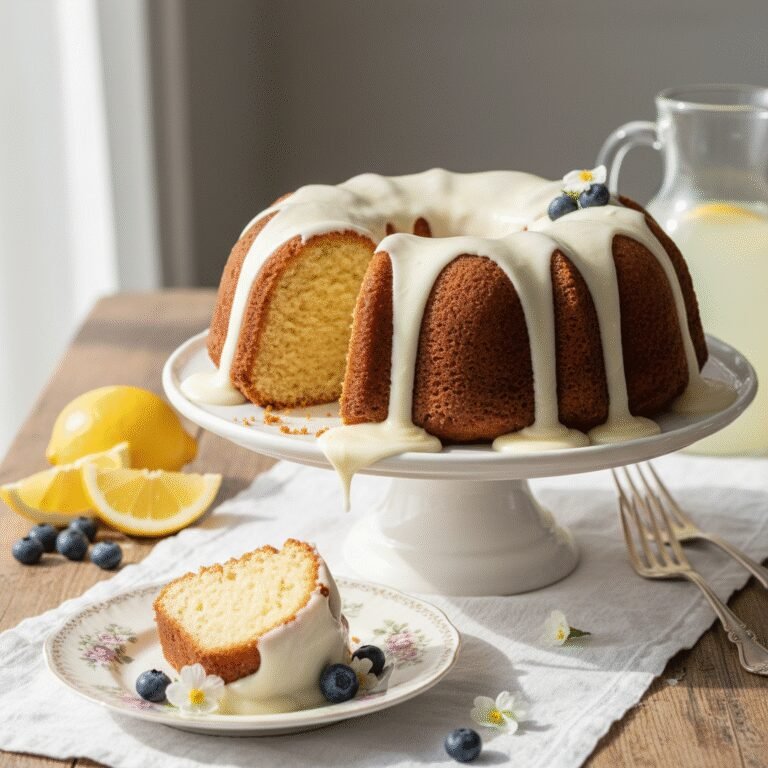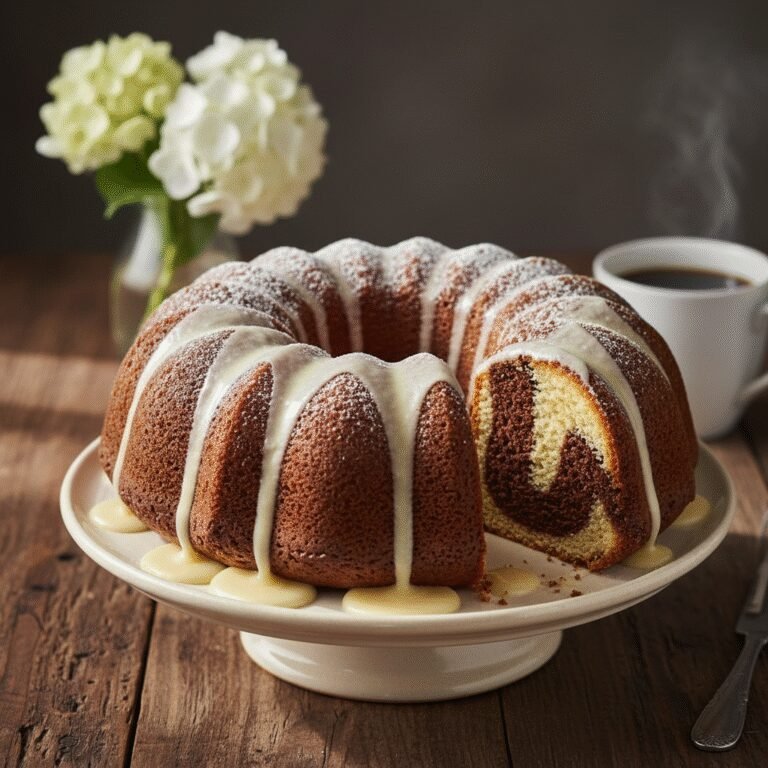
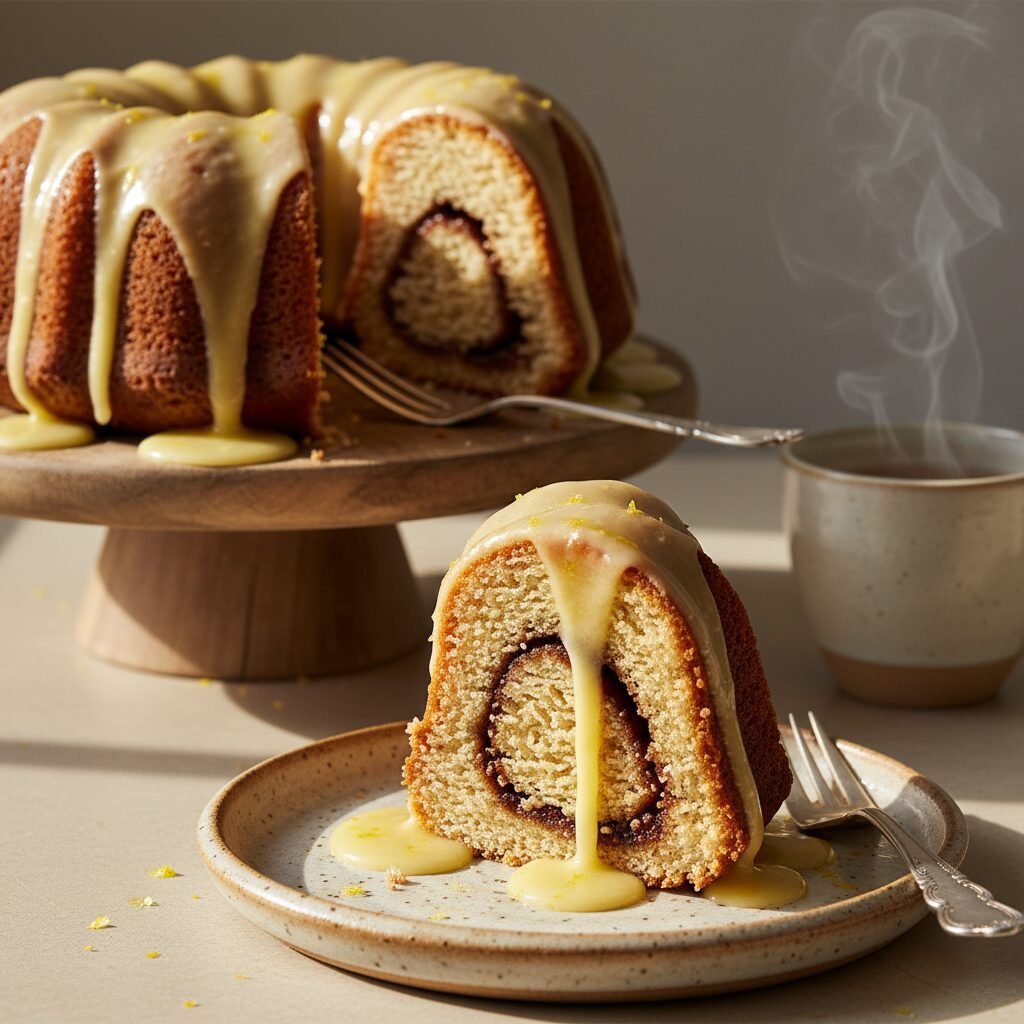
The Ultimate Moist Cinnamon Swirl Bundt Cake with Zesty Lemon Glaze
Moist Cinnamon Swirl Bundt Cake With Lemon Glaze Recipe
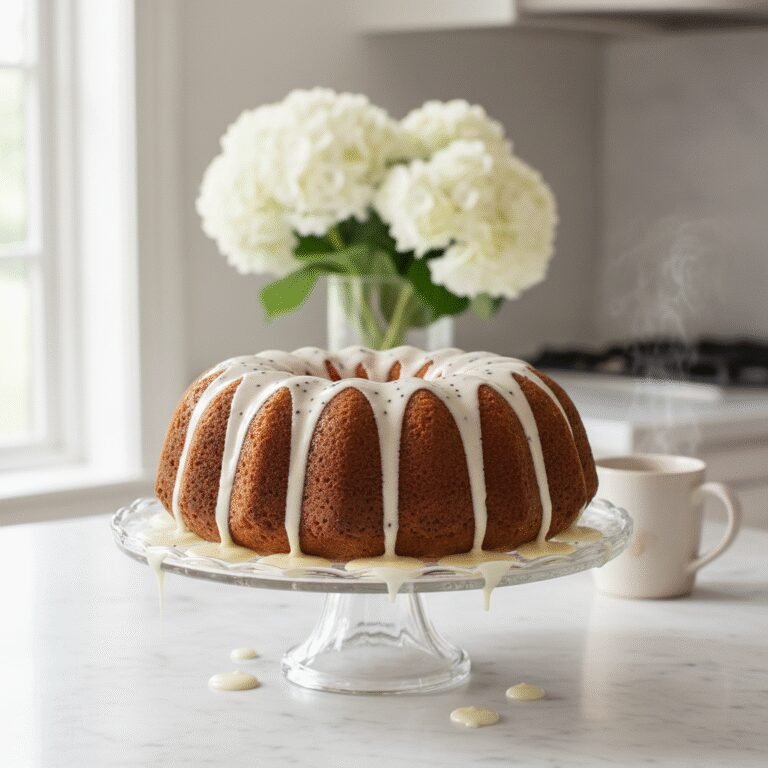
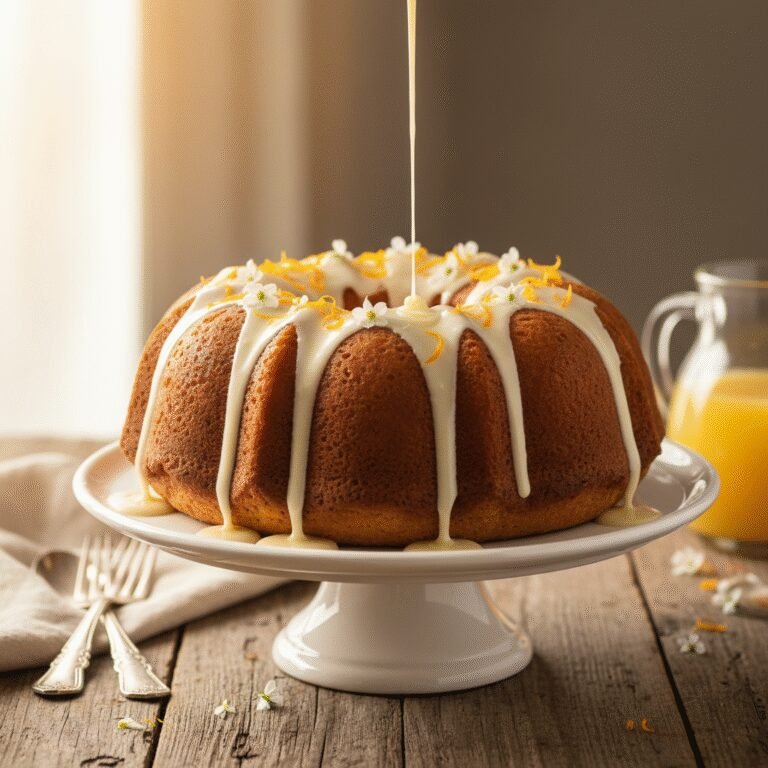
This incredibly moist Cinnamon Swirl Bundt Cake features a tender, buttery crumb with a ribbon of brown sugar cinnamon running through the center. Topped with a bright, zesty lemon glaze, it balances warmth and citrus perfection, making it the ultimate centerpiece for brunch or dessert.
20 minutes
55 minutes
1 hour 15 minutes
12-14 servings
Dessert
Baking
American
Vegetarian
There is something undeniably comforting about a Bundt cake sitting on the counter, waiting to be sliced. But this isn’t just any coffee cake; this is the Moist Cinnamon Swirl Bundt Cake with Lemon Glaze, a recipe that marries the cozy warmth of autumn spices with the bright, awakening zing of fresh citrus. The magic begins with the texture. We are talking about a crumb that is dense enough to hold its shape yet incredibly tender and moist, melting on your tongue with every bite. The secret lies in the balance of fats—butter for flavor and sour cream (or Greek yogurt) for that undeniable moisture that keeps the cake fresh for days. But the real showstopper is the hidden gem inside: a thick, generous ribbon of cinnamon and brown sugar that caramelizes slightly as it bakes, creating a textural contrast against the fluffy vanilla cake. Just when you think the flavors are settling into a purely sweet profile, the lemon glaze cuts through. It is not just a drizzle; it is a thick, opaque crown of tart sweetness that drips down the fluted edges of the pan, pooling beautifully at the base. This cake is designed for the Pinterest-savvy baker who wants a foolproof recipe that looks like it came from a high-end bakery. Whether you are hosting a Sunday brunch, looking for a comforting dessert to pair with your evening tea, or simply craving a slice of homemade happiness, this recipe delivers on all fronts. It is robust, flavorful, and visually stunning, requiring minimal effort for maximum payoff. Prepare your kitchen for the most intoxicating aroma of butter, vanilla, cinnamon, and lemon zest—a combination that smells like home in the best possible way.
History & Origins
The history of the Bundt cake is a fascinating journey that intertwines European tradition with American innovation. The cake’s lineage can be traced back to the ‘Gugelhupf’ or ‘Kugelhopf,’ a yeast-based brioche-style cake popular in Germany, Austria, and Alsace for centuries. These cakes were traditionally baked in round, fluted pans with a central tube, which allowed heat to penetrate the dense dough more evenly. However, the modern iteration of the Bundt cake is a distinctly American success story, largely attributed to H. David Dalquist, the founder of Nordic Ware. In 1950, Dalquist was approached by a group of women from the local Hadassah society in Minneapolis who wanted a pan to recreate the Kugelhopf cakes of their heritage. Dalquist cast the first aluminum pans and trademarked the name ‘Bundt,’ adding a ‘t’ to the German word ‘Bund’ (meaning an alliance or bond) to trademark the name and perhaps to dissociate from the German-American Bund. For over a decade, the pans sold poorly, languishing in cupboards until 1966. That year, Ella Helfrich took second place in the Pillsbury Bake-Off with her ‘Tunnel of Fudge’ cake, baked in a Nordic Ware Bundt pan. Overnight, the pan became a sensation, appearing in kitchens across America. Since then, the Bundt has evolved from heavy yeasted cakes to lighter, chemically leavened batters like this cinnamon swirl version. The addition of a cinnamon swirl pays homage to the classic American coffee cake tradition, while the lemon glaze nods to the popularity of citrus pound cakes in the Southern United States. This recipe represents a convergence of these histories—European shaping, American marketing ingenuity, and the timeless love for spice and citrus.
Why This Recipe Works
This recipe succeeds where others fail because of a meticulous focus on moisture retention and flavor layering. Many Bundt cakes suffer from being too dry or dense, a result of over-baking or a lack of fat. This recipe combats dryness by utilizing a ‘high-ratio’ batter concept, where the weight of the sugar and liquids balances the weight of the flour. We use a combination of room-temperature butter and full-fat sour cream. The acid in the sour cream tenderizes the gluten strands in the flour, resulting in a softer crumb, while the fat content ensures the cake stays moist long after it has cooled. Additionally, the cinnamon swirl is strategically placed. By layering one-third of the batter, then the cinnamon mixture, and then the remaining batter, we ensure the swirl stays suspended in the middle rather than sinking to the bottom—a common pitfall in lighter batters. The glaze is another critical component; rather than a thin, watery icing that disappears into the cake, we use a high ratio of powdered sugar to lemon juice. This creates a glaze with high viscosity that sits beautifully on top of the cake, hardening slightly to create a satisfying ‘crust’ that contrasts with the soft interior. Finally, the zest in the batter infuses lemon oil throughout the cake, bridging the gap between the spiced filling and the tart topping.
Why You’ll Love This Recipe
- ✓Incredibly moist texture thanks to sour cream and butter.
- ✓A thick, caramelized cinnamon brown sugar ribbon in every slice.
- ✓Bright, zesty lemon glaze that balances the sweetness.
- ✓Beautiful presentation with minimal decorating skills required.
- ✓Keeps fresh for days, making it perfect for make-ahead events.
- ✓Versatile enough for breakfast, brunch, or dessert.
Equipment You’ll Need
- ✓10-12 cup Bundt pan
- ✓Stand mixer or electric hand mixer
- ✓Large mixing bowls
- ✓Rubber spatula
- ✓Whisk
- ✓Wire cooling rack
- ✓Measuring cups and spoons
- ✓Zester/Microplane
Ingredients
- ✓3 cups All-Purpose Flour
- ✓1 tsp Baking Powder
- ✓1/2 tsp Baking Soda
- ✓1/2 tsp Salt
- ✓1 cup Unsalted Butter, softened
- ✓2 cups Granulated Sugar
- ✓4 large Eggs, room temperature
- ✓1 tsp Pure Vanilla Extract
- ✓1 cup Full-Fat Sour Cream or Greek Yogurt
- ✓1 tbsp Lemon Zest
- ✓For the Swirl: 1/3 cup Light Brown Sugar, packed
- ✓For the Swirl: 1 tbsp Ground Cinnamon
- ✓For the Glaze: 2 cups Powdered Sugar
- ✓For the Glaze: 3-4 tbsp Fresh Lemon Juice
- ✓For the Glaze: 1 tsp Lemon Zest (optional garnish)
Instructions
- 1. Preheat your oven to 350°F (175°C). Thoroughly grease your Bundt pan with butter or non-stick baking spray, ensuring you get into every crevice. Dust with flour and tap out the excess.
- 2. In a medium bowl, whisk together the flour, baking powder, baking soda, and salt. Set aside.
- 3. In a small bowl, mix the brown sugar and cinnamon for the swirl. Set aside.
- 4. In the bowl of a stand mixer fitted with the paddle attachment, cream the softened butter and granulated sugar on medium-high speed for 3-5 minutes until light and fluffy.
- 5. Add the eggs one at a time, beating well after each addition. Scrape down the sides of the bowl. Mix in the vanilla extract and lemon zest.
- 6. Reduce mixer speed to low. Add the flour mixture in three parts, alternating with the sour cream, beginning and ending with the flour. Mix only until just combined to avoid overworking the gluten.
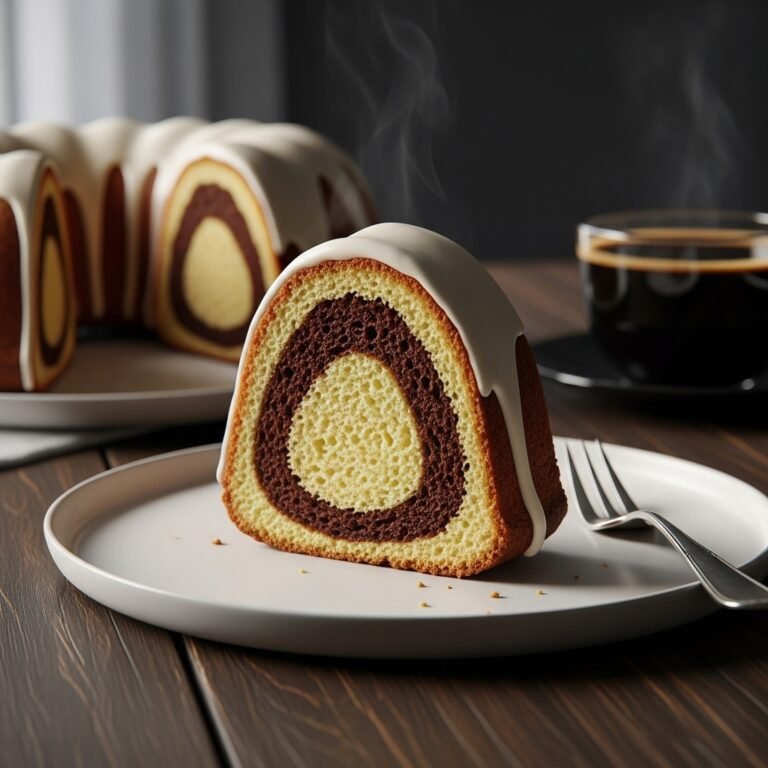
- 7. Pour about one-third of the batter into the prepared Bundt pan, smoothing it out with a spatula. Sprinkle the cinnamon-sugar mixture evenly over this layer. Top with the remaining batter, carefully spreading it to cover the cinnamon layer completely.
- 8. Bake for 50-60 minutes, or until a skewer inserted into the thickest part of the cake comes out clean or with just a few moist crumbs.
- 9. Allow the cake to cool in the pan for exactly 10 minutes. Then, invert it onto a wire rack to cool completely.
- 10. While the cake cools, make the glaze. Whisk together the powdered sugar and lemon juice until smooth. Adjust consistency by adding more juice (thinner) or sugar (thicker).
- 11. Drizzle the glaze over the completely cooled cake. Garnish with extra lemon zest if desired. Let the glaze set for 15 minutes before slicing.
Expert Cooking Tips
- ✓Room temperature ingredients are non-negotiable; they emulsify better for a smoother batter.
- ✓Grease the pan right before filling it so the oil doesn’t slide down the sides while you prep.
- ✓Do not overmix after adding the flour, or the cake will be tough instead of tender.
- ✓Use a skewer to swirl the cinnamon layer slightly if you want a marbled effect rather than a distinct line.
- ✓Cool in the pan for exactly 10 minutes; too short and it breaks, too long and it sticks.
- ✓Sift your powdered sugar for the glaze to avoid grainy lumps.
- ✓If the top of the cake browns too quickly in the oven, tent it loosely with aluminum foil.
Substitutions and Variations
Baking is a science, but there is room for flexibility with this recipe. If you do not have sour cream, full-fat plain Greek yogurt is an excellent 1:1 substitute that provides similar tang and moisture. Buttermilk can also be used, though the batter will be slightly thinner. For the flour, you can use cake flour for an even lighter crumb, but increase the amount by 2 tablespoons per cup. If you are out of brown sugar for the swirl, granulated sugar mixed with a tiny bit of molasses works, or just use plain granulated sugar for a crunchier texture. For a dairy-free version, use a high-quality plant-based butter and a coconut milk yogurt substitute, though the texture may vary slightly. If you prefer orange over lemon, simply swap the zest and juice for orange; blood orange makes for a stunning pink glaze. For the spice lovers, add a pinch of cardamom or nutmeg to the cinnamon swirl for a chai-inspired flavor profile.
Common Mistakes to Avoid
The most common mistake with Bundt cakes is improper pan preparation. Even non-stick pans need to be greased and floured; using a baking spray containing flour is often the most effective method. Another frequent error is over-baking. Because the pan is dark and heavy, it retains heat well. Start checking the cake at the 50-minute mark to prevent a dry crumb. Opening the oven door too often can cause the cake to fall, so rely on your oven light until the end. When making the glaze, adding the liquid too quickly can result in a runny mess that simply slides off the cake. Add the lemon juice one tablespoon at a time until you reach a consistency that resembles thick honey. Lastly, do not glaze a warm cake! The heat will melt the sugar, causing the glaze to vanish into the crumb rather than sitting beautifully on top.
Serving Suggestions
This cake is a stunner on its own, but you can elevate the presentation for special occasions. Serve slices with a dollop of lightly sweetened whipped cream or a scoop of vanilla bean ice cream to cut through the spices. Fresh berries, particularly blueberries or raspberries, pair wonderfully with the lemon glaze and add a pop of color to the plate. For a brunch setting, pair this cake with a dark roast coffee or an Earl Grey tea; the bergamot in the tea complements the lemon glaze beautifully. If serving for an evening dessert, a glass of dessert wine or a warm hot toddy makes for a cozy accompaniment. You can also dust the plate with a little extra cinnamon or powdered sugar for a restaurant-quality finish.
Storage and Reheating Tips
This cake stores beautifully and actually tastes even better the next day as the flavors meld. Store the cake in an airtight container or a cake dome at room temperature for up to 3 days. The glaze acts as a barrier, keeping the moisture inside. If you live in a very hot or humid climate, you may want to refrigerate it, but be sure to bring it to room temperature before serving to restore the soft texture. For longer storage, this cake freezes exceptionally well. You can freeze individual slices wrapped tightly in plastic wrap and then foil for up to 3 months. Thaw on the counter for an hour before eating. If freezing the whole cake, it is best to do so without the glaze; wrap the unglazed cake in plastic and foil, then thaw and glaze fresh before serving.
Nutrition Facts (Estimated)
| Serving Size | 1 slice |
| Calories | 420 |
| Fat | 18g |
| Saturated Fat | 11g |
| Unsaturated Fat | 6g |
| Trans Fat | 0g |
| Cholesterol | 85mg |
| Sodium | 210mg |
| Carbohydrates | 62g |
| Fiber | 1g |
| Sugar | 38g |
| Protein | 5g |
Frequently Asked Questions
Why did my Bundt cake stick to the pan?
Sticking usually happens because the pan wasn’t greased thoroughly enough or the cake cooled in the pan for too long. Ensure you grease every flute and crevice, and invert the cake after exactly 10 minutes.
Can I use a different pan if I don’t have a Bundt pan?
Yes, you can use two 9×5 inch loaf pans. The baking time will need to be adjusted, likely reduced to 40-50 minutes. Check for doneness with a skewer.
Why did my cinnamon swirl sink to the bottom?
If the batter is too thin or the cinnamon layer is too heavy, it can sink. Ensure your batter is thick (don’t overmix) and try not to put the swirl layer too close to the edge of the pan.
Can I make this cake ahead of time?
Absolutely. This cake stays moist for several days. You can bake it the day before serving; just cover it tightly. It’s often better on day two!
My glaze is too runny, how do I fix it?
Simply whisk in more powdered sugar, a tablespoon at a time, until it reaches a thick, pourable consistency that holds its shape.
Can I use bottled lemon juice instead of fresh?
You can, but fresh lemon juice provides a much brighter, cleaner flavor. Bottled juice can sometimes have a metallic or artificial aftertaste.
Is it necessary to use room temperature ingredients?
Yes, room temperature eggs, butter, and sour cream bond together much better, creating a smooth emulsion that traps air and results in a fluffier cake.
How do I know when the cake is perfectly done?
Insert a wooden skewer into the deepest part of the cake. It should come out clean or with a few moist crumbs attached. If it has wet batter, it needs more time.
Can I reduce the sugar in this recipe?
Reducing sugar can affect the moisture and texture of the cake, making it tougher and drier. It is best to stick to the recipe for the cake base, but you can reduce the sugar in the glaze or omit the glaze entirely.
Conclusion
The Moist Cinnamon Swirl Bundt Cake with Lemon Glaze is more than just a recipe; it is a reliable companion for any celebration or quiet afternoon. Its ability to bridge the gap between a cozy coffee cake and a bright, elegant dessert makes it a unique addition to your baking repertoire. The contrast of the warm, sugary cinnamon ribbon against the bright, tart lemon glaze creates a flavor complexity that keeps you coming back for ‘just one more thin slice.’ We hope this detailed guide gives you the confidence to pull out that Bundt pan and bake something truly spectacular. Remember, the secret ingredient is always a little bit of patience and a lot of love. Happy baking!