Moist Cinnamon Swirl Bundt Cake With Chocolate Glaze
Moist Cinnamon Swirl Bundt Cake With Chocolate Glaze Recipe
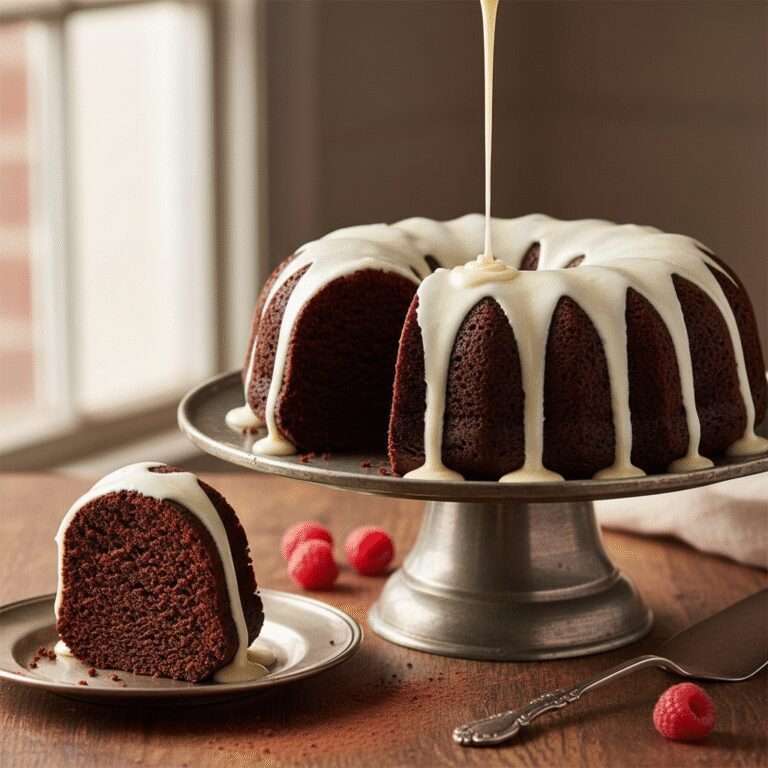
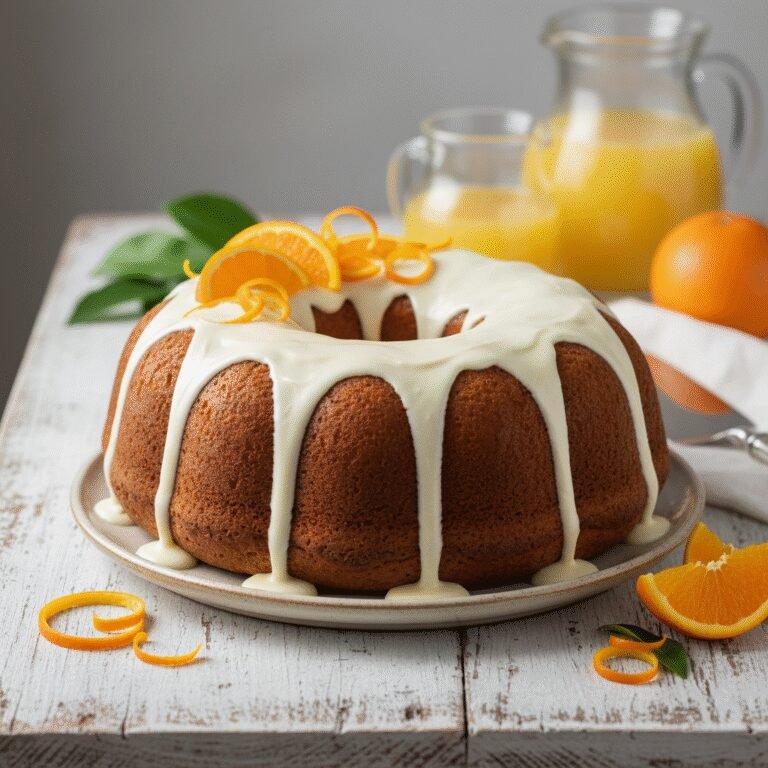
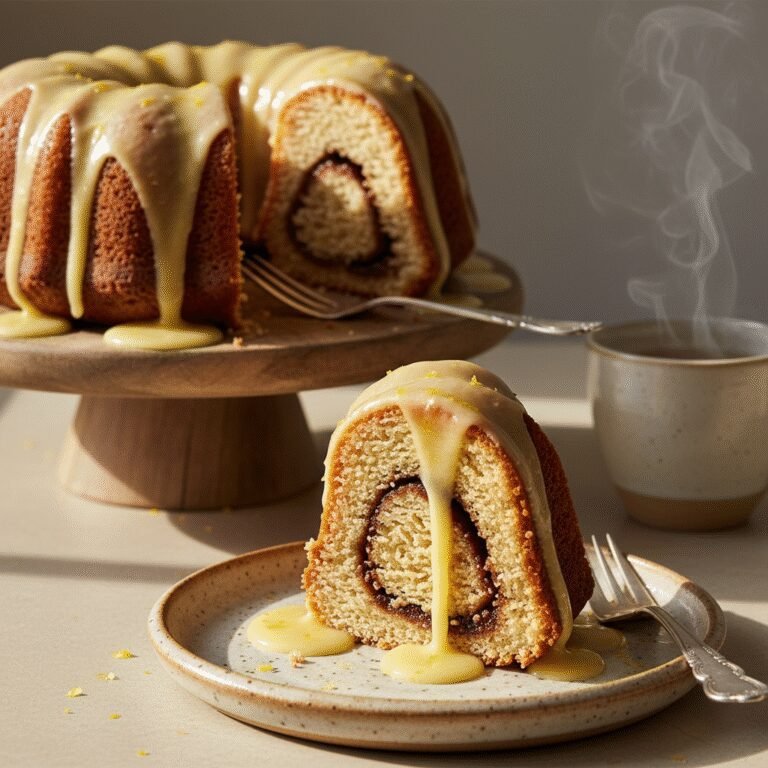
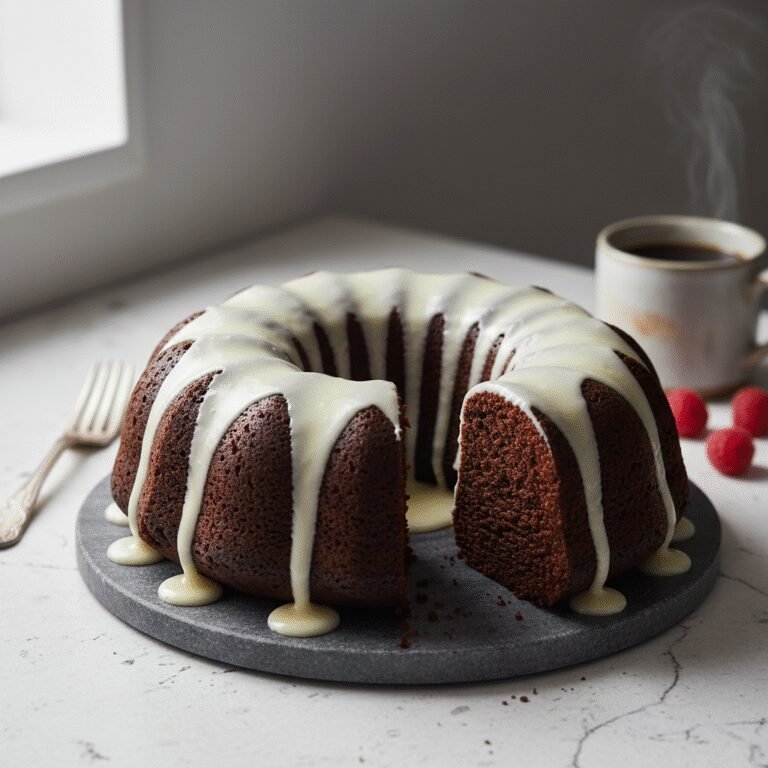
This incredibly moist Cinnamon Swirl Bundt Cake features a tender, buttery crumb with a thick, aromatic ribbon of cinnamon sugar running through every slice. Topped with a silky, rich chocolate ganache glaze, it is the ultimate coffee companion or dessert centerpiece.
20 minutes
55 minutes
1 hour 25 minutes
12-14 servings
Dessert
Baking
American
Vegetarian
There is something profoundly comforting about a Bundt cake. Unlike towering layer cakes that require architectural precision and frosting skills, a Bundt cake is humble yet elegant, relying on the beauty of the pan and the quality of the crumb. This Moist Cinnamon Swirl Bundt Cake is the absolute pinnacle of that comfort. Imagine a Sunday morning where the kitchen fills with the intoxicating aroma of toasted cinnamon and caramelized sugar. That is what this recipe delivers.
The texture here is key; we are aiming for a crumb that is dense enough to hold the swirl but tender enough to melt in your mouth. Thanks to the inclusion of full-fat sour cream and a precise balance of butter, this cake avoids the dryness that often plagues coffee cakes. It stays moist for days, actually improving in flavor and texture as it sits, making it the perfect make-ahead bake for brunch gatherings or holiday mornings.
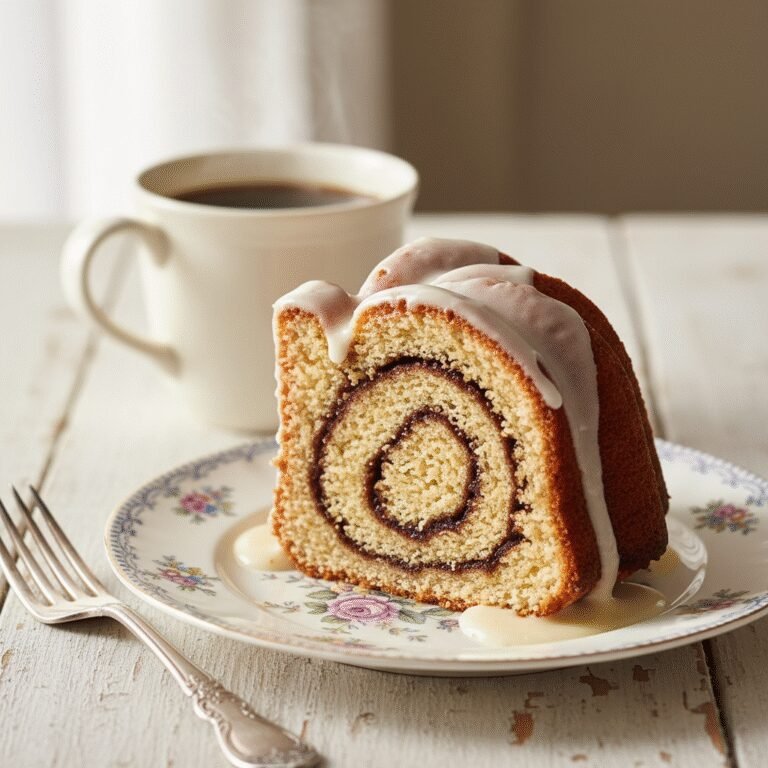
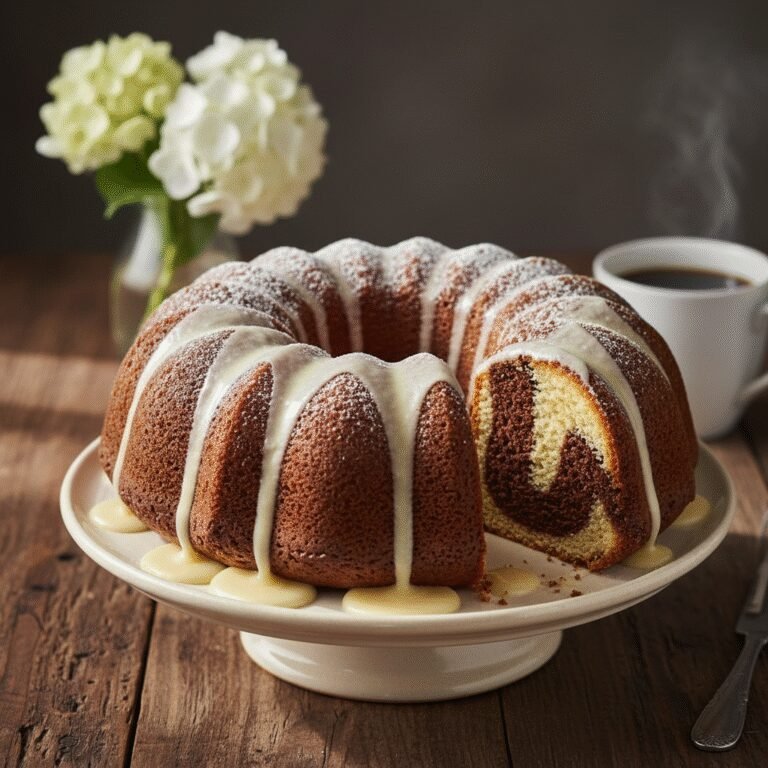
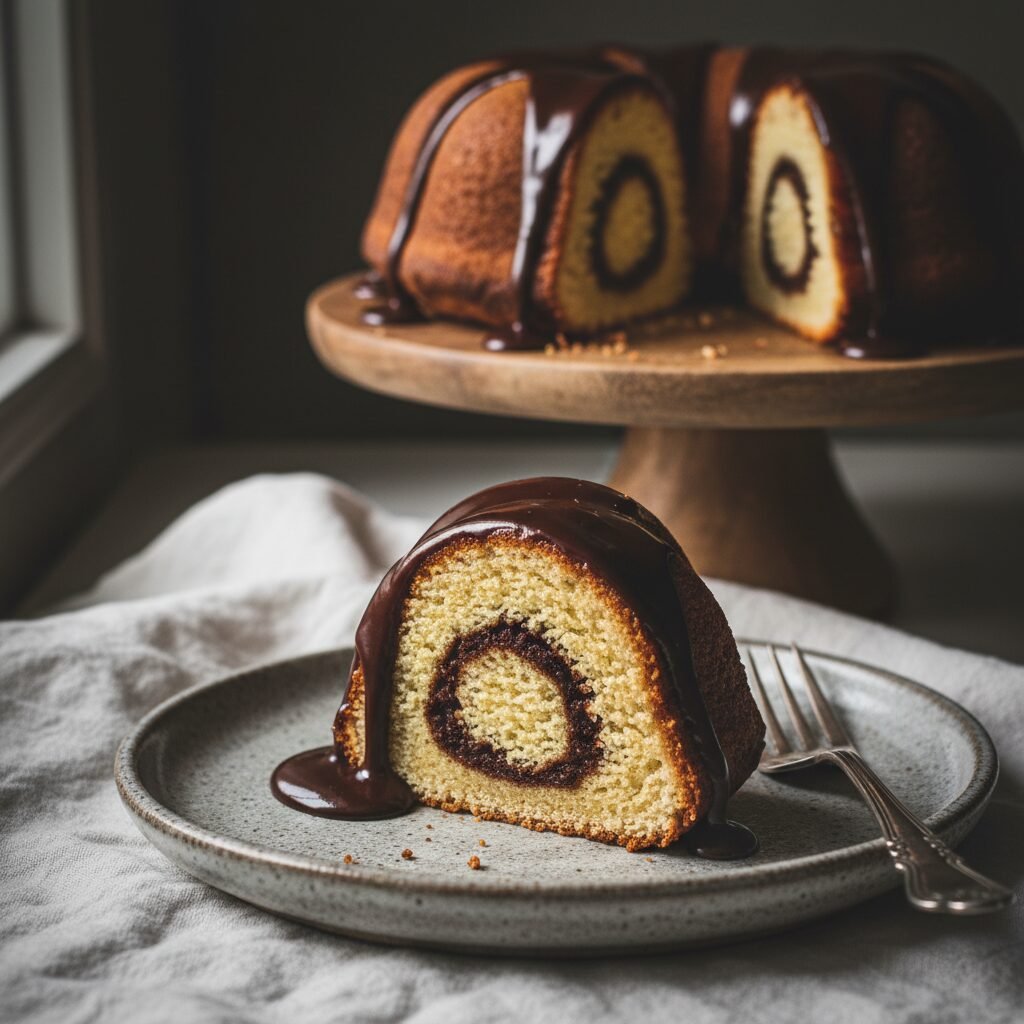
But the real showstopper is the swirl. A generous layer of brown sugar and cinnamon creates a striking visual ribbon and a burst of flavor in every bite. It provides a slight crunch that contrasts beautifully with the soft cake. And because we believe in indulgence, we don’t stop there. While a dusting of powdered sugar is traditional, we elevate this recipe with a glossy, rich chocolate glaze. The bitterness of the dark chocolate cuts through the sweetness of the cake, creating a sophisticated flavor profile that bridges the gap between breakfast pastry and decadent dessert. Whether you are serving this with a hot mug of black coffee or a scoop of vanilla bean ice cream, this cake is guaranteed to impress.
History & Origins
The history of the Bundt cake is a fascinating journey of American innovation meeting European tradition. The cake’s lineage can be traced back to the European ‘Gugelhupf’ or ‘Kugelhopf,’ a brioche-style cake baked in a fluted, ring-shaped mold, popular in Germany, Austria, and France for centuries. However, the Bundt cake as we know it in America is a distinct mid-century phenomenon.
In the late 1940s, H. David Dalquist, the founder of Nordic Ware in Minneapolis, was approached by members of the local Hadassah Society (a Jewish women’s service organization). They wanted a modern version of the traditional ceramic Kugelhopf molds used by their mothers in the old country, but made from lighter, more conductive aluminum. Dalquist created the cast aluminum pan and trademarked the name ‘Bundt’ in 1950, adding a ‘t’ to the German word ‘Bund’ (meaning an alliance or bond) to trademark the name and perhaps to distance it from the German-American Bund.
Sales were initially slow. The pan languished in obscurity for over a decade until the 1966 Pillsbury Bake-Off. A contestant named Ella Helfrich won second place with her ‘Tunnel of Fudge’ cake, baked in a Nordic Ware Bundt pan. The recipe required the specific pan, and suddenly, every baker in America wanted one. Nordic Ware went into round-the-clock production, turning out 30,000 pans a day at the height of the craze. Since then, the Bundt pan has become a staple in American kitchens, evolving from convenience-based mixes to sophisticated, scratch-made recipes like this Cinnamon Swirl Bundt Cake, which honors the tradition of the ‘coffee cake’ gatherings of the mid-20th century.
Why This Recipe Works
This recipe succeeds where others fail due to three specific chemical and structural factors: the fat ratio, the swirl placement, and the glaze consistency. First, the moisture content is meticulously controlled. Many pound cakes or Bundt cakes rely solely on butter, which provides flavor but can lead to a dry crumb if slightly overbaked. This recipe utilizes a combination of unsalted butter and full-fat sour cream. The acidity in the sour cream tenderizes the gluten strands in the flour, resulting in a softer crumb, while its high fat content ensures the cake remains moist days after baking.
Secondly, the structural integrity of the cinnamon swirl is often a point of failure; if the sugar layer is too thick or goes all the way to the edge, the cake can split in half when unmolded. We solve this by mixing a small amount of flour into the cinnamon-sugar mixture, which helps bind it to the batter, and by instructing a ‘moat’ technique during assembly to keep the swirl contained within the cake walls.
Finally, the chocolate glaze is a ganache rather than a confectioners’ sugar icing. A sugar-based icing often crystallizes and becomes too sweet. Our ganache uses heavy cream and semi-sweet chocolate, creating an emulsion that remains glossy and soft, providing a luxurious mouthfeel that complements the dense cake rather than overpowering it with sugar.
Why You’ll Love This Recipe
- ✓Stays moist for up to 4 days thanks to sour cream.
- ✓Beautiful, distinct cinnamon ripple running through the center.
- ✓Rich, glossy chocolate ganache glaze instead of standard icing.
- ✓Perfect structure that releases easily from intricate Bundt pans.
- ✓Can be frozen for up to 3 months for future enjoyment.
Equipment You’ll Need
- ✓10-12 cup Bundt pan
- ✓Stand mixer or electric hand mixer
- ✓Large mixing bowl
- ✓Medium mixing bowl
- ✓Small saucepan (for glaze)
- ✓Wire cooling rack
- ✓Rubber spatula
- ✓Measuring cups and spoons
Ingredients
- ✓3 cups All-Purpose Flour
- ✓1 teaspoon Baking Powder
- ✓1/2 teaspoon Baking Soda
- ✓1 teaspoon Salt
- ✓1 cup Unsalted Butter, softened to room temperature
- ✓1 3/4 cups Granulated Sugar
- ✓4 Large Eggs, room temperature
- ✓2 teaspoons Pure Vanilla Extract
- ✓1 cup Full-Fat Sour Cream, room temperature
- ✓1/3 cup Light Brown Sugar, packed (for swirl)
- ✓1 tablespoon Ground Cinnamon (for swirl)
- ✓4 oz Semi-Sweet Chocolate, chopped (for glaze)
- ✓1/2 cup Heavy Cream (for glaze)
Instructions
- Preheat your oven to 350°F (175°C). Thoroughly grease your Bundt pan with butter and dust with flour, or use a baking spray specifically designed for baking (with flour included). Ensure every crevice is coated.
- In a medium bowl, whisk together the flour, baking powder, baking soda, and salt. Set aside.
- In the bowl of a stand mixer fitted with the paddle attachment, cream the softened butter and granulated sugar on medium-high speed for 5 minutes until pale and fluffy. This aeration is crucial for the cake’s lift.
- Add the eggs one at a time, beating well after each addition and scraping down the sides of the bowl as needed. Mix in the vanilla extract.
- Reduce the mixer speed to low. Add the flour mixture in three parts, alternating with the sour cream in two parts, starting and ending with the flour. Mix only until just combined to avoid overworking the gluten.
- In a small bowl, mix the brown sugar and cinnamon for the swirl.
- Spoon about half of the cake batter into the prepared Bundt pan, smoothing the top. Sprinkle the cinnamon-sugar mixture evenly over the batter, ensuring it does not touch the edges of the pan (keep it centered to prevent the cake from splitting).
- Top with the remaining batter, carefully smoothing it out to cover the cinnamon layer completely.
- Bake for 50-60 minutes, or until a tester inserted into the center comes out clean or with just a few moist crumbs attached.
- Allow the cake to cool in the pan for exactly 10 minutes. Then, invert the pan onto a wire rack to release the cake. Let it cool completely before glazing.
- To make the glaze, place the chopped chocolate in a heatproof bowl. Heat the heavy cream in a small saucepan until it just begins to simmer. Pour the hot cream over the chocolate and let sit for 5 minutes. Whisk gently until smooth and glossy.
- Pour the glaze over the cooled cake, allowing it to drip down the sides. Let the glaze set for 15 minutes before slicing.
Expert Cooking Tips
- ✓Room Temperature Ingredients: Ensure your butter, eggs, and sour cream are at room temperature. This allows them to emulsify properly, creating a uniform batter structure.
- ✓Greasing the Pan: Bundt pans are notorious for sticking. Use a pastry brush to get the grease into every nook and cranny, or use ‘baker’s joy’ spray.
- ✓Don’t Overmix: Once the flour is added, mix gently. Overmixing develops gluten, which leads to a tough, rubbery cake instead of a tender one.
- ✓The Cooling Window: adhere strictly to the 10-minute cooling rule. If you flip too soon, the cake is too fragile and will break. If you wait too long, the sugars solidify and the cake sticks to the pan.
- ✓Glaze Consistency: If your ganache is too thin, let it sit at room temperature for a few minutes to thicken before pouring.
Substitutions and Variations
If you do not have sour cream, full-fat Greek yogurt is the best direct substitute; it provides the same tang and moisture content. Buttermilk can be used in a pinch, but because it is thinner, you may need to add an extra tablespoon of flour. For the flour, Cake Flour can be used for an even lighter crumb, but All-Purpose is standard for Bundts to support the structure. In the swirl, you can add finely chopped toasted pecans or walnuts for texture. For the glaze, if you prefer a non-chocolate option, a simple vanilla glaze made with powdered sugar, milk, and vanilla bean paste works beautifully, or a cream cheese glaze for a cinnamon-roll vibe.
Common Mistakes to Avoid
The most common mistake with Bundt cakes is improper pan preparation. Even non-stick pans need to be greased and floured; otherwise, the intricate designs will hold onto the cake, causing it to tear upon release. Another error is over-baking. Because the pan is dark and heavy, it retains heat. Check the cake 5 minutes before the stated time. If the skewer comes out clean, pull it out immediately. Finally, do not let the cinnamon sugar touch the edges of the pan. Sugar melts and caramelizes against the metal, acting like superglue, which will tear the cake when you try to flip it.
Serving Suggestions
This cake is versatile enough for breakfast or dessert. For a morning treat, serve a slice slightly warmed in the microwave for 10 seconds to remelt the chocolate slightly, accompanied by a strong dark roast coffee or an espresso. For a dessert presentation, serve at room temperature with a dollop of unsweetened whipped cream and fresh raspberries to cut the richness. It also pairs exceptionally well with a scoop of cinnamon or vanilla bean ice cream.
Storage and Reheating Tips
Store the cake in an airtight container at room temperature for up to 4 days. The high fat content keeps it moist. If you live in a very hot or humid climate, you may want to refrigerate it to prevent the glaze from melting, but bring it to room temperature before eating for the best texture. To freeze, wrap individual slices or the whole unglazed cake tightly in plastic wrap, followed by a layer of aluminum foil. It will keep for up to 3 months. Thaw on the counter overnight before glazing and serving.
Nutrition Facts (Estimated)
| Serving Size | 1 slice |
| Calories | 480 |
| Fat | 24g |
| Saturated Fat | 14g |
| Unsaturated Fat | 8g |
| Trans Fat | 0g |
| Cholesterol | 85mg |
| Sodium | 210mg |
| Carbohydrates | 62g |
| Fiber | 2g |
| Sugar | 35g |
| Protein | 6g |
Frequently Asked Questions
Why did my swirl sink to the bottom?
This usually happens if the batter is too thin or if the cinnamon sugar layer is too heavy. Ensure your batter is thick (don’t overmix) and sprinkle the sugar layer evenly without clumping.
Can I use a tube pan instead of a Bundt pan?
Yes, you can. A tube pan generally has straight sides and feet for cooling angel food cakes, but it will work for this pound cake style batter. The baking time should remain similar, but keep an eye on it.
How do I know when the cake is truly done?
A toothpick or skewer inserted into the thickest part of the cake should come out clean or with a few moist crumbs. If it has wet batter on it, it needs more time. If the top is browning too fast, tent it with foil.
Can I make this cake ahead of time?
Absolutely. In fact, this cake tastes better the next day as the flavors meld and the moisture redistributes. Just wait to add the glaze until the day you plan to serve it for the best visual appeal.
My cake stuck to the pan. Can I save it?
If it breaks, don’t panic! Piece it back together on the serving platter. The thick chocolate glaze is excellent at hiding imperfections. You can also turn it into a trifle by cutting it into cubes and layering with custard and fruit.
Can I use milk chocolate for the glaze?
You can, but milk chocolate is much sweeter and has a different fat content. You may need to reduce the heavy cream slightly to get the right drip consistency, and the final dish will be significantly sweeter.
Why do ingredients need to be at room temperature?
Room temperature ingredients emulsify into a smooth mixture that traps air. Cold ingredients don’t incorporate well, leading to a curdled-looking batter and a dense, unevenly baked cake.
Can I add nuts to the batter?
Yes, you can fold 1/2 cup of chopped walnuts or pecans into the batter, or add them to the cinnamon sugar swirl layer for a hidden crunch.
Conclusion
This Moist Cinnamon Swirl Bundt Cake with Chocolate Glaze is more than just a recipe; it’s a centerpiece that brings people together. Whether you are an experienced baker or trying your first Bundt, the combination of the tender, tangy crumb, the aromatic cinnamon ribbon, and the luxurious chocolate finish is foolproof. It captures the essence of home baking—warmth, comfort, and a little bit of indulgence. So dust off that Bundt pan, brew a fresh pot of coffee, and get ready to bake a cake that will likely become a requested family favorite for years to come.