The Ultimate Moist Chocolate Sheet Cake With Creamy Vanilla Frosting
Moist Chocolate Sheet Cake With Vanilla Frosting Recipe
This incredibly moist chocolate sheet cake is the definitive crowd-pleaser for any gathering, featuring a tender, rich crumb that melts in your mouth. Topped with a fluffy, cloud-like vanilla bean buttercream, it offers the perfect balance of deep cocoa flavor and sweet, creamy indulgence.
20 minutes
30 minutes
50 minutes
24 squares
Dessert
Baking
American
Vegetarian
There are few desserts as universally beloved and instantly comforting as a classic chocolate sheet cake. While towering layer cakes have their place in the world of patisserie, the humble sheet cake is the unsung hero of potlucks, birthday parties, and weeknight cravings across America. This specific recipe for Moist Chocolate Sheet Cake with Vanilla Frosting is designed to be the only chocolate cake recipe you will ever need. It bypasses the dryness that plagues so many cocoa-based sponges by utilizing a specific blend of vegetable oil and buttermilk, ensuring that the crumb remains tender and moist for days, not just hours.
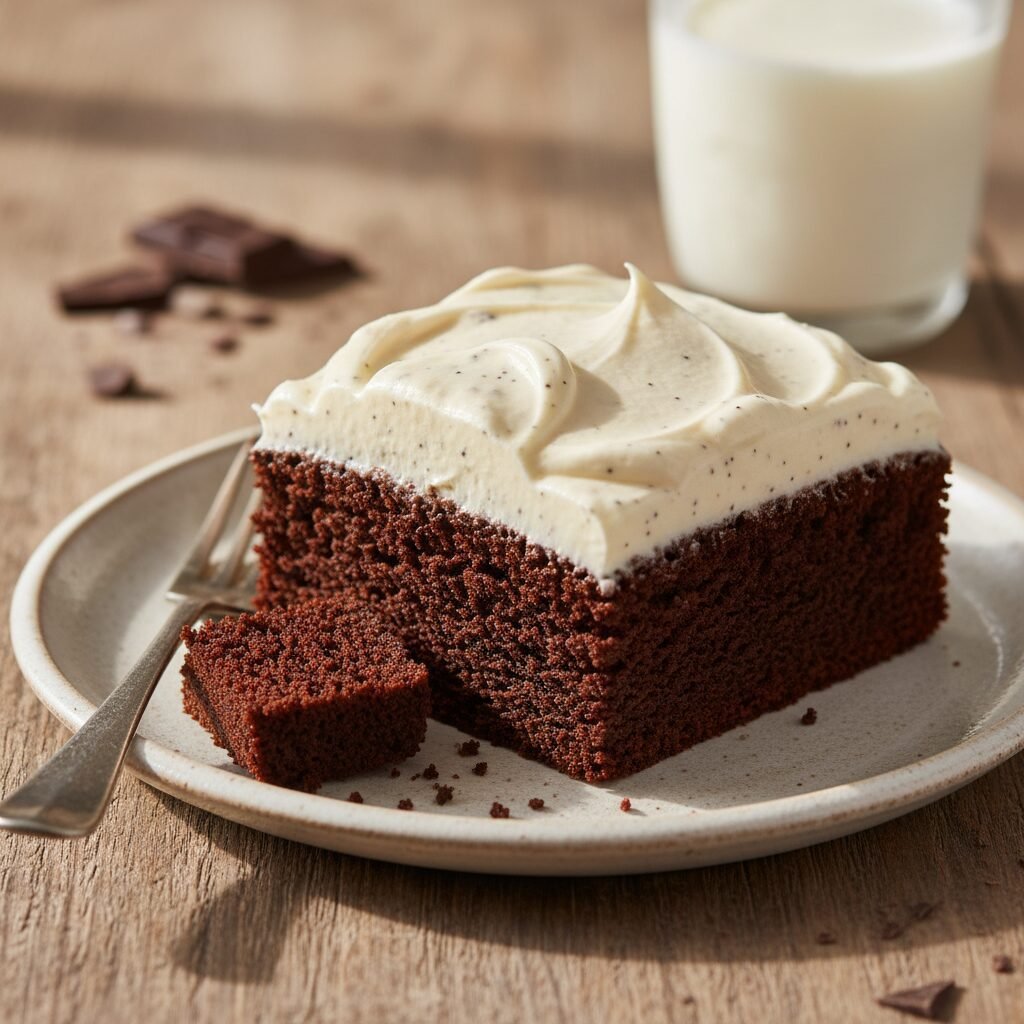
The magic lies in the simplicity of the flavor profile. We aren’t hiding behind ganache or fruit fillings here; it is a straightforward celebration of chocolate and vanilla. The cake base is deeply chocolatey, enhanced by a splash of hot coffee that blooms the cocoa powder, intensifying its richness without imparting a mocha flavor. This dark, moist canvas is then swept with a thick, swooping layer of homemade vanilla buttercream. The contrast is striking—both visually, with the dark crumb against the stark white frosting, and on the palate, where the slightly bitter notes of the cocoa meet the sweet, buttery smoothness of the topping. Whether you are an experienced baker looking for a reliable staple or a novice wanting to impress a crowd without the stress of stacking layers, this sheet cake delivers pure, unadulterated joy in every square.
History & Origins
The concept of the ‘sheet cake’ is deeply rooted in 20th-century American home baking, evolving alongside the industrialization of kitchenware and the availability of standard baking pans. While chocolate cake itself dates back to the 18th century—following Dr. James Baker’s discovery of how to grind cocoa beans between millstones in 1764—the specific iteration of the rectangular, single-layer cake gained massive popularity in the mid-1900s. It was a time when convenience began to merge with homemade tradition. As baking powder and baking soda became reliable commercial products, housewives could produce lighter, fluffier cakes with ease.
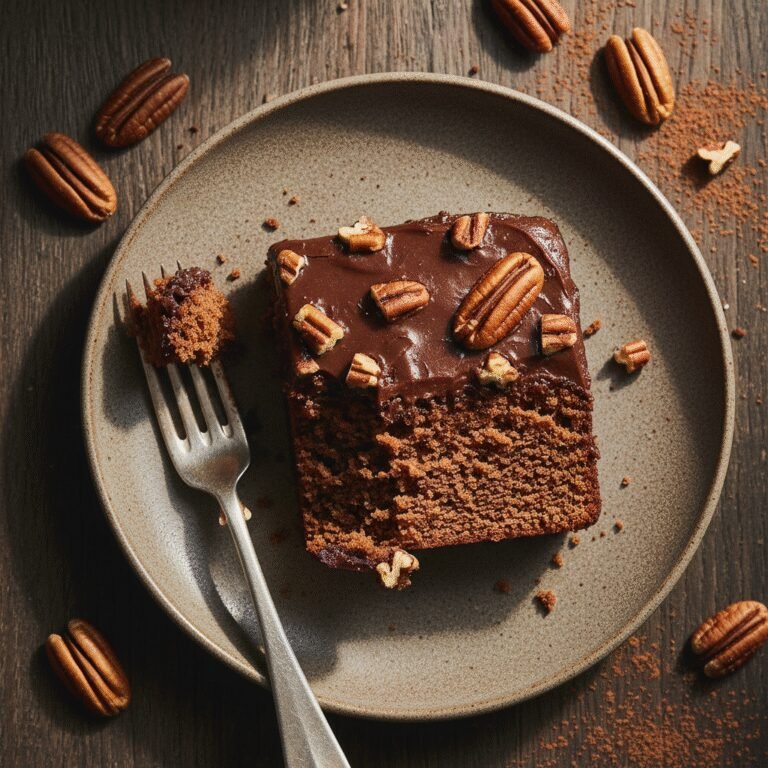
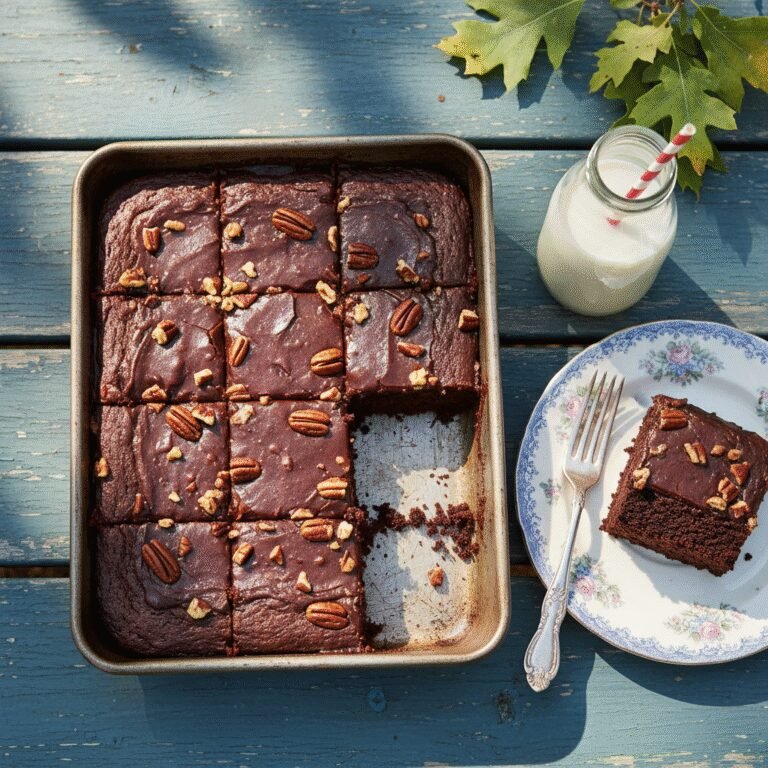
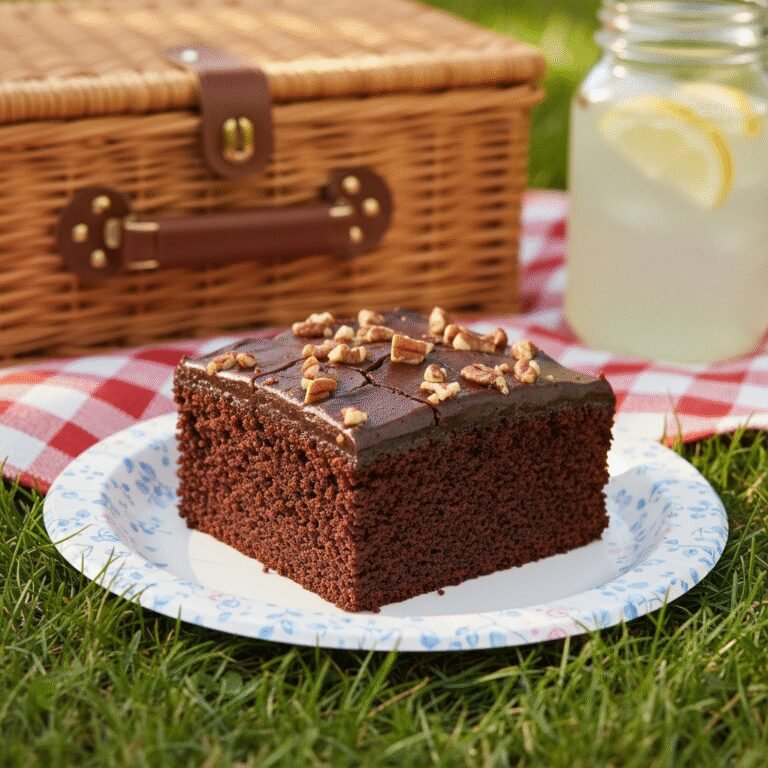
The sheet cake is often spiritually linked to the famous ‘Texas Sheet Cake,’ a recipe that appeared in newspapers and church cookbooks widely in the 1950s and 60s. Traditional Texas Sheet Cakes are typically thinner, baked in a jelly roll pan, and topped with a warm, poured fudge icing containing pecans. However, as the recipe migrated across state lines and decades, variations emerged. Families began baking them in 9×13 pans for a thicker, fluffier crumb, and swapping the warm fudge icing for a traditional American buttercream to create a starker flavor contrast. This evolution turned the practical ‘pan cake’ into a versatile canvas for birthdays and celebrations where serving a large crowd efficiently was paramount. The recipe presented here honors that lineage of practical, community-focused baking while elevating the texture with modern food science techniques to ensure it stands the test of time.
Why This Recipe Works
This recipe succeeds where others fail primarily due to the fat source and the mixing method. Many butter-based chocolate cakes taste delicious when warm but become dense and dry once they cool because butter is a solid fat at room temperature. By using a neutral vegetable oil as the primary fat, this cake stays incredibly moist and soft even after sitting out on the counter or being refrigerated, as oil remains liquid at room temperature. This ensures that ‘melt-in-your-mouth’ texture is preserved days after baking.
Furthermore, the inclusion of buttermilk is non-negotiable. The acidity in the buttermilk reacts with the baking soda to create carbon dioxide, giving the cake a superior lift and a tender crumb structure that isn’t heavy or gummy. We also utilize the ‘blooming’ technique, where boiling hot liquid (in this case, coffee) is poured over the cocoa powder or mixed into the batter at the end. The heat dissolves the cocoa solids and releases flavor compounds that are otherwise trapped, resulting in a more profound chocolate taste without requiring expensive chocolate bars. Finally, the vanilla buttercream is whipped with a splash of heavy cream, incorporating air pockets that make it light and spreadable, preventing it from tearing the delicate surface of the moist cake.
Why You’ll Love This Recipe
- ✓Incredibly moist texture that lasts for days
- ✓Deep chocolate flavor enhanced by hot coffee
- ✓Simple one-pan preparation with no layering required
- ✓Feeds a large crowd, perfect for parties
- ✓Perfect balance of salty-sweet vanilla frosting
- ✓Freezer-friendly for make-ahead convenience
Equipment You’ll Need
- ✓9×13 inch baking pan
- ✓Large mixing bowl
- ✓Medium mixing bowl
- ✓Electric hand mixer or stand mixer
- ✓Whisk
- ✓Rubber spatula
- ✓Measuring cups and spoons
- ✓Wire cooling rack
Ingredients
- ✓2 cups granulated sugar
- ✓1 3/4 cups all-purpose flour
- ✓3/4 cup unsweetened cocoa powder
- ✓1 1/2 teaspoons baking powder
- ✓1 1/2 teaspoons baking soda
- ✓1 teaspoon salt
- ✓2 large eggs, room temperature
- ✓1 cup whole milk or buttermilk
- ✓1/2 cup vegetable oil or canola oil
- ✓2 teaspoons pure vanilla extract
- ✓1 cup boiling hot coffee (or boiling water)
- ✓1 cup unsalted butter, softened (for frosting)
- ✓4 cups powdered sugar (for frosting)
- ✓1/4 cup heavy whipping cream (for frosting)
- ✓2 teaspoons vanilla bean paste or extract (for frosting)
- ✓Pinch of sea salt (for frosting)
Instructions
- Preheat your oven to 350°F (175°C). Grease a 9×13 inch baking pan with butter or cooking spray and lightly dust with cocoa powder or flour.
- In a large mixing bowl, whisk together the sugar, flour, cocoa powder, baking powder, baking soda, and salt until well combined and no lumps remain.
- Add the eggs, buttermilk, vegetable oil, and vanilla extract to the dry ingredients. Beat on medium speed with an electric mixer for about 2 minutes. The batter will be thick at this stage.
- Reduce the mixer speed to the lowest setting and carefully pour in the boiling hot coffee. Mix just until combined. The batter will be very thin and liquidy; this is normal and essential for a moist cake.
- Pour the batter into the prepared baking pan. Tap the pan gently on the counter once to release any large air bubbles.
- Bake for 30-35 minutes, or until a wooden toothpick inserted into the center comes out clean or with just a few moist crumbs attached.
- Remove the cake from the oven and place the pan on a wire cooling rack. Allow the cake to cool completely in the pan. Frosting a warm cake will cause the butter to melt.
- While the cake cools, prepare the frosting. In a large bowl or stand mixer, beat the softened butter on medium-high speed for 3-4 minutes until it is pale and creamy.
- Gradually add the powdered sugar, one cup at a time, mixing on low speed until incorporated. Scrape down the sides of the bowl as needed.
- Add the vanilla extract, heavy cream, and a pinch of salt. Increase the speed to high and whip for another 3-4 minutes until the frosting is light, fluffy, and aerated.
- Once the cake is fully cooled, spread the frosting generously over the top using an offset spatula. Create swirls with the spatula for a rustic, homemade look.
- Slice into squares and serve immediately, or cover and store for later.
Expert Cooking Tips
- ✓Do not skip the boiling water/coffee step; it blooms the cocoa for richer flavor.
- ✓Room temperature ingredients (eggs and buttermilk) mix better and create a more uniform crumb.
- ✓If you don’t have buttermilk, make a substitute by adding 1 tablespoon of vinegar to 1 cup of milk and letting it sit for 5 minutes.
- ✓Don’t over-bake the cake; start checking at the 30-minute mark to ensure it stays moist.
- ✓Sift your powdered sugar before making the frosting to avoid gritty lumps.
- ✓Use high-quality cocoa powder, as it is the primary flavor driver of the cake.
- ✓Cool the cake completely before frosting, otherwise, your buttercream will slide right off.
Substitutions and Variations
This recipe is quite resilient, but for the best results, stick close to the original. If you need to make it gluten-free, a high-quality 1:1 gluten-free all-purpose flour blend (preferably one with xanthan gum) works wonderfully, though the texture may be slightly denser. For a dairy-free version, you can substitute the buttermilk with almond milk mixed with a teaspoon of apple cider vinegar, and use a plant-based butter stick for the frosting; however, ensure the plant butter is firm enough to hold its shape. If you are averse to coffee, simply use boiling water. The coffee does not make the cake taste like java, but rather enhances the chocolate; however, water works if you prefer. You can swap the vegetable oil for melted coconut oil, but be aware it might impart a slight coconut flavor. For the frosting, if you don’t have heavy cream, whole milk will work, though the frosting may be slightly less fluffy.
Common Mistakes to Avoid
The most common mistake with this cake is over-baking. Because the batter is dark, it is hard to see visual cues of doneness like browning. Rely strictly on the toothpick test; if it comes out bone dry, you may have already gone too far—aim for a few moist crumbs. Another frequent error is using cold ingredients. Cold eggs and milk don’t emulsify properly with the oil, leading to a batter that isn’t smooth and a cake that creates tunnels or uneven rising. Regarding the frosting, many people don’t whip the butter long enough before adding sugar. You must beat the butter until it is nearly white to get that bakery-style fluffiness. Finally, attempting to frost the cake while it is even slightly warm is a recipe for disaster; the butter in the frosting will melt and separate, leaving you with a greasy, sliding mess rather than a beautiful layer of frosting.
Serving Suggestions
This cake is a showstopper on its own, but you can elevate the presentation for special occasions. Serve each square with a fresh raspberry or strawberry on top to cut through the sweetness. A dusting of rainbow sprinkles makes it perfect for birthdays, while chocolate shavings or crushed pistachios add an elegant touch for dinner parties. If you want to go the extra mile, serve the cake slightly warmed (microwave a slice for 10 seconds) alongside a scoop of vanilla bean ice cream or a dollop of freshly whipped cream. For a holiday twist, crushed peppermint candies over the vanilla frosting make for a festive winter treat. It pairs exceptionally well with a cold glass of milk or a hot cup of dark roast coffee.
Storage and Reheating Tips
Because this cake is oil-based, it stays moist at room temperature longer than butter cakes. You can store the frosted cake in an airtight container or covered tightly with plastic wrap on the counter for up to 3 days. If your kitchen is particularly hot, or if you want to keep it longer, store it in the refrigerator for up to 5 days; just be sure to let it come to room temperature before serving, as cold buttercream is hard and waxy. This cake also freezes beautifully. You can freeze individual slices wrapped in plastic wrap and foil for up to 3 months. Thaw them on the counter for an hour before eating. If freezing the whole cake, it is best to freeze it unfrosted, then thaw and frost fresh, though freezing it frosted works if you flash-freeze it first to set the icing.
Nutrition Facts (Estimated)
| Serving Size | 1 square |
| Calories | 340 |
| Fat | 16g |
| Saturated Fat | 6g |
| Unsaturated Fat | 9g |
| Trans Fat | 0g |
| Cholesterol | 45mg |
| Sodium | 190mg |
| Carbohydrates | 48g |
| Fiber | 2g |
| Sugar | 28g |
| Protein | 4g |
Frequently Asked Questions
Can I use Dutch-process cocoa powder?
Yes, you can, but natural cocoa powder reacts better with the baking soda to provide lift. If you use Dutch-process, the cake might be slightly denser and darker, but still delicious.
Why is the batter so runny?
The batter is supposed to be very thin! The high liquid content (milk, oil, coffee) ensures the cake bakes up incredibly moist. Don’t be tempted to add more flour.
Can I make this as a layer cake?
Absolutely. This batter will fit into two 8-inch or 9-inch round pans. You will need to reduce the baking time to approximately 25-30 minutes and keep an eye on them.
Does the cake taste like coffee?
No, it does not. The coffee enhances the depth of the chocolate flavor, making it richer. If you are sensitive to caffeine, use decaf coffee or simply boiling water.
My frosting is too soft, what do I do?
If your kitchen is warm or you added too much liquid, add more powdered sugar, 1/4 cup at a time. You can also refrigerate the frosting for 10-15 minutes to firm up the butter.
Can I halve the recipe?
Yes, you can halve the ingredients and bake it in an 8×8 inch square pan. Check for doneness around 25 minutes.
Why did my cake sink in the middle?
This usually happens if the oven door was opened too early, causing a temperature drop, or if the cake was under-baked. It can also happen if there was too much leavening (baking soda/powder).
Is salted or unsalted butter better for the frosting?
Unsalted butter is generally preferred so you can control the sodium, but if you only have salted butter, just omit the pinch of added salt in the frosting recipe.
Conclusion
In a world of complicated desserts and multi-step patisserie projects, this Moist Chocolate Sheet Cake with Vanilla Frosting stands as a testament to the power of simplicity. It is the kind of recipe that becomes a family heirloom, passed down not because it is fancy, but because it is reliably, undeniably delicious. Whether you are celebrating a milestone or just need a chocolate fix on a Tuesday night, this cake delivers comfort in every bite. We hope this becomes a staple in your kitchen just as it has in ours. Happy baking!