Decadent Moist Chocolate Loaf Cake With Buttery Crumb Topping
Moist Chocolate Loaf Cake With Crumb Topping Recipe
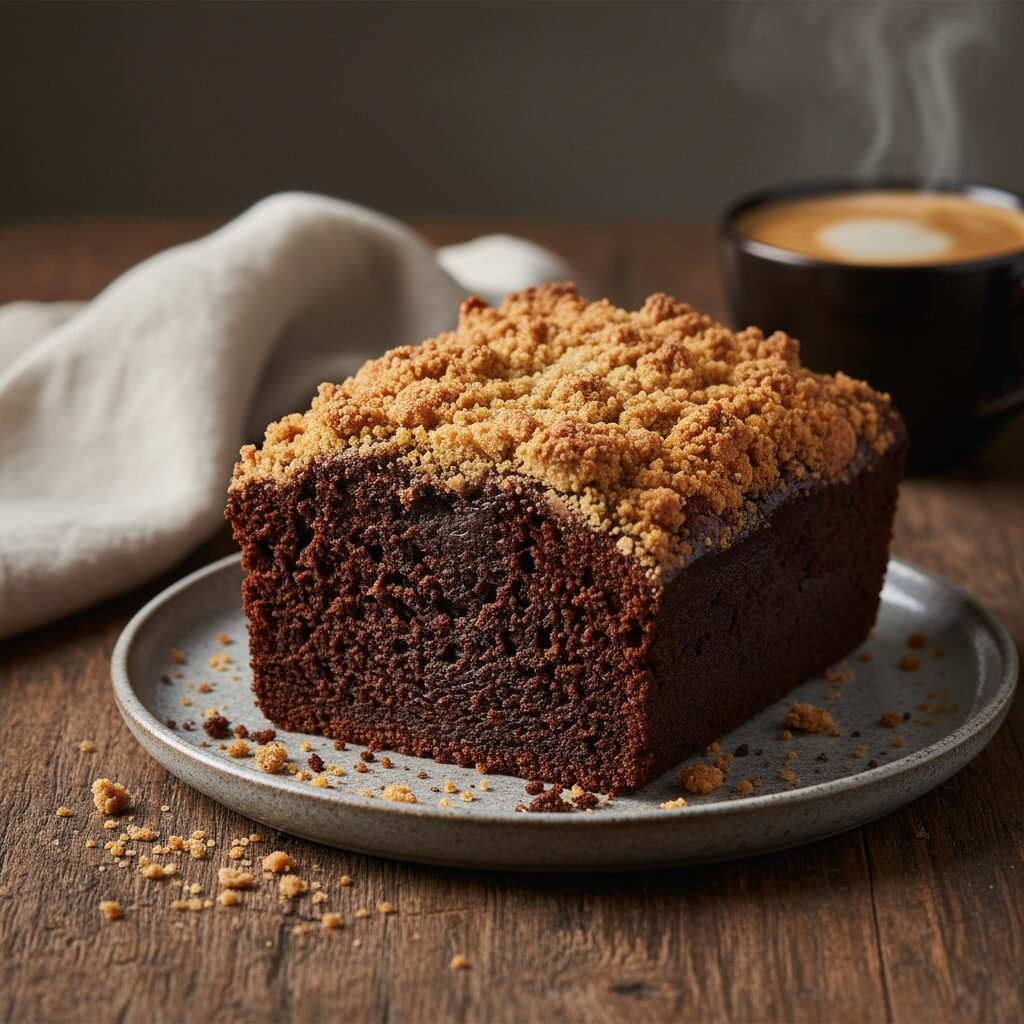
This isn’t your average dry tea cake; it is a deeply fudge-like chocolate loaf crowned with a mountain of buttery, crunchy streusel. Perfectly bridging the gap between a morning coffee cake and a decadent dessert, this recipe guarantees a moist crumb every single time.
20 minutes
55 minutes
1 hour 15 minutes
1 Loaf (10 Slices)
Dessert / Breakfast
Baking
American
Vegetarian
There is a distinct category of baking that sits comfortably between the morning necessity of a muffin and the evening indulgence of a layered gateau, and that is the humble loaf cake. However, the ‘Moist Chocolate Loaf Cake With Crumb Topping’ is anything but humble. It is a study in contrasts and a celebration of texture. Imagine a cake base that is dark, intense, and incredibly moist—almost bordering on the density of a brownie but retaining the springy lightness of a cake. Now, pair that with a thick, golden layer of brown sugar and butter crumbs that shatter delightfully with every bite. This recipe was born out of a common frustration: chocolate cakes that look beautiful but taste like dry sponges, and coffee cakes that lack a depth of flavor.
What makes this specific recipe a staple in my kitchen is its versatility. It is elegant enough to serve to guests with a dollop of crème fraîche and fresh raspberries, yet casual enough to slice up for a Tuesday afternoon snack. The chocolate flavor is profound, achieved by ‘blooming’ the cocoa powder in hot liquid, which releases the essential oils and deepens the color to a midnight mahogany. But the real star, the element that keeps people coming back for a second slice, is that generous crumb topping. It adds a salty-sweet crunch that cuts through the richness of the chocolate, creating a perfect bite that satisfies every craving. Whether you are an experienced baker or a novice looking for a foolproof win, this loaf cake delivers high-impact flavor with surprisingly minimal effort.
History & Origins
The concept of the loaf cake traces its lineage back to the classic British pound cakes of the 18th century, named for their simple ratio of one pound each of flour, sugar, butter, and eggs. These early cakes were dense, heavy, and baked in large pans. As chemical leaveners like pearl ash (a precursor to baking soda) and later baking powder were introduced in the 19th century, cakes became lighter, airier, and more adaptable to different shapes, including the rectangular ‘loaf’ tin which allowed for more even baking.
The ‘crumb topping’ or streusel, however, has a distinct Germanic origin. The word ‘streusel’ comes from the German word ‘streuen,’ meaning ‘to scatter.’ Streuselkuchen (crumb cake) originated in Silesia and quickly became a beloved tradition across Germany, typically consisting of a yeast dough topped with a mixture of flour, sugar, and butter. As German immigrants moved to the United States in the late 19th and early 20th centuries, they brought their baking traditions with them. The fusion of the American-style quick bread or chocolate cake with the German-style streusel topping created the modern ‘coffee cake’ genre. This specific iteration—a chocolate base with a vanilla-brown sugar crumb—represents a modern American evolution, marrying the New World’s obsession with chocolate (popularized by the Dutch cocoa process) with the Old World’s love for texture and buttery toppings.
Why This Recipe Works
This recipe succeeds where many others fail due to three critical food science principles: the fat source, the blooming process, and the acidity balance. First, unlike butter-based cakes which can dry out once they return to room temperature, this recipe uses oil. Oil remains liquid at room temperature, coating the flour proteins and preventing excessive gluten formation, which ensures the cake stays moist and tender for days.
Second, the method calls for adding hot coffee or boiling water to the cocoa powder. This technique, known as ‘blooming,’ dissolves the fruitier, more complex flavor compounds in the cocoa that are otherwise locked away. It also creates a darker, more visually appealing crumb. Finally, the use of sour cream or buttermilk introduces acid. This acid reacts with the baking soda to create carbon dioxide, giving the heavy batter the lift it needs to rise despite the weight of the crumb topping. The topping itself uses melted butter rather than cold butter, which creates larger, crunchier nuggets of streusel that won’t melt into the cake batter during baking, ensuring a distinct separation between the soft cake and the crisp top.
Why You’ll Love This Recipe
- ✓Incredibly moist texture that stays fresh for days.
- ✓Deep, intense chocolate flavor enhanced by hot coffee.
- ✓Thick, crunchy, buttery brown sugar topping.
- ✓No mixer required—can be made entirely by hand.
- ✓Freezes beautifully for make-ahead meal prep.
- ✓Perfect balance of salty, sweet, and bitter chocolate notes.
Equipment You’ll Need
- ✓9×5 inch Loaf Pan
- ✓Large Mixing Bowl
- ✓Medium Mixing Bowl
- ✓Whisk
- ✓Rubber Spatula
- ✓Parchment Paper
- ✓Wire Cooling Rack
Ingredients
- ✓For the Crumb Topping:
- ✓1 cup All-Purpose Flour
- ✓2/3 cup Light Brown Sugar, packed
- ✓1 tsp Cinnamon (optional)
- ✓1/4 tsp Salt
- ✓6 tbsp Unsalted Butter, melted
- ✓For the Chocolate Cake:
- ✓1 cup Granulated Sugar
- ✓1 cup All-Purpose Flour
- ✓1/2 cup Unsweetened Cocoa Powder (Dutch-processed preferred)
- ✓1 tsp Baking Soda
- ✓1/2 tsp Baking Powder
- ✓1/2 tsp Salt
- ✓1 Large Egg, room temperature
- ✓1/2 cup Buttermilk (or sour cream)
- ✓1/2 cup Vegetable Oil (or Canola oil)
- ✓1 tsp Pure Vanilla Extract
- ✓1/2 cup Hot Strong Coffee (or boiling water)
Instructions
- 1. Preheat your oven to 350°F (175°C). Grease a 9×5 inch loaf pan and line it with parchment paper, leaving an overhang on the sides for easy removal later.
- 2. Prepare the Crumb Topping: In a medium bowl, whisk together the 1 cup flour, brown sugar, cinnamon, and salt. Pour the melted butter over the dry ingredients. Use a fork to toss the mixture until moist clumps form. Do not overmix into a paste; you want distinct crumbs. Set aside.
- 3. Mix Dry Cake Ingredients: In a large bowl, sift together the flour, sugar, cocoa powder, baking soda, baking powder, and salt. Whisk well to ensure everything is evenly distributed.
- 4. Mix Wet Cake Ingredients: In a separate medium bowl, whisk together the egg, buttermilk, vegetable oil, and vanilla extract until smooth.
- 5. Combine: Pour the wet ingredients into the dry ingredients. Stir with a spatula until just combined. Do not overmix.
- 6. Bloom the Cocoa: Carefully pour the hot coffee (or boiling water) into the batter. Whisk gently until the batter is smooth and glossy. Note: The batter will be very thin and liquid; this is normal.
- 7. Assemble: Pour the chocolate batter into the prepared loaf pan. Evenly sprinkle the crumb topping over the batter. It may look like too much topping, but use it all.
- 8. Bake: Place on the middle rack of the oven and bake for 50-60 minutes. Check at the 50-minute mark. A toothpick inserted into the center should come out with a few moist crumbs, but no wet batter.
- 9. Cool: Remove from the oven and let the cake cool in the pan for at least 20 minutes. This is crucial as the cake is fragile when hot. Lift the cake out using the parchment paper handles and transfer to a wire rack to cool completely before slicing.
Expert Cooking Tips
- ✓Room Temperature Ingredients: Ensure your egg and buttermilk are at room temperature to create a smoother emulsion.
- ✓Don’t Skip the Coffee: You won’t taste the coffee, but it enhances the chocolate flavor significantly. If you must avoid caffeine, use decaf or hot water.
- ✓The Parchment Sling: Lining the pan is non-negotiable. This cake is moist and heavy; flipping it upside down to get it out will ruin the crumb topping.
- ✓Check Early: Ovens vary. Check the cake at 45 minutes. If the crumb topping is browning too fast, tent it loosely with aluminum foil.
- ✓Let it Cool: Slicing this cake while it’s hot will result in it falling apart. The structure sets as it cools.
- ✓Dutch Process Cocoa: For a darker color and mellower flavor, use Dutch-processed cocoa, but regular cocoa works fine too.
Substitutions and Variations
This recipe is quite robust, allowing for several substitutions. If you are out of buttermilk, you can make a DIY version by adding 1 tablespoon of lemon juice or white vinegar to a half-cup of whole milk and letting it sit for 5 minutes. Alternatively, full-fat sour cream or plain Greek yogurt can be used in equal measure for a slightly denser crumb. For a gluten-free version, swap the all-purpose flour for a high-quality 1:1 gluten-free baking flour blend that contains xanthan gum. If you want to avoid refined sugar, coconut sugar can be substituted for brown sugar in the topping, though the texture will be slightly less crunchy. Vegetable oil can be replaced with melted coconut oil or light olive oil, but avoid strong-flavored oils like extra virgin olive oil as they will clash with the chocolate.
Common Mistakes to Avoid
The most common mistake with this loaf is overbaking. Because the batter is dark, it is hard to see if it is burning, and because of the wet batter, people often fear it isn’t done. Rely on the toothpick test; a clean toothpick means it is overdone and dry. You want moist crumbs clinging to it. Another mistake is overmixing the batter after adding the flour. This develops gluten and leads to a tough, rubbery cake rather than a tender one. Lastly, using cold ingredients can cause the batter to seize or curdle, preventing an even rise. Always take your dairy out of the fridge 30 minutes before baking.
Serving Suggestions
This loaf cake is incredibly versatile. Serve it slightly warm for breakfast with a cup of black coffee or an espresso to complement the chocolate notes. For an elevated dessert, serve a thick slice with a scoop of vanilla bean ice cream and a drizzle of salted caramel sauce. It also pairs beautifully with fresh berries—strawberries or raspberries provide a tart contrast to the sweet crumb topping. If serving at a brunch, cut the loaf into smaller cubes and present them on a platter as bite-sized nibbles.
Storage and Reheating Tips
Due to its high moisture content, this cake keeps wonderfully. Store it at room temperature in an airtight container for up to 3 days. If you live in a very hot or humid climate, you may want to refrigerate it to prevent mold, but bring it back to room temperature before eating for the best texture. For long-term storage, this cake freezes exceptionally well. Wrap individual slices tightly in plastic wrap, then place them in a freezer-safe bag. They can be frozen for up to 3 months. Thaw on the counter for an hour or microwave for 15-20 seconds for an instant warm treat.
Nutrition Facts (Estimated)
| Serving Size | 1 Slice |
| Calories | 465 |
| Fat | 24g |
| Saturated Fat | 9g |
| Unsaturated Fat | 14g |
| Trans Fat | 0g |
| Cholesterol | 45mg |
| Sodium | 290mg |
| Carbohydrates | 58g |
| Fiber | 3g |
| Sugar | 38g |
| Protein | 5g |
Frequently Asked Questions
Why did my crumb topping sink to the bottom?
This usually happens if the batter is too thin or the crumbs are too heavy/large. Ensure you didn’t add extra liquid to the batter, and try not to make the crumb pieces massive boulders. Also, sprinkle the topping gently rather than dumping it in one spot.
Can I make this in a muffin tin?
Yes! This batter works great for muffins. Reduce the baking time to 18-22 minutes. The yield will be approximately 12 standard muffins.
Why is my cake dry?
The culprit is almost always overbaking or measuring flour incorrectly. If you scoop flour directly with the measuring cup, you pack it down and end up with too much. Use the ‘spoon and level’ method or weigh your ingredients.
Can I add chocolate chips?
Absolutely. You can fold 1/2 cup of semi-sweet or dark chocolate chips into the batter before pouring it into the pan. Toss them in a teaspoon of flour first to prevent them from sinking.
Can I use butter instead of oil in the cake?
You can, but the texture will change. Butter provides flavor but makes a drier cake that hardens in the fridge. Oil provides neutral flavor but superior moisture. A mix of half butter and half oil is a good middle ground.
My batter seems extremely runny, is that wrong?
No, that is correct! This is a high-hydration batter, similar to many chocolate cake recipes. The liquid helps bloom the cocoa and ensures a moist result. Do not add extra flour.
How do I know when it’s exactly done?
Insert a wooden skewer into the very center of the loaf. If it comes out with wet batter, keep baking. If it comes out with moist, fudgy crumbs, it is perfect. If it is clean, pull it out immediately.
Can I use instant coffee?
Yes, dissolve 1 teaspoon of instant coffee granules in 1/2 cup of boiling water. This works perfectly.
Conclusion
This Moist Chocolate Loaf Cake with Crumb Topping is more than just a recipe; it’s a reliable companion for those moments when you need a chocolate fix without the hassle of layering and frosting. It strikes that elusive balance between sophisticated flavor and rustic, homemade comfort. Whether you are baking it for a holiday morning, a gift for a neighbor, or just to have something sweet on the counter for the week, it promises to deliver satisfaction in every bite. The contrast of the velvety chocolate crumb against the sugary, crisp topping is a sensory delight that never gets old. Happy baking!