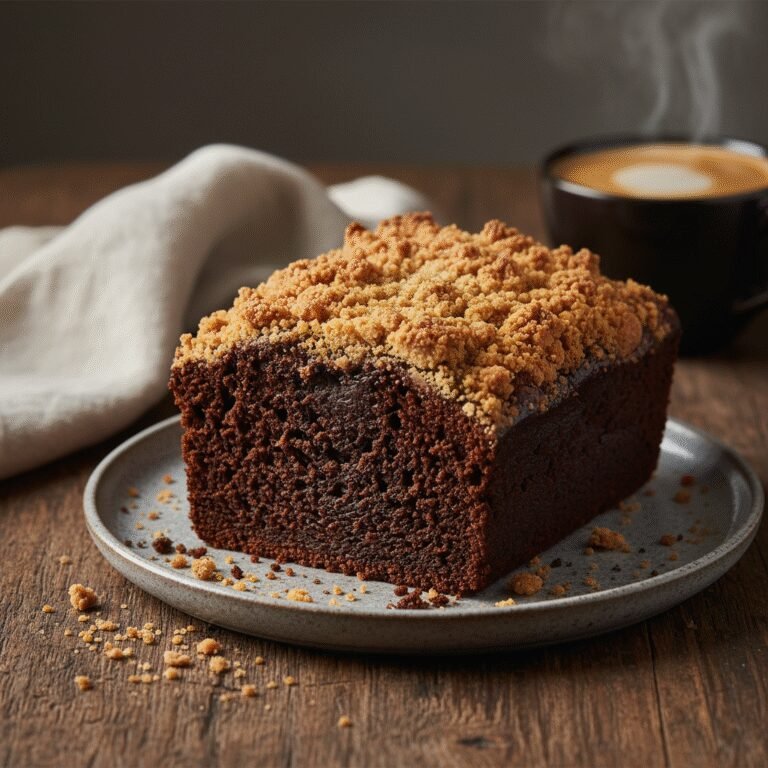
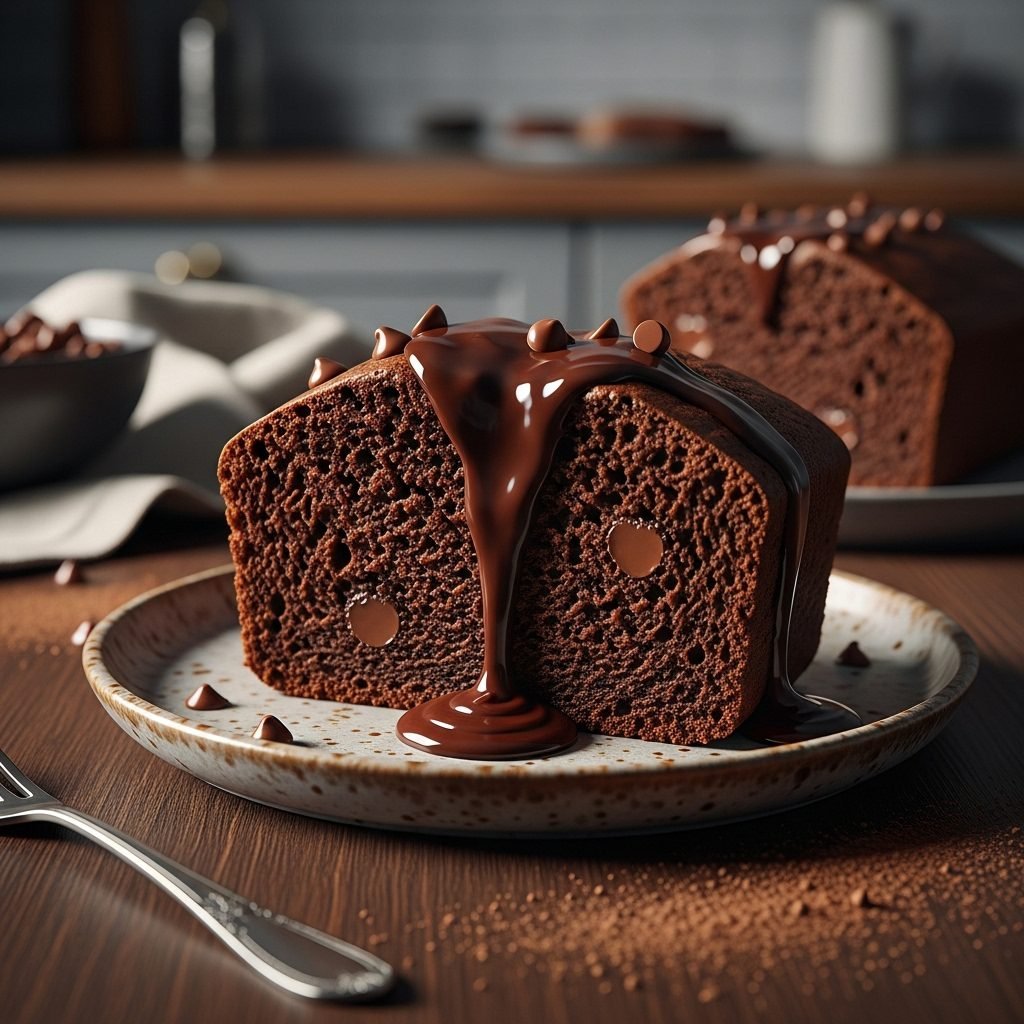
Ultimate Moist Chocolate Loaf Cake with Fudgy Ganache
Moist Chocolate Loaf Cake Recipe
Discover the secret to the perfect chocolate loaf cake that stays incredibly moist for days. Topped with a silky chocolate ganache, this easy-to-make recipe is a chocolate lover’s dream, perfect for breakfast, snack time, or a decadent dessert.
20 minutes
50 minutes
1 hour 10 minutes
1 Loaf (8-10 Slices)
Dessert
Baking
American
Vegetarian
There is something profoundly comforting about a loaf cake. Unlike its more high-maintenance cousins—the layered birthday cake or the delicate mousse—a loaf cake promises simplicity, warmth, and an unpretentious indulgence that fits just as well on a breakfast table as it does at a dinner party. However, finding the ‘holy grail’ of chocolate loaf cakes is a surprisingly difficult endeavor. Far too often, they emerge from the oven looking beautiful but tasting dry, crumbly, or lacking that deep, punchy chocolate flavor we all crave. That ends today. This Moist Chocolate Loaf Cake recipe is the result of obsessive testing to banish dry crumbs forever.
Imagine a cake with a crumb so tender it almost melts on your tongue, boasting a richness that rivals the best brownies but with a lighter, fluffier suspension. We achieve this not by magic, but by balancing fat ratios and using specific techniques to bloom the cocoa. The flavor profile here is deep and sophisticated; it’s not just ‘sweet,’ it is profoundly ‘chocolate.’ The addition of a hot coffee bloom amplifies the cocoa notes without making the cake taste like a mocha latte. To finish, we pour over a luxurious, glossy ganache that sets into a fudgy layer, adding a contrast in texture that elevates the entire experience. Whether you are a novice baker looking for a foolproof win or a seasoned pro searching for your new go-to standard, this recipe delivers on every front. Grab a glass of cold milk or a hot espresso, because you are about to bake the best chocolate cake of your life.
History & Origins
The history of the loaf cake is deeply intertwined with the evolution of the ‘pound cake,’ a culinary staple dating back to the early 1700s in Northern Europe. Originally named for its simple ratio of ingredients—a pound each of flour, butter, eggs, and sugar—these dense cakes were reliable but often heavy. As baking technology advanced in the 19th century with the invention of chemical leaveners like baking powder and baking soda, home bakers began to experiment with lighter textures and new flavors.
Chocolate, however, was a late addition to the baking canon. For centuries, chocolate was consumed primarily as a beverage in Mesoamerica and later Europe. It wasn’t until the mid-19th century, with the invention of the cocoa press by Coenraad van Houten and the subsequent development of cocoa powder, that chocolate became an accessible ingredient for baking. The ‘Devil’s Food’ style cakes, known for their reddish hue and intense flavor, began appearing in American cookbooks in the early 1900s, often utilizing boiling water to activate the cocoa—a technique we still prize today.
The specific ‘loaf’ format gained immense popularity in the mid-20th century in the United States, coinciding with the rise of the ‘quick bread.’ The loaf pan offered a convenient shape for slicing and packing in lunchboxes, moving cake from a special-occasion treat to an everyday comfort food. This particular recipe pays homage to that history, combining the convenience of the mid-century quick bread with the sophisticated, intense chocolate profiles favored by modern palates.
Why This Recipe Works
This recipe succeeds where others fail due to three critical chemical interactions: the choice of fat, the acidity of the dairy, and the blooming of the cocoa. First, we prioritize vegetable oil over butter for the cake batter. While butter provides flavor, it is about 18-20% water and solidifies at room temperature, which can lead to a drier texture once the cake cools. Oil remains liquid at room temperature, ensuring the cake stays sensationally moist and soft for days.
Second, the inclusion of sour cream is non-negotiable. The acidity in sour cream reacts with the baking soda to create carbon dioxide, giving the cake a superior lift, while the high fat content tenderizes the gluten strands in the flour, preventing toughness. This results in that desirable ‘velvety’ crumb.
Finally, and perhaps most importantly, is the ‘blooming’ step. By mixing the cocoa powder with hot coffee before adding it to the batter, we dissolve the cocoa butter and release flavor compounds that are otherwise locked away. The heat helps to hydrate the cocoa starches, leading to a deeper, darker color and a more intense chocolate flavor that doesn’t require excessive amounts of sugar to mask bitterness. The combination of these elements creates a synergy that guarantees a moist, flavorful, and foolproof loaf every time.
Why You’ll Love This Recipe
- ✓Stays moist for up to 4 days at room temperature
- ✓Intense, deep chocolate flavor enhanced by hot coffee
- ✓Easy one-bowl method with no electric mixer required
- ✓Versatile: works as breakfast, snack, or dessert
- ✓Freezer-friendly for make-ahead meal prep
- ✓Topped with a foolproof 2-ingredient ganache
Equipment You’ll Need
- ✓9×5 inch Loaf Pan
- ✓Large Mixing Bowl
- ✓Medium Mixing Bowl
- ✓Whisk
- ✓Rubber Spatula
- ✓Parchment Paper
- ✓Wire Cooling Rack
- ✓Measuring Cups and Spoons
Ingredients
- ✓1 cup (125g) All-Purpose Flour
- ✓1/2 cup (45g) Unsweetened Cocoa Powder (Dutch-processed preferred)
- ✓1 cup (200g) Granulated White Sugar
- ✓1/2 teaspoon Baking Soda
- ✓1/2 teaspoon Baking Powder
- ✓1/4 teaspoon Salt
- ✓2 Large Eggs, room temperature
- ✓1/2 cup (120ml) Vegetable Oil or Canola Oil
- ✓1/2 cup (120g) Sour Cream or Full-Fat Greek Yogurt, room temperature
- ✓1 teaspoon Pure Vanilla Extract
- ✓1/2 cup (120ml) Hot Strong Coffee (or hot water)
- ✓1/2 cup (85g) Semi-Sweet Chocolate Chips (optional mix-in)
- ✓FOR THE GANACHE: 1/2 cup (85g) Semi-Sweet Chocolate Chips
- ✓FOR THE GANACHE: 1/3 cup (80ml) Heavy Cream
Instructions
- 1. PREHEAT AND PREP: Preheat your oven to 350°F (175°C). Grease a 9×5 inch loaf pan generously with butter or cooking spray and line it with parchment paper, leaving an overhang on the sides for easy removal later.
- 2. WHISK DRY INGREDIENTS: In a large mixing bowl, sift together the all-purpose flour, cocoa powder, sugar, baking soda, baking powder, and salt. Whisk well to ensure the leavening agents are evenly distributed.
- 3. MIX WET INGREDIENTS: In a medium bowl, whisk together the eggs, vegetable oil, sour cream, and vanilla extract until the mixture is smooth and creamy.
- 4. COMBINE: Pour the wet ingredients into the dry ingredients. Use a rubber spatula to gently fold the mixture. Do not overmix; stop when there are still streaks of flour visible.
- 5. BLOOM WITH COFFEE: Carefully pour the hot coffee (or hot water) into the batter. Whisk gently until the batter is smooth and glossy. The batter will be thin and runny—this is normal! Fold in chocolate chips if using.
- 6. BAKE: Pour the batter into the prepared loaf pan. Bake for 45-55 minutes. Test for doneness by inserting a toothpick into the center; it should come out with a few moist crumbs attached, but no wet batter. If the top is browning too fast, tent loosely with foil after 30 minutes.
- 7. COOL: Remove from the oven and let the cake cool in the pan for 15 minutes. Then, use the parchment paper handles to lift the cake out onto a wire rack to cool completely before glazing.
- 8. MAKE GANACHE: While the cake cools, place the chocolate chips and heavy cream in a microwave-safe bowl. Heat in 30-second intervals, stirring in between, until smooth and glossy. Let it sit for 5-10 minutes to thicken slightly.
- 9. GLAZE AND SERVE: Pour the ganache over the completely cooled cake, letting it drip down the sides. Allow the ganache to set for 20 minutes before slicing.
Expert Cooking Tips
- ✓Don’t skip the room temperature eggs and sour cream; cold ingredients can shock the batter and lead to uneven baking.
- ✓Use high-quality cocoa powder. Dutch-processed cocoa will yield a darker color and mellower flavor, while natural cocoa provides more acidity and a lighter color.
- ✓Do not overmix the batter once the flour is added. Overmixing develops gluten, which results in a tough, rubbery loaf rather than a tender one.
- ✓The batter will be very liquid compared to standard cake batters. Do not be alarmed and do not add extra flour.
- ✓Check your oven temperature with an external thermometer. Loaf cakes are dense and take a while to bake; correct temperature is crucial to prevent a burnt exterior and raw interior.
- ✓Let the cake cool completely before glazing. If the cake is warm, the ganache will simply melt and run off entirely.
Substitutions and Variations
This recipe is quite forgiving with substitutions, though sticking to the original yields the best results. **Flour:** You can use a 1:1 Gluten-Free All-Purpose Baking Flour blend (ensure it contains xanthan gum) to make this gluten-free. **Oil:** Melted coconut oil or melted butter can be used instead of vegetable oil. Butter adds flavor but slight dryness; coconut oil adds a subtle coconut taste unless refined. **Sour Cream:** Full-fat plain Greek yogurt or buttermilk are excellent substitutes. If using buttermilk, the batter will be slightly thinner. **Coffee:** If you want to avoid caffeine, use decaf coffee or simply hot water. The coffee flavor is not prominent but enhances the chocolate; hot water works fine but the chocolate flavor will be slightly less ‘3D’. **Sugar:** You can substitute half the white sugar for light brown sugar for a more caramel-like undertone, though it increases moisture significantly so bake time may increase slightly.
Common Mistakes to Avoid
The most common mistake with loaf cakes is **overbaking**. Because the pan is deep, it’s easy to think the center is raw when it’s actually perfectly done. Remember that the cake continues to cook slightly as it cools in the pan. If your toothpick comes out bone dry, the cake will likely be dry. Aim for moist crumbs. Another mistake is **using a glass pan without adjusting temperature**. Glass conducts heat differently than metal; if using glass, lower the oven temperature by 25°F and bake slightly longer. Finally, **rushing the cooling process** often leads to the cake breaking apart. Loaf cakes are structurally fragile when hot; give it that full 15 minutes in the pan to set.
Serving Suggestions
This cake is stunning on its own, but you can dress it up for different occasions. For a cozy afternoon treat, serve a slice slightly warmed with a dollop of unsweetened whipped cream to cut the richness. For a dessert course, pair it with a scoop of vanilla bean ice cream and fresh raspberries or strawberries; the acidity of the fruit cuts through the dark chocolate beautifully. If you want to serve it for brunch, omit the ganache and instead dust the top heavily with powdered sugar or a simple espresso glaze.
Storage and Reheating Tips
Because this cake is oil-based, it stores beautifully. **Room Temperature:** Store the cake in an airtight container or wrapped tightly in plastic wrap at room temperature for up to 4 days. In fact, it is often moister on the second day. **Refrigerator:** You can refrigerate it for up to 1 week, but note that the cold will solidify the fats and make the texture denser. Bring to room temperature before eating. **Freezing:** This cake freezes exceptionally well. Wrap the unglazed loaf (or individual slices) in plastic wrap, then in foil. Freeze for up to 3 months. Thaw on the counter overnight before glazing and serving.
Nutrition Facts (Estimated)
| Serving Size | 1 Slice |
| Calories | 380 |
| Fat | 21g |
| Saturated Fat | 8g |
| Unsaturated Fat | 12g |
| Trans Fat | 0g |
| Cholesterol | 45mg |
| Sodium | 210mg |
| Carbohydrates | 45g |
| Fiber | 3g |
| Sugar | 28g |
| Protein | 5g |
Frequently Asked Questions
Why did my chocolate chips sink to the bottom?
This happens if the batter is too thin to support them or the chips are too heavy. To prevent this, toss your chocolate chips in a teaspoon of flour before folding them into the batter. This adds friction and helps them stay suspended.
Can I double this recipe?
Yes, you can double the ingredients to make two loaves. However, do not try to bake a double batch in one giant pan; use two separate 9×5 loaf pans and bake them side-by-side with a little space in between for air circulation.
Why did my loaf cake crack on top?
A crack down the center is actually characteristic of a good loaf cake! It happens because the outside sets before the rising center finishes expanding. It is a sign of a good rise and rustic appearance, not a failure.
Can I use natural cocoa powder instead of Dutch-processed?
Yes. This recipe uses both baking soda and baking powder, so it has enough leavening power to handle either. Natural cocoa will give a reddish tint and a slightly tangier flavor, while Dutch-process will be darker and earthier.
My cake is sinking in the middle. Why?
This usually means the cake was underbaked or the oven door was opened too early, causing the structure to collapse before it set. It can also happen if there was too much leavening agent used. Always measure baking soda/powder precisely.
Can I make this dairy-free?
Yes. Substitute the sour cream with a dairy-free yogurt (coconut or almond based) and ensure your chocolate chips are dairy-free. For the ganache, use full-fat coconut milk instead of heavy cream.
Do I really need to use hot coffee?
You don’t *have* to, but it is highly recommended. The heat blooms the cocoa, and the coffee intensifies the chocolate flavor. If you dislike coffee, hot water is the correct substitute to maintain the texture.
Can I bake this in a muffin tin?
Absolutely. This batter makes excellent muffins. Bake them at 350°F for approximately 18-22 minutes. The yield will be about 12-14 standard muffins.
Conclusion
In a world of complicated pastries and multi-step desserts, this Moist Chocolate Loaf Cake stands as a testament to the power of simplicity. It is the kind of recipe that becomes a family heirloom—scribbled on a recipe card, stained with cocoa powder, and passed down through generations. Whether you are baking for a celebration, a friend in need, or just a Tuesday night craving, this loaf delivers comfort in every crumb. Don’t forget to pin this recipe to your favorite dessert board so you never lose it, and please leave a comment below letting us know how it turned out for you. Happy baking!