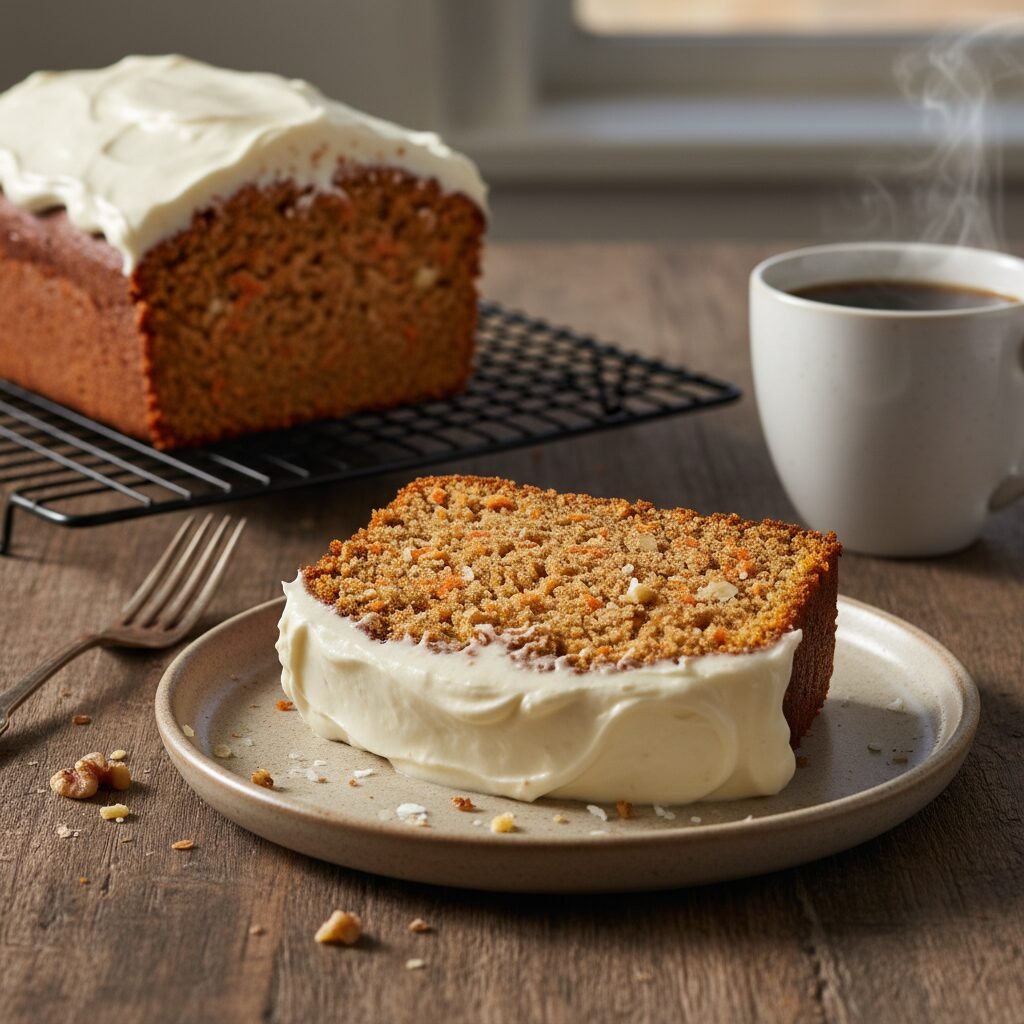
The Ultimate Moist Carrot Loaf Cake with Coconut & Cream Cheese Glaze
Moist Carrot Loaf Cake With Coconut Recipe
Discover the perfect balance of cozy spice and tropical sweetness with this incredibly moist carrot loaf cake. Packed with fresh grated carrots and shredded coconut, it’s finished with a tangy cream cheese glaze that makes every bite unforgettable.
20 minutes
55 minutes
1 hour 15 minutes
1 loaf (10-12 slices)
Dessert / Breakfast
Baking
American
Vegetarian
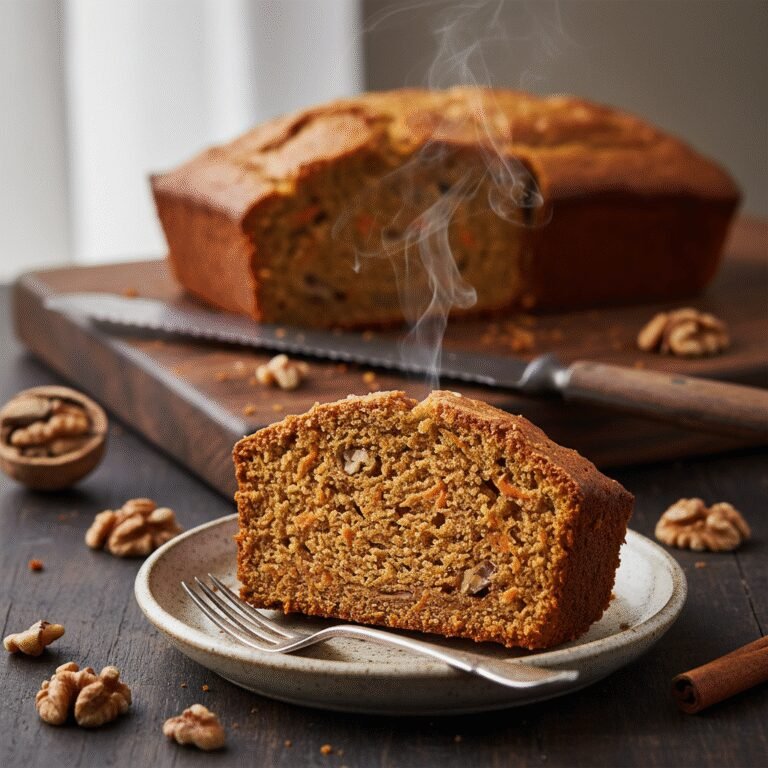
There is something undeniably comforting about a freshly baked loaf cake sitting on the counter, waiting to be sliced. This Moist Carrot Loaf Cake with Coconut takes that comfort to an entirely new level, bridging the gap between a classic morning quick bread and a decadent afternoon dessert. The magic lies in the texture; unlike drier sponges, this loaf boasts a dense, incredibly moist crumb that stays soft for days, thanks to the generous amount of freshly grated carrots and the secret weapon: shredded coconut.
While traditional carrot cake is often associated with heavy layers and towering frosting, the loaf format offers a more approachable, rustic elegance. It is the kind of bake that feels right at home next to a steaming mug of coffee on a rainy Sunday morning or served as a sweet treat after a light dinner. The addition of coconut introduces a subtle chew and a whisper of tropical sweetness that perfectly complements the warmth of cinnamon, nutmeg, and ginger. As the loaf bakes, the kitchen fills with an aroma that is nothing short of intoxicating—spicy, sweet, and buttery all at once.
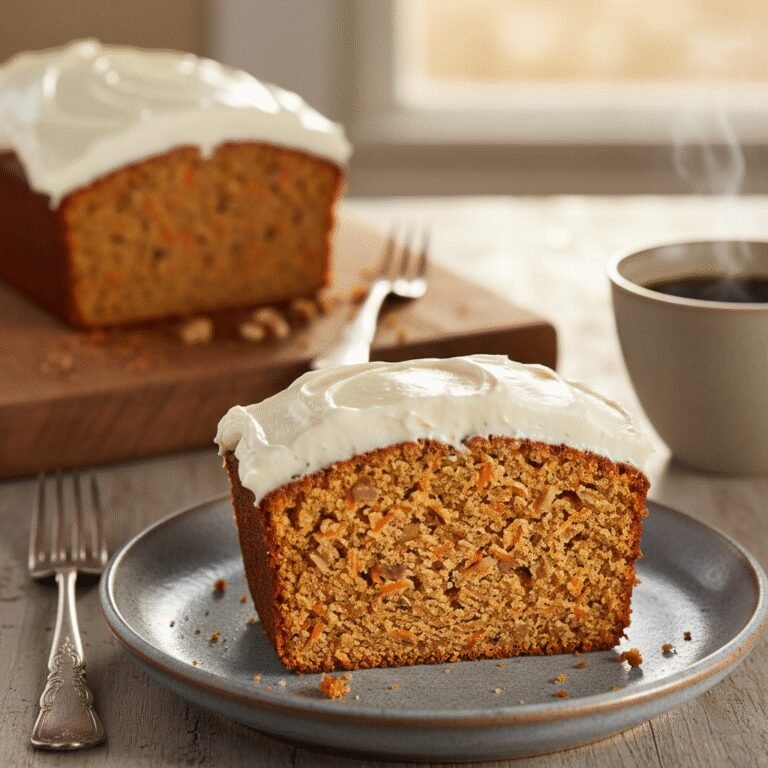
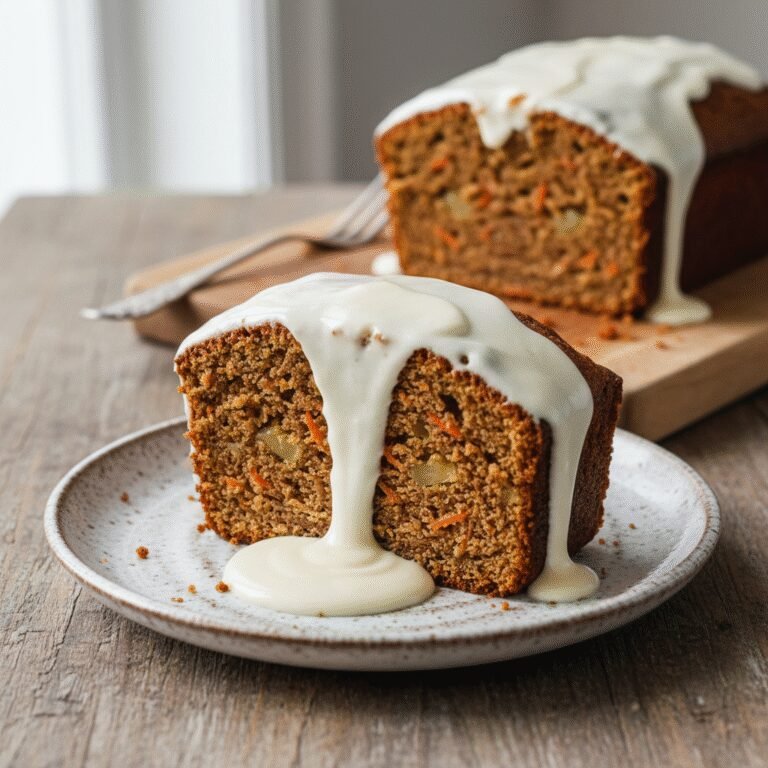
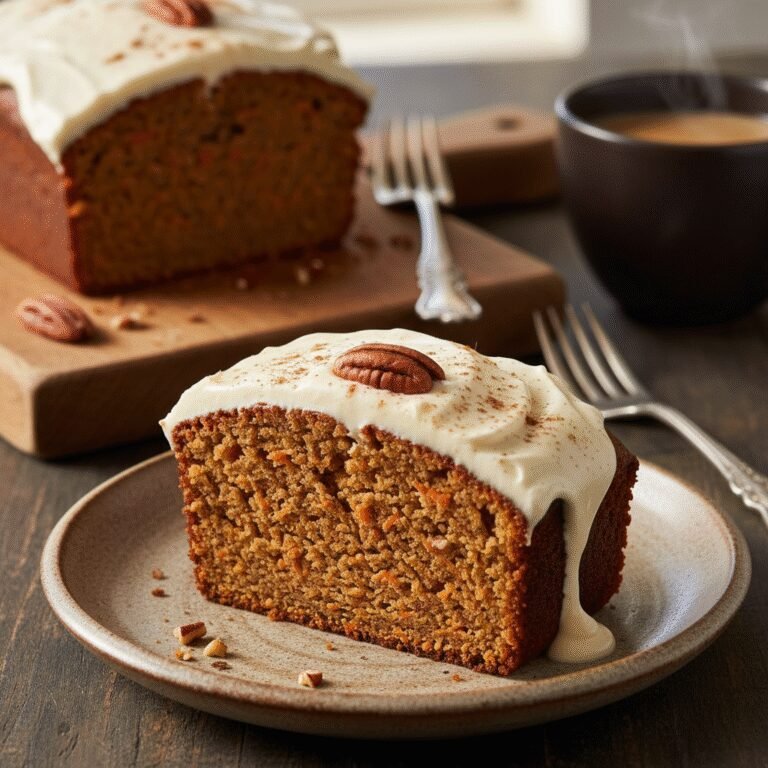
Topping it all off is a luscious cream cheese glaze that drizzles down the sides, adding just the right amount of tang to cut through the sweetness of the brown sugar and carrots. Whether you are an experienced baker or a novice looking for a foolproof recipe, this carrot coconut loaf is destined to become a staple in your recipe box. It is not just a cake; it is a slice of home, warmth, and pure culinary joy.
History & Origins
The history of carrot cake is a fascinating journey that traces back much further than the 1970s health food craze that popularized it in American diners. Its origins can likely be pinpointed to medieval Europe, specifically to carrot puddings. In the Middle Ages, sugar and other sweeteners were rare and prohibitively expensive for the common person. Carrots, however, were abundant and known to contain more natural sugar than almost any other vegetable (second only to sugar beets). Cooks of the era cleverly utilized this natural sweetness to create dense, steamed puddings that served as desserts.
Fast forward to the 20th century, and we see a resurgence of carrot-based baking during World War II in Great Britain. With strict rationing on sugar, the government distributed recipes using carrots as a sweetener to help families stretch their meager supplies. This solidified the carrot’s place in the realm of sweets. However, the modern carrot cake we know and love—often featuring cream cheese frosting—truly exploded in popularity in the United States during the 1960s and 70s. It was marketed as a ‘healthy’ alternative to traditional cakes, despite the rich oil and sugar content, capitalizing on the era’s back-to-nature movement.
The addition of coconut is a more recent evolution, likely influenced by Southern American baking traditions like the Hummingbird Cake, which famously combines bananas, pineapple, and pecans. Merging the texture of coconut with the spiced profile of carrot cake creates a hybrid that honors the rustic roots of the medieval pudding while embracing the indulgent textures of modern American baking.
Why This Recipe Works
This recipe succeeds where many others fail because it prioritizes moisture retention without sacrificing structure. Many loaf cakes suffer from being too dry or, conversely, too gummy. Here, we use a specific blend of oil and brown sugar. Oil is superior to butter in carrot cakes because it remains liquid at room temperature, ensuring the cake stays soft and moist for days, whereas butter-based cakes can firm up and dry out once cool. Brown sugar, with its high molasses content, is hygroscopic, meaning it attracts and holds water, further locking in moisture.
The inclusion of shredded coconut does double duty. First, it adds a delightful textural contrast to the soft crumb. Second, coconut has a high fat content, which contributes to the richness of the loaf. We also insist on freshly grating the carrots rather than buying pre-shredded ones. Pre-shredded carrots are often dry and coated in cornstarch to prevent clumping, which can throw off the hydration of your batter. Freshly grated carrots release their water during baking, essentially steaming the cake from the inside out.
Finally, the spice blend is carefully calibrated. We use a mix of cinnamon for warmth, ginger for a bit of heat, and nutmeg for earthy complexity. This ensures that the flavor profile is robust enough to stand up to the sweetness of the coconut and the tang of the cream cheese glaze.
Why You’ll Love This Recipe
- ✓Stays moist for up to 5 days due to the oil-based batter.
- ✓Perfect balance of warm spices and tropical coconut flavor.
- ✓Easy one-bowl mixing method requires no electric mixer.
- ✓Versatile enough for breakfast, brunch, or dessert.
- ✓Freezes beautifully for meal prep or unexpected guests.
Equipment You’ll Need
- ✓9×5 inch Loaf Pan
- ✓Large Mixing Bowl
- ✓Medium Mixing Bowl
- ✓Box Grater
- ✓Whisk
- ✓Rubber Spatula
- ✓Wire Cooling Rack
- ✓Measuring Cups and Spoons
Ingredients
- ✓1 1/2 cups All-purpose flour
- ✓1 tsp Baking powder
- ✓1/2 tsp Baking soda
- ✓1/2 tsp Salt
- ✓1 1/2 tsp Ground cinnamon
- ✓1/2 tsp Ground ginger
- ✓1/4 tsp Ground nutmeg
- ✓2 large Eggs, room temperature
- ✓1/2 cup Granulated sugar
- ✓1/2 cup Brown sugar, packed
- ✓1/2 cup Vegetable oil or melted coconut oil
- ✓1/3 cup Plain Greek yogurt or sour cream
- ✓1 tsp Vanilla extract
- ✓1 1/2 cups Carrots, freshly grated (approx. 2-3 medium carrots)
- ✓3/4 cup Sweetened shredded coconut
- ✓1/2 cup Walnuts or pecans, chopped (optional)
- ✓4 oz Cream cheese, softened (for glaze)
- ✓2 tbsp Unsalted butter, softened (for glaze)
- ✓3/4 cup Powdered sugar (for glaze)
- ✓1-2 tbsp Milk (for glaze)
Instructions
- Preheat your oven to 350°F (175°C). Grease a 9×5 inch loaf pan with non-stick spray or line it with parchment paper, leaving an overhang for easy removal.
- In a medium bowl, whisk together the flour, baking powder, baking soda, salt, cinnamon, ginger, and nutmeg until well combined. Set aside.
- In a large bowl, whisk the eggs, granulated sugar, and brown sugar vigorously for about 1-2 minutes until the mixture is slightly pale and smooth.
- Slowly drizzle in the oil while whisking constantly to emulsify. Add the Greek yogurt (or sour cream) and vanilla extract, whisking until fully incorporated.
- Gently fold the dry ingredients into the wet ingredients using a rubber spatula. Stop mixing when there are still a few streaks of flour visible.
- Add the grated carrots, shredded coconut, and chopped nuts (if using). Fold until just combined and no flour pockets remain. Do not overmix.
- Pour the batter into the prepared loaf pan and smooth the top with the spatula.
- Bake for 50-60 minutes, or until a toothpick inserted into the center comes out clean or with just a few moist crumbs attached. If the top browns too quickly, tent loosely with aluminum foil after 40 minutes.
- Remove from the oven and let the loaf cool in the pan for 15 minutes. Then, lift it out using the parchment paper overhang and transfer to a wire rack to cool completely before glazing.
- To make the glaze: Beat the softened cream cheese and butter together until smooth. Gradually add powdered sugar and 1 tablespoon of milk. Whisk until pourable but thick. Add more milk if needed.
- Drizzle the glaze over the completely cooled loaf and sprinkle with extra toasted coconut if desired.
Expert Cooking Tips
- ✓Grate your own carrots: Store-bought shredded carrots are too dry and thick. Use the medium holes of a box grater for the best texture.
- ✓Room temperature ingredients: Ensure your eggs and yogurt are at room temperature to create a smoother emulsion and better rise.
- ✓Don’t overmix: Once the flour hits the wet mixture, be gentle. Overmixing develops gluten which leads to a tough, rubbery loaf.
- ✓Check for doneness early: Ovens vary. Start checking at the 50-minute mark to prevent drying out the loaf.
- ✓Cool completely: Do not glaze a warm cake, or the frosting will melt and slide right off.
- ✓Toasting nuts: If adding walnuts or pecans, toast them in a dry pan for 5 minutes first to enhance their nutty flavor.
- ✓Tent with foil: Carrot cakes brown easily due to the sugar. Tenting with foil halfway through baking protects the crust while the center cooks.
Substitutions and Variations
This recipe is quite forgiving and adaptable to various dietary needs. For the flour, you can substitute a 1:1 gluten-free baking flour blend if you are avoiding gluten; just ensure the blend contains xanthan gum. If you want a whole grain approach, you can swap up to half of the all-purpose flour for white whole wheat flour, though the texture will be slightly denser. The vegetable oil can be replaced with melted coconut oil for a more intense tropical flavor, or even a light olive oil for a more savory note. If you are out of Greek yogurt, sour cream is the perfect 1:1 substitute, but unsweetened applesauce can also work if you are looking to reduce fat, though the cake will be slightly less rich. For the mix-ins, you can omit the coconut if you aren’t a fan, or replace it with raisins, dried cranberries, or even pineapple tidbits (drained well). The nuts are entirely optional and can be swapped for pumpkin seeds for a nut-free crunch.
Common Mistakes to Avoid
The most common mistake when making carrot loaf is using pre-bagged shredded carrots. These are often hard and dry, leading to a crunchy texture inside the cake rather than a soft melt-in-your-mouth crumb. Always grate fresh. Another pitfall is overmixing the batter. Quick breads and loaves rely on tenderness; vigorous mixing activates gluten, resulting in a tough, chewy texture. Be sure to stop mixing as soon as the flour disappears. Additionally, underbaking is a risk because of the high moisture content. The ‘toothpick test’ is crucial here—don’t just look at the golden crust; ensure the center is set. Lastly, adding the glaze while the cake is still warm is a recipe for disaster. The heat will cause the fats in the cream cheese to separate and melt, leaving you with a translucent, runny mess instead of a thick, white glaze.
Serving Suggestions
This Moist Carrot Loaf Cake is incredibly versatile. For a decadent breakfast or brunch, serve thick slices slightly warmed with a pat of salted butter or a dollop of extra Greek yogurt on the side. It pairs beautifully with a hot cup of chai tea or a dark roast coffee, as the spices in the drink complement the cinnamon and nutmeg in the loaf. For dessert, you can dress it up by serving a slice with a scoop of vanilla bean ice cream and a drizzle of caramel sauce. If you are hosting a gathering, cut the loaf into smaller squares and serve them on a platter garnished with edible flowers or candied carrot ribbons for an elegant presentation.
Storage and Reheating Tips
Because this cake is so moist, proper storage is key to maintaining its texture. If you have glazed the loaf, it is best stored in the refrigerator in an airtight container, where it will keep for up to 5 days. The cream cheese in the glaze requires refrigeration. If you haven’t glazed it, the loaf can stay at room temperature in an airtight container for 3 days. To freeze, wrap individual slices (without glaze is best, but glazed works too) tightly in plastic wrap and then in aluminum foil. Freeze for up to 3 months. To reheat, unwrap a slice and microwave it for 15-20 seconds to bring back that fresh-baked warmth and softness.
Nutrition Facts (Estimated)
| Serving Size | 1 slice |
| Calories | 340 |
| Fat | 18g |
| Saturated Fat | 6g |
| Unsaturated Fat | 11g |
| Trans Fat | 0g |
| Cholesterol | 35mg |
| Sodium | 180mg |
| Carbohydrates | 42g |
| Fiber | 2g |
| Sugar | 22g |
| Protein | 4g |
Frequently Asked Questions
Can I bake this in a muffin tin instead of a loaf pan?
Yes, absolutely! This batter works great for muffins. Line a standard muffin tin with paper liners and bake at 350°F (175°C) for 18-22 minutes. The yield will be approximately 12-14 muffins.
Why did my carrot loaf sink in the middle?
Sinking usually happens if the cake was underbaked or if the oven door was opened too early, causing a sudden temperature drop. It can also be caused by too much leavening (baking powder/soda) or over-beating the eggs.
Can I reduce the sugar in this recipe?
You can reduce the sugar by about 1/4 cup without significantly affecting the structure. However, keep in mind that sugar contributes to moisture, so reducing it too much may result in a drier loaf.
Do I have to use coconut?
No, the coconut is optional. If you omit it, you might want to add an extra 1/4 cup of carrots or nuts to maintain the volume of mix-ins, but the recipe works fine without it.
Can I use olive oil instead of vegetable oil?
Yes, but choose a light or mild olive oil. Extra virgin olive oil has a strong flavor that might clash with the sweet spices and coconut.
How do I grate carrots quickly?
A food processor with a grating attachment is the fastest method. If doing it by hand, use the medium holes of a box grater and watch your fingers!
Is the glaze necessary?
The loaf is delicious on its own, but the tangy cream cheese glaze balances the sweetness perfectly. For a lighter option, a simple dusting of powdered sugar works well too.
Can I add pineapple to this recipe?
Yes, crushed pineapple adds great flavor and moisture. Use about 1/2 cup of crushed pineapple, but make sure to drain it very thoroughly so the batter doesn’t become too wet.
Conclusion
This Moist Carrot Loaf Cake with Coconut is more than just a recipe; it is a reliable companion for your coffee breaks, celebrations, and quiet moments of indulgence. The combination of textures—from the tender crumb to the chewy coconut and crunchy nuts—makes every bite interesting and satisfying. By following the tips for fresh ingredients and careful mixing, you are guaranteed a bakery-quality result right in your own kitchen. Whether you are baking for family, friends, or just treating yourself, this loaf is sure to bring smiles and requests for the recipe. Happy baking!