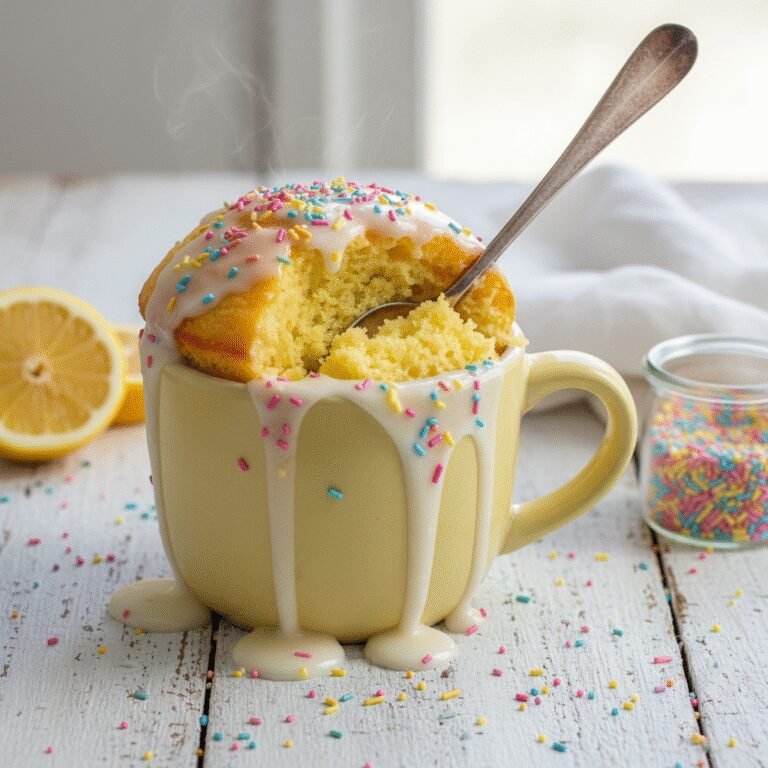
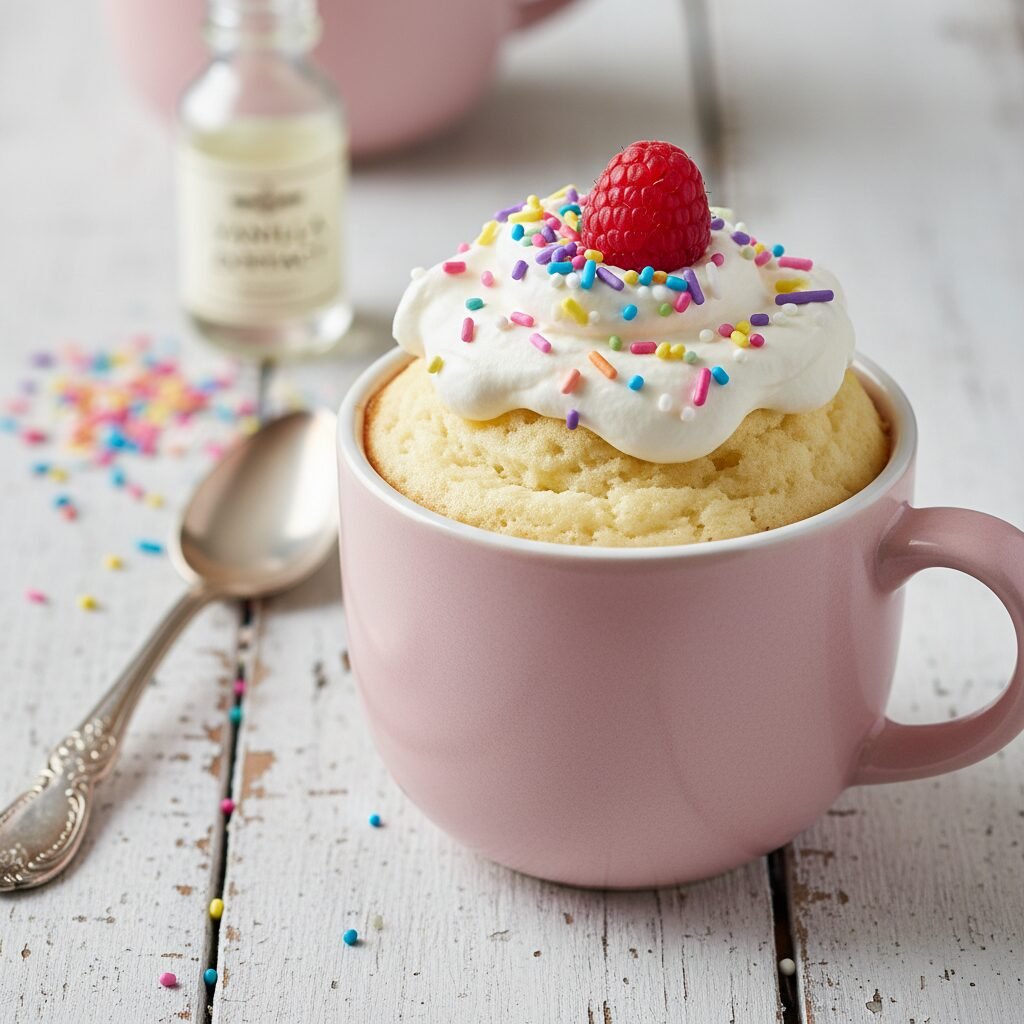
The Ultimate Easy Vanilla Mug Cake Without Egg Recipe: A 2-Minute Miracle
Easy Vanilla Mug Cake Without Egg Recipe
Satisfy your sudden sweet tooth cravings instantly with this fluffy, moist, and utterly delicious Easy Vanilla Mug Cake Without Egg Recipe. It requires just a handful of pantry staples and less than two minutes in the microwave to create a warm, comforting single-serving dessert.
3 minutes
1 minute 30 seconds
4 minutes 30 seconds
1 serving
Dessert
Microwave
American
Vegetarian
There are few things in the culinary world more satisfying than the immediacy of a mug cake. We have all been there: it is late at night, the house is quiet, and suddenly, a profound craving for something sweet and homemade strikes. Baking a whole cake seems like an insurmountable task involving preheating ovens, dirtying multiple mixing bowls, and waiting an hour for the result. Enter the hero of modern snacking: the mug cake. This specific Easy Vanilla Mug Cake Without Egg Recipe is designed for those moments when you need comfort food fast but do not want to compromise on texture or flavor.
Many skeptics believe that microwave baking results in rubbery or dry textures, especially when removing eggs from the equation. However, this recipe defies those expectations completely. By carefully balancing the ratio of fat, flour, and liquid, and relying on the reaction between baking powder and heat, we achieve a crumb that is surprisingly tender and light. The absence of egg actually works in favor of the texture here; often, an entire egg in a small mug cake can make the result spongy or omelet-like. Without it, the vanilla flavor shines through cleanly, unmasked by the sulfurous notes that eggs can sometimes impart in quick-cooking methods.
This recipe is more than just a quick fix; it is a blank canvas for your culinary creativity. Whether you are a student in a dorm room with limited equipment, a busy parent needing a quick treat, or simply someone who loves cake but hates the cleanup, this vanilla mug cake is your new best friend. It captures the essence of a classic vanilla birthday cake—buttery, sweet, and aromatic—condensed into a single, huggable mug. Get ready to discover how a few tablespoons of flour and a splash of milk can transform into a gourmet experience in mere seconds.
History & Origins
The concept of the mug cake is a relatively recent phenomenon in the grand timeline of baking history, closely tied to the widespread adoption of the microwave oven. While the microwave was invented in the mid-20th century, primarily used for reheating and defrosting, the idea of actually ‘cooking’ or ‘baking’ from scratch in it took decades to refine. In the early days of microwave cookbooks during the 1970s and 80s, recipes were often clunky and resulted in unappetizing textures, leading many to abandon the idea of microwave baking altogether.
However, the late 2000s and early 2010s saw a resurgence in single-serving desserts, driven largely by the internet and the rise of food blogging. As our lives became faster-paced and the desire for instant gratification grew, the ‘mug cake’ trend exploded on platforms like Pinterest and Instagram. It catered to a specific cultural shift: the move towards portion control and the reduction of food waste. Instead of baking a whole cake that might go stale, people could bake exactly what they needed.
The specific evolution of the *eggless* mug cake has roots in both necessity and dietary preference. Traditional mug cake recipes that simply scaled down standard cake batters often failed because standard cake chemistry does not scale linearly in a microwave environment. An egg, which provides structure in a standard 8-inch cake, is simply too much protein and binding power for a 10-ounce mug, often resulting in a rubbery texture. Home cooks and food scientists began experimenting with egg-free formulations, borrowing techniques from depression-era ‘wacky cakes’ and vegan baking traditions. This recipe represents the culmination of that history—a modern, refined approach to quick baking that respects the unique physics of the microwave while delivering the nostalgic comfort of traditional cake.
Why This Recipe Works
This recipe succeeds where many others fail because it addresses the fundamental challenges of microwave baking: moisture retention and texture management. In a conventional oven, heat surrounds the batter, cooking it from the outside in, allowing a slow rise and setting of the gluten structure. A microwave, however, excites water molecules throughout the batter simultaneously, causing a rapid rise and quick moisture loss. To combat this, this recipe uses a higher ratio of fat (oil or melted butter) and liquid (milk) to flour than a standard oven cake. This ensures the cake remains moist even after the intense burst of heat.
Furthermore, the omission of the egg is crucial for this specific application. Eggs act as binders and tougheners. In such a small volume of batter, the proteins in an egg coagulate too firmly, creating a dense, rubbery mass rather than a soft crumb. By relying on baking powder for lift and the gluten in the flour for just enough structure, we achieve a texture that is fluffy and tender. The addition of a pinch of salt is scientifically important as well; it doesn’t just add saltiness, but it suppresses bitterness and enhances the perception of sweetness and the volatile aromatic compounds of the vanilla, making the cake taste richer and more complex.
Why You’ll Love This Recipe
- ✓Ready in under 5 minutes from start to finish.
- ✓Completely egg-free, resulting in a softer, less rubbery texture.
- ✓Uses basic pantry ingredients you likely already have.
- ✓Perfect single-serving portion control.
- ✓Highly customizable with mix-ins like sprinkles or chocolate chips.
- ✓Minimal cleanup—mix and bake in the same mug!
Equipment You’ll Need
- ✓Microwave-safe mug (approx 12 oz capacity)
- ✓Tablespoon measure
- ✓Teaspoon measure
- ✓Small whisk or fork
Ingredients
- ✓4 tablespoons All-Purpose Flour
- ✓2 tablespoons Granulated Sugar
- ✓1/2 teaspoon Baking Powder
- ✓1/8 teaspoon Salt
- ✓3 tablespoons Milk (dairy or plant-based)
- ✓1 tablespoon Unsalted Butter, melted (or neutral oil)
- ✓1/2 teaspoon Pure Vanilla Extract
- ✓1 teaspoon Sprinkles (optional, for funfetti style)
Instructions
- Prepare your mug: select a microwave-safe mug that holds at least 10-12 ounces to prevent overflowing.
- In the mug, whisk together the dry ingredients: flour, sugar, baking powder, and salt. Ensure there are no large lumps.
- Add the wet ingredients: pour in the milk, melted butter, and vanilla extract.
- Mix thoroughly using a small whisk or a fork. Make sure to scrape the bottom edges of the mug to incorporate all the flour. The batter should be smooth.
- If using sprinkles or other mix-ins, fold them in gently now.
- Place the mug in the center of the microwave. Cook on high power for 60 to 90 seconds. The timing depends on your microwave’s wattage (usually 700W-1200W). Start with 60 seconds; if the top looks wet, add 10-15 second intervals.
- The cake will rise significantly while cooking and then sink slightly when the heat stops. This is normal.
- Carefully remove the hot mug from the microwave using the handle.
- Let it cool for 1-2 minutes before eating. This resting period allows the crumb to set and prevents tongue burns.
- Top with whipped cream or a scoop of ice cream and enjoy immediately.
Expert Cooking Tips
- ✓Do not overmix the batter once the wet ingredients are added; stop as soon as the flour streaks disappear to keep it tender.
- ✓Microwave wattages vary greatly; watch your first mug cake closely to dial in the perfect time for your specific appliance.
- ✓Use a mug with straight sides rather than a tapered bottom for the most even cooking.
- ✓If you want a molten center, reduce the cooking time by about 15 seconds.
- ✓Always place the mug on a paper towel or small plate in the microwave just in case of a minor overflow.
Substitutions and Variations
This recipe is incredibly forgiving and adaptable to various dietary needs. For a vegan version, simply swap the dairy milk for almond, soy, or oat milk, and replace the butter with coconut oil or a neutral vegetable oil like canola. If you are gluten-free, a 1:1 gluten-free baking flour blend works wonderfully here; just ensure your blend contains xanthan gum for structure. For the sweetener, while granulated sugar provides the classic texture, you can substitute brown sugar for a deeper, caramel-like flavor and a moister crumb. Liquid sweeteners like maple syrup or honey can be used, but you may need to add an extra teaspoon of flour to balance the moisture. If you don’t have vanilla extract, almond extract or even a pinch of cinnamon can provide a lovely alternative flavor profile.
Common Mistakes to Avoid
The most frequent mistake when making mug cakes is overcooking them. Because microwaves cook so quickly, even 10 extra seconds can turn a fluffy cake into a dry, hard puck. It is always better to undercook slightly than to overcook. Another common error is using the wrong size mug. If the mug is too small, the batter will inevitably overflow, creating a mess. Conversely, if the mug is too wide and shallow, the cake may spread too thin and dry out. Measuring flour incorrectly is also a culprit for dry cakes; avoid packing the flour into the tablespoon. Instead, scoop loosely and level it off. Finally, skipping the cooling time is a mistake—not only because of the heat, but because the texture improves significantly as the steam settles.
Serving Suggestions
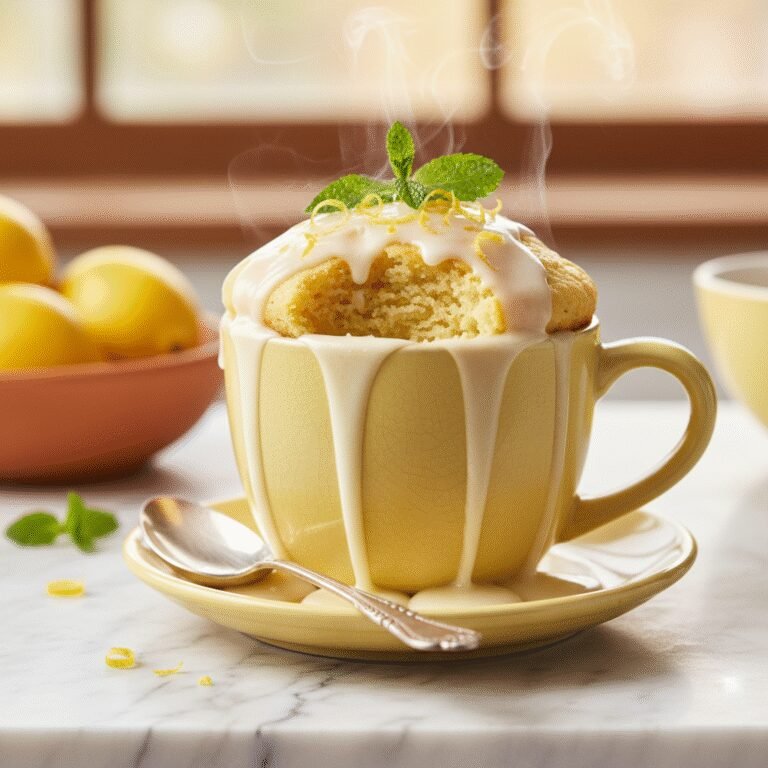
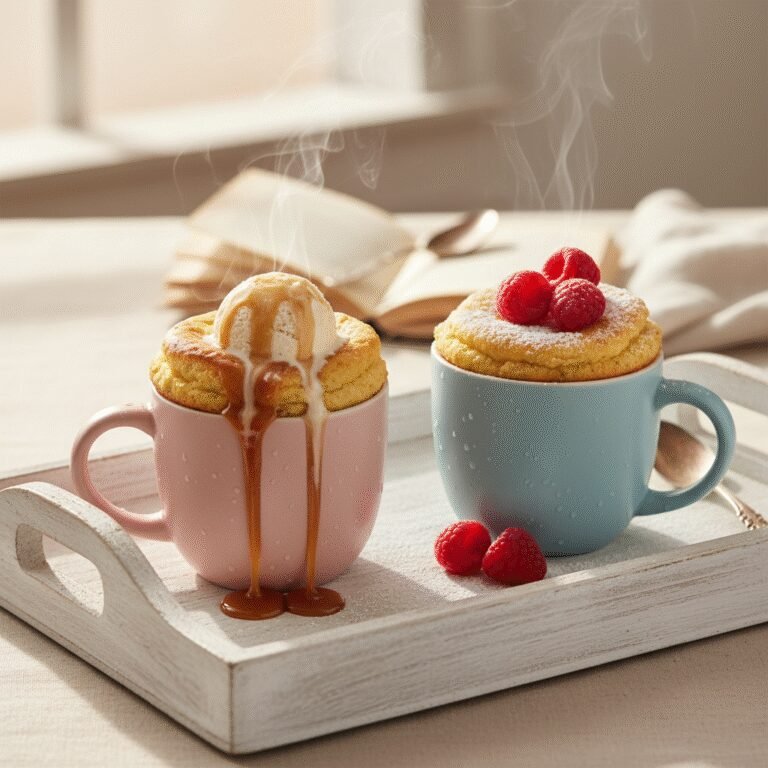
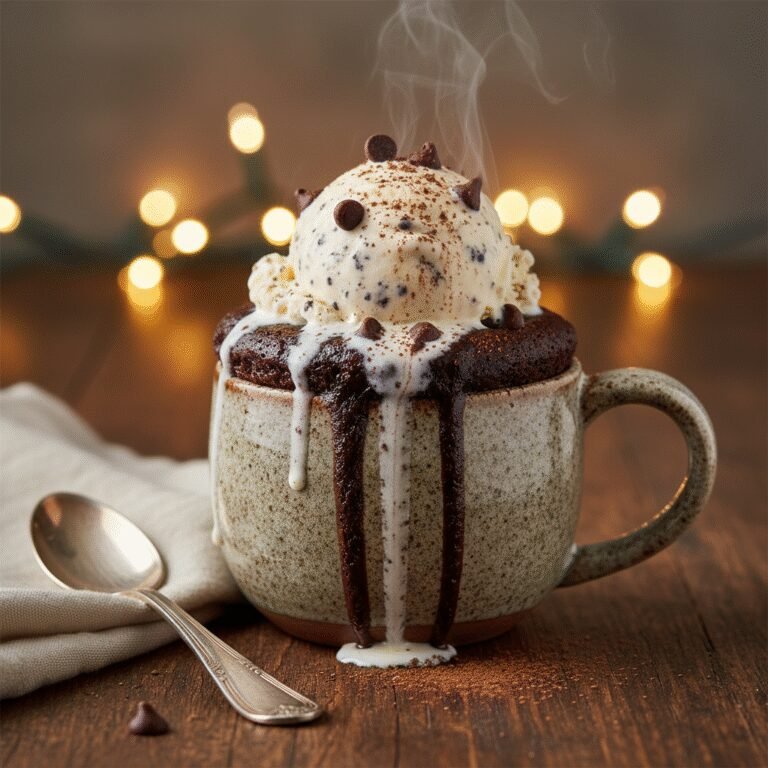
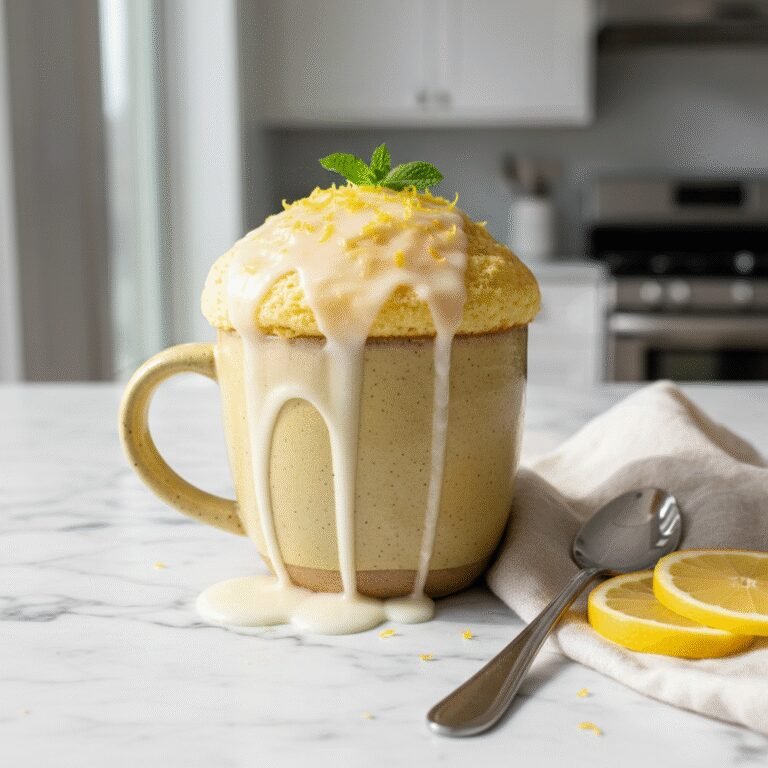
While this mug cake is delicious on its own, the right toppings can elevate it to a restaurant-quality dessert. A classic scoop of vanilla bean ice cream is the ultimate pairing, as the cold cream melts into the warm cake. Fresh berries, such as raspberries or sliced strawberries, add a tart contrast to the sweetness. For a decadent touch, drizzle warm chocolate sauce, salted caramel, or even a spoonful of Nutella over the top. A dollop of freshly whipped cream and a dusting of cocoa powder or cinnamon can also make it feel extra special. For a breakfast twist, try topping it with greek yogurt and a sprinkle of granola.
Storage and Reheating Tips
Mug cakes are best enjoyed immediately after baking. They are designed to be single-serving, instant treats and do not store particularly well as they can become stale or rubbery quickly. However, if you absolutely must save it, cover the mug tightly with plastic wrap to trap moisture and store it at room temperature for up to one day. Do not refrigerate, as this will dry out the sponge. To reheat, place a damp paper towel over the top of the mug and microwave in 10-second bursts until just warm. We highly recommend mixing a fresh batch rather than storing leftovers, as the quality difference is noticeable.
Nutrition Facts (Estimated)
| Serving Size | 1 mug cake |
| Calories | 380 |
| Fat | 18g |
| Saturated Fat | 10g |
| Unsaturated Fat | 8g |
| Trans Fat | 0g |
| Cholesterol | 15mg |
| Sodium | 200mg |
| Carbohydrates | 48g |
| Fiber | 1g |
| Sugar | 25g |
| Protein | 4g |
Frequently Asked Questions
Can I make this recipe in an oven if I don’t have a microwave?
Technically yes, but it defeats the purpose of a ‘mug’ cake. If you must, use an oven-safe ramekin and bake at 350°F (175°C) for roughly 12-15 minutes. The texture will be slightly different, more like a traditional cupcake.
Why is my mug cake rubbery?
Rubberiness is usually caused by two things: overmixing the batter (developing too much gluten) or overcooking it. Mix just until combined and reduce your cooking time next time.
Can I double the recipe?
Do not try to double the recipe in a single standard mug; it will overflow. You can double the ingredients to make two separate mugs cooked one at a time.
Can I use self-rising flour?
Yes! If you use self-rising flour, omit the baking powder and the salt from the recipe, as they are already included in the flour mix.
Is it safe to eat since there is no egg?
Absolutely. Since there are no raw eggs, you don’t have to worry about salmonella if the cake is slightly undercooked. However, raw flour can carry bacteria, so it is still recommended to cook it fully.
Can I add cocoa powder to make this chocolate?
Yes, replace about 1 tablespoon of the flour with unsweetened cocoa powder and add an extra teaspoon of sugar to offset the bitterness.
Why did my cake sink?
Mug cakes rise rapidly due to steam and baking powder. Because they lack the structural support of eggs, a slight sink as they cool is perfectly normal and doesn’t affect the taste.
Can I use oil instead of butter?
Yes, vegetable oil, canola oil, or melted coconut oil work very well and actually keep the cake moister for longer than butter, though you lose the buttery flavor.
Conclusion
This Easy Vanilla Mug Cake Without Egg Recipe proves that you don’t need a special occasion, hours of free time, or a fully stocked pantry to enjoy a slice of homemade happiness. It demystifies the art of baking, stripping it down to its most essential, enjoyable elements: flavor, warmth, and comfort. Whether you are treating yourself after a long day or whipping up a quick dessert for the kids, this recipe is a reliable, fail-proof gem that delivers every time. So, grab your favorite mug, spend five minutes in the kitchen, and enjoy the sweet reward of a perfectly fluffy vanilla cake made just for you.