The Ultimate Easy Vanilla Mug Cake With Cream Cheese Frosting
Easy Vanilla Mug Cake With Cream Cheese Frosting Recipe
Ready in just 5 minutes, this fluffy vanilla mug cake is the ultimate single-serving dessert solution. Topped with a tangy, luscious cream cheese frosting, it satisfies sweet cravings instantly without the hassle of baking a whole cake.
5 minutes
2 minutes
7 minutes
1 serving
Dessert
Microwave
American
Vegetarian
There are few culinary emergencies as pressing as the late-night need for something sweet, warm, and comforting, yet lacking the energy to drag out a stand mixer or preheat the oven. Enter the vanilla mug cake: the unsung hero of solo dining and midnight snacking. For years, mug cakes suffered from a bad reputation, often described as rubbery, sponge-like, or flavorless. However, this recipe completely rewrites that narrative. By carefully balancing the ratio of fat to flour and omitting the egg—which is often the culprit behind that tough, omelet-like texture in microwave baking—we achieve a crumb that is tender, moist, and surprisingly close to a traditional oven-baked cake. But the real showstopper here is the homemade cream cheese frosting. While a plain vanilla cake is delicious, the addition of a cool, tangy, and sweet cream cheese layer melting slightly into the warm top of the cake creates a temperature and texture contrast that is nothing short of gourmet. This isn’t just a quick fix; it is a legitimate dessert experience that happens to be ready in under ten minutes. Whether you are a college student in a dorm, a busy parent needing a moment of peace, or simply someone who believes that portion control shouldn’t mean sacrificing flavor, this recipe is designed for you. It captures the essence of a bakery-style vanilla cupcake, distilled down to its simplest, most accessible form.
History & Origins
The concept of the mug cake is a fascinating intersection of technological innovation and culinary convenience. While ‘cup cakes’ have existed since the late 18th century, the term originally referred to cakes baked in pottery cups or measured by the cupful, not the microwave delicacy we know today. The true origin of the modern mug cake is inextricably linked to the invention and popularization of the microwave oven. First introduced as the ‘Radarange’ in the 1940s, microwaves didn’t become a household staple until the late 1970s and 80s. Early microwave cookbooks often featured attempts at baking, but the results were mixed at best. The specific trend of the ‘mug cake’ as a viral internet phenomenon truly exploded in the late 2000s and early 2010s. This coincided with the rise of food blogging and platforms like Pinterest, where visual appeal and speed were paramount. During the economic recession of 2008, people began cooking at home more frequently and looking for economical, single-serving treats that used pantry staples rather than expensive, large-batch ingredients. The mug cake became a symbol of accessible indulgence. Over the last decade, the recipe has evolved significantly. Early iterations were often just standard cake batter microwaved, resulting in poor textures. Food scientists and home cooks alike eventually realized that microwave baking requires different chemistry—specifically regarding leavening agents and eggs—leading to the perfected, fluffy versions we enjoy today. This specific vanilla variation with cream cheese frosting pays homage to the classic American birthday cake, adapted for the modern, fast-paced lifestyle.
Why This Recipe Works
This recipe succeeds where many other mug cakes fail primarily due to the exclusion of eggs. In a standard cake recipe, an egg provides structure and richness for a large batter. However, when scaled down to a single coffee mug, a whole egg is simply too much protein. In the high-heat environment of a microwave, that protein coagulates rapidly, turning what should be a soft cake into a rubbery, chewy puck that tastes vaguely of scrambled eggs. By removing the egg and relying on baking powder for lift and milk combined with melted butter for moisture, we ensure a tender, velvety crumb. Furthermore, the use of melted butter rather than oil provides a depth of flavor that mimics a traditional butter cake. The microwave cooks by exciting water molecules, which can dry out baked goods instantly; the higher fat content in this recipe protects against that, keeping the cake moist. Finally, the cream cheese frosting provides a necessary acidic counterpoint to the sweetness of the cake. The density of the frosting prevents it from immediately dissolving into the hot cake, allowing for a perfect ‘hot cake, cold frosting’ sensory experience in every bite.
Why You’ll Love This Recipe
- ✓Ready in under 10 minutes from start to finish
- ✓No eggs required, ensuring a fluffy rather than rubbery texture
- ✓Single-serving portion control perfect for solo cravings
- ✓Uses basic pantry staples you likely already have
- ✓Includes a luxurious, tangy cream cheese frosting recipe
- ✓Highly customizable with mix-ins like sprinkles or chips
Equipment You’ll Need
- ✓Microwave-safe mug (12oz or larger)
- ✓Tablespoon measure
- ✓Teaspoon measure
- ✓Small mixing bowl (for frosting)
- ✓Fork or small whisk
- ✓Microwave
Ingredients
- ✓4 tablespoons all-purpose flour
- ✓2 tablespoons granulated sugar
- ✓1/2 teaspoon baking powder
- ✓1 pinch salt
- ✓3 tablespoons milk (whole milk preferred)
- ✓1 tablespoon unsalted butter, melted
- ✓1/2 teaspoon pure vanilla extract
- ✓1 tablespoon cream cheese, softened (for frosting)
- ✓2 tablespoons powdered sugar (for frosting)
- ✓1/4 teaspoon vanilla extract (for frosting)
- ✓1 teaspoon milk (optional, for thinning frosting)
Instructions
- In a standard microwave-safe mug (approx. 12oz), add the all-purpose flour, granulated sugar, baking powder, and salt.
- Use a fork or small whisk to mix the dry ingredients directly in the mug until well combined and no lumps remain.
- Add the milk, melted butter, and 1/2 teaspoon of vanilla extract to the mug.
- Stir the batter gently but thoroughly, ensuring you scrape the bottom edges of the mug so no pockets of dry flour remain. The batter should be smooth.
- Place the mug in the microwave and cook on high power for 60 to 90 seconds. The timing depends on your microwave wattage (see cooking tips). The cake should rise and look set in the center, though slightly moist on top is okay.
- While the cake cools for a moment, prepare the frosting. In a small separate bowl, whisk together the softened cream cheese, powdered sugar, and 1/4 teaspoon vanilla extract until smooth and creamy.
- If the frosting is too thick, add a tiny splash of milk to reach your desired consistency.
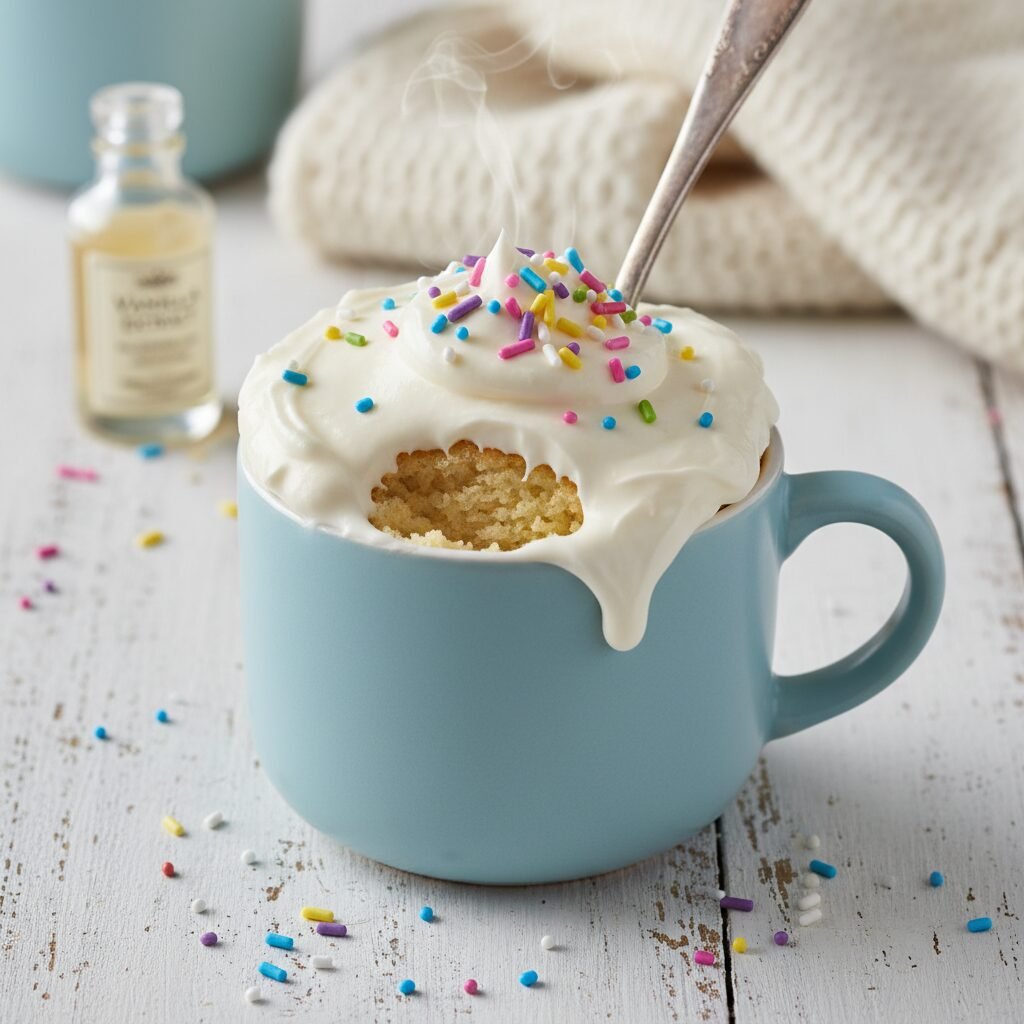
- Spoon the cream cheese frosting over the slightly warm mug cake.
- Add sprinkles or toppings if desired and enjoy immediately while warm.
Expert Cooking Tips
- ✓Know your wattage: If you have a powerful 1200W microwave, start with 60 seconds. If you have a 700W compact microwave, you may need up to 2 minutes.
- ✓Do not overmix the batter once the wet ingredients are added, as this can develop gluten and make the cake tough.
- ✓Use a mug with straight sides if possible for the most even cooking, though a standard coffee cup works fine.
- ✓To prevent overflow, ensure your mug is only about halfway full of batter before cooking.
- ✓Eat it while it is warm; mug cakes tend to dry out if they sit for too long.
- ✓Grease the mug lightly with butter or cooking spray before adding ingredients for easier cleanup.
Substitutions and Variations
This recipe is highly adaptable to various dietary needs. For a gluten-free version, substitute the all-purpose flour with a high-quality 1:1 gluten-free baking flour blend; avoid almond flour alone as it will not rise the same way without eggs. If you are vegan or dairy-free, swap the dairy milk for soy, almond, or oat milk, and use melted coconut oil or vegan butter instead of dairy butter. For the frosting, vegan cream cheese works surprisingly well. If you don’t have cream cheese on hand, you can make a simple buttercream glaze with butter, powdered sugar, and milk, or simply top the cake with a dollop of whipped cream or a scoop of vanilla ice cream. For a lower sugar option, granular erythritol or monk fruit sweetener can replace the sugar 1:1, though the texture may be slightly drier.
Common Mistakes to Avoid
The most common mistake with mug cakes is overcooking. Because microwaves heat unevenly and quickly, even 10 extra seconds can turn a moist cake into a rock. Always err on the side of undercooking; you can always zap it for another 10 seconds, but you cannot un-cook it. Another frequent error is using a mug that is too small. The batter rises significantly due to the baking powder, and a small tea cup will result in a messy overflow on your microwave turntable. Ensure you use a standard 12oz mug or larger. Finally, failing to mix the batter at the very bottom of the mug often results in a mouthful of dry, cooked flour at the end. Make sure to scrape the corners of the mug thoroughly with your fork before cooking.
Serving Suggestions
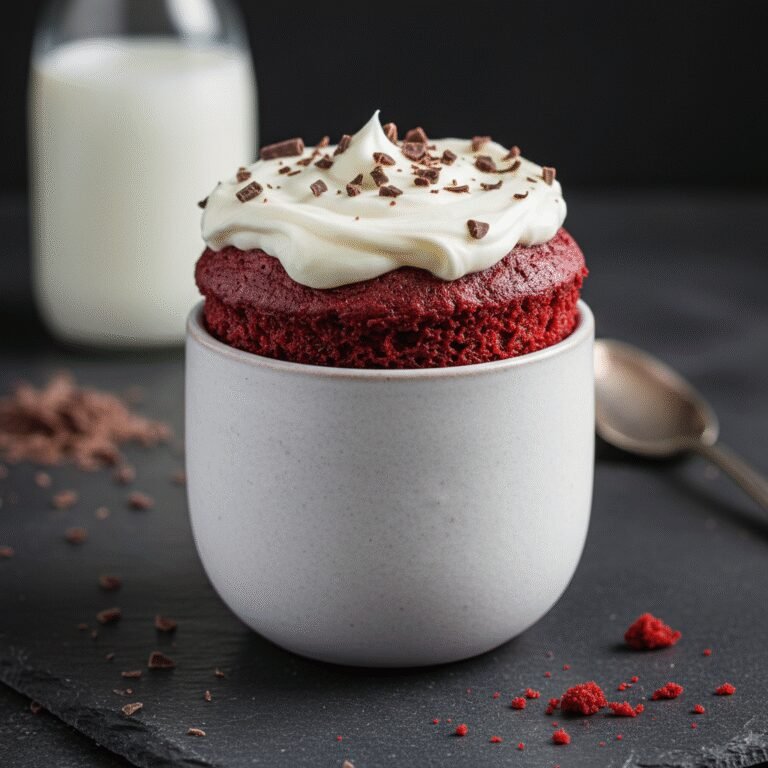
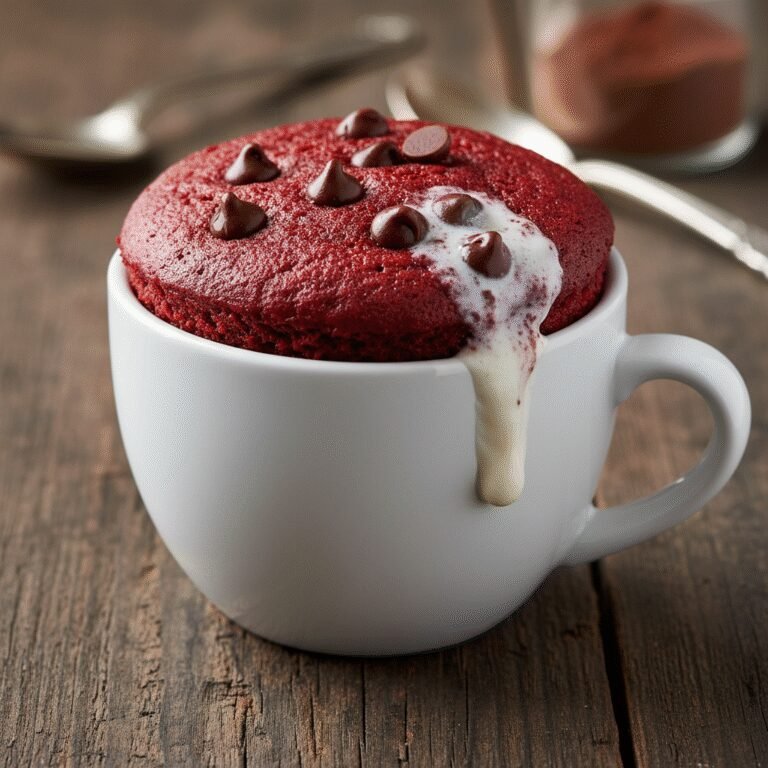
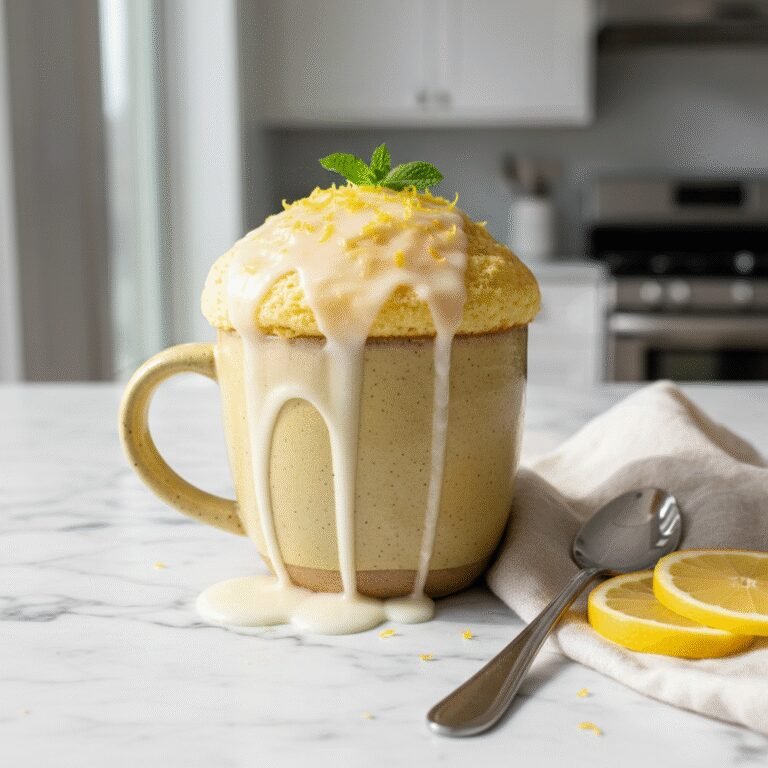
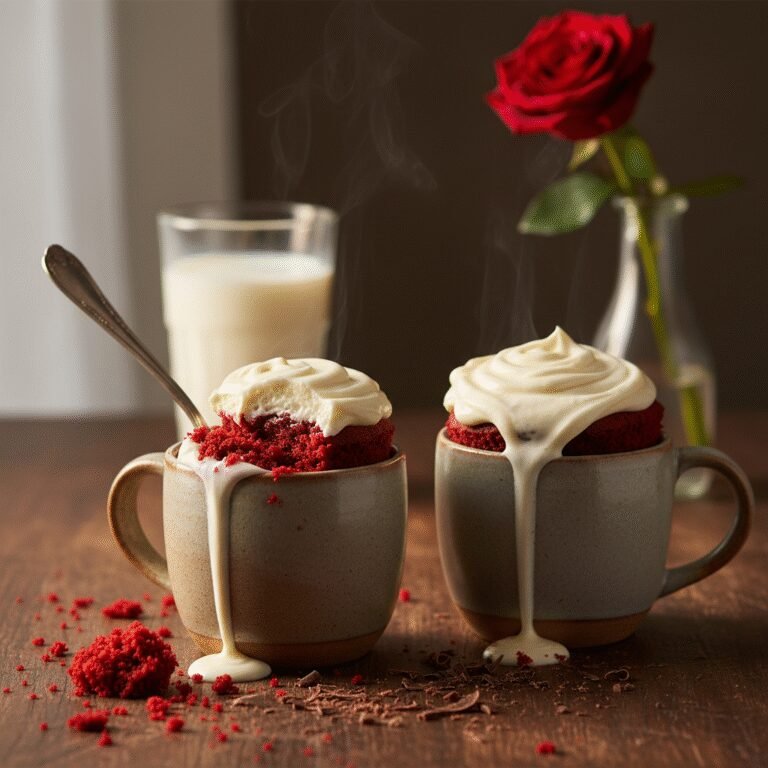
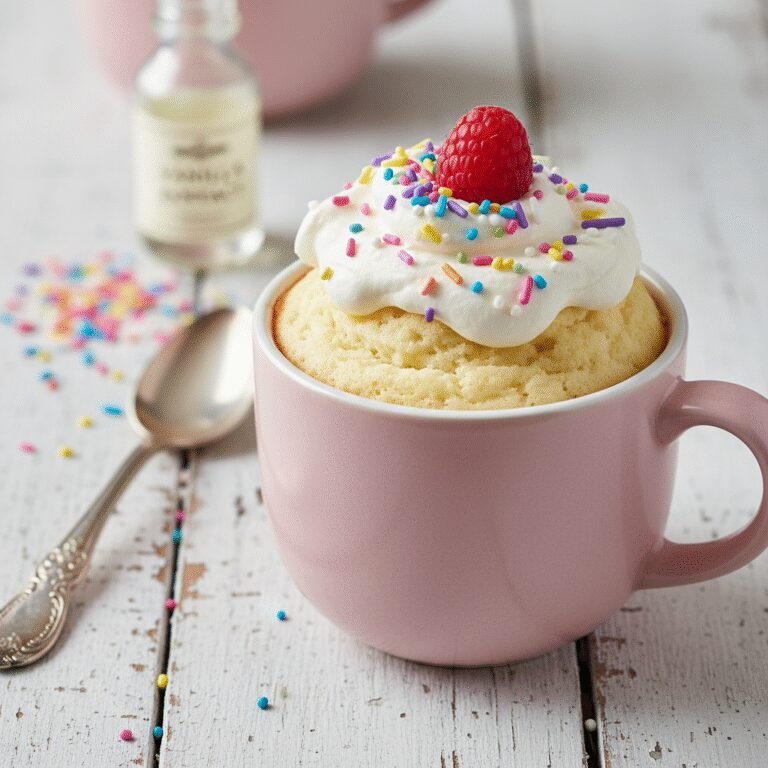
While this cake is delicious on its own, presentation can elevate it to a true dessert. Serve the mug on a small saucer with a nice dessert spoon. Top the cream cheese frosting with colorful rainbow sprinkles for a birthday cake vibe, or use crushed graham crackers and a few chocolate chips for a cheesecake-inspired twist. Fresh berries, such as raspberries or sliced strawberries, cut through the richness of the frosting perfectly. For a cozy winter treat, dust the top with cinnamon and nutmeg. If you are feeling indulgent, skip the frosting and drop a scoop of vanilla bean ice cream directly onto the hot cake, allowing it to melt into a crème anglaise sauce.
Storage and Reheating Tips
Mug cakes are designed to be single-serving items consumed immediately after cooking. They do not store well. As the cake cools completely, the texture changes, becoming denser and staler much faster than an oven-baked cake due to the way microwaves affect starch retrogradation. If you absolutely cannot finish it, you can cover the mug tightly with plastic wrap and store it in the refrigerator for up to 24 hours. To eat, remove the plastic and reheat in the microwave for 10-15 seconds. However, note that the frosting will melt completely upon reheating. It is highly recommended to make the batter fresh every time you want to eat it.
Nutrition Facts (Estimated)
| Serving Size | 1 mug cake with frosting |
| Calories | 480 |
| Fat | 24g |
| Saturated Fat | 15g |
| Unsaturated Fat | 8g |
| Trans Fat | 0.5g |
| Cholesterol | 65mg |
| Sodium | 210mg |
| Carbohydrates | 62g |
| Fiber | 1g |
| Sugar | 32g |
| Protein | 6g |
Frequently Asked Questions
Why did my mug cake turn out rubbery?
Rubbery texture usually comes from two things: overmixing the batter (developing too much gluten) or overcooking it in the microwave. Next time, mix just until combined and reduce the cooking time by 15 seconds.
Can I bake this in an oven instead of a microwave?
Yes, you can bake this in an oven-safe ramekin at 350°F (175°C) for about 12-15 minutes, but the texture will be slightly different and it defeats the purpose of a quick mug cake.
Can I double the recipe?
You can double the ingredients, but do not cook them in the same mug unless it is a massive soup mug. It is better to use two separate mugs and cook them one at a time for consistent results.
My cake overflowed! What happened?
This usually happens if the mug is too small or if you added too much baking powder. Ensure you are using level measurements for the baking powder, not heaping spoonfuls.
Can I make this chocolate?
Absolutely. To make a chocolate version, replace 1 tablespoon of the flour with 1 tablespoon of unsweetened cocoa powder and add an extra teaspoon of sugar.
Is it safe to eat if it looks wet on top?
Yes, mug cakes often look slightly glossy or wet on the very top even when cooked through. If the edges look set and it has risen, it is likely done. A toothpick test should come out mostly clean.
Can I use self-rising flour?
Yes. If you use self-rising flour, omit the baking powder and salt from the recipe, as they are already included in the flour mix.
Why is my cake salty?
If you used salted butter, you should omit the pinch of salt called for in the recipe. The contrast can be nice, but too much salt ruins the dessert profile.
Can I prepare the dry mix in advance?
Yes! This is a great meal prep hack. You can mix the flour, sugar, baking powder, and salt in small ziplock bags or jars. When a craving hits, just dump it in a mug and add the wet ingredients.
Does the cream cheese need to be room temperature?
Ideally, yes. Cold cream cheese is very difficult to mix by hand and will result in lumpy frosting. If it’s cold, microwave the cream cheese alone for 5-10 seconds to soften it before adding sugar.
Conclusion
The Easy Vanilla Mug Cake with Cream Cheese Frosting is more than just a recipe; it is a lifestyle hack for the sweet tooth. It proves that you don’t need hours of time, a sink full of dirty dishes, or advanced pastry skills to enjoy a homemade, warm, and decadent dessert. By mastering this simple ratio of ingredients, you unlock the ability to treat yourself to a moment of joy whenever the mood strikes. So, grab your favorite mug, check your pantry, and within minutes, you’ll be savoring a spoonful of vanilla bliss. Happy microwaving!