The Ultimate Fluffy Vanilla Mug Cake For Two (Ready in 5 Minutes)
Easy Vanilla Mug Cake For Two People Recipe
Craving a homemade dessert but don’t want to bake a whole cake? This easy vanilla mug cake recipe for two is the perfect solution! It creates two warm, fluffy, and incredibly moist individual cakes in under 5 minutes using simple pantry staples.
5 minutes
2 minutes
7 minutes
2 servings
Dessert
Microwave
American
Vegetarian
There is a specific kind of magic that happens around 9 PM on a Tuesday night. You have settled in for the evening, the dinner dishes are done, and suddenly, a craving hits. You want something sweet, warm, and comforting, but the idea of preheating the oven, dragging out the stand mixer, and waiting an hour for a cake to bake is simply out of the question. Enter the humble yet heroic mug cake. This Easy Vanilla Mug Cake For Two is designed specifically for those moments when you want to share a sweet treat with a partner, roommate, or friend—or perhaps enjoy one now and save one for later. Unlike many mug cake recipes that can turn out rubbery, spongy, or bland, this recipe has been rigorously tested to ensure a texture that rivals a traditional oven-baked vanilla cake. We focus on the perfect balance of moisture and structure, utilizing melted butter for a rich flavor profile and just the right amount of baking powder to give it that classic domed top. The beauty of this recipe lies in its simplicity; it requires no obscure ingredients, just the flour, sugar, butter, and milk you likely already have in your kitchen. It captures the essence of a birthday cake—sweet, buttery, and aromatic with vanilla—condensed into a single-serving vessel that fits snugly in your hands. Whether you are celebrating a mini-milestone or just need a quick sugar fix, this vanilla mug cake transforms the microwave from a reheating tool into a gourmet bakery, delivering satisfaction in mere minutes.
History & Origins
While the concept of the ‘mug cake’ feels like a distinctly modern, internet-era phenomenon, the idea of baking small cakes in individual containers dates back centuries. In the late 18th and early 19th centuries, before the invention of the muffin tin, ‘cup cakes’ were literally cakes baked in pottery cups or ramekins. Amelia Simmons’ 1796 cookbook, ‘American Cookery,’ references this style of baking, which allowed for faster cooking times and easier portioning compared to large hearth cakes. However, the true ancestor of the modern mug cake is tied to the invention and popularization of the microwave oven. Percy Spencer accidentally discovered the heating power of microwaves in 1945, but it wasn’t until the late 1990s and early 2000s that microwave cooking moved beyond frozen dinners and popcorn. The specific trend of the ‘mug cake’ exploded with the rise of food blogging and Pinterest around 2008 to 2012. Home cooks began experimenting with single-serving desserts that could be ‘baked’ in under two minutes. Early iterations were often criticized for their texture—frequently described as an ‘omelet’ due to the inclusion of a whole egg in a small volume of batter. Over the last decade, recipe developers have refined the science, often removing the egg entirely to achieve a tender crumb that mimics traditional baking. Today, the mug cake is a staple of dorm room cuisine, late-night snacking culture, and quick-fix comfort food, representing the ultimate intersection of culinary history and modern convenience.
Why This Recipe Works
This recipe succeeds where many other mug cakes fail because it specifically addresses the chemistry of microwave baking, which is fundamentally different from convection baking. In a microwave, heat is generated internally by exciting water molecules, which can lead to rapid toughening of gluten and proteins. Many standard recipes call for a whole egg, but for a small mug cake, a whole egg provides too much protein and structure, resulting in a rubbery, chewy texture that feels more like a sweet breakfast scramble than a cake. By eliminating the egg and relying on baking powder for lift and milk combined with melted butter for moisture, we achieve a tender, velvety crumb. Furthermore, the ratio of fat (butter) to liquid (milk) is higher here than in some recipes. Fat coats the flour particles, inhibiting gluten formation, which ensures the cake remains soft rather than tough. We also use a specific amount of sugar not just for sweetness, but because sugar is hygroscopic—it holds onto moisture, preventing the cake from drying out as it cools. Finally, splitting the batter into two mugs ensures even cooking; a single massive mug cake often overcooks on the edges before the center is done, but two standard portions cook evenly and quickly, guaranteeing a consistent texture from the first spoonful to the last.
Why You’ll Love This Recipe
- ✓Ready in under 7 minutes from start to finish
- ✓No eggs required, ensuring a fluffy rather than rubbery texture
- ✓Uses standard pantry ingredients you already have
- ✓Perfect portion control for two people
- ✓Minimal cleanup with just one mixing bowl and two mugs
- ✓Highly customizable with mix-ins like sprinkles or chocolate chips
Equipment You’ll Need
- ✓Small mixing bowl
- ✓Whisk or fork
- ✓Measuring spoons and cups
- ✓Two microwave-safe mugs (approx 10-12 oz size)
- ✓Microwave
Ingredients
- ✓1/2 cup All-Purpose Flour
- ✓1/4 cup Granulated Sugar
- ✓1 tsp Baking Powder
- ✓1 pinch Salt
- ✓1/2 cup Whole Milk (room temperature is best)
- ✓3 tbsp Unsalted Butter, melted
- ✓1 tsp Pure Vanilla Extract
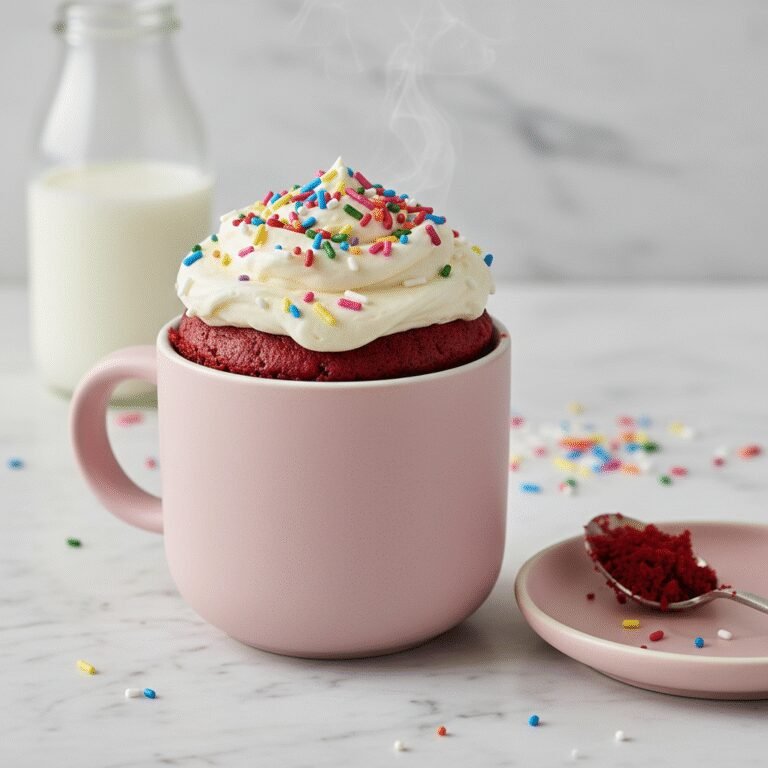
- ✓1 tbsp Rainbow Sprinkles (optional, for ‘funfetti’ style)
Instructions
- Start by melting the butter in a small microwave-safe bowl or cup. This usually takes about 30-45 seconds. Set it aside to cool slightly so it does not cook the flour immediately.
- In a medium-sized mixing bowl, whisk together the dry ingredients: all-purpose flour, granulated sugar, baking powder, and the pinch of salt. Ensure there are no large lumps of baking powder.
- Pour the milk, melted butter, and vanilla extract into the dry mixture.
- Whisk the batter gently until just combined. It is crucial not to overmix; stop as soon as the flour streaks disappear. If you are adding sprinkles, fold them in gently now.
- Divide the batter evenly between two microwave-safe mugs. The batter should fill the mugs no more than halfway to allow for rising.
- Place both mugs in the microwave on opposite sides of the turntable (not touching in the center).
- Microwave on high for 90 seconds to 2 minutes. Watch carefully; the cakes will rise rapidly. They are done when the tops look set and are no longer wet. A toothpick inserted into the center should come out clean or with a few moist crumbs.
- Remove the mugs carefully (they will be hot!) and let them cool for 1-2 minutes before eating. The texture improves as they cool slightly.
Expert Cooking Tips
- ✓Use a wide mug rather than a tall, narrow one. A wider surface area allows the cake to cook more evenly without overflowing.
- ✓Do not overmix the batter. Overmixing develops gluten, which is the enemy of a soft mug cake and the primary cause of toughness.
- ✓Microwave wattages vary significantly. Start with 90 seconds. If it is still wet, add 10-second intervals. It is better to undercook slightly than overcook.
- ✓Grease the mugs lightly with a little butter or cooking spray if you want to eat the cake all the way to the bottom without sticking.
- ✓Eat while warm! Mug cakes do not have the shelf life of regular cakes and are best enjoyed within 15 minutes of cooking.
Substitutions and Variations
This recipe is highly adaptable to various dietary needs and pantry limitations. For a gluten-free version, substitute the all-purpose flour with a high-quality 1:1 gluten-free baking flour blend that contains xanthan gum. If you are vegan or dairy-free, swap the whole milk for soy milk, oat milk, or almond milk, and replace the butter with melted coconut oil or a vegan butter stick alternative. Note that coconut oil may impart a slight coconut flavor. For the sweetener, you can use brown sugar instead of granulated white sugar for a deeper, caramel-like flavor, though the color of the cake will be darker. If you don’t have vanilla extract, almond extract works beautifully, or you can omit it for a plain sweet cake. You can also add a tablespoon of cocoa powder to the dry ingredients (and an extra teaspoon of milk) to turn this into a chocolate mug cake.
Common Mistakes to Avoid
The most common mistake when making mug cakes is overcooking them. Because microwaves cook from the inside out and very rapidly, a cake can go from perfect to rock-hard in just 15 seconds. Always err on the side of caution. Another frequent error is using a mug that is too small. The batter contains baking powder and will rise significantly—sometimes doubling in height—before sinking back down slightly. If your mug is too small, you will end up with a mess on your microwave turntable. Using cold milk and hot butter can also cause the butter to re-solidify into clumps before it’s mixed; try to have your milk at room temperature or zap it for 10 seconds before mixing. Finally, forgetting the pinch of salt results in a flat, overly sweet flavor; salt is essential to pop the vanilla notes.
Serving Suggestions
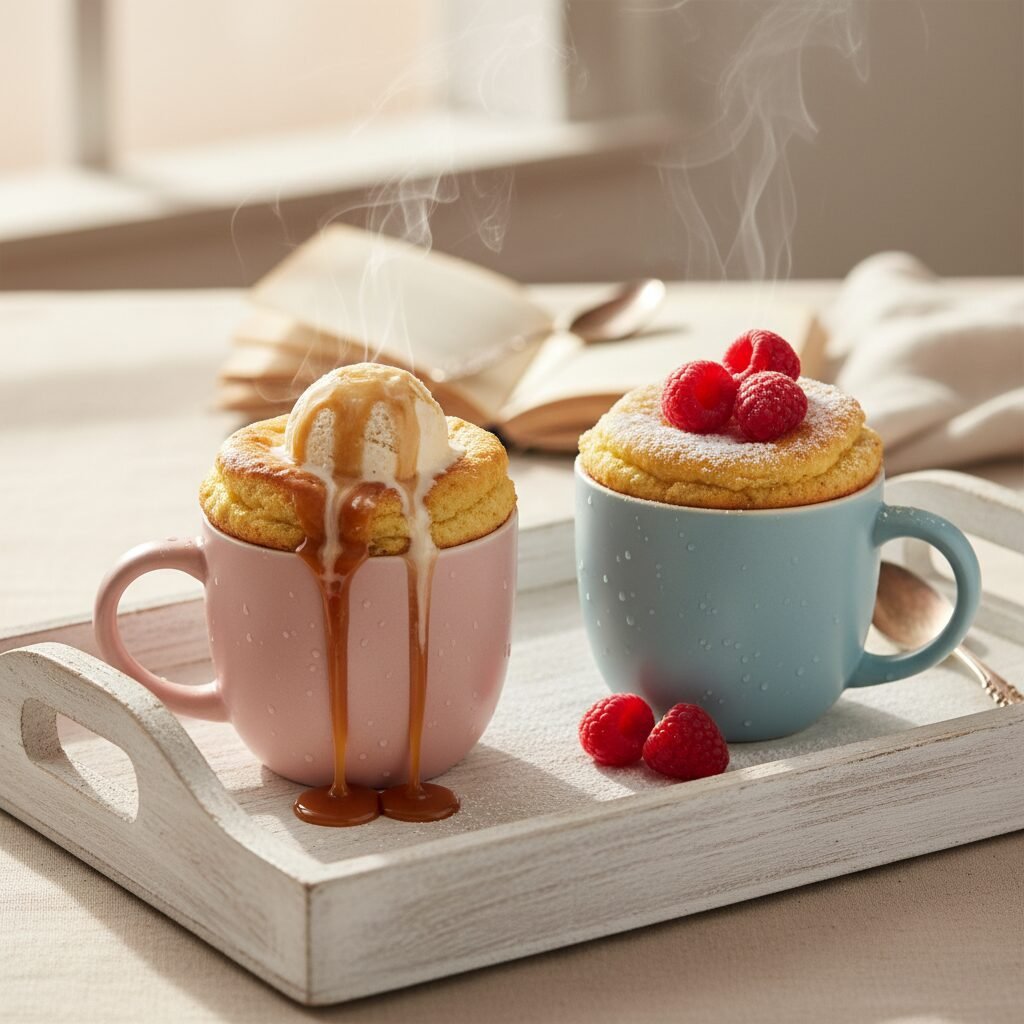
While delicious on its own, this vanilla mug cake is a blank canvas for toppings. A scoop of vanilla bean ice cream is the classic choice, creating a ‘hot and cold’ dessert experience as it melts into the warm cake. Fresh berries like strawberries or raspberries add a tart contrast to the sweetness. A dollop of homemade whipped cream and a dusting of cinnamon or cocoa powder can elevate the presentation. For a decadent twist, drizzle warm caramel sauce, chocolate fudge sauce, or even a spoonful of fruit preserves over the top just before serving.
Storage and Reheating Tips
Mug cakes are designed for immediate consumption. Because they lack the preservatives and structural fats of commercial cakes, and because microwave cooking affects starch retrogradation differently, they tend to become hard and stale very quickly once cool. We strictly recommend eating these fresh. However, if you absolutely must save one, cover the top of the mug tightly with plastic wrap to trap moisture and store it at room temperature for no more than 24 hours. To eat, you must reheat it in the microwave for 10-15 seconds to soften the crumb again. Do not refrigerate, as this will dry it out instantly.
Nutrition Facts (Estimated)
| Serving Size | 1 mug cake |
| Calories | 280 |
| Fat | 12g |
| Saturated Fat | 7g |
| Unsaturated Fat | 4g |
| Trans Fat | 0g |
| Cholesterol | 30mg |
| Sodium | 150mg |
| Carbohydrates | 38g |
| Fiber | 0.5g |
| Sugar | 18g |
| Protein | 4g |
Frequently Asked Questions
Can I make this in one giant mug instead of two?
Technically yes, but you would need a soup mug or a very large bowl (at least 20 oz capacity). The cooking time would also increase, likely to about 2.5 to 3 minutes, but the texture might be less consistent in the center.
Why is my mug cake rubbery?
Rubberiness is usually caused by two things: overmixing the batter (developing too much gluten) or overcooking it. Ensure you mix just until the flour disappears and check the cake early.
Can I bake this in the oven instead?
Yes, you can. Pour the batter into oven-safe ramekins and bake at 350°F (175°C) for approximately 15-20 minutes. However, the primary appeal of this recipe is the speed of the microwave.
Can I use water instead of milk?
You can, but we don’t recommend it. Milk adds fat, sugar, and protein which contribute to flavor and tenderness. Water will result in a blander, tougher cake.
Do I need to use baking powder?
Yes, baking powder is the leavening agent. Without it, you will have a dense, flat puck rather than a fluffy cake. Baking soda is not a direct 1:1 substitute unless you add an acid like lemon juice.
Can I add chocolate chips?
Absolutely! Add about 1 tablespoon of chocolate chips per mug. Stir them in at the very end. White chocolate, dark chocolate, or butterscotch chips all work well.
Is it safe to eat if slightly wet?
Since this recipe contains no eggs, there is no risk of salmonella from raw eggs. However, raw flour can carry bacteria, so it is best to cook it until set. If it’s just moist from melted butter or steam, it is safe.
Can I double the recipe?
Yes, you can double the ingredients to make four mugs. However, do not cook all four at once in the microwave as it will affect the heat distribution. Cook them in batches of two.
Conclusion
There you have it—the secret to satisfying your sweet tooth without the hassle of traditional baking. This Easy Vanilla Mug Cake for Two proves that you don’t need hours of time or a sink full of dirty dishes to enjoy a homemade dessert. It is fluffy, moist, and packed with comforting vanilla flavor, making it the ultimate quick-fix treat. Whether you are sharing with a loved one on a movie night or treating yourself to a cozy evening in, this recipe is sure to become a staple in your late-night repertoire. Keep these ingredients on hand, and you are never more than five minutes away from a warm, delicious cake.