The Ultimate 1-Minute Vanilla Mug Cake: Soft, Fluffy, and Egg-Free
Easy Vanilla Mug Cake For One Person Recipe
Satisfy your sweet tooth instantly with this foolproof vanilla mug cake recipe. It is incredibly soft, moist, and ready in just one minute using simple pantry staples—no eggs required!
2 minutes
1 minute
3 minutes
1 serving
Dessert
Microwave
American
Vegetarian
We have all been there: it is 9 PM, you are curled up on the couch watching your favorite show, and suddenly, a craving hits. You want something sweet, warm, and comforting. A cookie just won’t cut it, but baking an entire layer cake feels like an impossible chore involving piles of dirty dishes and hours of waiting. Enter the hero of late-night snacking: the Vanilla Mug Cake. This isn’t just any quick fix; this is the result of endless testing to find the perfect balance between convenience and gourmet texture.
Many mug cakes suffer from a fatal flaw—they turn out rubbery, sponge-like, or oddly eggy. This recipe specifically addresses those issues by eliminating the egg entirely, which is often the culprit for that tough texture in single-serving microwave desserts. Instead, we rely on a precise ratio of baking powder and milk to create a crumb that is tender, airy, and surprisingly close to a traditional oven-baked vanilla cake. The flavor is pure nostalgia: rich vanilla bean notes, a hint of butter, and just enough sweetness to pair perfectly with a scoop of ice cream or a dollop of whipped cream. Whether you are a college student in a dorm, a busy parent needing a quick treat, or simply someone who appreciates the magic of instant gratification, this recipe is about to become your new go-to favorite.
History & Origins
While the concept of steaming cakes is centuries old, the modern ‘mug cake’ is a direct descendant of the microwave revolution that swept through American kitchens in the late 1970s and 1980s. Initially, microwave cookbooks were filled with experimental recipes, including ‘cup cakes’ baked in teacups or small ramekins. However, these early iterations were often dense and more closely resembled steamed puddings than the fluffy cakes we know today.
The true explosion of the mug cake phenomenon occurred with the rise of food blogging and social media platforms like Pinterest in the early 2010s. As the internet culture shifted towards ‘life hacks’ and quick, visual content, the idea of a cake that could be made in a single vessel in under five minutes went viral. It promised a solution to portion control and waste, allowing people to bake for one without leftovers. Over the last decade, the humble mug cake has evolved from a culinary curiosity into a legitimate dessert category. Bakers have refined techniques, moving away from the ‘throw it all in’ approach to more scientific ratios that respect the unique way microwaves cook food—essentially steaming it from the inside out. This vanilla version represents the modern peak of that evolution, prioritizing texture and flavor over mere speed.
Why This Recipe Works
Microwave baking is fundamentally different from oven baking. An oven heats from the outside in, creating a crust and allowing for a slow rise. A microwave excites water molecules throughout the batter simultaneously, causing a rapid expansion of steam. This is why many mug cakes fail; they rise too fast and collapse, or the proteins in eggs coagulate too quickly, resulting in a rubbery, omelet-like texture.
This recipe works because it omits the egg. In a full-sized cake, eggs provide structure and richness. However, in a tiny 12-ounce mug, a whole egg is simply too much protein for the small amount of flour. By removing the egg and relying on baking powder for lift and oil (or melted butter) for tenderness, we achieve a velvety, soft crumb that mimics a standard cake. Furthermore, the inclusion of a splash of milk ensures the batter remains hydrated enough to steam properly without drying out. We also use a specific amount of sugar not just for sweetness, but because sugar is hygroscopic—it holds onto moisture, ensuring your cake remains soft even as it cools. The result is a reliable, scientifically sound method for achieving cake perfection in 60 seconds.
Why You’ll Love This Recipe
- ✓Ready in under 2 minutes from prep to first bite.
- ✓Egg-free recipe ensures a fluffy, non-rubbery texture.
- ✓Uses basic pantry ingredients you likely already have.
- ✓Perfect single-serving portion control.
- ✓Highly customizable with add-ins like sprinkles or chocolate chips.
- ✓Minimal cleanup with everything mixed in one mug.
Equipment You’ll Need
- ✓Microwave-safe mug (12oz capacity or larger)
- ✓Tablespoon measure
- ✓Teaspoon measure
- ✓Small whisk or fork
Ingredients
- ✓4 tablespoons All-Purpose Flour
- ✓2 tablespoons Granulated White Sugar
- ✓1/2 teaspoon Baking Powder
- ✓4 tablespoons Milk (Dairy or Non-Dairy)
- ✓1 1/2 tablespoons Neutral Oil (Canola, Vegetable) or Melted Butter
- ✓1/2 teaspoon Pure Vanilla Extract
- ✓1 pinch Salt
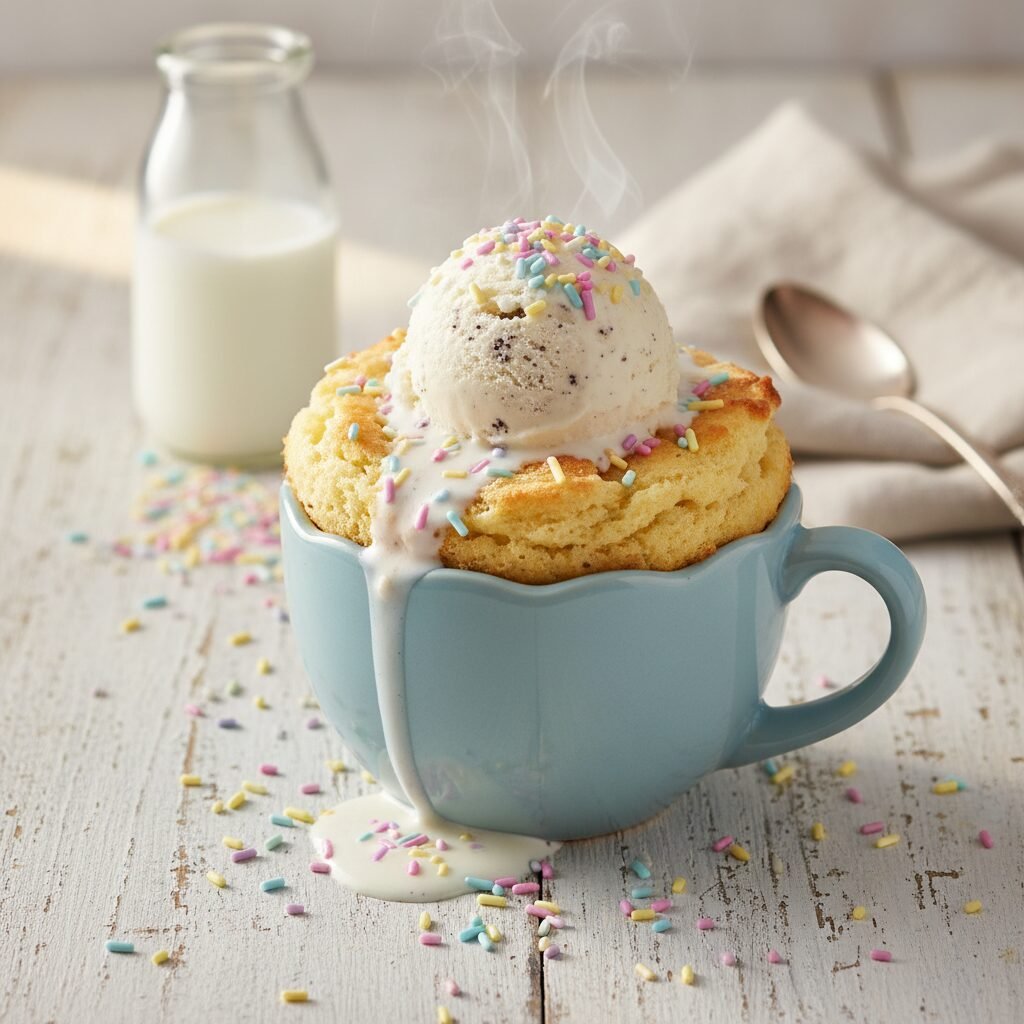
- ✓1 tablespoon Sprinkles (Optional, for Funfetti style)
Instructions
- Grab a microwave-safe mug that holds at least 10-12 ounces of liquid to prevent overflow.
- Add the dry ingredients (flour, sugar, baking powder, and salt) directly into the mug.
- Whisk the dry ingredients together with a fork to ensure the baking powder is evenly distributed and there are no clumps.
- Add the wet ingredients (milk, oil/melted butter, and vanilla extract) to the mug.
- Stir gently but thoroughly with the fork. Be sure to scrape the bottom corners of the mug to incorporate any dry pockets of flour. Stop mixing as soon as the batter is smooth.
- If using sprinkles or chocolate chips, fold them in now.
- Microwave on high power for 45 to 60 seconds. The time will vary based on your microwave’s wattage. The cake is done when it has risen, the top looks set and dry, and it springs back slightly when touched.
- Let the mug cake cool for at least 1-2 minutes before eating. The interior is extremely hot and the texture sets further as it cools.
Expert Cooking Tips
- ✓Use a wide mug rather than a tall, thin one to ensure even cooking.
- ✓Do not overmix the batter; stop as soon as the flour disappears to keep it tender.
- ✓Start with 45 seconds if you have a high-wattage microwave (1000W+).
- ✓Place a paper towel under the mug in the microwave just in case of minor spills.
- ✓Eat while warm! Mug cakes are best enjoyed within 15 minutes of cooking.
Substitutions and Variations
This recipe is incredibly forgiving and adaptable to various dietary needs. For a **Gluten-Free** version, simply substitute the all-purpose flour with a high-quality 1:1 gluten-free baking flour blend; look for one containing xanthan gum for the best structure. To make this **Vegan**, use a plant-based milk (almond, soy, and oat milk work wonderfully) and stick to oil instead of butter. If you want to reduce the **sugar**, you can use a granular sweetener like erythritol or monk fruit, though the texture may be slightly drier. For the fat, melted coconut oil adds a lovely tropical hint, or browned butter can be used for a nutty, gourmet depth of flavor. You can also swap the vanilla extract for almond extract or lemon zest to completely change the flavor profile.
Common Mistakes to Avoid
The most common mistake when making mug cakes is **overcooking**. Because microwaves vary so wildly in power, cooking it for even 10 seconds too long can turn a soft cake into a hard puck. Always err on the side of undercooking; you can always zap it for another 10 seconds, but you can’t un-cook it. Another frequent error is **using the wrong size mug**. If the mug is too small, the batter will overflow as it rises rapidly. Always use a mug that holds at least 12 ounces. Finally, **forgetting to mix the bottom** is a classic blunder. It is easy to leave a layer of dry flour at the base of the mug, which results in a powdery, unpleasant surprise at the end of your dessert. Make sure to scrape the bottom edges well with your fork.
Serving Suggestions
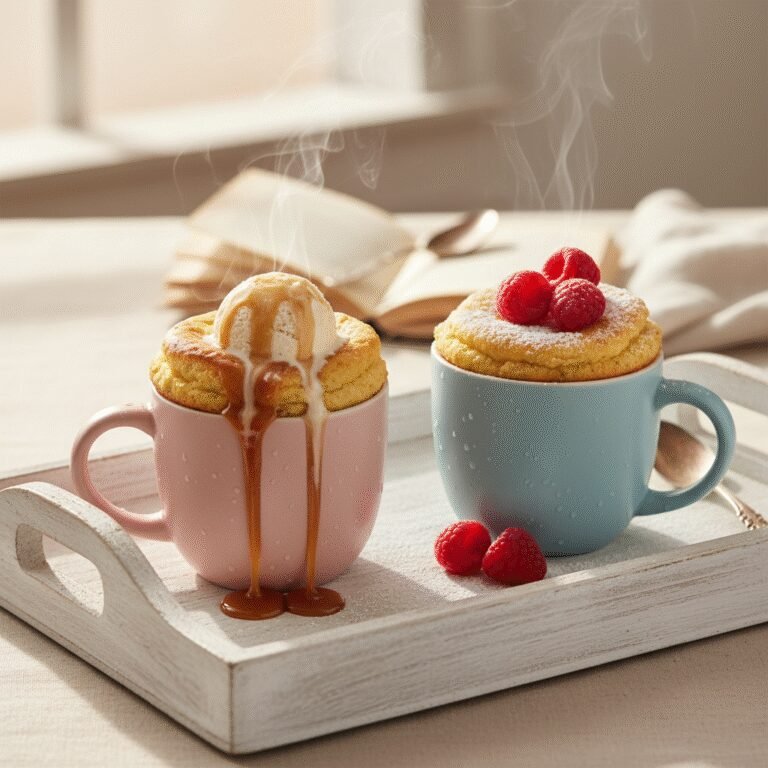
While delicious on its own, this vanilla mug cake is a blank canvas for toppings. For a classic treat, top it with a generous scoop of vanilla bean ice cream and let it melt into the warm sponge. Fresh berries, such as raspberries or sliced strawberries, add a tart contrast to the sweetness. A drizzle of salted caramel sauce, chocolate syrup, or even a spoonful of lemon curd can elevate this simple snack into a decadent dessert. For a cozy winter vibe, dust the top with cinnamon sugar or serve with a dollop of whipped cream and a sprinkle of nutmeg.
Storage and Reheating Tips
Mug cakes are designed to be eaten immediately. They do not store well because they lack the preservatives and fat content of commercial cakes, meaning they will stale rapidly. If you absolutely must save it, cover the top of the mug tightly with plastic wrap and store it at room temperature for up to 24 hours. To reheat, sprinkle a few drops of water on top and microwave for 10-15 seconds to revive the texture. Freezing is not recommended as the texture will become rubbery upon thawing.
Nutrition Facts (Estimated)
| Serving Size | 1 mug cake |
| Calories | 340 |
| Fat | 14g |
| Saturated Fat | 2g |
| Unsaturated Fat | 11g |
| Trans Fat | 0g |
| Cholesterol | 5mg |
| Sodium | 180mg |
| Carbohydrates | 48g |
| Fiber | 1g |
| Sugar | 22g |
| Protein | 4g |
Frequently Asked Questions
Why is my mug cake rubbery?
A rubbery texture usually comes from two things: overmixing the batter (which develops gluten) or overcooking. Since this recipe has no egg, it is less prone to rubberiness, but be sure to stop mixing as soon as the flour is incorporated and watch the cooking time closely.
Can I make this in the oven?
Technically yes, but it defeats the purpose of a quick mug cake. If you must, use an oven-safe ramekin and bake at 350°F (175°C) for about 12-15 minutes.
Can I double the recipe?
Do not double the ingredients in the same mug, as it will not cook evenly and will definitely overflow. If you want two servings, make them in two separate mugs and cook them one at a time.
Why did my cake sink?
It is normal for a mug cake to deflate slightly as it cools, but if it collapses completely, it might be undercooked or your baking powder might be expired.
Can I use self-rising flour?
Yes! If you use self-rising flour, omit the baking powder and the salt from the recipe.
Can I add cocoa powder to make it chocolate?
Yes, replace 1 tablespoon of flour with 1 tablespoon of unsweetened cocoa powder for a light chocolate version.
Is it safe to eat if it looks wet?
Microwave cakes often look slightly moist on top even when done. If it pulls away from the sides and feels springy, it is safe. The lack of raw egg makes undercooking much less of a safety concern.
What is the best oil to use?
Any neutral oil like vegetable, canola, or grapeseed works best. Olive oil has a strong flavor that might clash with the vanilla unless you enjoy that combination.
Conclusion
There is something undeniably magical about taking a few tablespoons of flour and sugar and transforming them into a warm, fluffy cake in less time than it takes to brew a cup of coffee. This Easy Vanilla Mug Cake is the ultimate hack for dessert lovers, proving that you don’t need a special occasion or hours of free time to enjoy a homemade treat. It is comfort food in its purest, simplest form. So the next time that sweet craving strikes, skip the store-bought cookies and treat yourself to this warm, vanilla-scented delight. Happy microwaving!