Easy No Bake Oreo Cheesecake With Graham Cracker Crust Recipe
Easy No Bake Oreo Cheesecake With Graham Cracker Crust Recipe
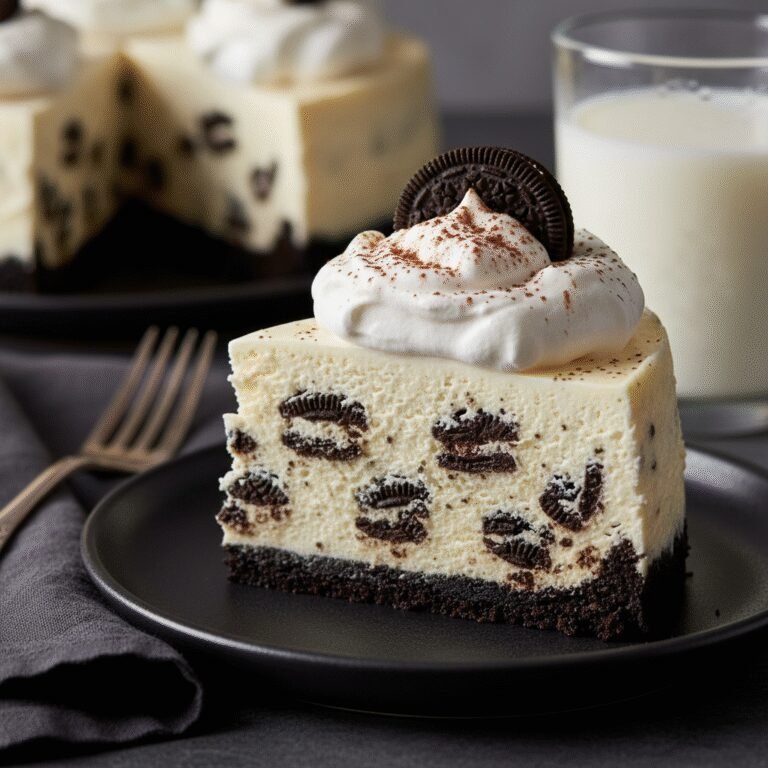
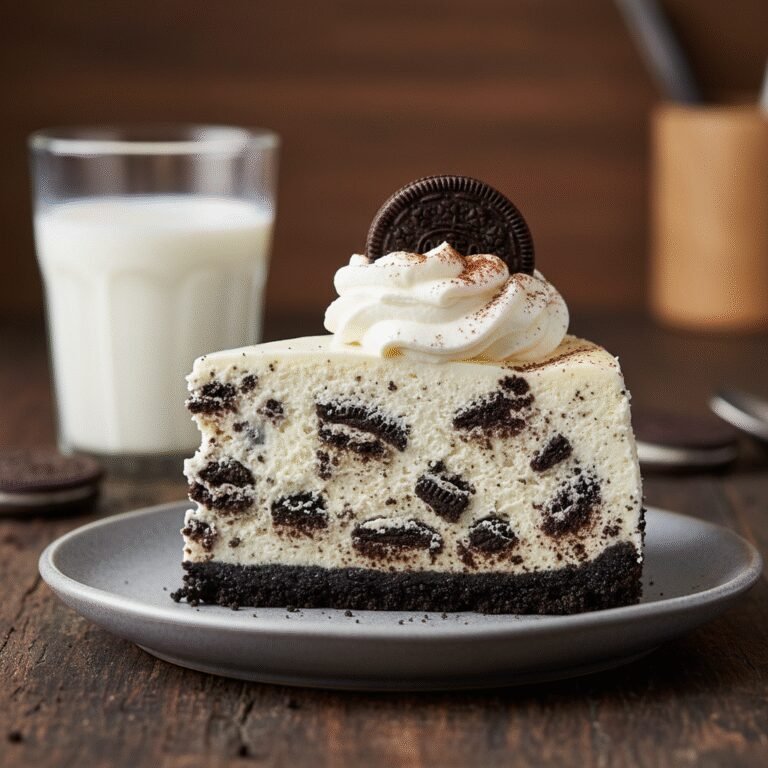
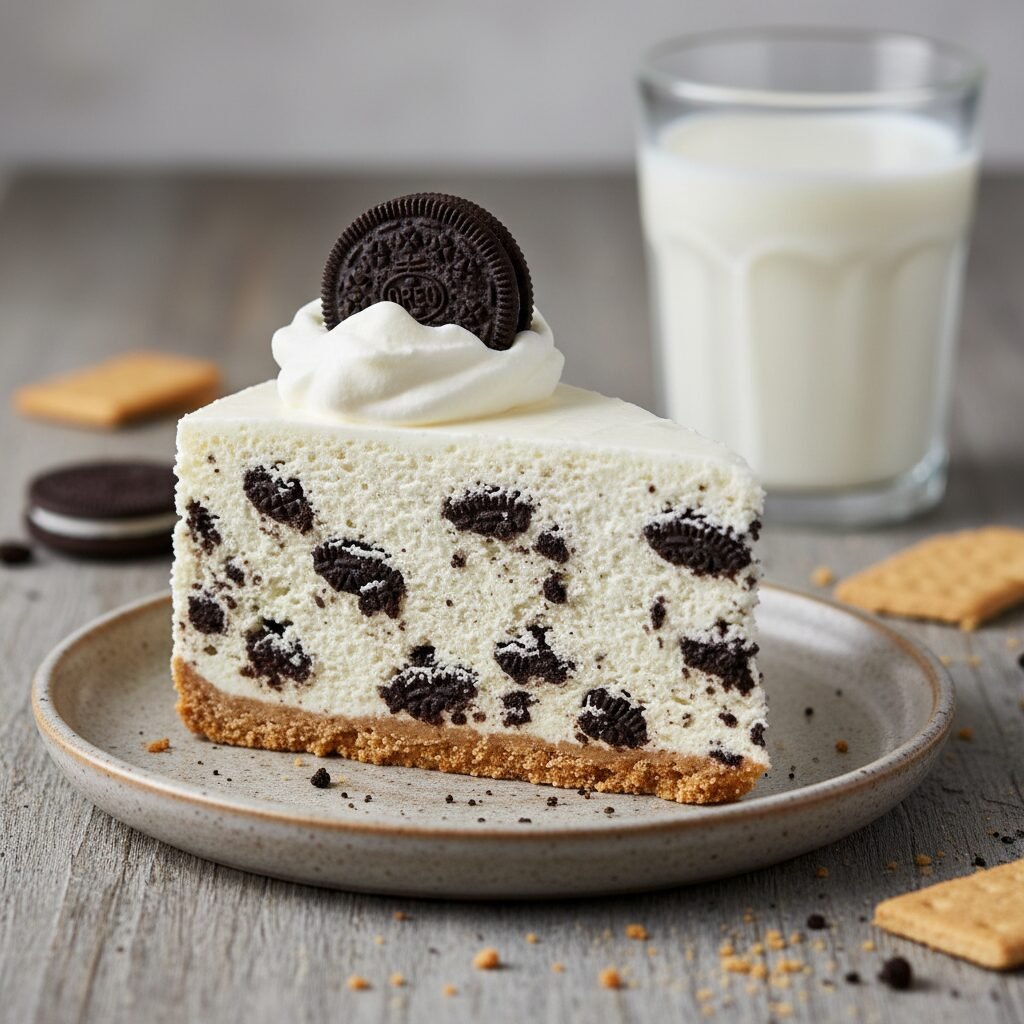
This Easy No Bake Oreo Cheesecake features a buttery, golden graham cracker crust topped with a velvety, cookies-and-cream filling. It is the perfect make-ahead dessert for summer gatherings, offering a delightful crunch and creamy texture without ever turning on the oven.
20 minutes
0 minutes
6 hours 20 minutes (includes chilling)
12 servings
Dessert
No-Bake / Chilling
American
Vegetarian
There is something undeniably magical about the combination of tangy cream cheese and the nostalgic crunch of Oreo cookies. When summer heat hits or when you simply need a show-stopping dessert without the fuss of a water bath, this Easy No Bake Oreo Cheesecake with Graham Cracker Crust is the ultimate solution. Unlike traditional baked cheesecakes that require precise temperature control and hours of cooling to prevent cracks, this recipe relies on the simple science of refrigeration to achieve its luscious, mousse-like texture. The filling is an airy yet rich blend of beaten cream cheese, sugar, and whipped cream, studded generously with chopped Oreo cookies that soften just enough to become cake-like while retaining a pleasant bite.
What sets this specific recipe apart is the choice of a graham cracker crust. While many Oreo cheesecakes double down with a chocolate crust, using a classic graham cracker base provides a necessary flavor contrast. The buttery, slightly salty, and caramelized notes of the graham crackers cut through the intense sweetness of the cookies-and-cream filling, creating a more balanced and sophisticated flavor profile. It brings a touch of traditional cheesecake identity to this modern, fun dessert. Whether you are hosting a backyard barbecue, a birthday party, or simply craving a midnight treat, this cheesecake delivers on all fronts: visual appeal, ease of preparation, and a flavor that instantly transports you back to childhood. It is a slice of pure, unadulterated joy that looks as good as it tastes.
History & Origins
The history of cheesecake is a journey that spans millennia, evolving from ancient energy food to the decadent dessert we know today. Its origins can be traced back to ancient Greece, specifically the island of Samos, where physical anthropologists excavated cheese molds dated circa 2,000 B.C. It was considered a potent source of energy, and there is evidence that it was served to athletes during the first Olympic Games in 776 B.C. However, these early versions were quite different from our modern interpretation, often consisting of cheese, honey, and wheat heated in a pot.
The modern cheesecake began to take shape in the 18th century as Europeans began using beaten eggs to leaven their breads and cakes, removing the strong yeast flavor. But the true game-changer occurred in 1872 in Chester, New York. A dairyman named William Lawrence was attempting to replicate the French cheese Neufchâtel. In the process, he accidentally added too much cream and created a richer, spreadable cheese that would eventually be marketed as Philadelphia Cream Cheese. This invention paved the way for the classic New York-style cheesecake.
The Oreo cookie, the other star of this dish, was introduced by the National Biscuit Company (Nabisco) on March 6, 1912. It quickly became the best-selling cookie in the United States. The concept of the ‘no-bake’ dessert gained massive popularity in the mid-20th century with the widespread adoption of residential refrigerators and the ‘icebox cake’ trend. Homemakers looked for convenient, elegant desserts that didn’t require heat. Combining the stability of chilled cream cheese with the beloved Oreo cookie was a natural evolution in American culinary history, resulting in a dessert that marries the ancient tradition of cheese tarts with modern industrial confectionery.
Why This Recipe Works
This recipe succeeds because it perfectly balances texture and structural integrity without the need for heat-induced coagulation (eggs). In a baked cheesecake, eggs provide the structure. In a no-bake version, the structure comes from the fat in the cream cheese and the aeration of the heavy cream. When chilled, the saturated fats in the cream cheese and butter solidify, firming up the filling. By folding in whipped cream (or a stabilized whipped topping), we introduce air bubbles that are trapped within the fat matrix, creating a texture that is light and ethereal rather than heavy and dense.
The decision to use a graham cracker crust instead of an Oreo crust is crucial for flavor balance. An all-chocolate dessert can sometimes become one-dimensional. The graham crackers offer a distinct textural crunch and a flavor profile of honey, molasses, and whole wheat that acts as a palate cleanser against the rich, sweet cream. Furthermore, the moisture migration from the filling into the chopped Oreos inside the cheesecake softens them slightly, turning them into tender, cake-like morsels, while the graham crust remains crisp thanks to the butter binder. This interplay of textures—crisp crust, creamy filling, and tender cookie chunks—is what makes every bite exciting.
Why You’ll Love This Recipe
- ✓Requires absolutely no baking, keeping your kitchen cool.
- ✓Features a buttery graham cracker crust for a unique flavor contrast.
- ✓Loaded with large chunks of Oreo cookies for texture in every bite.
- ✓Can be made up to 2 days in advance, perfect for entertaining.
- ✓Uses simple, accessible ingredients found in any grocery store.
- ✓Produces a professional-looking dessert with minimal effort.
Equipment You’ll Need
- ✓9-inch Springform Pan
- ✓Electric Hand Mixer or Stand Mixer
- ✓Large Mixing Bowls
- ✓Food Processor or Ziploc Bag with Rolling Pin
- ✓Rubber Spatula
- ✓Measuring Cups and Spoons
Ingredients
- ✓1 1/2 cups Graham Cracker crumbs (about 10-12 full sheets)
- ✓1/3 cup Unsalted Butter, melted
- ✓1/4 cup Granulated Sugar (for crust)
- ✓24 oz (3 blocks) Full-fat Cream Cheese, softened to room temperature
- ✓1 cup Powdered Sugar, sifted
- ✓1 teaspoon Pure Vanilla Extract
- ✓1 1/2 cups Heavy Whipping Cream, cold
- ✓20 Oreo cookies, roughly chopped
- ✓Optional: Extra Oreos and Whipped Cream for garnish
Instructions
- Prepare the crust: In a medium bowl, combine the graham cracker crumbs, melted butter, and 1/4 cup granulated sugar. Mix until the texture resembles wet sand.
- Press the mixture firmly into the bottom and slightly up the sides of a 9-inch springform pan. Use the bottom of a measuring cup to pack it down tightly. Place the pan in the freezer for 10-15 minutes to set while you make the filling.
- In a large mixing bowl using a hand mixer (or stand mixer with paddle attachment), beat the softened cream cheese until completely smooth and creamy. There should be no lumps.
- Add the powdered sugar and vanilla extract to the cream cheese. Beat on medium speed until well combined and fluffy, scraping down the sides of the bowl as needed.
- In a separate cold bowl, whip the cold heavy cream until stiff peaks form. (Alternatively, if using a stand mixer, you can switch to the whisk attachment, pour the cream into the cheese mixture, and whip until thick, but whipping separately ensures better volume).
- Gently fold the whipped cream into the cream cheese mixture using a rubber spatula. Do this in two batches to avoid deflating the air. Fold until just combined.
- Add the chopped Oreo cookies to the filling and fold gently until evenly distributed.
- Remove the crust from the freezer. Pour the filling over the crust and smooth the top with an offset spatula or the back of a spoon.
- Cover the pan loosely with plastic wrap or aluminum foil. Refrigerate for at least 6 hours, preferably overnight, to allow the cheesecake to set completely.
- Before serving, run a thin knife around the edge of the pan to loosen the cheesecake, then release the springform ring.
- Garnish with additional whipped cream and whole or crushed Oreos if desired. Slice and serve chilled.
Expert Cooking Tips
- ✓Ensure your cream cheese is truly at room temperature before mixing. Cold cream cheese will result in a lumpy filling that no amount of mixing can fix.
- ✓When whipping the heavy cream, make sure it is very cold. A cold bowl and beaters also help achieve volume faster.
- ✓Do not crush the Oreos for the filling too finely; you want distinct chunks for texture, not a grey, muddy batter.
- ✓Pack the crust very firmly. Since it isn’t baked, the pressure is the only thing holding it together.
- ✓Allow the cheesecake to chill for the full recommended time. Cutting it too early will result in a messy slice that doesn’t hold its shape.
- ✓Use a hot knife to slice the cheesecake. Dip the knife in hot water and wipe it dry between each cut for clean, professional-looking slices.
Substitutions and Variations
For the crust, if you prefer a chocolate base, you can swap the graham crackers for chocolate graham crackers or even crushed Oreo cookies (remove the cream filling first or reduce the butter). For a gluten-free version, simply use gluten-free graham style crackers and gluten-free chocolate sandwich cookies; most major brands offer these alternatives now. If you want to lighten up the calories slightly, you can use Neufchâtel cheese instead of full-fat cream cheese, though the texture may be slightly softer. You can also substitute the heavy whipping cream with a stabilized whipped topping (like Cool Whip), which simplifies the process as you won’t need to whip the cream yourself—just fold it in. For the sweetener, powdered sugar is best for texture, but in a pinch, very fine granulated sugar can work if beaten thoroughly to dissolve.
Common Mistakes to Avoid
The most common mistake is using cold cream cheese. This inevitably leads to small lumps of cheese throughout the filling that ruin the smooth mouthfeel. Another frequent error is over-mixing the heavy cream once it’s added to the cheese base. If you mix too vigorously at this stage, you knock out the air bubbles, resulting in a dense, heavy dessert rather than a light, airy one. Additionally, be careful not to over-chop the Oreos for the filling; ‘dust’ will turn your beautiful white cheesecake grey. Finally, rushing the chilling time is a recipe for disaster. The fats need time to recrystallize in the cold environment to provide structural support. If you cut it after only 2 hours, it will likely collapse.
Serving Suggestions
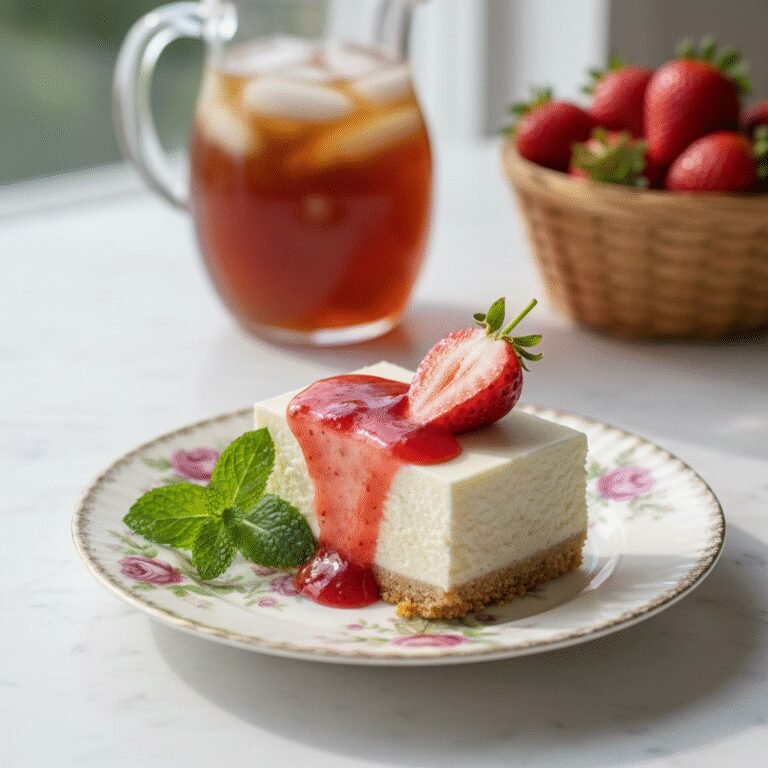
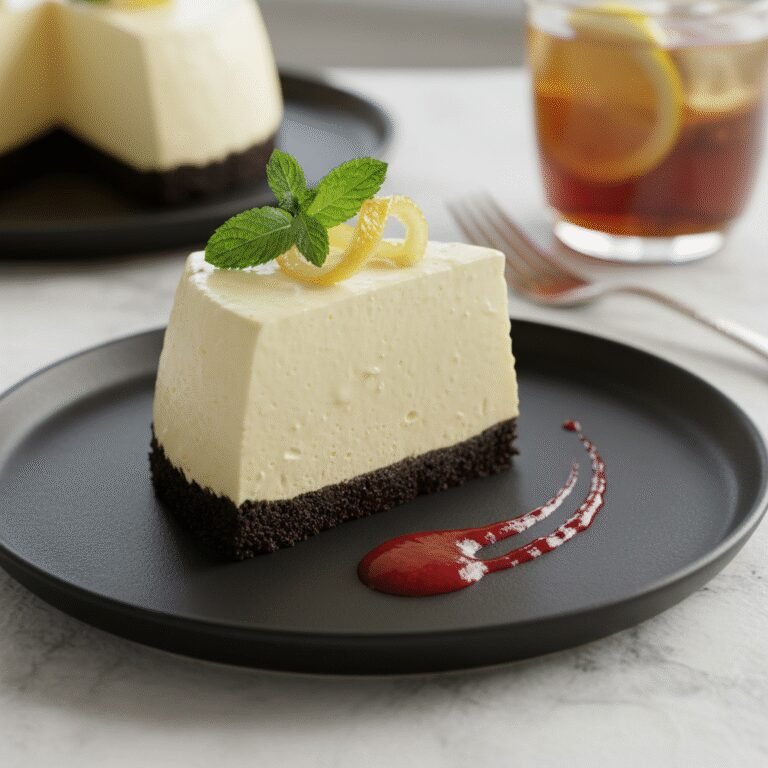
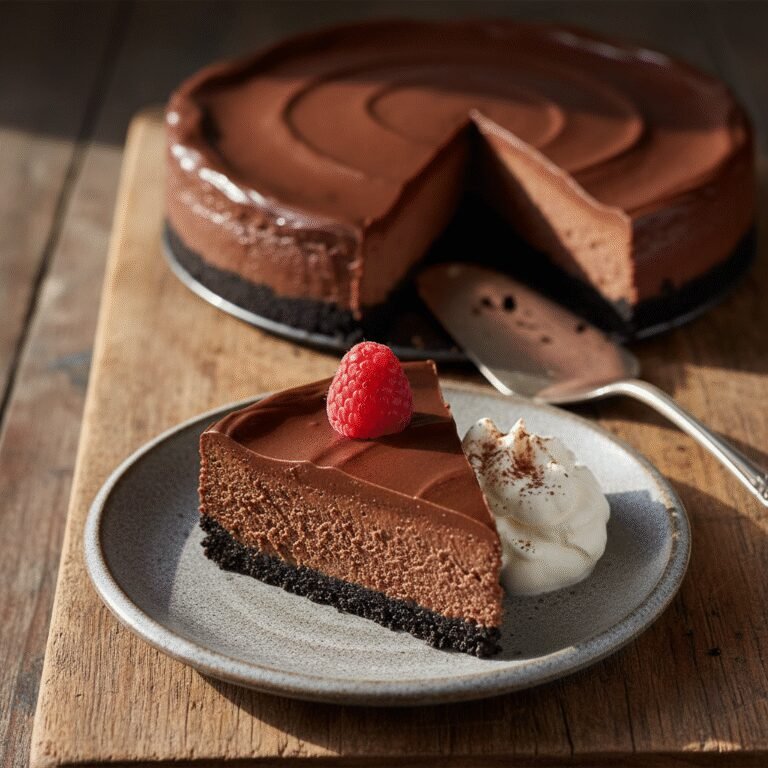
This cheesecake is rich, so it pairs beautifully with beverages that can cut through the creaminess. Serve it with a hot cup of dark roast coffee or an espresso to contrast the sweetness. For a summer party, a glass of cold milk is a classic pairing that echoes the ‘cookies and milk’ theme. To plate it elegantly, add a dollop of fresh whipped cream on top of the slice and garnish with a mini Oreo or a sprig of fresh mint for a pop of color. A drizzle of chocolate ganache or salted caramel sauce over the slice can also elevate the presentation and add an extra layer of decadence.
Storage and Reheating Tips
This cheesecake must be kept refrigerated. It can be stored in the refrigerator, covered, for up to 5 days. However, the crust may begin to soften after day 3. For longer storage, this cheesecake freezes exceptionally well. To freeze, wrap the entire cheesecake (or individual slices) tightly in plastic wrap, followed by a layer of aluminum foil to prevent freezer burn. It can be frozen for up to 3 months. Thaw it in the refrigerator overnight before serving. Do not thaw it at room temperature, as it may become too soft and lose its structure.
Nutrition Facts (Estimated)
| Serving Size | 1 slice |
| Calories | 450 |
| Fat | 32g |
| Saturated Fat | 18g |
| Unsaturated Fat | 12g |
| Trans Fat | 0g |
| Cholesterol | 85mg |
| Sodium | 320mg |
| Carbohydrates | 38g |
| Fiber | 1g |
| Sugar | 28g |
| Protein | 5g |
Frequently Asked Questions
Can I use low-fat cream cheese?
Technically yes, but it is not recommended. Low-fat cream cheese has a higher water content and fewer stabilizers, which can prevent the cheesecake from setting firmly. If you must use it, consider adding a teaspoon of gelatin dissolved in water to help it set.
Why is my cheesecake filling runny?
A runny filling is usually caused by under-whipping the heavy cream or over-mixing the batter after adding the cream. It can also happen if the cream cheese was melted rather than just softened. Unfortunately, once it’s runny, it’s hard to fix without adding a stabilizer like gelatin.
Can I use Double Stuf Oreos?
Yes, you can use Double Stuf Oreos. The extra cream filling in the cookies will just add a little more sweetness and vanilla flavor to the cheesecake, which is delicious!
How do I get clean slices?
The secret to bakery-perfect slices is temperature. Dip a sharp chef’s knife into a pitcher of hot water, wipe it dry with a paper towel, and make one cut. Repeat this process for every single cut you make.
Do I need a springform pan?
A springform pan is best because it allows you to remove the sides without damaging the delicate crust. If you don’t have one, you can make this in a deep pie dish or a square baking pan, but the first slice will be difficult to remove cleanly.
Can I make this gluten-free?
Absolutely. Just substitute the graham crackers for gluten-free graham crackers and use gluten-free chocolate sandwich cookies (like Gluten-Free Oreos). The rest of the ingredients (cream cheese, sugar, cream) are naturally gluten-free.
Can I use Cool Whip instead of heavy cream?
Yes. Substitute the 1.5 cups of heavy cream and the powdered sugar with one 8oz tub of Cool Whip. Reduce the vanilla extract slightly as Cool Whip is already sweetened.
How long does it take to set?
It needs a minimum of 6 hours in the refrigerator. However, leaving it overnight (12+ hours) yields the best texture and structural stability.
Conclusion
This Easy No Bake Oreo Cheesecake with Graham Cracker Crust is a testament to the fact that incredible desserts don’t always require complicated techniques or hours of baking. It brings together the best of both worlds: the buttery, nostalgic crunch of a traditional graham crust and the modern, creamy indulgence of a cookies-and-cream filling. Whether you are a seasoned baker looking for a quick summer fix or a complete novice in the kitchen, this recipe is designed to guarantee success. It’s crowd-pleasing, visually stunning, and utterly delicious. So, grab your mixer, crush some cookies, and get ready to be the hero of your next potluck or family dinner!