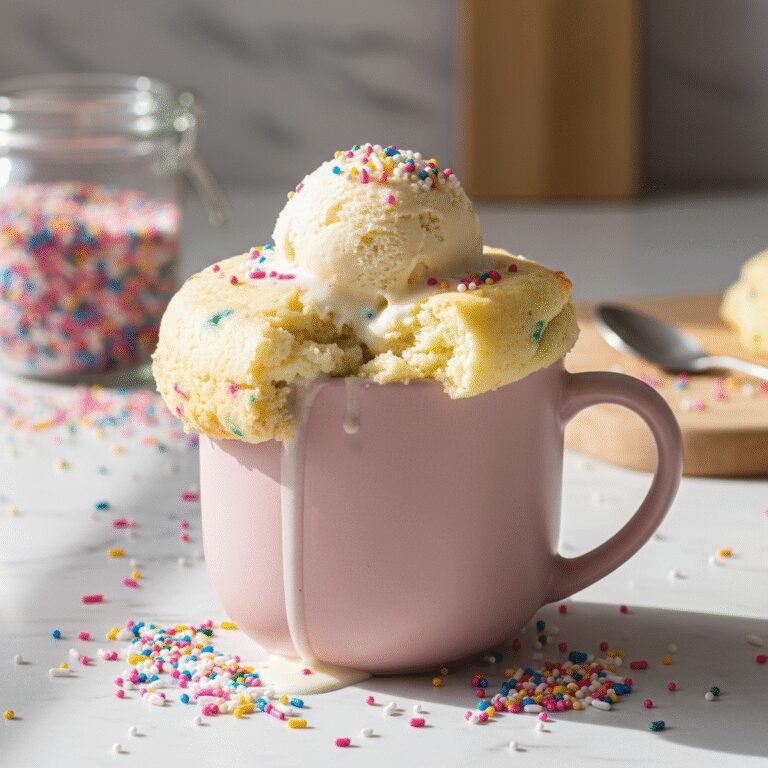

The Ultimate Easy Lemon Mug Cake With Cream Cheese Frosting
Easy Lemon Mug Cake With Cream Cheese Frosting Recipe
Satisfy your sweet tooth in under 5 minutes with this bright and tangy Lemon Mug Cake. Topped with a luscious, homemade cream cheese frosting, this single-serving dessert is the perfect balance of zesty citrus and creamy richness.
5 minutes
2 minutes
7 minutes
1 serving
Dessert
Microwave
American
Vegetarian
There is a specific kind of magic that happens when a late-night craving meets the convenience of modern cooking. We have all been there: it is 9 PM, the kitchen is clean, and suddenly, the desire for something homemade, warm, and sweet hits you like a freight train. You do not want to drag out the stand mixer, preheat the oven, or commit to an entire 9-inch cake that will tempt you for days. Enter the Lemon Mug Cake with Cream Cheese Frosting—a dessert that feels like a cheat code for happiness.
This recipe is not just about speed; it is about capturing the essence of a high-quality bakery lemon cake in a vessel that fits in the palm of your hand. The texture is surprisingly fluffy, defying the rubbery stereotype that often plagues microwave desserts. By balancing the acidity of fresh lemon juice with the fat from melted butter and milk, we create a tender crumb that rivals oven-baked goods.
But the real showstopper here is the frosting. A naked lemon cake is delicious, but a lemon cake crowned with a quick, two-minute cream cheese frosting is transcendent. The tang of the cream cheese mirrors the citrus notes in the sponge, while the powdered sugar cuts through the tartness, providing a velvety finish that melts into the warm cake. Whether you are a college student with limited equipment, a busy parent needing a quick treat, or simply a lemon lover looking for instant gratification, this recipe is designed to bring a burst of sunshine into your kitchen with minimal effort.
History & Origins
The concept of the ‘mug cake’ is a relatively modern culinary phenomenon, inextricably linked to the popularization of the microwave oven. While microwave cooking became a household staple in the late 1970s and early 1980s, early microwave cookbooks focused largely on reheating meals or cooking vegetables. It wasn’t until the internet era, specifically the rise of food blogs and Pinterest in the late 2000s and early 2010s, that the ‘cake in a mug’ trend exploded. It offered a solution to the modern desire for single-serving portion control and instant gratification.
However, the flavor profile of this specific dish has much deeper roots. Lemon cakes have been a staple of European baking for centuries. The English pound cake, dating back to the 1700s, often incorporated dried fruits or citrus peel. By the 19th century, with the wider availability of baking powder and chemical leaveners, lighter, fluffier lemon cakes became popular across America and Europe. The pairing of lemon cake with cream cheese frosting is a distinctly American evolution, likely influenced by the popularity of carrot cake in the 1960s and 70s, which cemented cream cheese frosting as the go-to topping for dense, flavorful cakes. This mug cake recipe represents the convergence of centuries-old flavor pairings with the technological convenience of the 21st century, shrinking a classic banquet dessert into a five-minute treat.
Why This Recipe Works
Microwave baking operates on a completely different scientific principle than conventional oven baking, which is why simply reducing a standard cake recipe does not work. Microwaves excite water molecules, generating heat from within the food almost instantly. This rapid cooking process can easily lead to a tough, rubbery texture if the batter lacks sufficient fat and moisture. This recipe works because it specifically increases the ratio of fat (butter) and liquid (milk and lemon juice) to flour.
The inclusion of melted butter rather than oil provides a richer flavor and a softer crumb. Furthermore, the acidity from the lemon juice reacts with the baking powder immediately, creating carbon dioxide bubbles that give the cake its lift. Because microwaves cook so fast, this immediate reaction is crucial for fluffiness. We also use a lower setting or short bursts of heat to prevent the eggless batter (if you choose to omit egg, though this recipe relies on baking powder for lift to avoid ‘eggy’ texture) from seizing. The cream cheese frosting works perfectly here because its high fat content prevents it from melting away completely on the warm cake, instead softening into a glaze-like consistency that permeates the top layer of the sponge.
Why You’ll Love This Recipe
- ✓Ready in under 5 minutes from start to finish.
- ✓Perfect single-serving portion control.
- ✓No eggs required, preventing a rubbery texture.
- ✓bright, fresh lemon flavor using real juice and zest.
- ✓Rich, homemade cream cheese frosting included.
- ✓Minimal cleanup—mix and bake in the same mug.
Equipment You’ll Need
- ✓Microwave-safe mug (12oz capacity recommended)
- ✓Small mixing bowl (for frosting)
- ✓Measuring spoons
- ✓Fork or small whisk
- ✓Microplane or zester
Ingredients
- ✓4 tbsp All-purpose flour
- ✓3 tbsp Granulated sugar
- ✓1/2 tsp Baking powder
- ✓1 pinch Salt
- ✓3 tbsp Whole milk (room temperature)
- ✓1 tbsp Unsalted butter, melted
- ✓1 tsp Fresh lemon juice
- ✓1/2 tsp Lemon zest
- ✓2 tbsp Cream cheese, softened (Frosting)
- ✓1 tbsp Powdered sugar (Frosting)
- ✓1/4 tsp Vanilla extract (Frosting)
Instructions
- In a microwave-safe mug, whisk together the flour, granulated sugar, baking powder, and salt until well combined and free of lumps.
- Add the milk, melted butter, fresh lemon juice, and lemon zest to the dry ingredients.
- Stir gently with a fork or small whisk until the batter is smooth. Be careful not to overmix; stop as soon as the flour streaks disappear.
- Place the mug in the microwave and cook on high for 90 seconds to 2 minutes. The time will vary depending on your microwave’s wattage. The cake is done when it has risen and the top looks set but slightly moist.
- While the cake cools for a minute, prepare the frosting. In a small bowl, mix the softened cream cheese, powdered sugar, and vanilla extract until creamy and smooth.
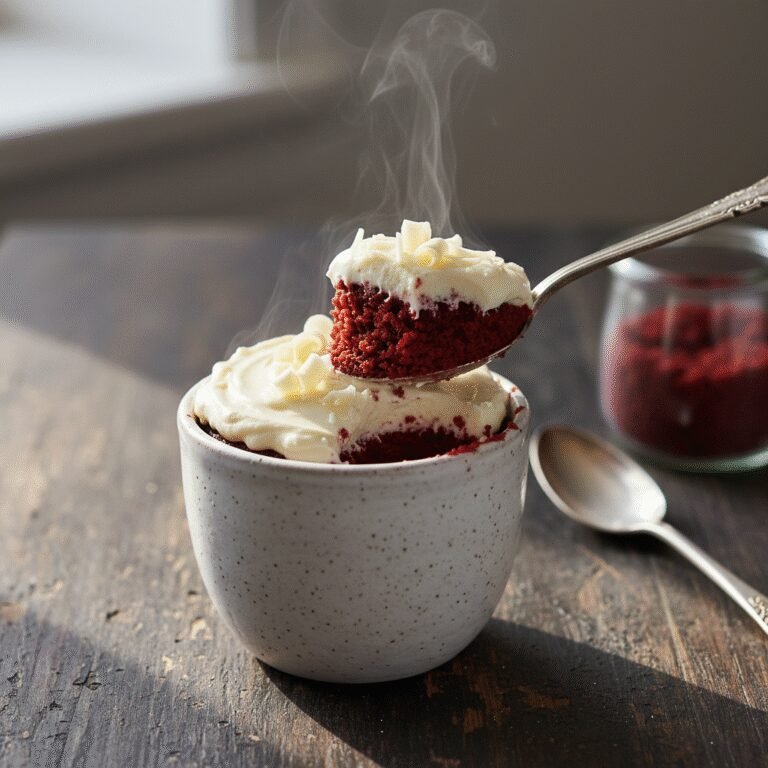
- Spoon the frosting over the warm mug cake.
- Garnish with extra lemon zest if desired and serve immediately.
Expert Cooking Tips
- ✓Do not overmix the batter, or the gluten will develop too much, resulting in a chewy, rubbery cake.
- ✓Use a mug with straight sides for the most even cooking; tapered mugs can cause the bottom to overcook while the top is raw.
- ✓Microwave wattages vary wildly. Start checking your cake at the 60-second mark to ensure it doesn’t dry out.
- ✓Fresh lemon juice is non-negotiable; bottled lemon juice often has a metallic aftertaste that ruins the delicate flavor.
- ✓If you want a moister cake, you can add a tiny drop of oil alongside the butter.
- ✓Let the cake cool for at least 60 seconds before frosting, or the frosting will melt completely into a liquid.
Substitutions and Variations
This recipe is quite flexible. If you need to make it gluten-free, a standard 1:1 gluten-free baking flour blend works exceptionally well, though the texture may be slightly denser. For a vegan version, substitute the dairy milk with almond or soy milk, use vegan butter or coconut oil, and swap the cream cheese for a vegan alternative or a simple glaze of powdered sugar and lemon juice. If you don’t have granulated sugar, cane sugar works fine, though brown sugar will change the flavor profile to something more caramel-like, which clashes slightly with the lemon. You can also swap the lemon for orange or lime for a different citrus variation.
Common Mistakes to Avoid
The most common mistake is overcooking. Microwave cakes go from perfectly fluffy to rock-hard in a matter of seconds. Always err on the side of undercooking slightly, as the cake continues to cook from residual heat once removed. Another mistake is using a mug that is too small. The batter rises significantly due to the baking powder; a standard 8oz coffee cup might overflow, so stick to a 12oz or larger mug. Finally, forgetting to mix the dry ingredients at the bottom of the mug often results in pockets of dry flour after cooking. Make sure to scrape the bottom corners of the mug with your fork.
Serving Suggestions
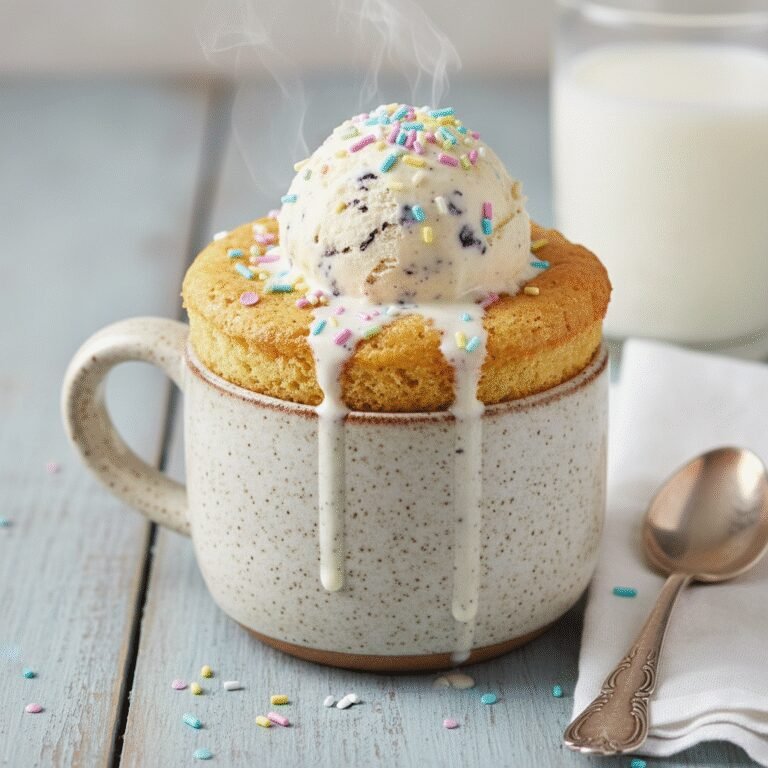
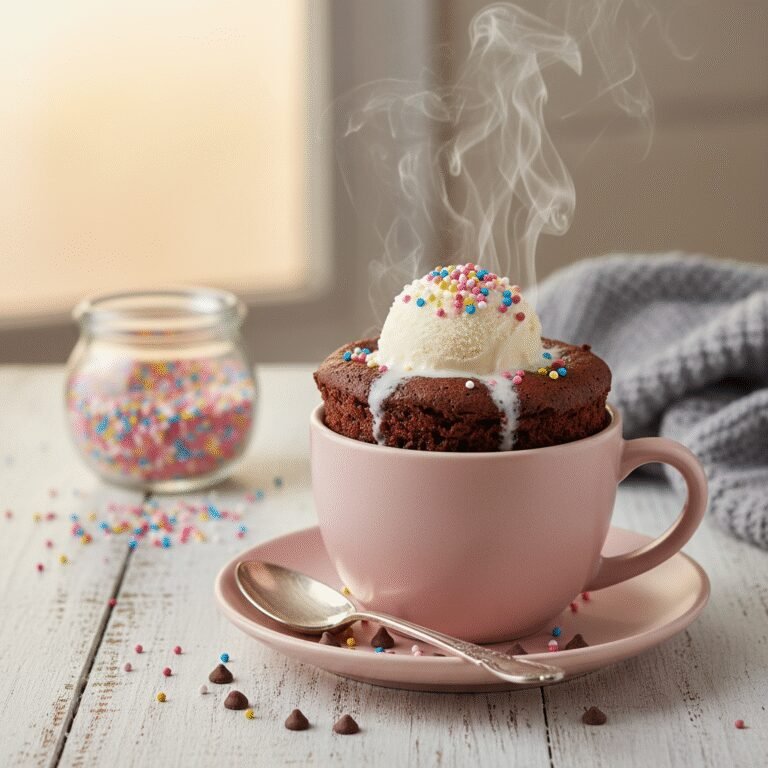
This mug cake is best served warm, directly in the mug. For an elegant touch, place the mug on a saucer with a small spoon. While the cream cheese frosting is the standard pairing, you can also serve this with a dollop of whipped cream, a scoop of vanilla bean ice cream, or fresh berries like blueberries or raspberries, which pair beautifully with lemon. A dusting of powdered sugar is a lighter alternative if you want to skip the frosting.
Storage and Reheating Tips
Mug cakes are designed to be eaten immediately. They do not store well because they tend to dry out and become hard once they cool completely and sit for hours. However, if you must save it, cover the mug tightly with plastic wrap and store it in the refrigerator for up to 24 hours. To reheat, sprinkle a teaspoon of water over the top and microwave in 10-second bursts until warm. The frosting should be stored separately in the fridge if not used immediately.
Nutrition Facts (Estimated)
| Serving Size | 1 mug cake |
| Calories | 420 |
| Fat | 22g |
| Saturated Fat | 14g |
| Unsaturated Fat | 7g |
| Trans Fat | 0.5g |
| Cholesterol | 60mg |
| Sodium | 310mg |
| Carbohydrates | 52g |
| Fiber | 1g |
| Sugar | 32g |
| Protein | 5g |
Frequently Asked Questions
Can I use self-rising flour?
Yes, if you use self-rising flour, omit the baking powder and the salt from the recipe, as they are already included in the flour blend.
Why is my mug cake rubbery?
Rubbery texture usually comes from two things: overmixing the batter (developing too much gluten) or overcooking it in the microwave.
Can I make this without a microwave?
Technically yes, you can bake it in an oven-safe ramekin at 350°F (175°C) for about 15-20 minutes, but the texture might be drier than the microwave version.
Can I double the recipe?
Do not double the recipe in a single mug; it will overflow and cook unevenly. Make two separate mugs instead.
Why did my cake sink?
Mug cakes often deflate slightly when removed from the heat; this is normal. However, if it collapses completely, your baking powder may be expired.
Can I add poppy seeds?
Absolutely! Add 1 teaspoon of poppy seeds to the dry ingredients for a classic lemon-poppy seed variation.
Is this recipe egg-free?
Yes, this specific recipe relies on baking powder for lift rather than eggs, which helps keep the texture light and spongy rather than dense.
My butter exploded in the microwave, what happened?
Butter can pop if heated too quickly. Cover the bowl with a paper towel when melting the butter, or melt it in 10-second intervals.
Conclusion
The Easy Lemon Mug Cake with Cream Cheese Frosting is the ultimate testament to the fact that great food doesn’t always require hours of labor. It is a pocket-sized burst of joy that brings the bakery experience into your home in minutes. Whether you are treating yourself after a long day or whipping up a quick dessert for a friend, this recipe delivers consistent, delicious results. Don’t forget to experiment with the zest and toppings to make it your own. Happy microwaving!