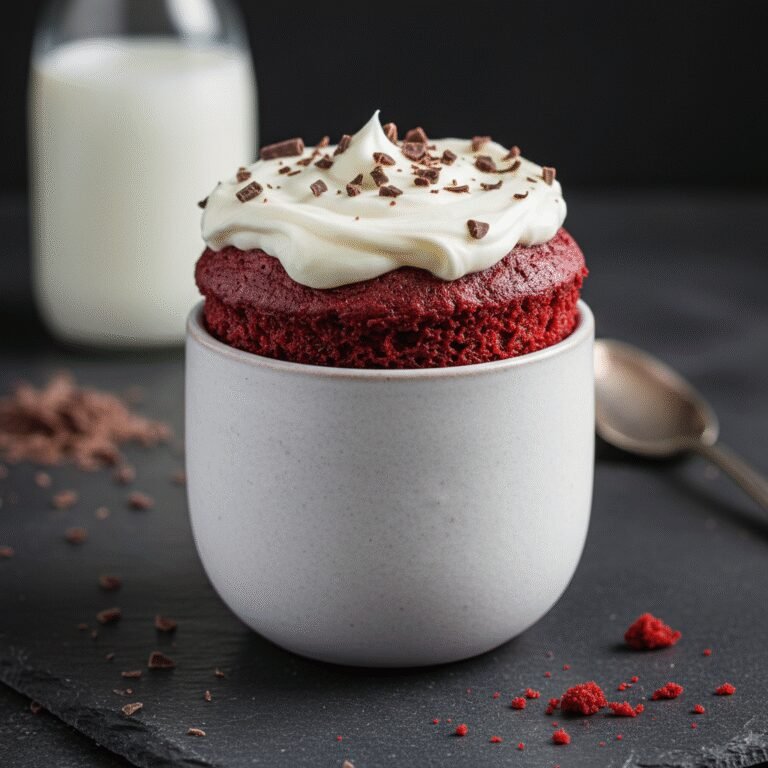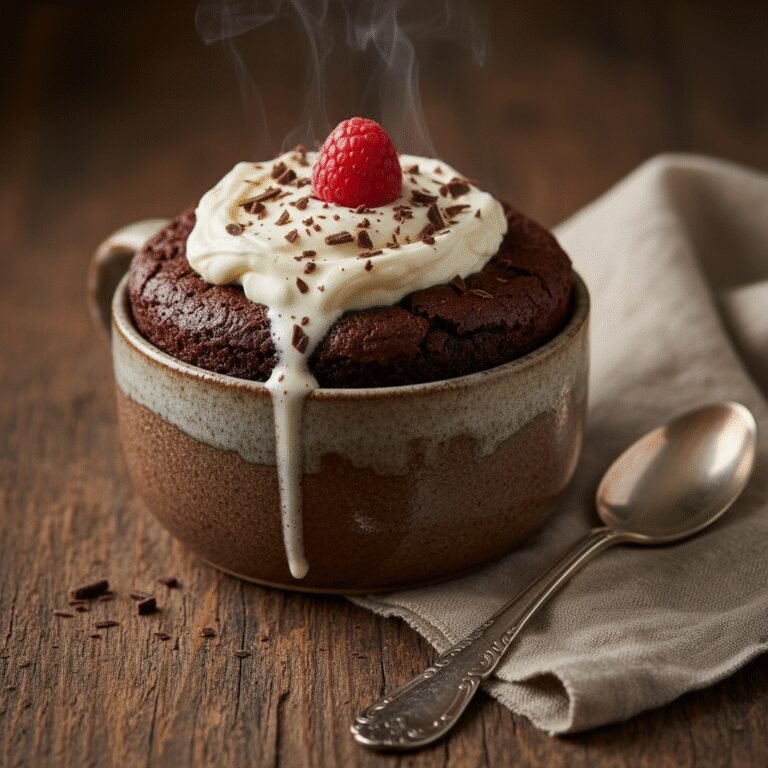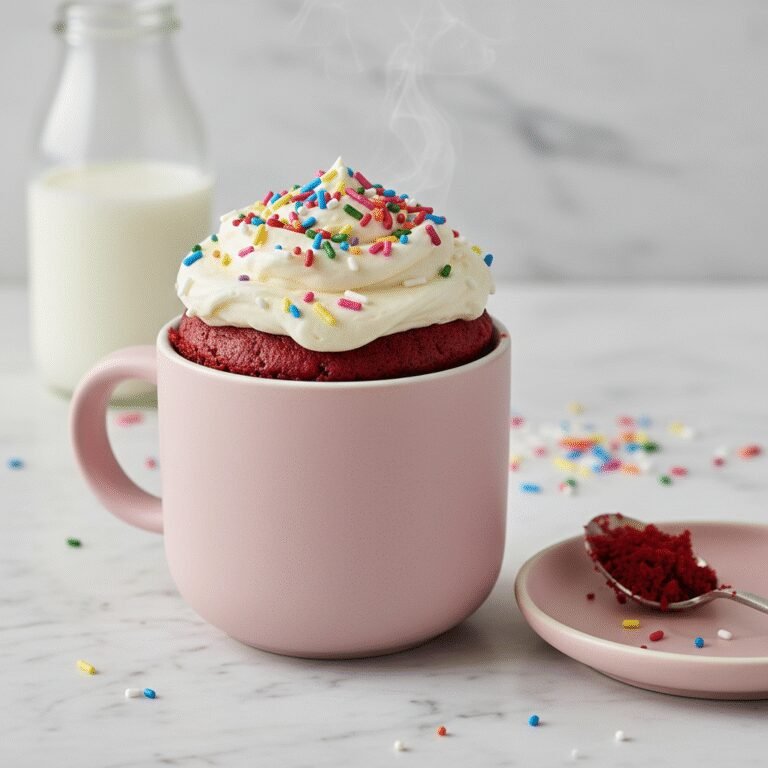

5-Minute Easy Lemon Mug Cake With Chocolate Chips
Easy Lemon Mug Cake With Chocolate Chips Recipe
Craving something sweet and zesty but short on time? This Easy Lemon Mug Cake with Chocolate Chips is the ultimate single-serving dessert solution. It is fluffy, moist, and bursting with bright citrus flavor balanced by pockets of melty chocolate, all ready in under 10 minutes.
5 minutes
2 minutes
7 minutes
1 large mug cake
Dessert
Microwave
American
Vegetarian
There is something undeniably magical about the mug cake. It bridges the vast canyon between ‘I need dessert right now’ and ‘I absolutely refuse to bake an entire cake.’ But often, mug cakes can fall into the trap of being rubbery, flavorless, or just plain disappointing. That is where this Easy Lemon Mug Cake with Chocolate Chips changes the game completely. Imagine the sunny, vibrant zest of a lemon bar meeting the comforting, tender crumb of a vanilla sponge, all studded with rich, semi-sweet chocolate chips that melt slightly as the cake steams to perfection in the microwave. It is a flavor combination that might sound slightly unconventional to some—citrus and chocolate—but it is a sophisticated pairing that works beautifully. The brightness of the lemon cuts through the richness of the chocolate, creating a balanced bite that feels far more luxurious than the five minutes it took to prepare implies.
This recipe is designed for those late-night cravings, the rainy afternoons, or the dorm room study sessions where an oven isn’t an option. We have tested ratios of flour to fat and liquid to ensure that you don’t end up with a dense, chewy puck. Instead, you get a spoonable, soft, and aromatic treat. The scent of lemon zest hitting the warm batter alone is enough to lift your spirits. Whether you are a seasoned baker looking for a quick fix or a kitchen novice, this recipe is foolproof. So, grab your favorite oversized mug, and let’s make a dessert that tastes like sunshine and comfort in equal measure.
History & Origins
The concept of the ‘mug cake’ is a thoroughly modern phenomenon, yet its roots trace back to the earliest days of baking. In the 18th and 19th centuries, before the advent of muffin tins, small cakes were often baked in individual pottery cups or ramekins—hence the term ‘cupcake.’ However, these were still baked in traditional wood-fired or gas ovens. The true evolution of the mug cake as we know it parallels the widespread adoption of the microwave oven in the late 20th century. Initially, microwave cooking was touted for full meals, but as the novelty wore off, it became a tool for reheating and convenience.
The specific trend of the ‘5-minute mug cake’ exploded in the internet age, particularly around the late 2000s and early 2010s. Food bloggers and early Pinterest users began sharing recipes for single-serving desserts that required minimal cleanup and instant gratification. It was a rebellion against the precision and time commitment of traditional baking. Early versions were often just flour, sugar, cocoa, and water, resulting in less-than-stellar textures. Over the last decade, however, recipe developers have refined the science, incorporating fats like butter or oil, raising agents, and eggs (or egg substitutes) to mimic the texture of an oven-baked cake.
The pairing of lemon and chocolate has its own history, often found in European confectionery where candied lemon peel is dipped in dark chocolate. Bringing this sophisticated flavor profile into the humble, casual format of an American mug cake represents the democratization of gourmet flavors—making high-end taste accessible to anyone with a microwave and a mug.
Why This Recipe Works
This recipe succeeds where many mug cakes fail because of the precise balance of moisture, fat, and acidity. One of the biggest challenges with microwave baking is texture; microwaves cook by vibrating water molecules, which can easily lead to a tough, rubbery texture if there is too much gluten development or not enough fat. We use melted butter (or oil) here specifically to coat the flour proteins, inhibiting gluten formation and ensuring a tender crumb. Furthermore, the inclusion of lemon juice can sometimes curdle dairy milk if mixed incorrectly. This recipe dictates mixing the sugar and lemon zest first to release the lemon oils, then adding the liquid ingredients in a specific order to maintain a smooth batter.
The addition of chocolate chips does double duty: they provide flavor contrast, but physically, they also create pockets of moisture within the cake as they melt. The baking powder is calibrated for the small volume; too much and the cake explodes over the mug; too little and it is a dense brick. Finally, the cooking time is kept short. Microwaves vary wildly in wattage, but this recipe uses a lower power setting or short bursts to gently steam the cake rather than blasting it, which preserves the delicate lemon flavor and keeps the chocolate from scorching.
Why You’ll Love This Recipe
- ✓Ready in under 7 minutes from start to finish
- ✓Perfect single-serving portion control
- ✓No oven required—great for summer or dorms
- ✓Bright, fresh lemon flavor using real zest
- ✓Uses pantry staple ingredients
- ✓Minimal cleanup with just one mug and a spoon
Equipment You’ll Need
- ✓Microwave-safe mug (12oz capacity or larger)
- ✓Measuring spoons
- ✓Small mixing spoon or fork
- ✓Microplane or zester
Ingredients
- ✓4 tablespoons All-Purpose Flour
- ✓3 tablespoons Granulated Sugar
- ✓1/2 teaspoon Baking Powder
- ✓1 pinch Salt
- ✓3 tablespoons Milk (whole or 2%)
- ✓1 tablespoon Unsalted Butter, melted (or vegetable oil)
- ✓1 teaspoon Fresh Lemon Zest
- ✓1 teaspoon Fresh Lemon Juice
- ✓2 tablespoons Semi-Sweet or White Chocolate Chips
- ✓Optional: Powdered sugar for dusting
Instructions
- Select a microwave-safe mug that holds at least 12 ounces to prevent overflowing.
- In the mug, combine the granulated sugar and fresh lemon zest. Use the back of a spoon to rub the zest into the sugar for 30 seconds. This releases the essential oils and maximizes the lemon flavor.
- Add the all-purpose flour, baking powder, and salt to the mug. Stir the dry ingredients until well combined.
- Pour in the milk, melted butter (or oil), and lemon juice.
- Mix gently with a fork or small spoon. Ensure you scrape the bottom edges of the mug to incorporate any pockets of dry flour. Do not overmix; stop as soon as the batter is smooth.
- Fold in the chocolate chips, reserving a few to sprinkle on top.
- Place the mug in the center of the microwave. Cook on high power for 90 seconds to 2 minutes. The timing depends on your microwave wattage (based on 1000W).
- Watch the cake rise; it is done when the top looks set and is no longer wet. It may look slightly shiny due to the melted chocolate.
- Remove carefully (the mug will be hot!) and let it sit for 1-2 minutes to cool and finish setting.
- Top with optional powdered sugar or whipped cream and enjoy warm.
Expert Cooking Tips
- ✓Do not overmix the batter once the wet ingredients are added, or the cake will become rubbery.
- ✓Use a mug with straight sides for the most even cooking; tapered mugs can lead to an undercooked bottom.
- ✓If you are unsure of your microwave’s wattage, start with 60 seconds and add 15-second intervals.
- ✓Rubbing the lemon zest into the sugar is a crucial step for flavor—don’t skip it!
- ✓Place a paper towel under the mug in the microwave just in case it spills over.
- ✓Eat the cake while it is warm; mug cakes tend to dry out as they cool down completely.
Substitutions and Variations
This recipe is highly adaptable to various dietary needs and pantry situations. If you are gluten-free, you can substitute the all-purpose flour with a 1:1 gluten-free baking blend; just be aware the texture might be slightly denser. For a vegan version, swap the dairy milk for almond, soy, or oat milk, and use melted coconut oil or canola oil instead of butter. Ensure your chocolate chips are dairy-free as well. If you don’t have fresh lemons, you can use 1/4 teaspoon of lemon extract, though fresh zest provides a superior flavor profile. Regarding the chocolate, white chocolate chips pair exceptionally well with lemon if you prefer a sweeter, creamier profile over the semi-sweet contrast. You can also reduce the sugar by a tablespoon if you prefer a tart cake, or use a sugar substitute like erythritol, though this may affect the moisture level slightly.
Common Mistakes to Avoid
The most common mistake with mug cakes is overcooking. Because microwaves cook from the inside out, a cake that looks slightly moist on top might actually be fully done inside. If you cook it until it looks completely dry like an oven cake, it will likely be hard and rubbery by the time you eat it. Another error is using a mug that is too small. The batter expands significantly due to the baking powder and steam; a standard 8oz coffee cup is often too small, leading to a messy overflow. Finally, forgetting to mix the bottom of the mug is a frequent issue. It is easy to leave a clump of dry flour at the base, which results in an unpleasant powdery bite at the end of your dessert. Always scrape the bottom corner of the mug with your spoon before cooking.
Serving Suggestions
While delicious on its own, this mug cake can be elevated with a few simple garnishes. A dusting of powdered sugar adds a professional finish and extra sweetness. For a decadent treat, add a dollop of whipped cream or a scoop of vanilla ice cream while the cake is still hot, creating a creamy sauce as it melts. Fresh berries, such as raspberries or blueberries, pair perfectly with the lemon and chocolate flavors. If you want to emphasize the citrus, a tiny drizzle of lemon glaze (powdered sugar mixed with lemon juice) can be poured over the top after cooking.
Storage and Reheating Tips
Mug cakes are best enjoyed immediately after cooking. The texture relies on the steam generated during microwaving, and as the cake cools, the starches retrogress, causing it to become hard or stale quickly. If you absolutely must save it, cover the mug tightly with plastic wrap to trap moisture and store it at room temperature for up to 24 hours. Do not refrigerate, as this will dry it out faster. To reheat, place a damp paper towel over the top of the mug and microwave on 50% power for 15-20 seconds to try and revive the soft texture.
Nutrition Facts (Estimated)
| Serving Size | 1 mug cake |
| Calories | 420 |
| Fat | 18g |
| Saturated Fat | 10g |
| Unsaturated Fat | 7g |
| Trans Fat | 0g |
| Cholesterol | 45mg |
| Sodium | 210mg |
| Carbohydrates | 58g |
| Fiber | 2g |
| Sugar | 28g |
| Protein | 6g |
Frequently Asked Questions
Can I make this recipe without eggs?
Yes! This recipe is naturally egg-free. Because the cake is so small, an egg would make it too dense and spongy. The baking powder provides enough lift.
Why is my mug cake rubbery?
A rubbery texture usually comes from two things: overmixing the batter (developing too much gluten) or overcooking it in the microwave. Mix just until combined and reduce cooking time.
Can I bake this in an oven instead?
Technically yes, but it defeats the purpose of a quick mug cake. If you want to use an oven, pour the batter into a greased ramekin and bake at 350°F (175°C) for about 15-20 minutes.
Can I use self-rising flour?
Yes. If you use self-rising flour, omit the baking powder and salt from the recipe ingredients.
What happens if I don’t have fresh lemon?
You can use bottled lemon juice, but you will miss out on the floral aroma of the zest. Add a drop of lemon extract if you have it to boost the flavor.
Is it safe to eat if it looks wet?
Yes, mug cakes often look slightly damp on top when done. As long as the batter isn’t raw liquid, it is safe. It will continue to set as it cools.
Can I double the recipe?
Do not double the recipe in a single mug; it will overflow and cook unevenly. Make two separate batches in two separate mugs.
Why did my chocolate chips sink to the bottom?
Batter consistency affects this. If the batter is too thin, chips sink. You can toss the chips in a pinch of flour before adding them to help them stay suspended.
Conclusion
This Easy Lemon Mug Cake with Chocolate Chips proves that you don’t need hours in the kitchen or a sink full of dirty dishes to enjoy a high-quality, homemade dessert. It is the perfect blend of convenience and indulgence, offering a burst of sunshiney citrus and rich chocolate in every bite. Whether you are treating yourself after a long day or whipping up a quick snack for a movie night, this recipe is a keeper. Give it a try, and you might just find that the microwave is your new favorite baking tool.