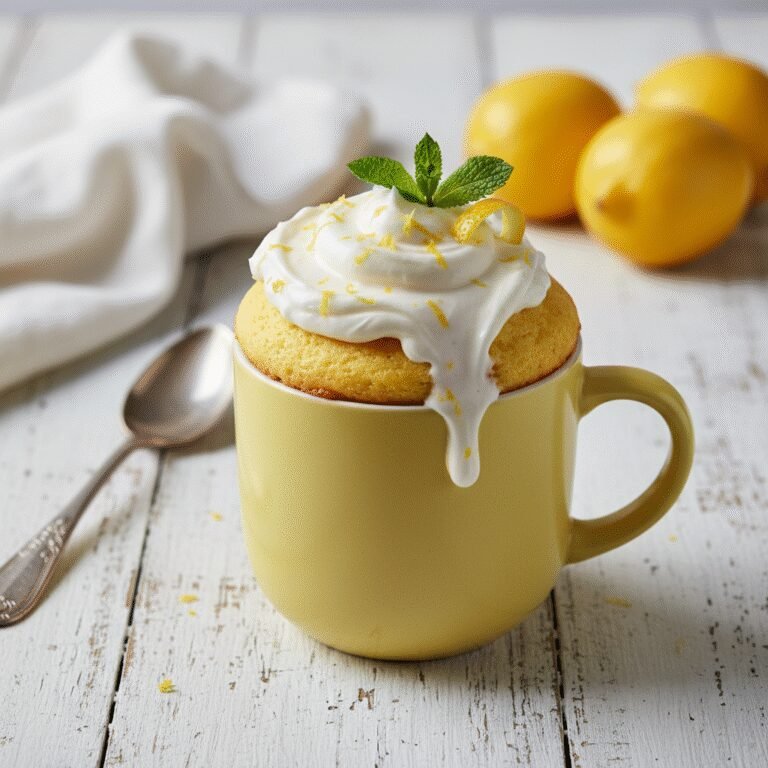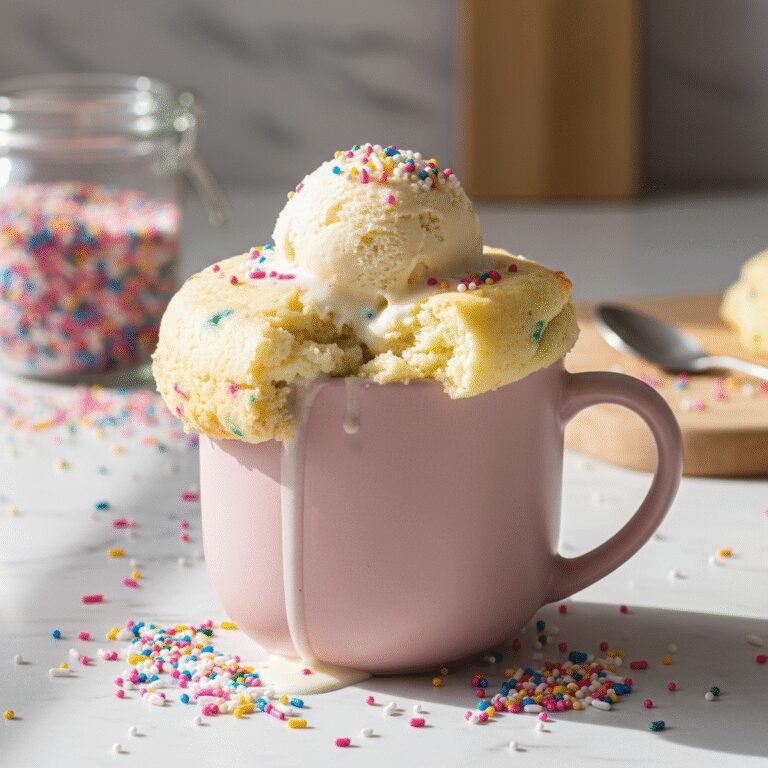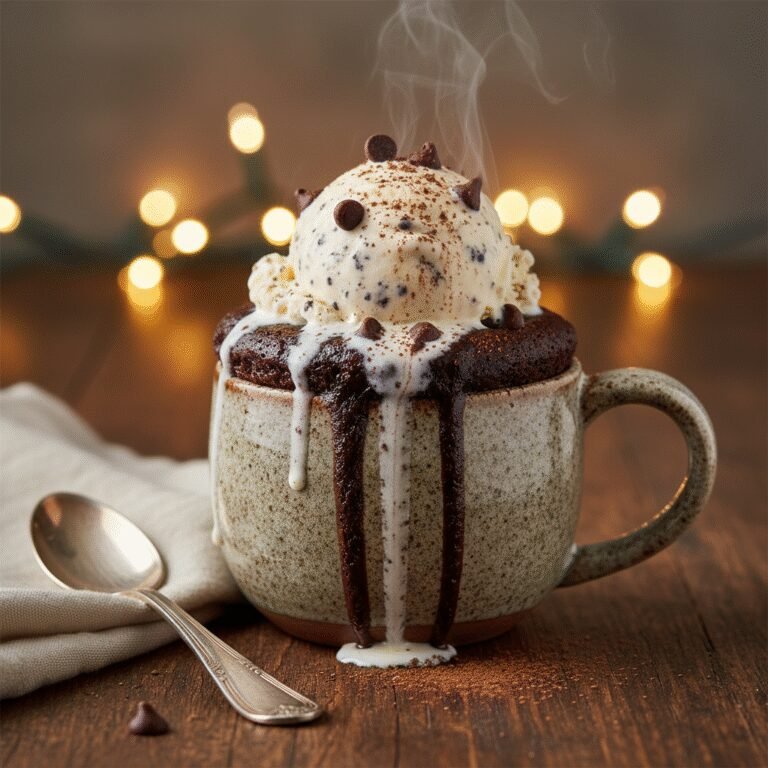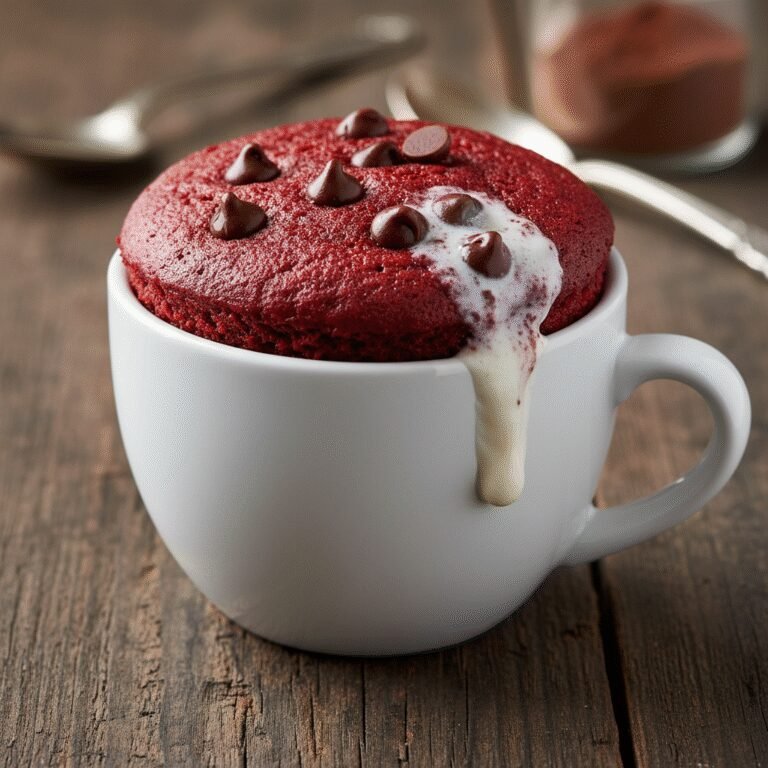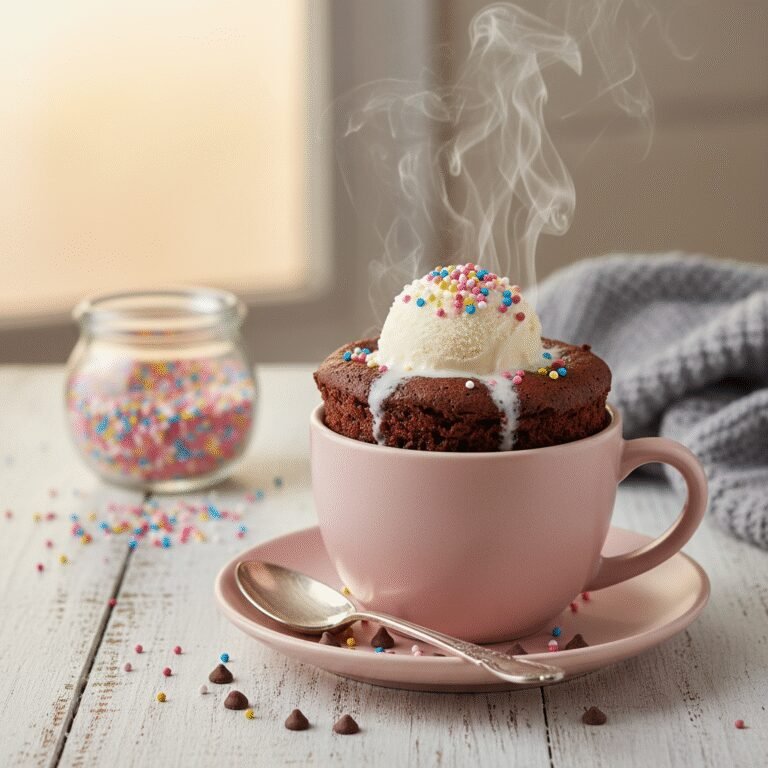
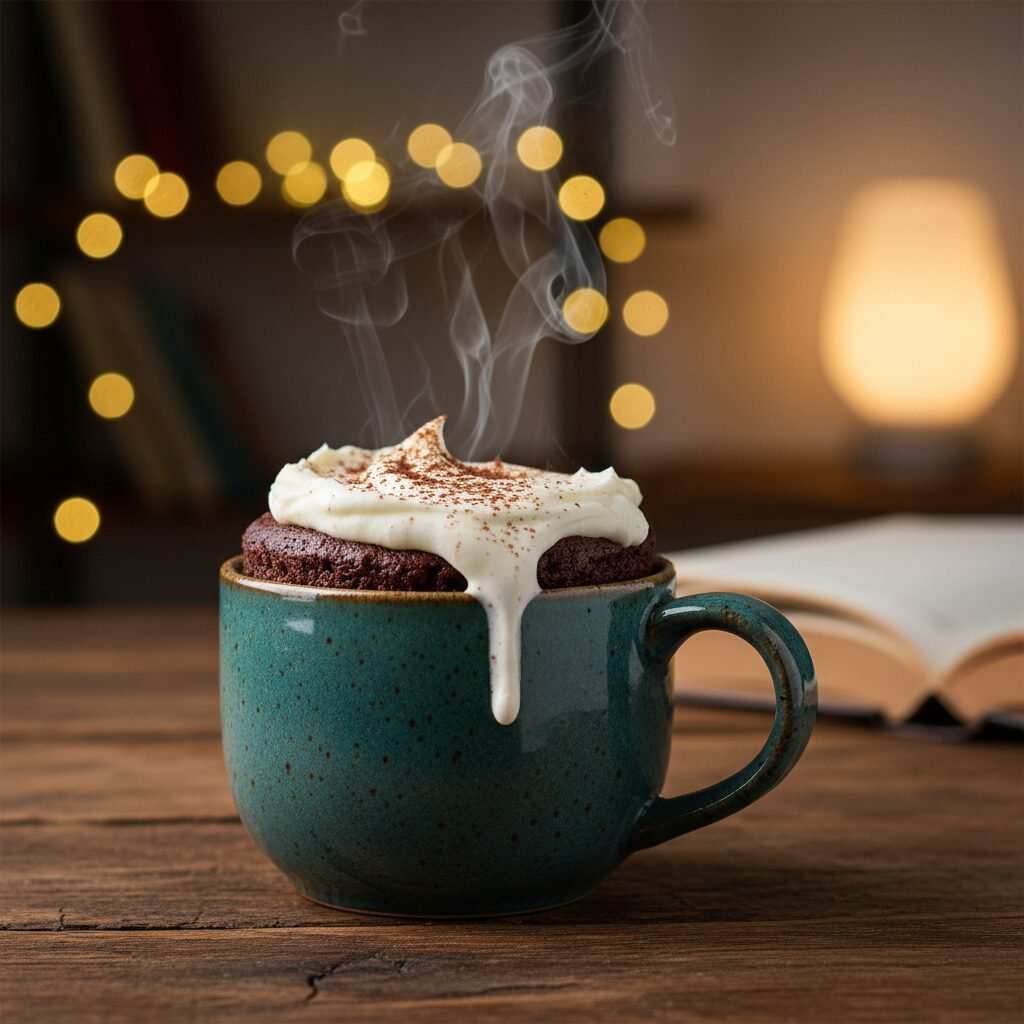
The Ultimate 5-Minute Chocolate Mug Cake With Cream Cheese Frosting
Easy Chocolate Mug Cake With Cream Cheese Frosting Recipe
Satisfy your deepest chocolate cravings in just 5 minutes with this incredibly moist, fudgy chocolate mug cake topped with a tangy, luscious homemade cream cheese frosting. It is the perfect single-serving dessert for late-night snacking or a quick afternoon treat without the hassle of baking a full cake.
3 minutes
2 minutes
5 minutes
1 serving
Dessert
Microwave
American
Vegetarian
There is a specific kind of hunger that strikes around 9:00 PM—a deep, resonant need for something sweet, warm, and comforting. It is usually too late to preheat the oven and commit to the hour-long process of baking a traditional cake, yet a simple piece of chocolate just won’t cut it. Enter the chocolate mug cake: the unsung hero of single-serving desserts. This isn’t just any microwave sponge; this is a carefully engineered recipe designed to replicate the tender crumb and rich flavor of a bakery-style chocolate cake, all within the confines of your favorite coffee mug. The magic lies in the balance of ingredients. Many mug cakes suffer from a rubbery texture, often caused by the inclusion of an egg, which is simply too much structure for such a small volume of batter cooked so quickly. By eliminating the egg and focusing on the ratio of fat to flour, we achieve a texture that is dangerously close to a steamed pudding—moist, dense, and utterly decadent.
But what truly elevates this recipe from a quick fix to a gourmet experience is the cream cheese frosting. While the cake is warm and deeply chocolaty, the frosting offers a cool, tangy counterpoint that cuts through the richness. The contrast between the steaming hot cake and the slightly melting, creamy frosting is a sensory delight. Whether you are a college student with nothing but a microwave, a busy parent needing a moment of solace, or simply a chocolate lover looking for instant gratification, this recipe is your new best friend. It requires minimal cleanup, pantry staples you likely already have, and zero patience. Prepare to fall in love with the art of the microwave bake.
History & Origins
The concept of the ‘mug cake’ is a relatively modern culinary phenomenon, inextricably linked to the widespread adoption of the microwave oven and the internet age’s demand for instant gratification. While the microwave was invented in the 1940s by Percy Spencer and became a household staple by the 1980s, it was primarily viewed as a tool for reheating leftovers or popping corn. The idea of actually ‘baking’ in it was often relegated to niche cookbooks that produced lackluster results. However, the late 2000s and early 2010s saw a massive shift with the rise of food blogging and social media platforms like Pinterest. Home cooks began experimenting with single-serving portions that could be cooked rapidly.
The ‘cake in a mug’ trend exploded virally around 2008-2009. Early iterations were often hit-or-miss, frequently criticized for their rubbery, omelet-like texture due to the use of whole eggs in small portions. As the trend matured, recipe developers began to apply food science to the microwave method, realizing that standard baking rules didn’t apply to this unique heat source. The omission of eggs and the adjustment of leavening agents marked the ‘second wave’ of mug cake evolution, leading to the high-quality recipes we see today. Culturally, the mug cake represents the shift toward individualized consumption and the ‘treat yourself’ mentality. It creates a moment of private indulgence—a cake that is explicitly yours, not meant to be shared, celebrating the joy of solitary comfort food in a fast-paced world.
Why This Recipe Works
This recipe succeeds where many others fail because it specifically addresses the physics of microwave cooking. Microwaves cook by agitating water, fat, and sugar molecules, generating heat from within the food. This happens incredibly fast, which can toughen gluten strands in flour instantly. To combat this, this recipe uses oil rather than butter for the cake base. Oil remains liquid at room temperature and coats the flour proteins more effectively, preventing the formation of tough gluten networks and ensuring the cake stays moist even as it cools.
Furthermore, the decision to omit the egg is crucial. In a full-sized cake, an egg provides structure and stability. In a 10-ounce mug, a whole egg provides too much protein coagulation, turning the cake into a rubbery, spongy mass that resembles a sweet omelet. By relying on baking powder for lift and a splash of milk for hydration, we achieve a tender crumb that breaks apart softly rather than bouncing back. We also use a specific ratio of cocoa powder to flour; too much cocoa can dry out the batter, so we balance it with enough sugar to ensure the result is fudgy, not chalky. Finally, the cream cheese frosting provides a necessary acidity. The tang of the cream cheese cuts through the intense sweetness and density of the chocolate, providing a balanced flavor profile that keeps the dessert from becoming cloying.
Why You’ll Love This Recipe
- ✓Ready in under 5 minutes from start to finish.
- ✓Egg-free batter ensures a moist, fudgy texture, never rubbery.
- ✓Perfect single-serving portion control.
- ✓Uses standard pantry staples—no obscure ingredients required.
- ✓Includes a luscious, homemade cream cheese frosting recipe.
- ✓Highly customizable with mix-ins like nuts or chocolate chips.
Equipment You’ll Need
- ✓Microwave-safe mug (12oz or larger recommended)
- ✓Measuring spoons
- ✓Small mixing bowl (for frosting)
- ✓Whisk or fork
- ✓Microwave
Ingredients
- ✓4 tbsp All-purpose flour
- ✓3 tbsp Granulated sugar
- ✓2 tbsp Unsweetened cocoa powder
- ✓1/2 tsp Baking powder
- ✓Pinch of salt
- ✓5 tbsp Milk (whole or 2%)
- ✓2 tbsp Vegetable oil or melted coconut oil
- ✓1/4 tsp Vanilla extract
- ✓1 tbsp Chocolate chips (optional, for the center)
- ✓2 tbsp Cream cheese, softened (Frosting)
- ✓1 tbsp Unsalted butter, softened (Frosting)
- ✓3 tbsp Powdered sugar (Frosting)
- ✓1/4 tsp Vanilla extract (Frosting)
Instructions
- In a standard microwave-safe mug (approx 12oz), whisk together the dry ingredients: flour, sugar, cocoa powder, baking powder, and salt. Ensure there are no clumps.
- Add the wet ingredients to the mug: milk, vegetable oil, and vanilla extract.
- Stir gently but thoroughly with a fork or small whisk until the batter is smooth. Be sure to scrape the bottom edges of the mug to incorporate any dry flour pockets.
- If desired, drop the chocolate chips into the center of the batter. Do not stir them in; let them sink slightly to create a molten center.
- Place the mug in the microwave. Cook on high for 60 to 90 seconds. The timing depends on your microwave’s wattage (see cooking tips). The cake should look set and risen, but slightly shiny on top.
- While the cake cools for a minute, prepare the frosting. In a small bowl, whisk together the softened cream cheese, softened butter, powdered sugar, and vanilla until smooth and creamy.
- Dollop the frosting onto the warm cake. The heat from the cake will slightly melt the bottom layer of the frosting, creating a delicious sauce.
- Serve immediately with a spoon and enjoy!
Expert Cooking Tips
- ✓Know your wattage: If you have a powerful 1200W microwave, start with 60 seconds. If you have a 700W compact microwave, you may need up to 1 minute 45 seconds.
- ✓Don’t overcook: This is the golden rule of mug cakes. It is better to undercook it slightly (making it fudgy) than to overcook it (making it dry and hard).
- ✓Use a wide mug: A wider mug allows for more even cooking and prevents the batter from overflowing, which is a common mishap.
- ✓Room temperature ingredients for frosting: Ensure your cream cheese and butter are soft, or your frosting will be lumpy.
- ✓Mix thoroughly: Flour loves to hide in the bottom crevices of the mug. Double-check the bottom before cooking.
- ✓Let it sit: Allowing the cake to rest for 1-2 minutes after cooking helps the texture settle and prevents you from burning your tongue.
Substitutions and Variations
This recipe is highly adaptable to various dietary needs and pantry limitations. For the flour, you can substitute a 1:1 gluten-free baking blend if you are gluten-intolerant; almond flour can be used but will result in a denser, less fluffy texture. If you are vegan, swap the dairy milk for almond, soy, or oat milk, and replace the cream cheese and butter in the frosting with plant-based alternatives. The vegetable oil can be replaced with melted butter for a richer flavor, or melted coconut oil for a subtle tropical hint. For the sweetener, brown sugar can be used instead of granulated sugar to create a deeper, caramel-like flavor profile. If you don’t have cream cheese, a simple buttercream or a dollop of whipped cream works beautifully as a topping.
Common Mistakes to Avoid
The most frequent error when making mug cakes is overcooking. Because microwaves vary so wildly in power, following the time instruction blindly can lead to a rock-hard cake. Always check it at the minimum time mark. Another common mistake is using a mug that is too small. The batter rises significantly due to the baking powder; if the mug is too small, you will end up with a messy overflow on your microwave turntable. Additionally, forgetting to mix the dry ingredients first can lead to clumps of bitter cocoa powder or salty pockets in the final product. Lastly, do not use an egg unless the recipe specifically calls for it and adjusts the other ingredients accordingly; adding an egg to this specific egg-free formulation will ruin the texture.
Serving Suggestions
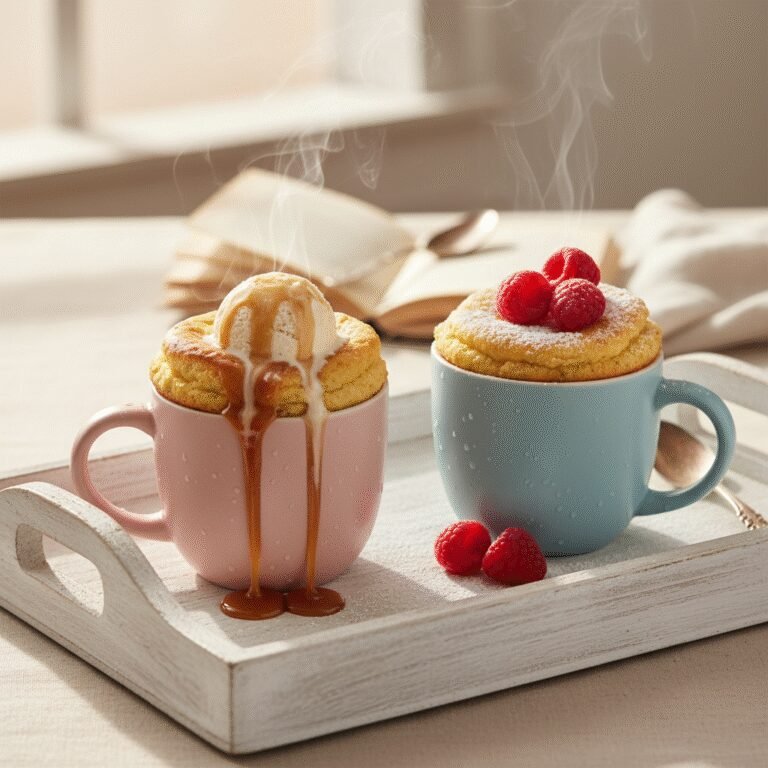
This mug cake is best served immediately while still warm. The contrast of the warm cake and the cool frosting is part of the experience. For an extra indulgence, drizzle caramel sauce or chocolate syrup over the frosting. Chopped nuts like walnuts or pecans add a wonderful crunch. If you want to turn this into a breakfast treat (we won’t judge), try topping it with fresh berries like raspberries or strawberries, which pair beautifully with the dark chocolate and cream cheese. A dusting of espresso powder on top of the frosting can also elevate the flavor for adults.
Storage and Reheating Tips
Mug cakes are designed to be eaten immediately and do not store well. The texture tends to become tough and stale within a few hours. However, if you absolutely must save it, cover the mug tightly with plastic wrap and store it in the refrigerator for up to 24 hours. To reheat, remove the wrap and microwave on 50% power for 15-20 seconds. Note that the frosting will melt completely upon reheating. It is highly recommended to mix the dry ingredients in bulk and store them in a jar (homemade ‘mug cake mix’) so you can just scoop, add wet ingredients, and cook fresh every time.
Nutrition Facts (Estimated)
| Serving Size | 1 mug cake with frosting |
| Calories | 480 |
| Fat | 24g |
| Saturated Fat | 9g |
| Unsaturated Fat | 14g |
| Trans Fat | 0g |
| Cholesterol | 35mg |
| Sodium | 210mg |
| Carbohydrates | 62g |
| Fiber | 4g |
| Sugar | 38g |
| Protein | 6g |
Frequently Asked Questions
Why is my mug cake rubbery?
Rubberiness is usually caused by overcooking or over-mixing the batter, which develops the gluten too much. It can also happen if you added an egg to a recipe designed to be egg-free.
Can I make this in the oven?
Technically yes, but it defeats the purpose of a quick mug cake. If you must, bake at 350°F (175°C) in an oven-safe ramekin for about 15-20 minutes.
Can I use self-rising flour?
Yes! If you use self-rising flour, simply omit the baking powder and the salt from the recipe.
My cake overflowed! What happened?
Your mug was likely too small or too narrow. Use a mug that holds at least 12 ounces, leaving plenty of headspace for the batter to rise.
Can I reduce the sugar?
You can reduce the sugar slightly, but be aware that sugar contributes to moisture. Reducing it too much may result in a drier, less tender cake.
Is cocoa powder necessary?
For a chocolate cake, yes. If you want a vanilla version, omit the cocoa powder and add an extra 2 tablespoons of flour.
Can I double the recipe?
Do not double the recipe in a single mug; it will not cook evenly. Make two separate mugs and cook them one at a time for best results.
Why is my cake dry?
It was likely in the microwave for too long. Next time, reduce the cooking time by 10-15 seconds.
Conclusion
The Easy Chocolate Mug Cake with Cream Cheese Frosting is more than just a recipe; it is a survival tool for the modern sweet tooth. It proves that you don’t need a stand mixer, a preheated oven, or hours of free time to enjoy a high-quality, homemade dessert. With its rich chocolate flavor, tender crumb, and the luxurious tangy-sweet finish of the frosting, it rivals many full-sized cakes in satisfaction. Keep these ingredients on hand, and you will never be more than five minutes away from chocolate bliss. Whether you are celebrating a small win or comforting yourself after a long day, this mug cake is the perfect companion.