The Ultimate 5-Minute Fudgy Chocolate Mug Cake
Easy Chocolate Mug Cake Recipe
Satisfy your deepest chocolate cravings in less than five minutes with this incredibly moist and fudgy mug cake. It is the perfect single-serving dessert that requires no eggs, minimal cleanup, and delivers a rich, decadent flavor every single time.
3 minutes
1 minute
4 minutes
1 large serving
Dessert
Microwave
American
Vegetarian
We have all been there: it is 9:00 PM on a Tuesday, you are curled up on the couch, and suddenly a craving for chocolate strikes with undeniable force. You do not want to bake a whole cake, nor do you want to deal with the mountain of dishes that comes with traditional baking. Enter the chocolate mug cake—the unsung hero of late-night snacking and the answer to your dessert prayers. This is not just any mug cake; this is the result of endless testing to banish the rubbery, dry texture that plagues so many microwave recipes.
This recipe yields a dessert that sits perfectly on the fence between a moist cake and a molten brownie. By removing the egg—which often makes microwave cakes tough—and balancing the fat-to-flour ratio, we achieve a tender crumb that feels like it came out of a professional oven. It is rich, deeply chocolatey, and can be customized with anything from peanut butter swirls to a scoop of vanilla bean ice cream. Whether you are a college student in a dorm, a busy parent needing a quick treat, or simply a chocolate lover, this recipe is your new best friend. Prepare to fall in love with the simplicity and decadence of microwave baking.
History & Origins
While the concept of ‘cakes in a mug’ feels like a distinctly modern internet phenomenon, its roots are actually intertwined with the history of the microwave oven itself. When microwave ovens became a household staple in the late 1970s and early 1980s, manufacturers and food companies scrambled to create recipes that demonstrated the appliance’s versatility beyond just reheating leftovers. Early microwave cookbooks often featured ‘cupcakes’ or ‘snack cakes’ cooked in teacups or ramekins, though the textures were often hit-or-miss due to the technology of the time.
The true explosion of the ‘mug cake’ as we know it today occurred in the late 2000s and early 2010s, coinciding with the rise of food blogging and social media platforms like Pinterest. As the digital age accelerated our lives, the demand for instant gratification extended to our kitchens. Home cooks began sharing ‘life hacks’ for single-serving desserts that could be whipped up during a commercial break. The chocolate mug cake quickly became the poster child for this movement. Over the last decade, the recipe has evolved significantly. Early viral recipes often included a whole egg, which resulted in a spongey, omelet-like texture. Through communal trial and error across the food blogging community, recipes have been refined to exclude eggs and optimize moisture, transforming a novelty hack into a genuinely delicious culinary category of its own.
Why This Recipe Works
The science behind this mug cake is what separates it from the rubbery disasters many people have experienced with microwave baking. The primary reason this recipe works so well is the omission of eggs. In a standard oven-baked cake, eggs provide structure and lift. However, in a microwave, which cooks food rapidly by agitating water molecules, the protein in eggs coagulates too quickly, turning the texture tough and rubbery. By relying on baking powder for lift and a combination of milk and oil for moisture, we keep the crumb tender.
Furthermore, the ratio of fat to flour is higher here than in a standard cake. We use oil (or melted butter) to coat the flour proteins, inhibiting gluten formation. Since you are mixing this in a mug with a spoon, it is easy to overmix, which develops gluten and leads to toughness. The extra fat acts as a safeguard against this. Finally, the addition of chocolate chips isn’t just for flavor; as they melt, they create pockets of gooiness that mimic the texture of a molten lava cake, ensuring that even if you accidentally overcook it by ten seconds, the center remains decadent and moist.
Why You’ll Love This Recipe
- ✓Ready in under 5 minutes from pantry to spoon.
- ✓Egg-free recipe ensures a moist, fudge-like texture.
- ✓Minimal cleanup required—mix and bake in the same mug.
- ✓Easily customizable with nuts, caramel, or fruit.
- ✓Perfect portion control for a single serving.
- ✓Uses standard pantry staples you likely already have.
Equipment You’ll Need
- ✓Microwave-safe mug (12-14 oz capacity)
- ✓Tablespoon
- ✓Measuring spoons
- ✓Microwave
Ingredients
- ✓1/4 cup All-purpose flour
- ✓1/4 cup Granulated sugar
- ✓2 tablespoons Unsweetened cocoa powder
- ✓1/2 teaspoon Baking powder
- ✓1 pinch Salt
- ✓3 tablespoons Milk (dairy or non-dairy)
- ✓2 tablespoons Vegetable oil (or melted butter)
- ✓1 tablespoon Semi-sweet chocolate chips (plus more for topping)
- ✓1 splash Vanilla extract (optional)
Instructions
- In a standard microwave-safe mug (at least 12 oz size), whisk together the dry ingredients: flour, sugar, cocoa powder, baking powder, and salt. Ensure there are no large lumps of cocoa powder.
- Add the wet ingredients: milk, vegetable oil, and vanilla extract to the mug.
- Stir gently with a spoon until the batter is smooth and combined. Be sure to scrape the bottom edges of the mug to incorporate all the flour.
- Sprinkle the chocolate chips into the center of the batter. Do not stir them in completely; let them sit near the top/middle.
- Place the mug in the microwave. Cook on high power for 60 to 90 seconds. The timing depends heavily on your microwave’s wattage (see tips). The cake should rise and look set on top but may still look slightly moist in the very center.
- Remove carefully from the microwave (the mug will be hot!). Let it sit for 1-2 minutes to cool and finish setting.
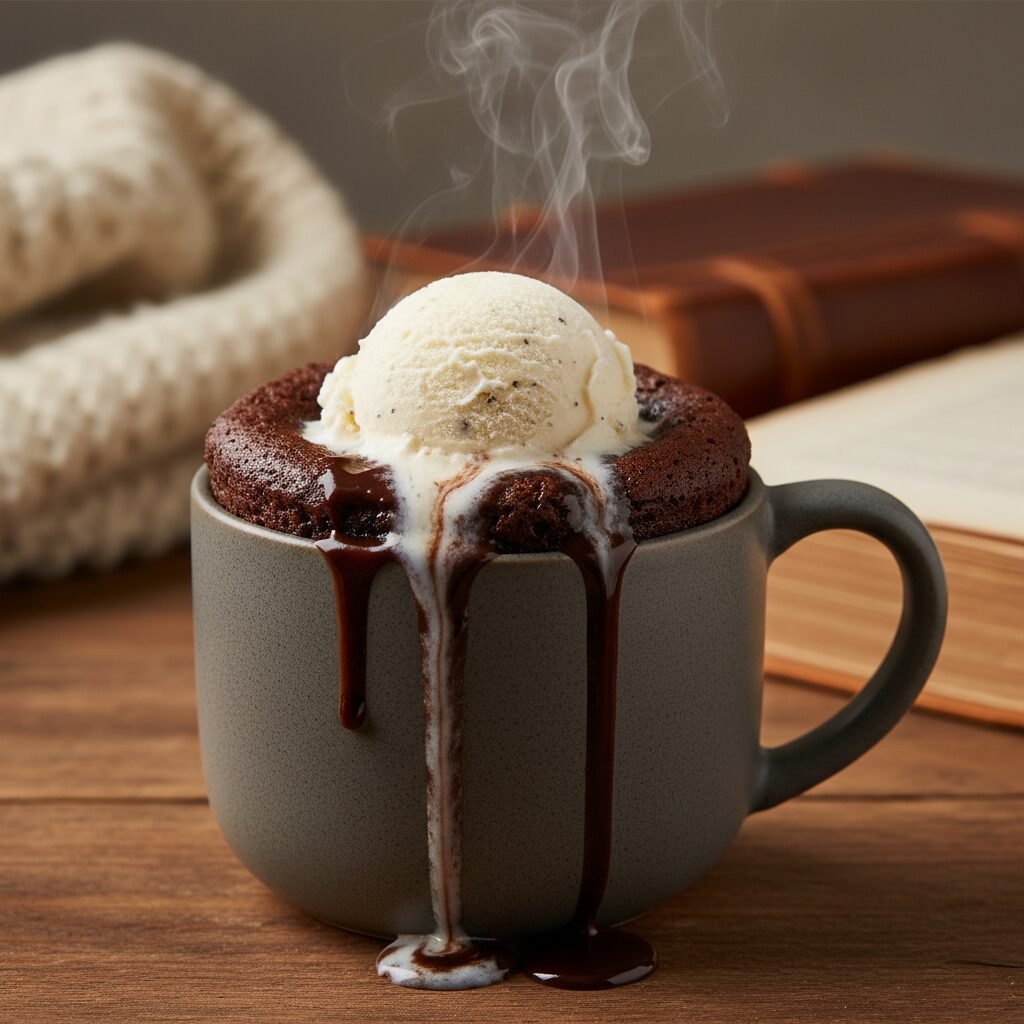
- Top with whipped cream or ice cream if desired and enjoy immediately.
Expert Cooking Tips
- ✓Know your microwave wattage: Start with 60 seconds. If it’s still liquid, add 10-second intervals. Overcooking is the enemy of moisture.
- ✓Use a wide mug: A wider mug allows the cake to cook more evenly than a tall, narrow one.
- ✓Don’t overmix: Stir just until the flour streaks disappear to keep the texture tender.
- ✓Place a paper towel under the mug: Just in case your mug is too small and the batter overflows, this saves you from cleaning the microwave.
- ✓Eat it warm: Mug cakes are best enjoyed immediately after the resting period; they can dry out if left to sit for hours.
- ✓Check the baking powder: Ensure your baking powder is fresh, or the cake won’t rise.
Substitutions and Variations
This recipe is incredibly forgiving and adaptable to various dietary needs. For a gluten-free version, simply swap the all-purpose flour for a 1:1 gluten-free baking flour blend; almond flour can work but may result in a denser texture. If you are vegan or dairy-free, use any plant-based milk (almond, soy, and oat work great) and ensure your chocolate chips are dairy-free. You can replace the vegetable oil with melted coconut oil or melted butter for a richer flavor, though butter makes the crumb slightly denser. For sugar alternatives, coconut sugar works well but will add a caramel note. Liquid sweeteners like maple syrup can be used, but you may need to reduce the milk slightly to balance the liquid ratio.
Common Mistakes to Avoid
The most common mistake is overcooking the cake. Microwaves vary wildly in power, and even 15 seconds too long can turn a moist cake into a hard rock. Always err on the side of undercooking, as the cake continues to cook from residual heat once removed. Another mistake is using a mug that is too small. The batter rises significantly due to the baking powder; if the mug is filled more than halfway with raw batter, it will likely spill over. Finally, failing to mix the bottom of the mug is a frequent error—ensure you dig your spoon into the corners so you don’t end up with a pocket of dry flour at the bottom of your cooked cake.
Serving Suggestions
While delicious on its own, this mug cake shines with toppings. A classic scoop of vanilla bean ice cream creates a hot-and-cold contrast that is irresistible. Fresh berries, such as raspberries or strawberries, add a tart freshness that cuts through the rich chocolate. For extra decadence, drizzle with salted caramel sauce, hot fudge, or a dollop of peanut butter. A dusting of powdered sugar or a dollop of fresh whipped cream is a simple way to elevate the presentation.
Storage and Reheating Tips
Mug cakes are designed to be single-serving treats eaten immediately. They do not store well, as the texture tends to become rubbery or dry once fully cooled and reheated. However, if you absolutely must save it, cover the mug tightly with plastic wrap and store it in the refrigerator for up to 24 hours. To reheat, microwave in 10-second bursts, ideally with a damp paper towel draped over the top to reintroduce moisture. It is not recommended to freeze this dish.
Nutrition Facts (Estimated)
| Serving Size | 1 mug cake |
| Calories | 450 |
| Fat | 22g |
| Saturated Fat | 6g |
| Unsaturated Fat | 14g |
| Trans Fat | 0g |
| Cholesterol | 5mg |
| Sodium | 180mg |
| Carbohydrates | 58g |
| Fiber | 4g |
| Sugar | 32g |
| Protein | 6g |
Frequently Asked Questions
Why is my mug cake rubbery?
A rubbery texture usually comes from two things: overmixing the batter (which develops gluten) or overcooking it in the microwave. Try mixing less and reducing the cook time.
Can I make this without a microwave?
Yes, you can bake it in an oven-safe ramekin at 350°F (175°C) for about 12-15 minutes, but that defeats the ‘quick’ purpose of the recipe!
Can I double the recipe?
Do not double the recipe in a single mug; it will overflow and cook unevenly. Make two separate mugs instead.
Why did my cake sink?
It is normal for a mug cake to deflate slightly after cooking as the steam escapes. However, if it collapses completely, your baking powder might be expired.
Can I use self-rising flour?
Yes. If you use self-rising flour, omit the baking powder and the salt from the recipe.
Is it safe to eat if it looks wet?
Since this recipe contains no eggs, it is safe to eat even if slightly undercooked. In fact, a slightly gooey center is desirable for a fudgy texture.
Can I use water instead of milk?
Technically yes, but the cake will be less rich and flavorful. Milk adds fat and sugar that contribute to the texture.
Can I add protein powder?
Yes, you can replace 1 tablespoon of flour with protein powder, but you may need to add an extra teaspoon of milk as protein powder absorbs liquid.
Conclusion
There you have it—the secret weapon for instant dessert gratification. This Easy Chocolate Mug Cake proves that you don’t need a fancy kitchen, hours of time, or a pantry full of exotic ingredients to create something truly delicious. It is a testament to the magic of simple baking science. Whether you are treating yourself after a long day or making a quick snack for the kids, this recipe delivers consistent, fudgy joy every time. Give it a try tonight; your sweet tooth will thank you!