Easy Brownie Mug Cake With Cream Cheese Frosting Recipe
Easy Brownie Mug Cake With Cream Cheese Frosting Recipe
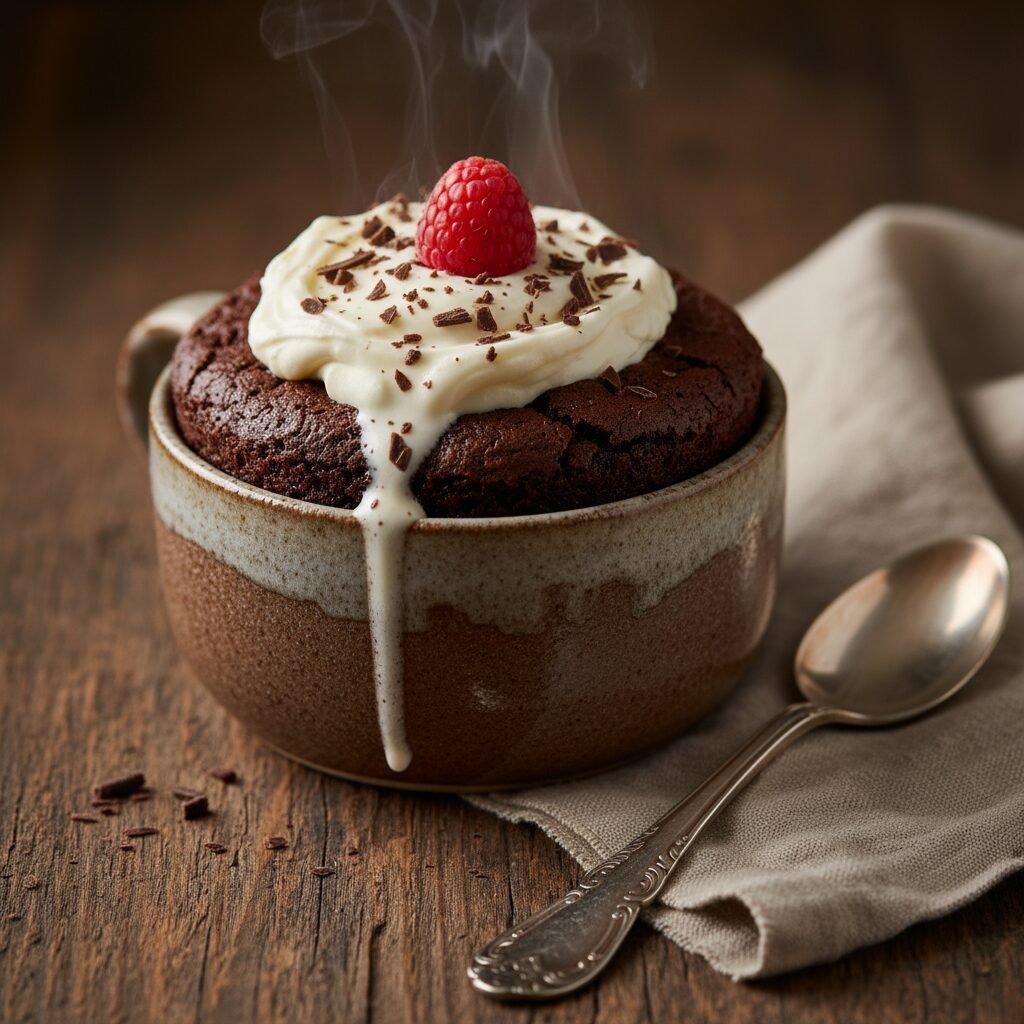
Satisfy your deepest chocolate cravings in less than 5 minutes with this ultra-rich Brownie Mug Cake. Topped with a tangy, luscious cream cheese frosting, this single-serving dessert delivers the perfect balance of fudgy texture and creamy sweetness without the hassle of baking a full batch.
3 minutes
1 minute 30 seconds
5 minutes
1 serving
Dessert
Microwave
American
Vegetarian
There are few things in life as urgently necessary as a chocolate fix when the craving strikes late at night. We have all been there: sitting on the couch, scrolling through feeds, when suddenly the need for a warm, gooey brownie becomes all-consuming. Baking a whole tray seems like an impossible chore involving preheating ovens and dirtying endless bowls. Enter the Brownie Mug Cake with Cream Cheese Frosting—a recipe designed for the impatient gourmet. This isn’t just a dry sponge cake masquerading as a brownie; it is a meticulously tested formula that replicates the dense, fudgy interior of a bakery-style brownie, all within the confines of your favorite coffee mug. The magic lies in the texture. Unlike many microwave cakes that turn out rubbery or overly airy, this recipe utilizes the fat-to-flour ratio perfectly to ensure a moist crumb that melts in your mouth. But the true pièce de résistance is the cream cheese frosting. While the brownie base provides deep, dark cocoa notes, the frosting adds a bright, tangy creaminess that cuts through the richness, mimicking the flavor profile of a decadent cheesecake-swirled brownie. It is a dessert of contrasts: hot and cold, bitter and sweet, dense and creamy. Whether you are cooking for one, need a quick dessert for unexpected guests, or simply want to treat yourself without leftovers tempting you for days, this mug cake is your new secret weapon. It transforms pantry staples into a luxurious experience in minutes, proving that fast food can indeed be slow-savor quality.
History & Origins
The concept of the ‘mug cake’ is a fascinating evolution of culinary convenience, tracing its roots back to the earliest days of microwave cooking, but finding its true cultural stride in the internet age. When microwave ovens became a household staple in the 1970s and 80s, manufacturers released cookbooks filled with experimental recipes, including cakes baked in cups. However, these early iterations were often underwhelming—dry, pale, and lacking the texture of oven-baked goods. They were seen more as novelties than serious desserts. The true renaissance of the mug cake began around the late 2000s and early 2010s, driven by food bloggers and the rise of visual social media platforms like Pinterest. As the ‘single-serving’ trend grew, fueled by a desire for portion control and instant gratification, home cooks began hacking traditional cake batters to work in the microwave. The brownie, specifically, has a distinct lineage. Originating in the United States at the end of the 19th century, the brownie has always been defined by its lack of leavening agents compared to cakes, resulting in that signature density. Adapting this for the microwave was a challenge; without the slow heat of an oven, sugar doesn’t caramelize the same way, and eggs can scramble. This specific recipe represents the modern culmination of that history—a refined version that skips the egg to avoid a sponge-like texture and uses oil for superior moisture retention, bridging the gap between a 19th-century American classic and 21st-century convenience cooking.
Why This Recipe Works
This recipe succeeds where many other mug cakes fail due to the specific chemistry of microwave cooking. First and foremost, the decision to omit the egg is crucial. In a full-sized cake, eggs provide structure and stability, but in a small mug cooked rapidly via microwave radiation, an egg often over-coagulates, resulting in a rubbery, omelet-like texture that is unappetizing in a dessert. By relying on baking powder for a gentle lift and milk for hydration, we achieve a tender crumb that remains fudgy rather than bouncy. Secondly, the use of oil (vegetable or melted butter) rather than solid creamed butter ensures the cake remains moist even as it cools. Microwaves cook by vibrating water molecules, which can rapidly dry out food; oil coats the flour proteins, inhibiting gluten formation and trapping moisture inside. Finally, the addition of the cream cheese frosting is not merely decorative. The acidity and fat in the cream cheese provide a sensory counterbalance to the intense sweetness and cocoa bitterness of the cake. The contrast between the piping hot cake and the cool frosting creates a sensory experience that mimics a high-end plated dessert, elevating a simple pantry hack into a gourmet treat.
Why You’ll Love This Recipe
- ✓Ready in under 5 minutes from start to finish
- ✓No eggs required, preventing a rubbery texture
- ✓Perfectly portioned for a single serving
- ✓Rich, fudgy texture that rivals oven-baked brownies
- ✓Tangy cream cheese frosting balances the sweetness
- ✓Uses standard pantry staples you likely already have
Equipment You’ll Need
- ✓Microwave-safe mug (12-16 oz)
- ✓Small mixing bowl
- ✓Whisk or fork
- ✓Measuring spoons
Ingredients
- ✓4 tablespoons all-purpose flour
- ✓3 tablespoons granulated sugar
- ✓2 tablespoons unsweetened cocoa powder
- ✓1/4 teaspoon baking powder
- ✓pinch of salt
- ✓3 tablespoons milk (dairy or non-dairy)
- ✓2 tablespoons vegetable oil or melted butter
- ✓1/4 teaspoon vanilla extract
- ✓2 tablespoons cream cheese, softened
- ✓1 tablespoon powdered sugar
Instructions
- In a microwave-safe mug (at least 12 oz capacity), whisk together the flour, sugar, cocoa powder, baking powder, and salt until well combined and no lumps remain.
- Add the milk, oil (or melted butter), and vanilla extract to the dry ingredients.
- Stir vigorously with a spoon or small whisk until the batter is smooth and shiny. Ensure you scrape the bottom edges of the mug so no dry flour pockets remain.
- Place the mug in the microwave and cook on high power for 60 to 90 seconds. The timing depends on your microwave wattage (see tips). The cake should look set and risen, but slightly moist on top.
- While the cake cools slightly, prepare the frosting. In a small bowl, mix the softened cream cheese and powdered sugar until smooth and creamy.
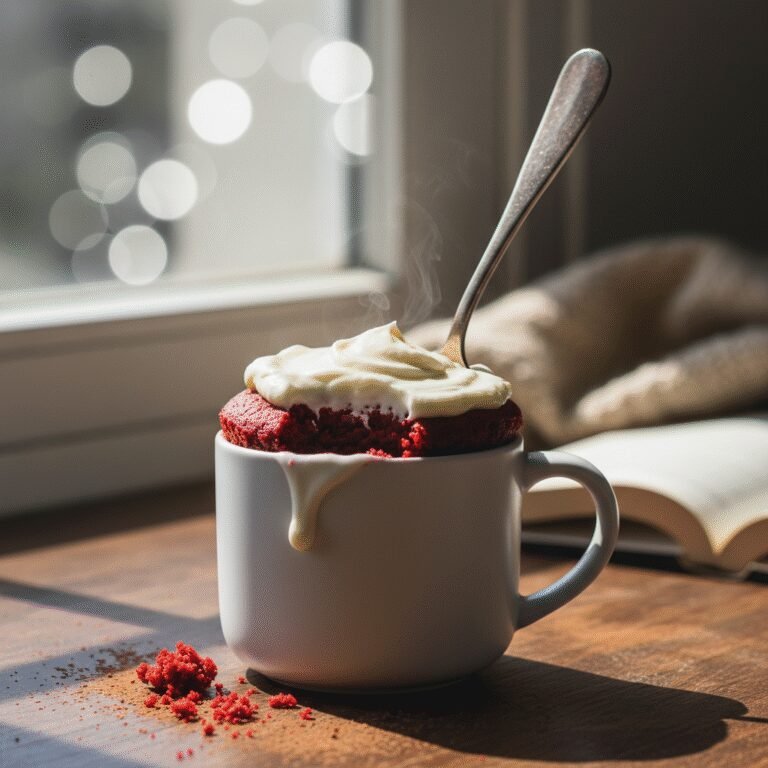
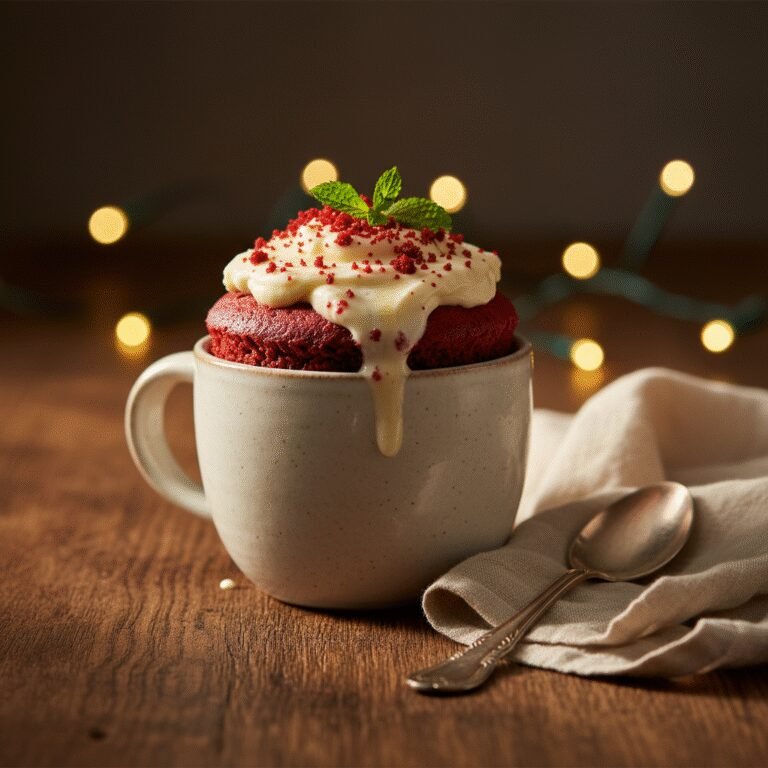
- Let the mug cake cool for 1-2 minutes before dolloping the cream cheese frosting on top. The residual heat will slightly melt the frosting, creating a delicious sauce.
- Serve immediately with a spoon and enjoy warm.
Expert Cooking Tips
- ✓Do not overcook the cake; microwaves vary greatly, so start with 60 seconds and add 10-second intervals if needed. It is better to be slightly undercooked and fudgy than dry.
- ✓Use a mug with straight sides for the most even cooking. Tapered mugs can cause the bottom to cook slower than the top.
- ✓Mix the dry ingredients first to ensure the baking powder and cocoa are evenly distributed, preventing bitter clumps.
- ✓If you want a molten center, insert a piece of chocolate or a spoonful of Nutella into the center of the batter before cooking.
- ✓Make sure your mug is large enough; the batter will rise significantly while cooking and could overflow if the mug is too small.
Substitutions and Variations
This recipe is highly adaptable to various dietary needs and pantry limitations. If you are out of all-purpose flour, you can use a gluten-free 1:1 baking flour blend with excellent results; the texture may be slightly more crumbly but still delicious. For the fat source, vegetable oil, canola oil, or melted coconut oil work well, but melted butter offers the richest flavor. If you are vegan or dairy-free, substitute the milk with almond, soy, or oat milk, and use a vegan cream cheese alternative for the frosting. The white sugar can be swapped for brown sugar if you prefer a deeper, caramel-like molasses flavor in your brownie. If you don’t have cream cheese, a simple buttercream or a dollop of peanut butter can be used as a topping, though you will miss that specific cheesecake tang. Lastly, the cocoa powder should ideally be unsweetened Dutch-process for a darker color and smoother flavor, but natural cocoa powder works just fine in a pinch.
Common Mistakes to Avoid
The most frequent mistake with mug cakes is overcooking. Because microwaves cook from the inside out and very rapidly, a few extra seconds can turn a moist brownie into a hard, dry puck. Always err on the side of undercooking. Another common issue is not mixing the batter thoroughly at the bottom of the mug. It is frustrating to eat your way through a delicious cake only to find a pocket of dry, unmixed flour at the base. Take an extra ten seconds to scrape the corners of the mug with your spoon. Using a mug that is too small is another recipe for disaster; as the baking powder activates, the batter rises rapidly. If the mug is too small, you will end up with a mess on your microwave turntable. Finally, forgetting the pinch of salt is a subtle but significant error; salt is essential to wake up the chocolate flavor and balance the sugar.
Serving Suggestions
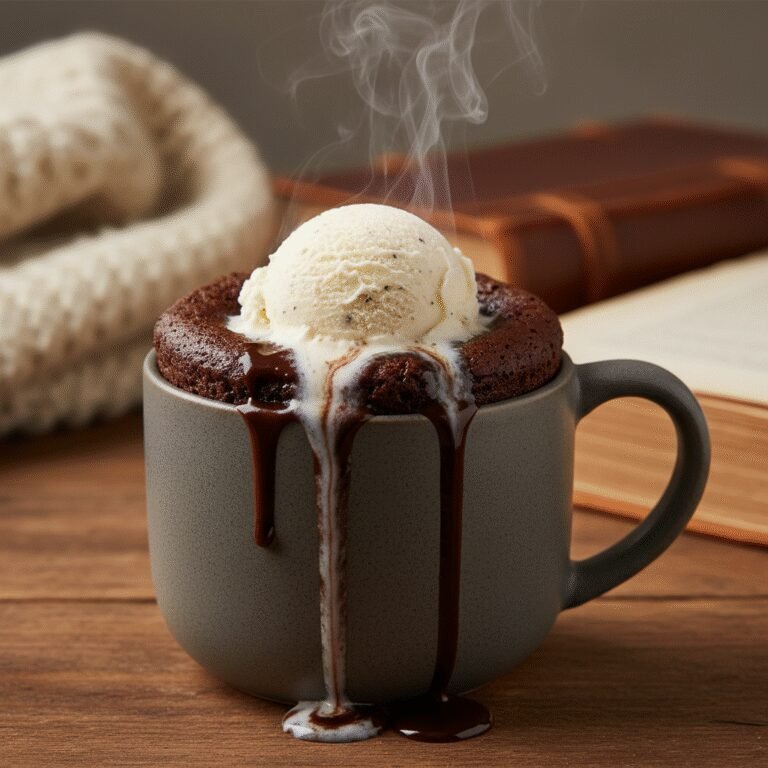
While this mug cake is a star on its own, you can elevate the presentation and flavor with a few simple additions. Serve it while it is still warm so the cream cheese frosting gets slightly melty. For added texture, sprinkle chopped walnuts, pecans, or crushed pistachios over the frosting. Fresh berries, such as raspberries or strawberries, provide a tart contrast that cuts through the chocolate intensity beautifully. If you are feeling particularly indulgent, a scoop of vanilla bean ice cream alongside the hot mug creates a classic ‘à la mode’ experience. A dusting of espresso powder or cinnamon on top of the frosting can add a sophisticated finish. Pair this dessert with a glass of cold milk or a hot espresso to round out the experience.
Storage and Reheating Tips
Mug cakes are best enjoyed immediately after cooking. The texture degrades quickly as they cool, often becoming tough or dry after a few hours. Therefore, we do not recommend making the cake batter ahead of time or storing the cooked cake for later. However, the cream cheese frosting can be made in a larger batch and stored in an airtight container in the refrigerator for up to a week. If you absolutely must save a portion of the cooked cake, cover the mug tightly with plastic wrap to retain moisture and store it at room temperature for up to 24 hours. Reheat it in the microwave for 10-15 seconds before eating to restore some of the softness, though it will never be quite as good as fresh.
Nutrition Facts (Estimated)
| Serving Size | 1 mug cake with frosting |
| Calories | 480 |
| Fat | 22g |
| Saturated Fat | 8g |
| Unsaturated Fat | 12g |
| Trans Fat | 0g |
| Cholesterol | 25mg |
| Sodium | 210mg |
| Carbohydrates | 62g |
| Fiber | 3g |
| Sugar | 35g |
| Protein | 6g |
Frequently Asked Questions
Can I double this recipe?
Yes, but do not cook two servings in the same mug. Mix the double batch in a bowl and divide it between two mugs. Microwave them separately to ensure even cooking, as microwaves often struggle to cook multiple items evenly at once.
Why is my mug cake rubbery?
A rubbery texture usually comes from overmixing the batter (developing too much gluten) or overcooking it. It can also happen if you add an egg to a single-serving recipe. Stick to the egg-free recipe and mix just until combined.
Can I bake this in the oven?
Technically yes, but the timing defeats the purpose of a mug cake. If you must, use an oven-safe ramekin and bake at 350°F (175°C) for about 15-20 minutes. However, the texture is optimized for microwave steaming, not dry oven heat.
Do I need to grease the mug?
It is not strictly necessary since you are eating it directly out of the mug, but a quick spray of non-stick cooking spray can make washing the mug easier later.
Can I use water instead of milk?
You can, but the result will be less rich and flavorful. Milk adds fat and sugar (lactose) that contribute to a tender crumb and better browning.
My cake overflowed, what happened?
Your mug was likely too small, or you added too much baking powder. Always use a mug that holds at least 12 ounces, and ensure the batter only fills it about halfway before cooking.
Is baking soda the same as baking powder?
No, they are different. This recipe requires baking powder. If you only have baking soda, use 1/4 of the amount and add a splash of vinegar or lemon juice to activate it, though the taste may vary.
Can I add chocolate chips?
Absolutely! Stirring in a tablespoon of chocolate chips before cooking will result in pockets of melted chocolate throughout the cake, making it even fudgier.
Conclusion
The Easy Brownie Mug Cake with Cream Cheese Frosting is the ultimate testament to the idea that great food doesn’t always require great effort. It is a reliable, comforting, and deeply satisfying recipe that stands ready to rescue you from any dessert emergency. By understanding the simple science behind the ingredients and respecting the power of the microwave, you can achieve a result that feels like a cheat code for life. Whether you are a college student in a dorm, a busy parent needing a moment of peace, or just a chocolate lover, this recipe is a keeper. Keep these ingredients stocked, and you are never more than five minutes away from a warm, homemade brownie delight.