The Ultimate Creamy Lemon Cheesecake With Buttery Almond Crust
Creamy Lemon Cheesecake With Almond Crust Recipe
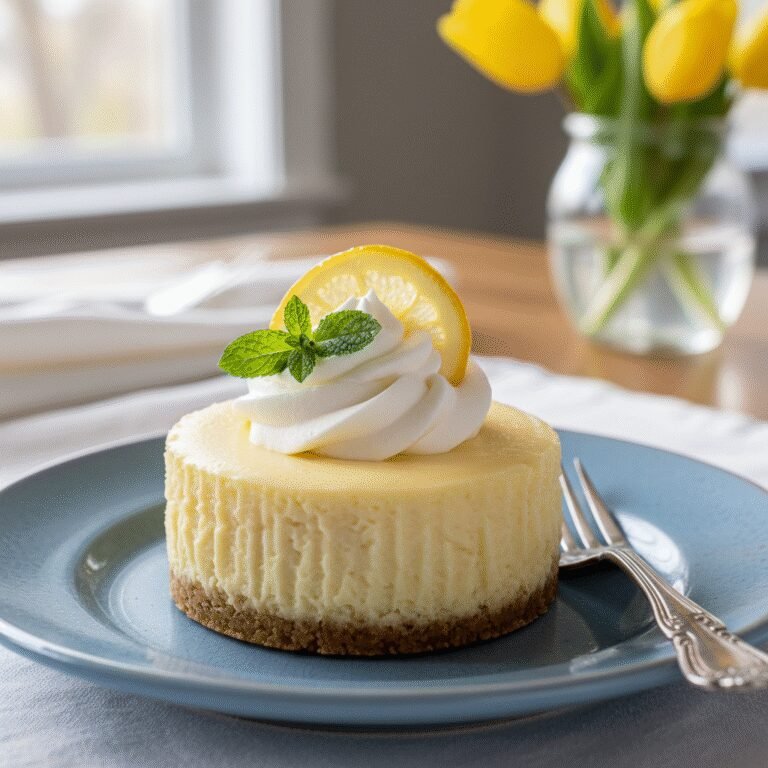
Experience the perfect balance of zesty citrus and rich, velvety cream with this stunning Lemon Cheesecake featuring a nutty, gluten-free almond crust. It is the ultimate show-stopping dessert for spring gatherings or any special occasion that calls for a slice of sunshine.
30 minutes
1 hour 15 minutes
8 hours (includes cooling)
12 servings
Dessert
Baking
American / Mediterranean Fusion
Gluten-Free
There is something undeniably magical about the marriage of bright, tart lemon and rich, tangy cream cheese. This Creamy Lemon Cheesecake with Almond Crust is a celebration of that classic flavor combination, elevated by a texture that is nothing short of heavenly. Unlike dense, heavy New York-style cheesecakes that can sometimes feel like a brick in the stomach, this recipe focuses on a lighter, creamier consistency that melts on the tongue, leaving behind a refreshing zest that cleanses the palate. The secret lies in the careful balance of sour cream and heavy cream, which lightens the batter while maintaining that luxurious mouthfeel we all crave. But the real game-changer here is the crust. Moving away from the traditional graham cracker base, we employ a buttery, toasted almond flour crust. Not only does this add a sophisticated nutty depth that pairs beautifully with the lemon, but it also offers a naturally gluten-free option that holds up remarkably well against the moist filling. Whether you are hosting an elegant dinner party, looking for the perfect Easter dessert, or simply satisfying a Tuesday night craving for something sweet and tart, this cheesecake delivers on every front. It is a labor of love that rewards patience with every forkful, promising a dessert experience that is as visually stunning as it is delicious. Get ready to impress your guests and yourself with a cheesecake that rivals any high-end bakery.
History & Origins
The history of cheesecake is as rich and layered as the dessert itself, dating back over 4,000 years to ancient Greece. Known then as ‘plakous’ meaning ‘flat mass’, early versions were simple mixtures of cheese, honey, and wheat, served to athletes at the first Olympic Games in 776 B.C. for energy. The Romans later adopted the recipe, adding eggs and baking it under hot bricks, calling it ‘libum’. As the Roman Empire expanded, so did the cheesecake, evolving as it traveled across Europe. However, the cheesecake we know and love today is a distinctly modern innovation, largely thanks to an accidental discovery in New York in 1872. William Lawrence, a dairyman trying to replicate French Neufchâtel, stumbled upon a richer, creamier cheese which eventually became the famous Philadelphia Cream Cheese. This revolutionized the dessert, leading to the dense, decadent New York Style cheesecake in the early 20th century. This particular variation, incorporating lemon and an almond crust, nods to Mediterranean influences where nuts and citrus are staples. The use of almond flour for crusts gained popularity in the late 20th and early 21st centuries with the rise of gluten-free diets and a culinary shift towards more complex flavor profiles. By swapping the sugary graham cracker for nutrient-dense almonds, this recipe bridges the gap between ancient rustic cakes and modern, refined patisserie.
Why This Recipe Works
This recipe succeeds because it meticulously addresses the three most common pitfalls of cheesecake baking: cracking, graininess, and a soggy crust. First, the almond crust works exceptionally well because the natural oils in the almonds create a moisture barrier. Unlike graham crackers which can absorb liquid from the batter and turn mushy, the almond meal toasts up into a crisp, sturdy base that stays crunchy even after days in the fridge. Second, the filling uses a specific ratio of cream cheese to sour cream and heavy cream. The sour cream introduces acidity which tenderizes the protein structure of the eggs and cheese, ensuring a silky, smooth texture rather than a rubbery one. We also utilize the ‘low and slow’ baking method combined with a water bath (bain-marie). This gentle heat prevents the eggs from curdling—which causes graininess—and ensures the cake rises and sets evenly without the surface drying out and cracking under tension. Finally, the infusion of both lemon zest and fresh lemon juice adds a brightness that cuts through the heavy fat content, creating a flavor profile that is perfectly balanced and never cloying. The result is a cheesecake that is technically flawless and flavorfully superior.
Why You’ll Love This Recipe
- ✓Silky smooth texture with no graininess
- ✓Naturally gluten-free almond crust
- ✓Perfect balance of sweet and tart flavors
- ✓No-crack baking method explained
- ✓Stays fresh for up to 5 days
- ✓Elegant presentation for dinner parties
Equipment You’ll Need
- ✓9-inch Springform Pan
- ✓Electric Stand Mixer or Hand Mixer
- ✓Large Roasting Pan (for water bath)
- ✓Aluminum Foil (heavy duty)
- ✓Microplane Zester
- ✓Rubber Spatula
- ✓Mixing Bowls
- ✓Parchment Paper
Ingredients
- ✓2 cups superfine almond flour
- ✓1/3 cup unsalted butter, melted
- ✓3 tbsp granulated sugar (for crust)
- ✓1/4 tsp salt
- ✓32 oz (4 blocks) full-fat cream cheese, room temperature
- ✓1 1/4 cups granulated sugar (for filling)
- ✓1/2 cup full-fat sour cream, room temperature
- ✓1/4 cup heavy whipping cream
- ✓4 large eggs, room temperature
- ✓2 tbsp fresh lemon zest (approx. 2 lemons)
- ✓1/4 cup fresh lemon juice
- ✓1 tsp pure vanilla extract
Instructions
- Preheat your oven to 325°F (163°C). Line the bottom of a 9-inch springform pan with parchment paper and grease the sides.
- In a medium bowl, combine the almond flour, melted butter, 3 tablespoons of sugar, and salt. Mix until the texture resembles wet sand.
- Press the crumb mixture firmly into the bottom of the prepared pan in an even layer. Bake for 10 minutes until slightly golden. Remove and let cool completely. Reduce oven temperature to 300°F (150°C).
- Wrap the outside of the springform pan with 2-3 layers of heavy-duty aluminum foil to ensure no water seeps in during the water bath.
- In a large mixing bowl or stand mixer fitted with a paddle attachment, beat the cream cheese and 1 1/4 cups sugar on medium-low speed until completely smooth and creamy (about 2-3 minutes). Scrape down the bowl.
- Add the sour cream, heavy cream, lemon zest, lemon juice, and vanilla extract. Mix on low until combined. Do not overmix.
- Add the eggs one at a time, mixing on low speed just until the yolk disappears after each addition. Scrape the bowl again to ensure no lumps remain.
- Pour the batter over the cooled crust. Tap the pan gently on the counter to release any trapped air bubbles.
- Place the springform pan inside a large roasting pan. Place the roasting pan in the oven and carefully pour boiling water into the roasting pan until it reaches halfway up the sides of the springform pan.
- Bake at 300°F for 60-75 minutes. The edges should be set, but the center should still have a slight ‘wobble’ like Jell-O.
- Turn off the oven and crack the door open slightly (use a wooden spoon to hold it if needed). Let the cheesecake cool inside the oven for 1 hour. This gradual cooling prevents cracks.
- Remove from the water bath and run a thin knife around the edge to release it from the pan sides. Cool completely at room temperature, then refrigerate for at least 6 hours, preferably overnight.
- Remove the rim of the springform pan, slice, and serve chilled.
Expert Cooking Tips
- ✓Ensure all dairy ingredients (cream cheese, eggs, sour cream) are at room temperature before mixing to prevent lumps.
- ✓Do not overbeat the batter once the eggs are added; incorporating too much air causes the cheesecake to rise and then collapse, leading to cracks.
- ✓Use heavy-duty foil for the water bath to prevent a soggy crust, or place the springform pan inside a slightly larger silicone cake pan before placing it in the water.
- ✓Zest the lemons before juicing them for easier handling.
- ✓Clean your knife with hot water and wipe it dry between every single cut for perfect, professional-looking slices.
Substitutions and Variations
If you need to substitute the almond flour for a nut-free version, you can use an equal amount of crushed graham crackers or digestive biscuits mixed with the butter. For a keto-friendly version, swap the granulated sugar for a sweetener like erythritol or allulose. If you don’t have sour cream, full-fat Greek yogurt is an excellent 1:1 substitute that maintains the tanginess. In a pinch, bottled lemon juice can be used, but fresh lemon juice is strongly recommended for the best flavor profile. If you prefer a different citrus profile, lime or orange zest and juice can be substituted for the lemon.
Common Mistakes to Avoid
The most common mistake is rushing the cooling process. Placing a hot cheesecake directly into the fridge will cause condensation to form, making the top soggy, and the thermal shock will almost certainly cause cracks. Another error is mixing on high speed; this incorporates air bubbles which ruin the dense, creamy texture. Finally, opening the oven door frequently during baking causes temperature fluctuations that can lead to a sunken center. Trust the timing and the wobble test.
Serving Suggestions
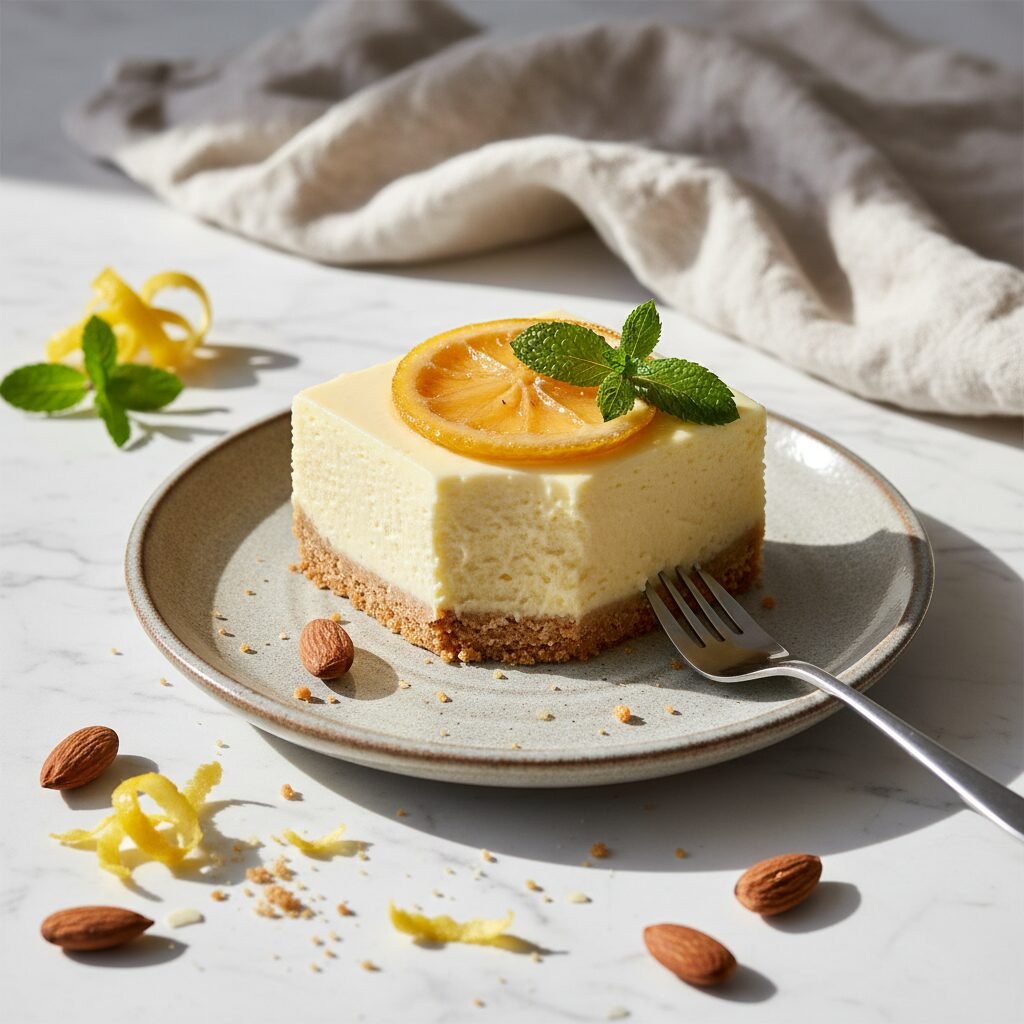
Serve this cheesecake chilled. It pairs beautifully with a dollop of fresh whipped cream and candied lemon slices for an elegant look. For a berry contrast, top with a fresh blueberry or raspberry compote. A sprig of fresh mint adds a pop of color. Serve alongside a hot espresso or a glass of chilled dessert wine like a Sauternes or a late-harvest Riesling.
Storage and Reheating Tips
Store the cheesecake in the refrigerator, loosely covered with plastic wrap or in a cake keeper, for up to 5 days. For longer storage, you can freeze the whole cake or individual slices. To freeze, wrap tightly in plastic wrap followed by a layer of aluminum foil. It will keep well in the freezer for up to 2 months. Thaw overnight in the refrigerator before serving. Do not microwave to thaw as it will melt the cheese.
Nutrition Facts (Estimated)
| Serving Size | 1 slice |
| Calories | 450 |
| Fat | 38g |
| Saturated Fat | 18g |
| Unsaturated Fat | 17g |
| Trans Fat | 0g |
| Cholesterol | 115mg |
| Sodium | 280mg |
| Carbohydrates | 26g |
| Fiber | 3g |
| Sugar | 22g |
| Protein | 9g |
Frequently Asked Questions
Do I really need a water bath?
Yes, a water bath is highly recommended. It regulates the heat, ensuring the cheesecake bakes gently and evenly, which creates that ultra-creamy texture and prevents the top from cracking.
How do I know when it is done?
The ‘wobble test’ is the best indicator. Gently shake the pan; the outer 2 inches should look set and firm, while the center should jiggle slightly like gelatin. It will firm up as it cools.
Can I make this ahead of time?
Absolutely. In fact, cheesecake tastes better after resting in the fridge for 24 hours, allowing the flavors to meld and the texture to set completely.
Why did my cheesecake crack?
Cracks usually happen due to overmixing the batter (too much air), overbaking (drying out), or cooling too quickly (thermal shock).
Can I use low-fat cream cheese?
It is not recommended. Low-fat cream cheese has a higher water content and stabilizers that can affect the setting ability and creamy mouthfeel of the final dish.
Is the almond crust soggy?
No, the almond crust is pre-baked to ensure crispness, and the high oil content in almonds naturally repels moisture from the filling.
How do I get clean slices?
Dip a sharp, thin-bladed knife into hot water, wipe it dry, make a cut, and repeat the process for every single slice.
Can I use bottled lemon juice?
Technically yes, but fresh lemon juice provides a much brighter, cleaner citrus flavor that bottled juice lacks.
Conclusion
This Creamy Lemon Cheesecake with Almond Crust is more than just a dessert; it is a testament to how a few high-quality ingredients can come together to create something truly spectacular. The nutty, buttery base provides the perfect foundation for the bright, velvety filling, resulting in a bite that is balanced, refreshing, and deeply satisfying. Whether you are a seasoned baker or a novice in the kitchen, following these detailed steps will ensure success. So, preheat that oven, zest those lemons, and prepare to fall in love with your new favorite cheesecake recipe.