The Ultimate Creamy Chocolate Cheesecake With Oreo Crust
Creamy Chocolate Cheesecake With Oreo Crust Recipe
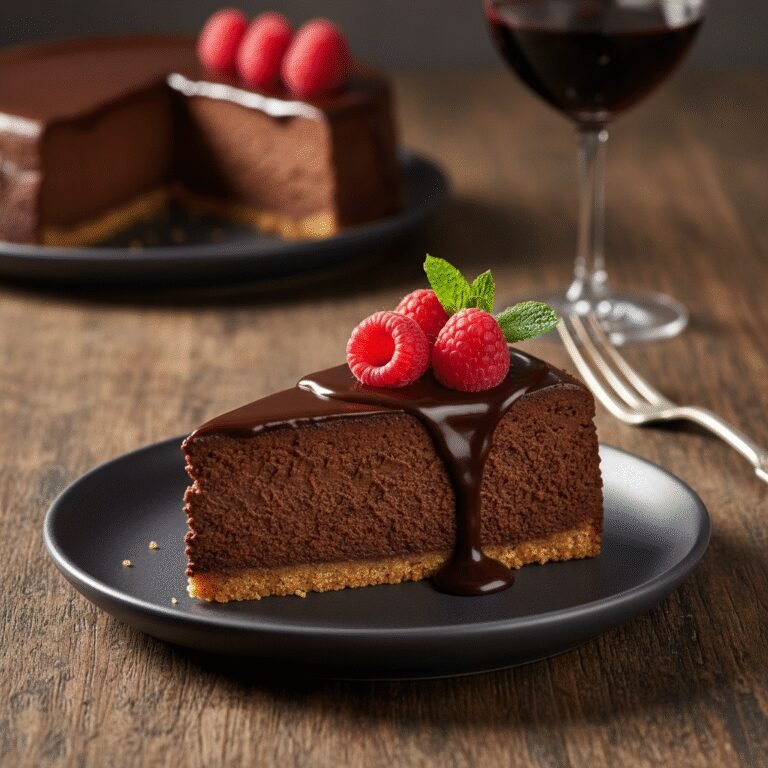
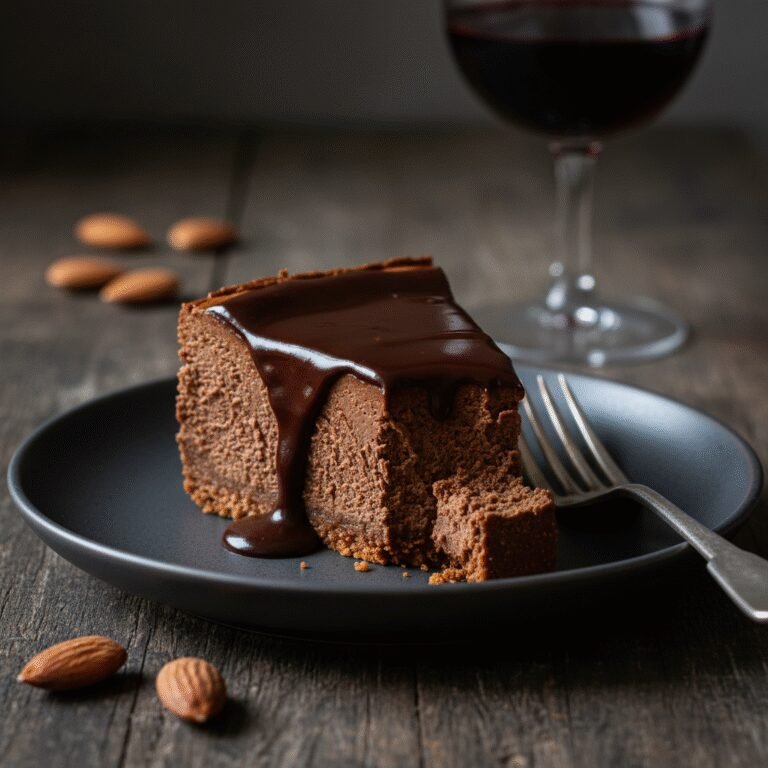
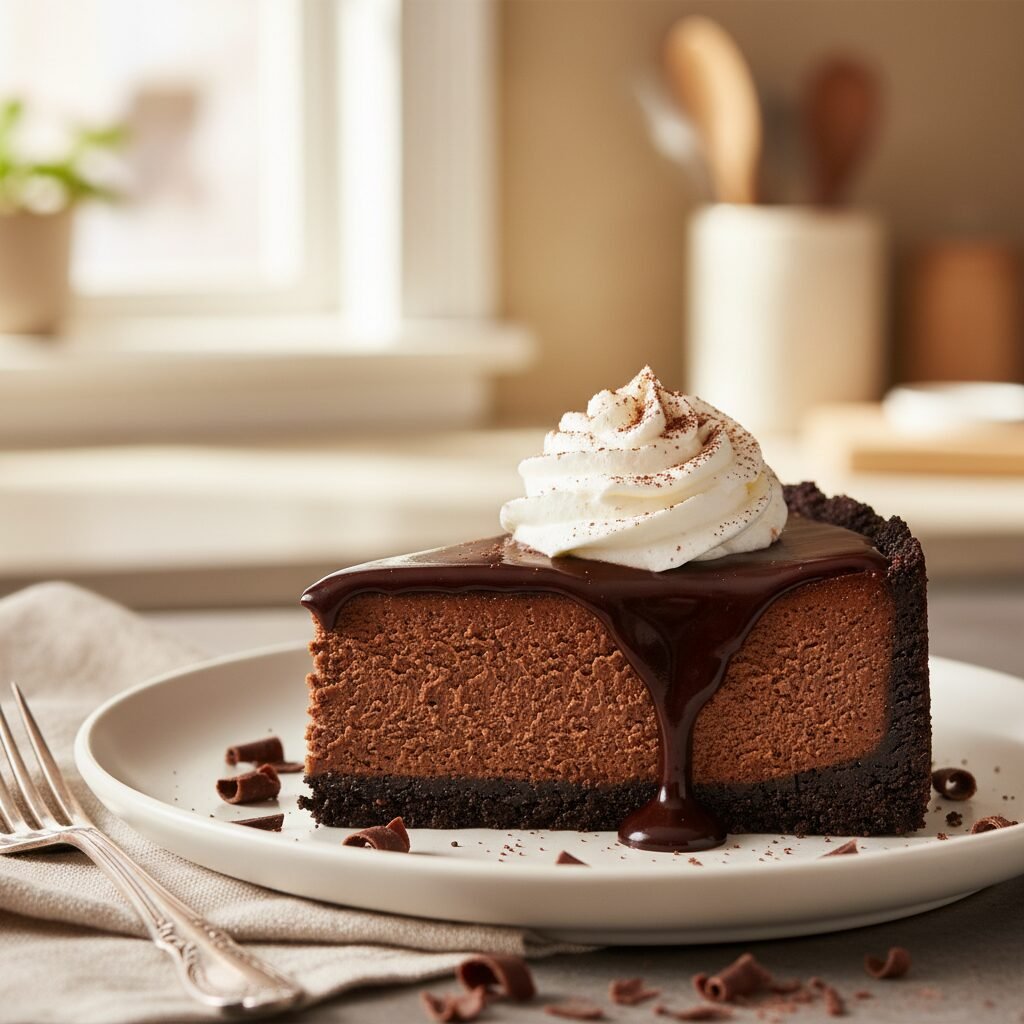
Indulge in the ultimate dessert experience with this Creamy Chocolate Cheesecake featuring a buttery, crunchy Oreo crust. It is a rich, velvety masterpiece topped with luxurious ganache that promises to satisfy even the deepest chocolate cravings.
30 minutes
1 hour 15 minutes
8 hours (includes chilling)
12-14 servings
Dessert
Baking (Water Bath)
American
Vegetarian
If there is one dessert that speaks the universal language of comfort and indulgence, it is cheesecake. But not just any cheesecake—we are talking about a triple-threat chocolate experience that starts with a dark, buttery Oreo cookie crust, moves into a dense, velvety chocolate cheesecake filling, and finishes with a glossy, decadent chocolate ganache. This Creamy Chocolate Cheesecake with Oreo Crust is designed for the true chocoholic. It strikes the perfect balance between the tanginess of traditional cream cheese and the deep, roasted notes of high-quality cocoa and semi-sweet chocolate. Unlike lighter, airy mousses, this recipe yields a substantial, fudge-like consistency that melts in your mouth, reminiscent of the finest New York-style slices you would find in a top-tier bakery. The contrast in textures is what makes this dish truly spectacular. You have the slight crunch of the chocolate sandwich cookies providing a sturdy base, the incredibly smooth and rich filling that coats the palate, and the silky ganache that adds a final layer of luxury. Whether you are celebrating a milestone birthday, hosting a fancy dinner party, or simply treating yourself after a long week, this cheesecake is a showstopper. While cheesecake has a reputation for being finicky, this guide is written to ensure your success, breaking down the science of the water bath and temperature control to guarantee a crack-free, perfect surface every time. Prepare to fall in love with your new favorite dessert.
History & Origins
The history of cheesecake is a journey that spans thousands of years, evolving from simple ancient energy cakes to the rich, creamy dessert we know today. Anthropologists have found cheese molds dating back to 2,000 B.C. on the Greek island of Samos. In ancient Greece, cheesecake was considered a potent source of energy, and there is evidence that it was served to athletes during the first Olympic Games in 776 B.C. These early versions were simple mixtures of flour, wheat, honey, and cheese, baked in earthenware molds. When the Romans conquered Greece, they adopted the recipe, adding crushed cheese and eggs, and spread it across Europe as their empire expanded. However, the modern cheesecake we adore, specifically the New York style that serves as the base for this chocolate version, was born from an accidental invention in the United States. In 1872, a New York dairyman named William Lawrence was attempting to replicate French Neufchâtel cheese but accidentally created a richer, creamier product that we now know as cream cheese. This revolutionized cheesecake making. The addition of chocolate to cheesecake is a more recent 20th-century innovation, coinciding with the mass availability of high-quality baking chocolate and cocoa powders. The Oreo crust component pays homage to the ‘Oreo Biscuit,’ first introduced by the National Biscuit Company (Nabisco) in 1912 in New York City. Combining the classic American cookie with the accidental American cream cheese created a distinctly modern, indulgent classic that has become a staple in American dessert culture.
Why This Recipe Works
This recipe succeeds where others fail due to the meticulous balance of fat, moisture, and temperature control. First, the combination of full-fat cream cheese and sour cream creates the ideal texture. Cream cheese provides the dense, structural body, while sour cream introduces a necessary acidity that cuts through the sugar and softens the proteins, preventing the cake from becoming rubbery. We use both melted semi-sweet chocolate and high-quality cocoa powder in the batter. The melted chocolate contributes to the fudge-like density, while the cocoa powder deepens the flavor profile without adding extra moisture that could throw off the baking chemistry. A critical factor in why this works is the room temperature requirement for all dairy and eggs. Cold ingredients do not emulsify properly, leading to a lumpy batter; when ingredients are at room temperature, they blend seamlessly, incorporating less air, which is the enemy of a dense, crack-free cheesecake. Finally, the water bath (bain-marie) method is non-negotiable. By surrounding the springform pan with gentle, hot water, we moderate the heat entering the custard. This ensures the eggs cook slowly and evenly, preventing the outer edges from overcooking and curdling before the center is set, which is the primary cause of surface cracks and sunken centers.
Why You’ll Love This Recipe
- ✓Decadent triple-chocolate experience with crust, filling, and ganache.
- ✓Velvety, dense texture similar to bakery-style New York cheesecake.
- ✓Detailed water bath instructions ensure a crack-free surface.
- ✓Can be made ahead of time, actually tasting better after 24 hours.
- ✓Perfect balance of tangy cream cheese and sweet chocolate.
- ✓Sturdy Oreo crust stays crunchy under the creamy filling.
Equipment You’ll Need
- ✓9-inch Springform pan
- ✓Large roasting pan (for water bath)
- ✓Electric hand mixer or stand mixer
- ✓Heavy-duty aluminum foil
- ✓Rubber spatula
- ✓Food processor (for crust)
- ✓Parchment paper
Ingredients
- ✓24 Oreo cookies (whole, with filling)
- ✓5 tablespoons unsalted butter, melted
- ✓32 oz (4 blocks) full-fat cream cheese, softened to room temperature
- ✓1 1/2 cups granulated sugar
- ✓3/4 cup unsweetened cocoa powder
- ✓4 large eggs, room temperature
- ✓1 cup sour cream, room temperature
- ✓2 teaspoons vanilla extract
- ✓8 oz semi-sweet chocolate chips, melted and slightly cooled
- ✓1/2 cup heavy cream (for ganache)
- ✓1 cup semi-sweet chocolate chips (for ganache)
Instructions
- Preheat your oven to 325°F (163°C). Prepare your 9-inch springform pan by lightly greasing the sides and lining the bottom with parchment paper.
- To make the crust, pulse the whole Oreo cookies in a food processor until they are fine crumbs. Pour in the melted butter and pulse until the mixture resembles wet sand.
- Press the crumb mixture firmly into the bottom and slightly up the sides of the springform pan using the bottom of a measuring cup to pack it down. Bake for 8-10 minutes, then set aside to cool.
- Reduce oven temperature to 300°F (150°C). Begin the filling by beating the softened cream cheese and sugar in a large bowl on medium speed until completely smooth and creamy, about 3 minutes. Scrape down the sides of the bowl.
- Sift in the cocoa powder and mix on low speed until combined. Add the sour cream and vanilla extract, mixing until just incorporated.
- Add the eggs one at a time, mixing on low speed after each addition just until the yolk disappears. Do not overmix. Stir in the melted (and slightly cooled) chocolate by hand using a spatula.
- Wrap the outside of the springform pan in 2-3 layers of heavy-duty aluminum foil to prevent water from seeping in. Place the springform pan inside a large roasting pan.
- Pour the cheesecake batter over the cooled crust, smoothing the top with a spatula.
- Boil water and carefully pour it into the roasting pan until it reaches halfway up the sides of the springform pan.
- Bake in the center rack for 1 hour and 10 minutes to 1 hour and 20 minutes. The edges should be set, but the center should still have a slight wobble like Jell-O.
- Turn off the oven and crack the door open slightly. Let the cheesecake cool inside the oven for 1 hour. This gradual cooling prevents cracks.
- Remove from the water bath and foil. Run a thin knife around the edge to release it from the pan. Cool completely on a wire rack, then refrigerate for at least 6 hours, preferably overnight.
- Before serving, make the ganache: Heat the heavy cream until it just begins to simmer. Pour over the 1 cup of chocolate chips in a heatproof bowl. Let sit for 5 minutes, then whisk until smooth.
- Pour the ganache over the chilled cheesecake, spreading to the edges. Let it set for 15 minutes before slicing.
Expert Cooking Tips
- ✓Room temperature ingredients are vital for a lump-free batter.
- ✓Do not overmix the batter once the eggs are added; this introduces air which causes cracks.
- ✓Use high-quality chocolate bars or premium chips for the best flavor.
- ✓Invest in heavy-duty foil or a silicone slow cooker liner to protect the pan in the water bath.
- ✓Clean your knife with hot water and wipe it dry between every single cut for clean slices.
- ✓Do not open the oven door during the first hour of baking to maintain consistent heat.
- ✓If the top browns too quickly, tent a piece of foil loosely over the top.
Substitutions and Variations
This recipe is quite adaptable to dietary needs or pantry limitations, though texture changes may occur. For the crust, if you do not have Oreos, you can use chocolate graham crackers or even gluten-free chocolate sandwich cookies for a gluten-free base (ensure all other ingredients are GF). For the fat in the crust, salted butter can be used to cut the sweetness slightly. In the filling, full-fat Greek yogurt can be substituted for sour cream in a 1:1 ratio, providing a similar tang and protein structure. If you prefer a darker, more intense chocolate flavor, use bittersweet chocolate (60% cacao or higher) instead of semi-sweet, and slightly increase the sugar by 2 tablespoons. Do not substitute low-fat cream cheese, as the stabilizers and high water content will prevent the cheesecake from setting properly and achieving that luxurious texture. For the eggs, there is no perfect egg-free substitute for a baked cheesecake of this density, so it is best to stick to the original recipe or find a specific vegan cheesecake recipe.
Common Mistakes to Avoid
The most common mistake is using cold cream cheese, which leads to a lumpy batter that requires overmixing to smooth out. Overmixing, especially after adding eggs, whips air into the batter; this air expands in the oven and collapses while cooling, causing deep cracks. Another frequent error is skipping the water bath. While it seems cumbersome, baking without it exposes the custard to harsh, direct heat, resulting in a rubbery texture and curdled eggs. Rushing the cooling process is also detrimental; taking the cheesecake straight from the hot oven to the cold counter or fridge causes thermal shock. Finally, do not slice the cheesecake before it has chilled for at least 6 hours. The structure needs this time to firm up; cutting it too early will result in a runny, messy slice.
Serving Suggestions
This rich dessert pairs beautifully with elements that cut through the density of the chocolate. A dollop of lightly sweetened whipped cream or vanilla bean chantilly cream is a classic choice. Fresh berries, particularly raspberries or strawberries, add a tart freshness and a pop of color that contrasts beautifully with the dark ganache. For a gourmet touch, serve with a raspberry coulis or a salted caramel drizzle. Beverage-wise, this cheesecake stands up well to strong coffee, espresso, or a dark roast stout beer. For wine lovers, a glass of ruby port or a bold Cabernet Sauvignon complements the chocolate notes perfectly.
Storage and Reheating Tips
Cheesecake is one of the best desserts for making ahead. Store the finished cheesecake in the refrigerator, loosely covered with plastic wrap or in a cake dome, for up to 5 days. For longer storage, this cheesecake freezes exceptionally well. To freeze, chill the cake completely (without ganache is best, but with ganache works too). Slice the cake or freeze it whole. Wrap the cake or individual slices tightly in two layers of plastic wrap, followed by a layer of heavy-duty aluminum foil. It can be frozen for up to 3 months. Thaw overnight in the refrigerator before serving. Do not microwave to thaw, as this will melt the fats and ruin the texture.
Nutrition Facts (Estimated)
| Serving Size | 1 slice |
| Calories | 580 |
| Fat | 42g |
| Saturated Fat | 24g |
| Unsaturated Fat | 16g |
| Trans Fat | 0g |
| Cholesterol | 145mg |
| Sodium | 320mg |
| Carbohydrates | 48g |
| Fiber | 3g |
| Sugar | 38g |
| Protein | 8g |
Frequently Asked Questions
Why did my cheesecake crack?
Cracks are usually caused by overmixing the batter (incorporating too much air), overbaking, or cooling the cheesecake too quickly. Using a water bath and letting the cake cool in the oven with the door cracked helps prevent this.
Can I make this without a water bath?
Technically yes, but the texture will be different. It will be denser, more like a tart, and the edges may dry out. If you skip the water bath, bake at a lower temperature (275°F) for a longer time, but a water bath is highly recommended for the creamy texture.
How do I know when the cheesecake is done?
The ‘jiggle test’ is the best method. Gently shake the pan; the outer 2-3 inches should look set and firm, while the center should wobble slightly like gelatin. It will finish setting as it cools.
Can I use chocolate chips instead of baking chocolate?
Yes, high-quality chocolate chips work well. However, baking bars often melt more smoothly. If using chips, ensure they are semi-sweet or dark, not milk chocolate, which creates a cloying sweetness.
Why do I need to wrap the pan in foil?
Springform pans are not watertight. The foil prevents the water from the water bath from seeping into the crust and making it soggy. Use heavy-duty foil or multiple layers to be safe.
Can I use a different size pan?
Yes, but baking times will vary. A 10-inch pan will result in a thinner cheesecake that bakes faster, while an 8-inch pan will be taller and take longer. Watch the wobble test closely.
My ingredients are cold, can I microwave them?
You can microwave the cream cheese in short 10-second bursts to soften it, but be careful not to melt it. To warm eggs, place them in a bowl of warm (not hot) water for 5-10 minutes.
Can I make this recipe gluten-free?
Absolutely. The filling is naturally gluten-free. You simply need to use gluten-free chocolate sandwich cookies for the crust.
Conclusion
Mastering this Creamy Chocolate Cheesecake with Oreo Crust is a culinary achievement that yields incredibly delicious rewards. While the process requires patience and attention to detail, the result is a dessert that rivals any high-end bakery. The interplay of the crunchy, dark crust with the smooth, luscious filling and the rich ganache topping creates a symphony of textures and flavors that is unforgettable. Whether you are a seasoned baker or trying your hand at a water bath for the first time, this recipe is your roadmap to chocolate perfection. So gather your ingredients, take your time, and prepare to impress your friends, family, and most importantly, your own taste buds with this slice of heaven.