The Ultimate Moist Cinnamon Swirl Bundt Cake with Vanilla Bean Glaze
Moist Cinnamon Swirl Bundt Cake Recipe
Experience the perfect balance of tender, buttery cake and a rich, caramelized cinnamon ribbon in every bite. This foolproof sour cream Bundt cake is topped with a silky vanilla glaze, making it the ultimate comfort bake for breakfast, brunch, or dessert.
20 minutes
60 minutes
1 hour 30 minutes
12-16 servings
Dessert
Baking
American
Vegetarian
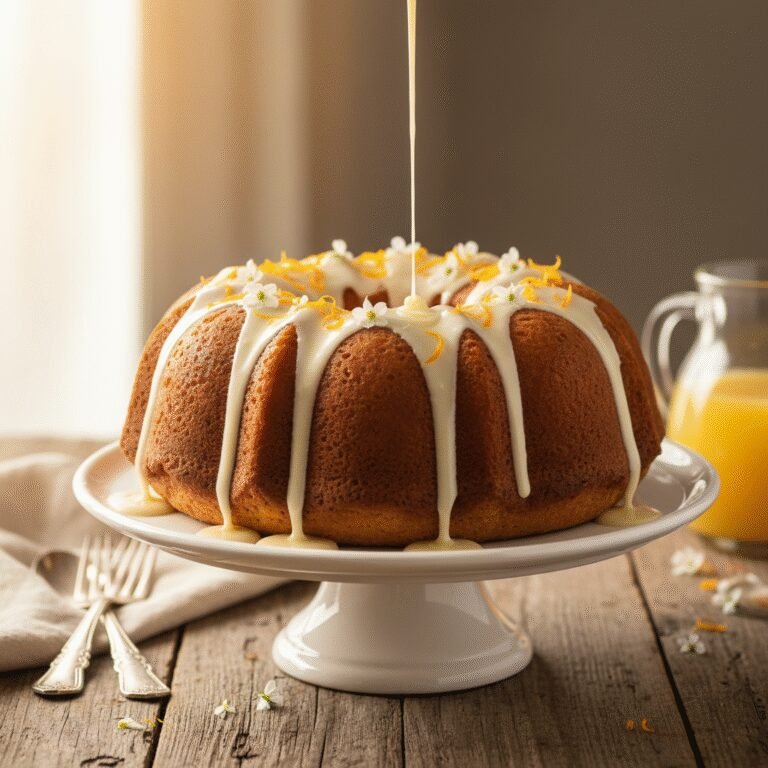
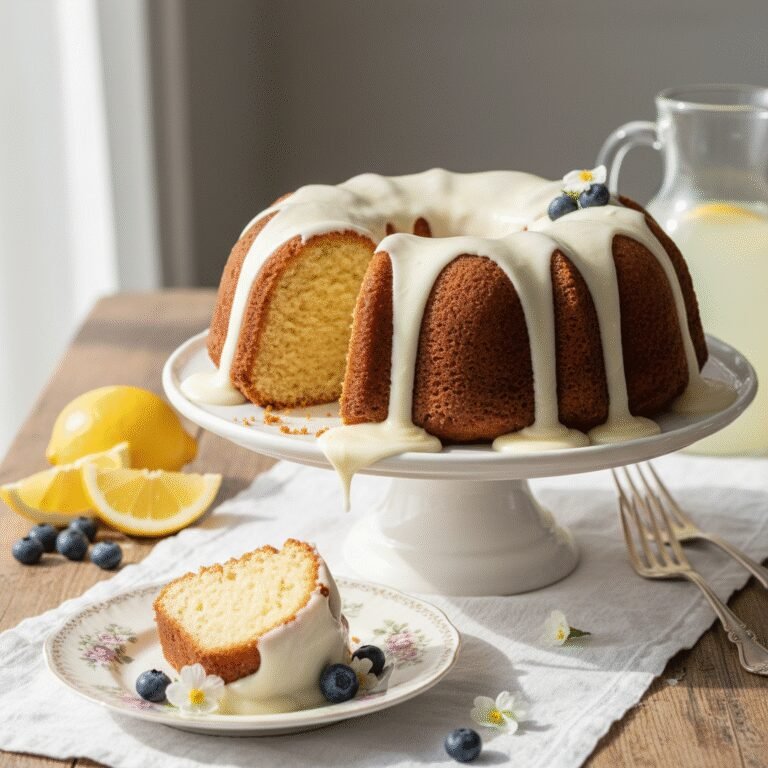
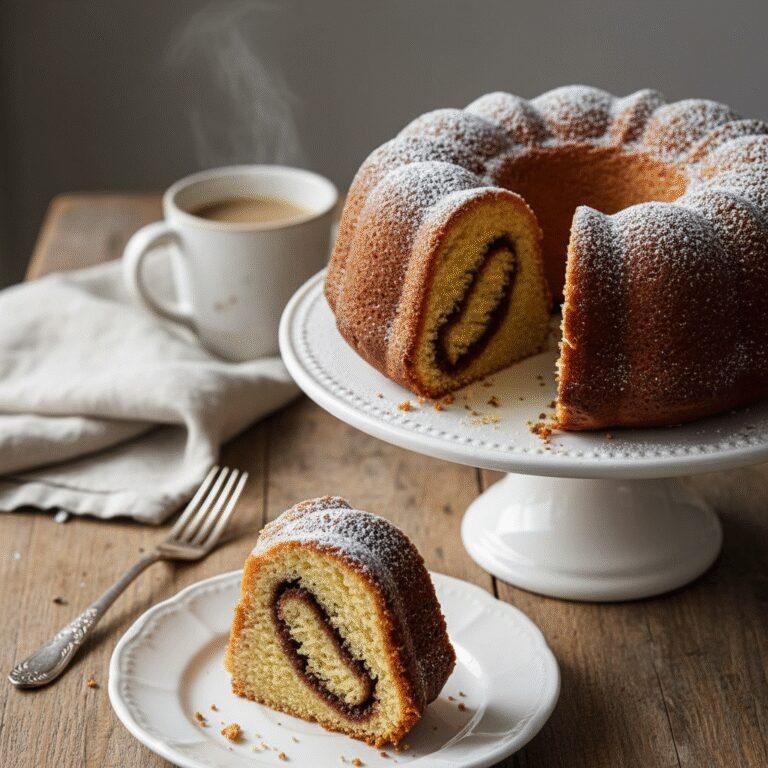
There are few things in the culinary world more inviting than the aroma of a cinnamon cake baking in the oven. It is a scent that promises comfort, warmth, and a touch of nostalgia. This Moist Cinnamon Swirl Bundt Cake is not just another coffee cake; it is a celebration of texture and flavor designed to be the centerpiece of any brunch table or the perfect companion to your afternoon coffee. The magic lies in the crumb—dense enough to hold its shape yet incredibly tender and moist, thanks to the addition of full-fat sour cream. Unlike airy sponge cakes, this Bundt possesses a velvety richness that melts in your mouth, punctuated by a striking ribbon of cinnamon sugar that winds its way through the center like a hidden treasure.
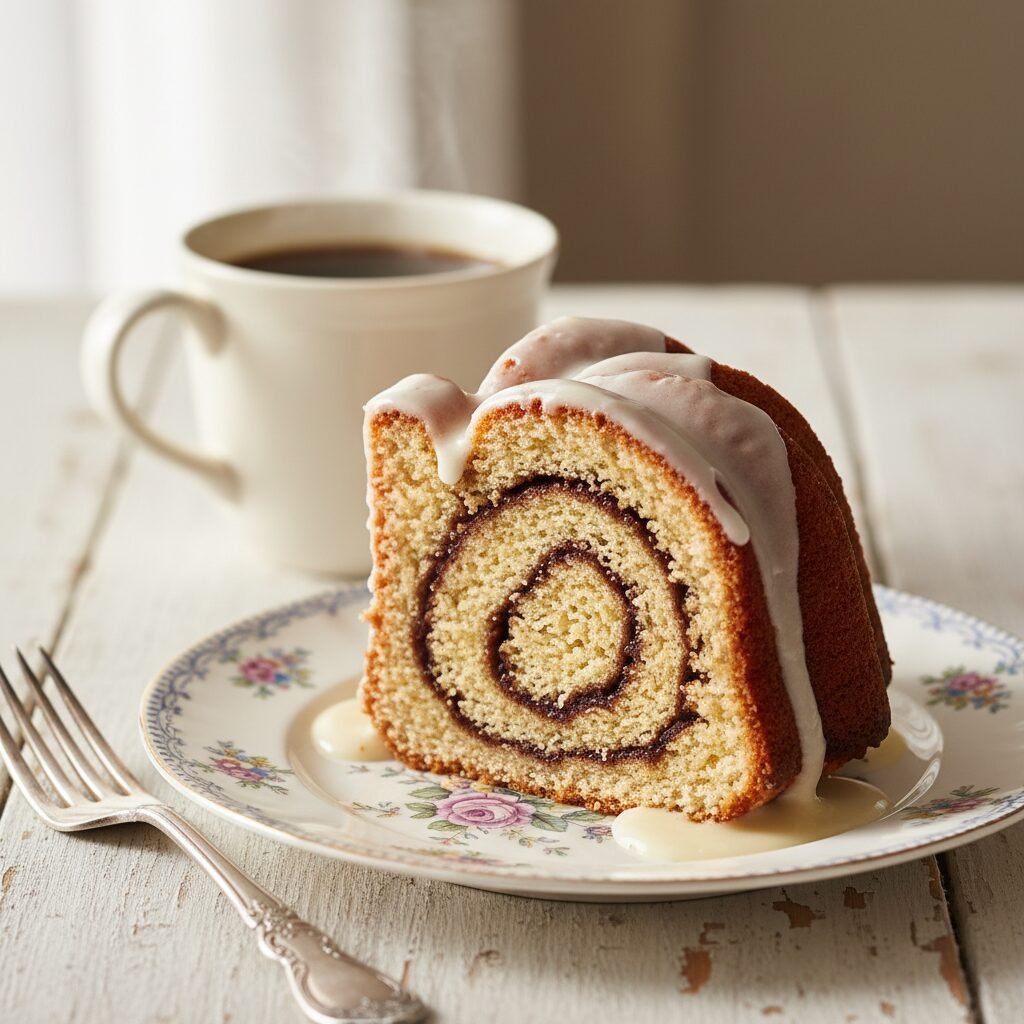
What sets this recipe apart is the meticulous balance of ingredients. We use a combination of butter and oil to ensure the cake stays moist for days, not just hours. The swirl isn’t merely a dusting; it is a thick, crunchy layer of brown sugar and premium cinnamon that caramelizes slightly as it bakes, providing a delightful textural contrast to the soft cake. Finished with a cascading vanilla bean glaze that settles into the pan’s intricate crevices, this cake is as beautiful as it is delicious. Whether you are a seasoned baker or a novice in the kitchen, this recipe delivers bakery-quality results with minimal effort, proving that elegance and simplicity can indeed go hand in hand.
History & Origins
The history of the Bundt cake is a fascinating journey that bridges European tradition with American innovation. The cake’s lineage can be traced back to the European ‘Gugelhupf’ or ‘Kugelhopf,’ a brioche-style yeast cake baked in a fluted, ring-shaped pan, popular in Germany, Austria, and Alsace for centuries. The distinctive hole in the center was originally a practical engineering solution, allowing heat to penetrate the center of the dense dough to ensure even baking. However, the modern incarnation of the Bundt cake is distinctly American.
In 1950, H. David Dalquist, the founder of Nordic Ware in Minneapolis, was approached by members of the local Hadassah society who wanted a modern aluminum version of the heavy ceramic or cast-iron Gugelhupf pans used by their mothers. Dalquist created the cast aluminum ‘Bundt’ pan (adding a ‘t’ to the German word ‘Bund’ for trademarking purposes). Initially, sales were lackluster, and the pan nearly faded into obscurity. The turning point came in 1966 during the Pillsbury Bake-Off, when Ella Helfrich of Houston, Texas, used the pan to create the ‘Tunnel of Fudge’ cake. She won second place, but her cake won the hearts of American home bakers. Following the competition, Nordic Ware was inundated with over 200,000 requests for the pan, cementing the Bundt cake’s place in American culinary history. Since then, the Bundt has evolved from boxed mix hacks to sophisticated, scratch-made masterpieces like this Cinnamon Swirl version, remaining a symbol of hospitality and home baking.
Why This Recipe Works
This recipe succeeds where many dry, crumbly Bundt cakes fail because of the specific chemistry of its wet ingredients. The primary secret weapon here is full-fat sour cream. Sour cream is acidic, and that acid works to tenderize the gluten strands in the flour, resulting in a crumb that is soft rather than tough. Furthermore, the high fat content in the sour cream, combined with unsalted butter, provides a richness that milk alone cannot achieve. We also utilize a ‘creaming method’ where the butter and sugar are beaten until aerated before adding eggs; this incorporates mechanical leavening that works in tandem with the baking soda and powder to give the heavy batter perfectly uniform lift.
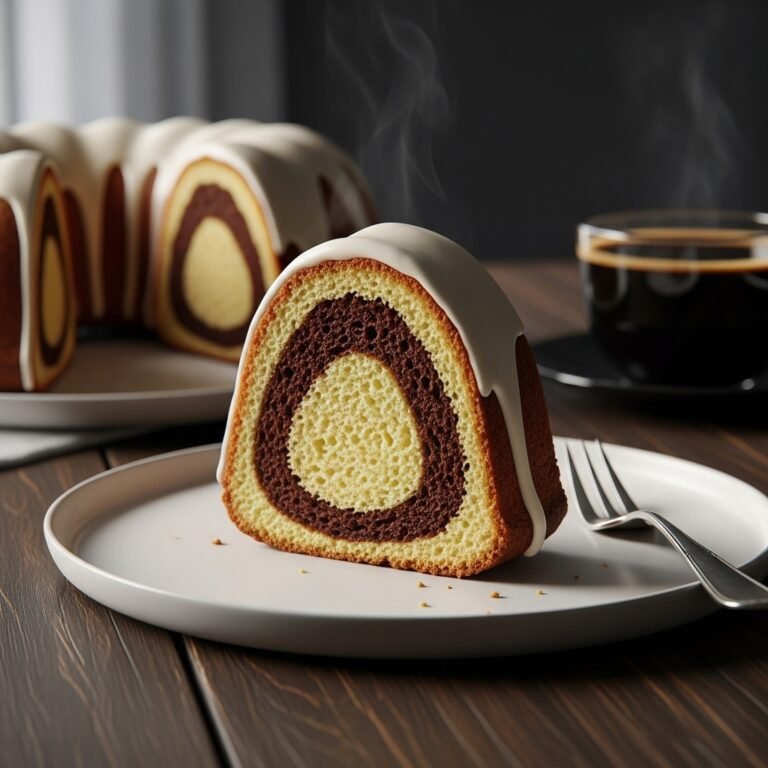
The cinnamon swirl is strategically placed. By layering one-third of the batter, then the cinnamon sugar, and then the remaining batter, we ensure the swirl stays suspended in the middle of the slice rather than sinking to the bottom. Using brown sugar in the swirl mixture is crucial because its molasses content adds moisture and depth, creating a slightly gooey, caramelized vein that hardens just enough upon cooling to offer a satisfying crunch. Finally, the use of a Bundt pan exposes more surface area of the cake to the heat, creating a delicious, golden-brown crust that encases the moist interior, providing the perfect structural integrity for the heavy glaze.
Why You’ll Love This Recipe
- ✓Incredibly moist texture due to the sour cream and butter combination.
- ✓A thick, caramelized cinnamon-sugar ribbon in every slice.
- ✓Stays fresh and soft for days at room temperature.
- ✓Beautiful presentation with minimal decorating skills required.
- ✓Versatile enough for breakfast, brunch, or an after-dinner treat.
- ✓Freezes exceptionally well for make-ahead meal prep.
Equipment You’ll Need
- ✓10-12 cup Bundt pan
- ✓Stand mixer or electric hand mixer
- ✓Large mixing bowl
- ✓Medium mixing bowl
- ✓Silicone spatula
- ✓Wire cooling rack
- ✓Measuring cups and spoons
- ✓Whisk
Ingredients
- ✓3 cups all-purpose flour
- ✓1 teaspoon baking powder
- ✓1/2 teaspoon baking soda
- ✓1/2 teaspoon salt
- ✓1 cup unsalted butter, softened to room temperature
- ✓2 cups granulated white sugar
- ✓4 large eggs, room temperature
- ✓2 teaspoons pure vanilla extract
- ✓1 cup full-fat sour cream, room temperature
- ✓FOR THE SWIRL: 1/3 cup light brown sugar, packed
- ✓FOR THE SWIRL: 1/3 cup granulated white sugar
- ✓FOR THE SWIRL: 2 tablespoons ground cinnamon
- ✓FOR THE GLAZE: 1 1/2 cups powdered sugar
- ✓FOR THE GLAZE: 2-3 tablespoons milk or heavy cream
- ✓FOR THE GLAZE: 1/2 teaspoon vanilla extract or vanilla bean paste
Instructions
- Preheat your oven to 350°F (175°C). Thoroughly grease your Bundt pan with butter or non-stick baking spray (the kind with flour in it works best). Ensure you get into every crevice of the pan to prevent sticking.
- In a medium bowl, whisk together the flour, baking powder, baking soda, and salt. Set this dry mixture aside.
- In the bowl of a stand mixer fitted with the paddle attachment (or a large bowl with a hand mixer), cream the softened butter and 2 cups of granulated sugar together on medium-high speed for about 3-5 minutes. The mixture should look pale, fluffy, and aerated.
- Add the eggs one at a time, beating well after each addition. Scrape down the sides and bottom of the bowl with a spatula to ensure everything is incorporated. Mix in the vanilla extract.
- Reduce the mixer speed to low. Add half of the dry flour mixture to the butter mixture and mix until just combined. Add the sour cream and mix until incorporated. Finally, add the remaining flour mixture and mix until just combined. Do not overmix; the batter will be thick.
- In a small separate bowl, mix the brown sugar, 1/3 cup granulated sugar, and cinnamon for the swirl.
- Pour approximately one-third to one-half of the cake batter into the prepared Bundt pan, smoothing it out with a spatula.
- Sprinkle the cinnamon-sugar mixture evenly over the batter in the pan. Try to keep the sugar away from the very edges of the pan to prevent it from caramelizing against the metal and sticking.
- Spoon the remaining batter over the cinnamon layer. Use a spatula to gently smooth the top, ensuring the cinnamon layer is covered.
- Using a butter knife or a skewer, gently swirl the batter in a zigzag motion once around the pan to marble the cinnamon slightly (optional, or leave layered for a distinct ribbon).
- Bake for 55-65 minutes, or until a wooden skewer inserted into the thickest part of the cake comes out clean or with just a few moist crumbs attached. If the top starts browning too quickly after 40 minutes, loosely tent with aluminum foil.
- Remove from the oven and let the cake cool in the pan for exactly 10-15 minutes. Then, invert the pan onto a wire cooling rack and lift the pan off. Let the cake cool completely before glazing.
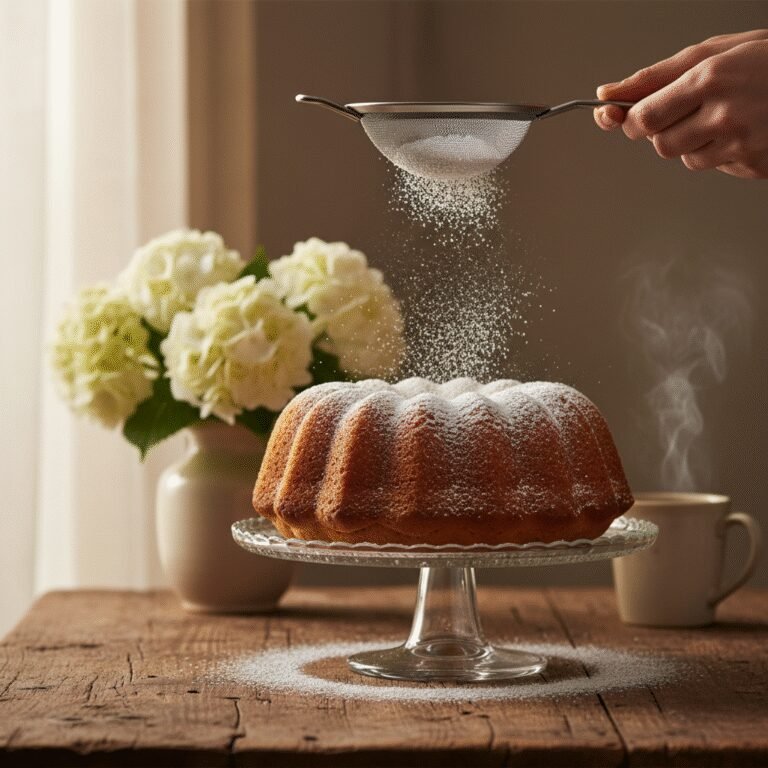
- To make the glaze, whisk together the powdered sugar, milk, and vanilla until smooth. The consistency should be thick but pourable. Drizzle over the cooled cake.
Expert Cooking Tips
- ✓Room temperature ingredients are non-negotiable. Cold eggs or sour cream can cause the batter to curdle and result in an uneven bake.
- ✓Grease the pan right before filling. If you grease it too early, the oil can slide down the sides, leaving the top edges vulnerable to sticking.
- ✓Weigh your flour if possible (approx. 120g per cup). If using cups, spoon the flour into the cup and level it off; scooping directly packs the flour and leads to a dry cake.
- ✓Do not open the oven door for the first 45 minutes of baking. Drafts can cause the cake to collapse.
- ✓Cooling time is critical. If you try to flip the cake too soon, it is too fragile and will break. If you wait too long, the sugars solidify and stick to the pan.
- ✓Tap the filled pan on the counter 2-3 times before baking to release any large air bubbles trapped in the thick batter.
Substitutions and Variations
This recipe is quite adaptable. If you do not have sour cream, full-fat plain Greek yogurt is an excellent 1:1 substitute that provides similar tang and moisture. In a pinch, buttermilk can work, though the batter will be thinner and the crumb slightly different. For the fat, you can substitute half of the butter with a neutral oil (like vegetable or canola) if you prefer a lighter crumb, though you will lose some buttery flavor. For the flour, a high-quality 1:1 Gluten-Free baking flour blend works well for those with gluten sensitivities. Regarding the sugar, you can use all brown sugar for the swirl for a deeper molasses flavor, or add finely chopped walnuts or pecans to the swirl mixture for added crunch. If you want to spice up the cake batter itself, add a teaspoon of cardamom or nutmeg to the dry ingredients.
Common Mistakes to Avoid
The most common mistake with Bundt cakes is improper greasing. Even non-stick pans need to be greased. Using a pastry brush to apply melted shortening or butter ensures every nook is covered. Another frequent error is overmixing the batter after adding the flour. Once the flour hits the liquid, gluten begins to form. Overmixing creates a tough, rubbery cake rather than a tender one. Stop mixing as soon as the white streaks of flour disappear. Additionally, baking by time alone can be misleading; oven temperatures vary. Always use a skewer to test for doneness. Finally, adding the glaze while the cake is still hot will cause it to melt and run off completely; patience is key—wait until it is cool.
Serving Suggestions
This cake is stunning on its own, but it pairs beautifully with fresh berries like strawberries or raspberries to cut through the richness. A dollop of freshly whipped cream or a scoop of vanilla bean ice cream turns a slice into a decadent dessert. For breakfast, serve it slightly warmed with a pat of salted butter. It is the ultimate companion to a dark roast coffee, an Earl Grey tea, or a cold glass of milk.
Storage and Reheating Tips
Because of the high moisture content, this cake keeps incredibly well. Store it in an airtight container (a cake dome is perfect) at room temperature for up to 4 days. If you live in a very hot or humid climate, you may want to refrigerate it after day 2, but bring it to room temperature before eating for the best texture. To freeze, wrap individual slices tightly in plastic wrap and then foil. They can be frozen for up to 3 months. Thaw on the counter for an hour before serving.
Nutrition Facts (Estimated)
| Serving Size | 1 slice |
| Calories | 480 |
| Fat | 24g |
| Saturated Fat | 14g |
| Unsaturated Fat | 8g |
| Trans Fat | 0.5g |
| Cholesterol | 85mg |
| Sodium | 210mg |
| Carbohydrates | 62g |
| Fiber | 1g |
| Sugar | 38g |
| Protein | 5g |
Frequently Asked Questions
Why did my cake stick to the Bundt pan?
Sticking usually happens if the pan wasn’t greased thoroughly enough or if the cake cooled in the pan for too long. The sugars in the cake harden as they cool, acting like glue. Invert the cake after 10-15 minutes.
Can I make this cake ahead of time?
Yes! In fact, this cake often tastes even better the next day as the flavors meld and the moisture redistributes. It’s a perfect make-ahead dessert for parties.
Why is my cinnamon swirl sinking to the bottom?
If the batter is too thin or if you use too much sugar in the swirl, it can sink. Ensure your batter is thick (don’t over-mix) and try to layer the swirl in the middle, not near the bottom.
Can I use a regular cake pan instead of a Bundt pan?
Yes, you can use two 9-inch round pans or a 9×13 rectangular pan. However, you will need to significantly reduce the baking time, likely checking around 30-40 minutes.
Why is my cake dry?
Dry cake is usually the result of over-baking or measuring flour incorrectly (packing it into the cup). Use the spoon-and-level method for flour and check the cake 5 minutes before the timer goes off.
Can I add nuts to the swirl?
Absolutely. 1/2 cup of finely chopped pecans or walnuts mixed into the cinnamon sugar adds a wonderful crunch and flavor.
My glaze is too runny, how do I fix it?
Simply add more powdered sugar, a tablespoon at a time, until it reaches your desired thickness. If it’s too thick, add a teaspoon of milk.
What if I don’t have a stand mixer?
A hand electric mixer works perfectly fine. You can even mix it by hand with a whisk and a wooden spoon, though it will require some serious elbow grease to cream the butter and sugar properly.
Conclusion
This Moist Cinnamon Swirl Bundt Cake is more than just a recipe; it is a reliable staple that brings warmth and joy to any kitchen. With its impressive appearance and comforting flavors, it manages to be both sophisticated and homey all at once. Whether you are baking for a holiday gathering, a Sunday brunch, or simply to have a sweet treat on the counter for the family, this cake delivers perfect results every time. The combination of the tender sour cream crumb and the burst of cinnamon sugar is timeless. We hope this cake becomes a cherished part of your baking repertoire. Happy baking!