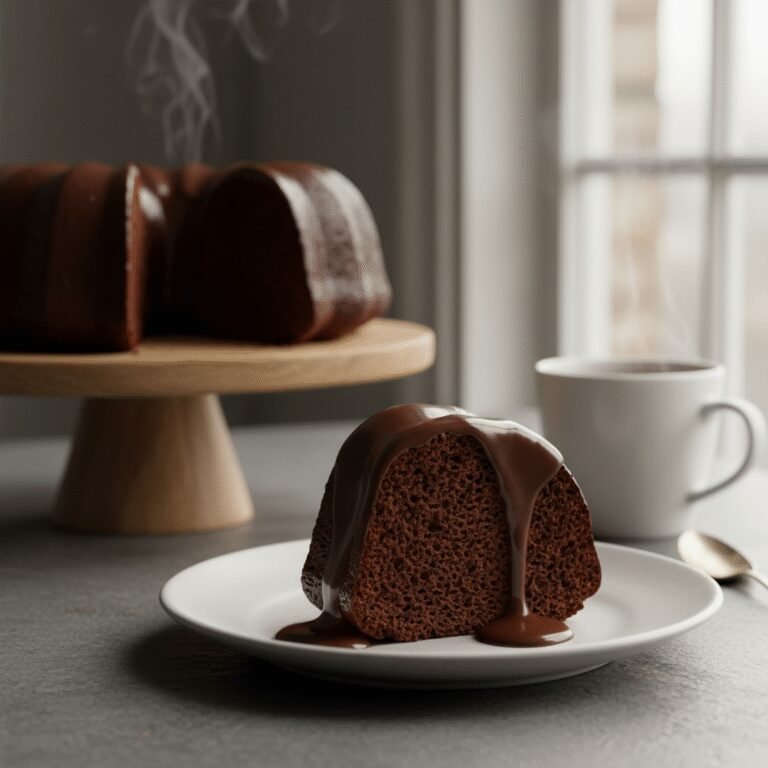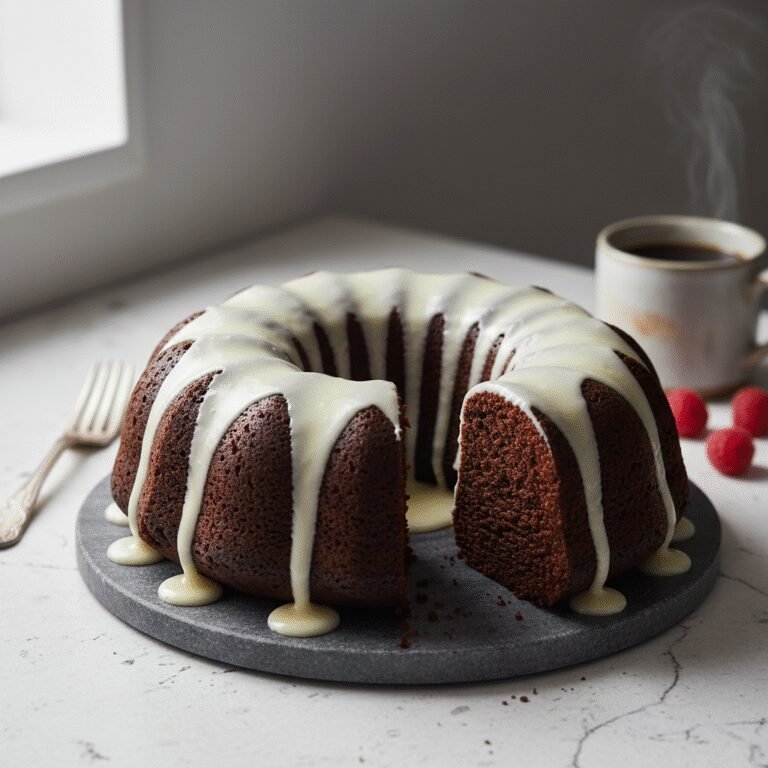
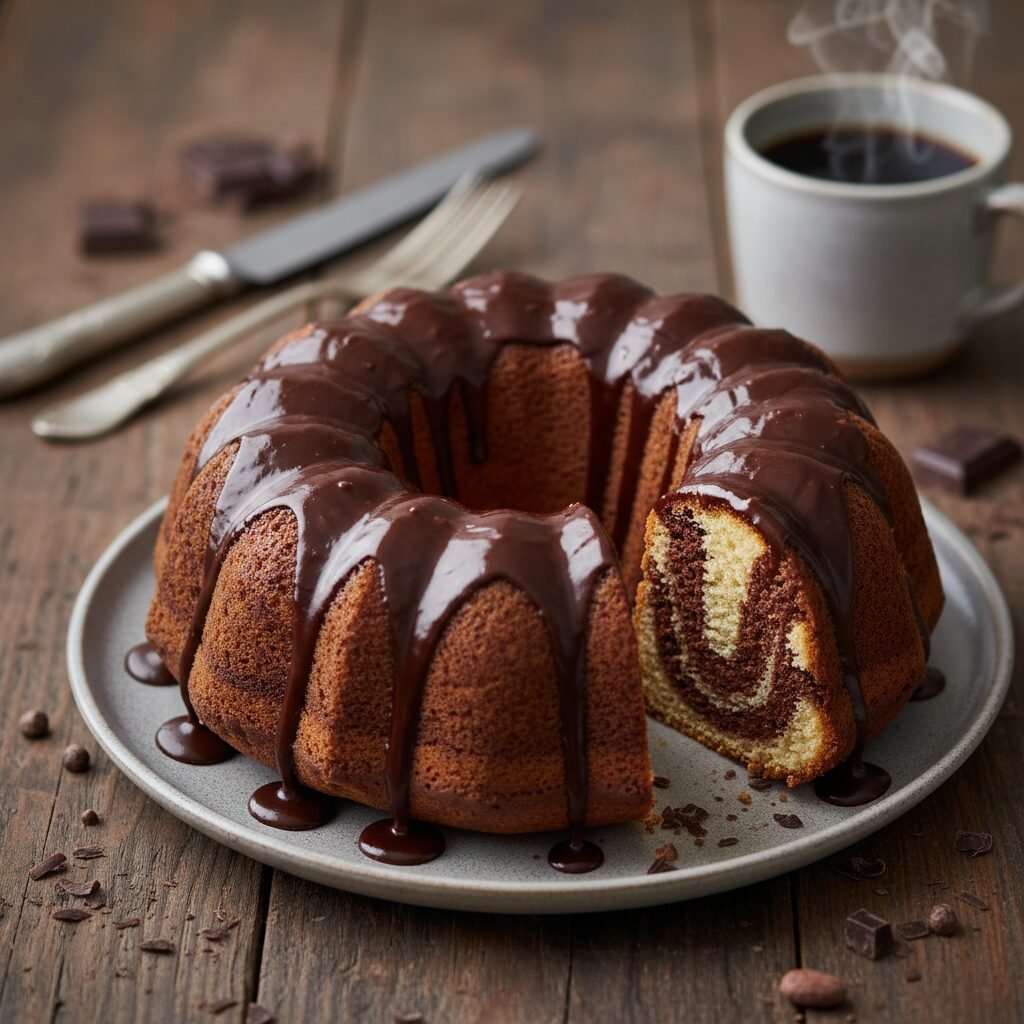
The Ultimate Moist Marble Bundt Cake with Rich Chocolate Glaze
Moist Marble Bundt Cake With Chocolate Glaze Recipe
Experience the best of both worlds with this stunning Moist Marble Bundt Cake. Swirls of tender vanilla and rich chocolate cake are baked to perfection and crowned with a glossy, decadent chocolate glaze. It is the perfect centerpiece for any gathering or a cozy afternoon treat.
25 minutes
55 minutes
1 hour 20 minutes
12-14 servings
Dessert
Baking
American / German
Vegetarian
There is something undeniably magical about a marble cake. It captures the eternal struggle between choosing vanilla or chocolate and solves it with a beautiful, artistic compromise. This Moist Marble Bundt Cake with Chocolate Glaze is not just a dessert; it is a nostalgic journey back to childhood kitchens and bakery windows, updated with a texture so tender it practically melts in your mouth. For many home bakers, the Bundt cake is the epitome of comfort baking. It doesn’t require the architectural skills of a layer cake or the piping precision of cupcakes, yet it emerges from the oven looking effortlessly elegant. The beauty lies in the surprise inside; no two slices are ever the same, each revealing a unique, Rorschach-like pattern of light and dark batters.
What sets this specific recipe apart is its incredible crumb. We have all suffered through dry, lackluster marble cakes where the chocolate portion feels sandy and the vanilla tastes bland. Not here. By utilizing a specific blend of fats and the magic of sour cream, we ensure that every bite is lush and velvety. The vanilla bean paste adds aromatic depth to the golden batter, while high-quality Dutch-processed cocoa powder ensures the chocolate swirls are intensely fudge-like, not just colored brown. Topped with a shiny, ganache-style glaze that drips lazily down the fluted sides, this cake is a showstopper that tastes even better than it looks. Whether you are serving it for a holiday brunch, a birthday celebration, or simply because it is Tuesday and you deserve chocolate, this recipe promises to be a staple in your baking repertoire.
History & Origins
The history of the marble cake is a fascinating evolution of baking trends, tracing its roots back to 19th-century Germany. Originally known as ‘Marmorkuchen’ (marble cake), the earliest iterations did not actually use chocolate. Instead, bakers would create the dark swirls using molasses and spices, or sometimes dried fruits, to contrast with the light, egg-rich batter. It wasn’t until the late 19th century, as chocolate became more accessible and affordable in the United States and Europe, that the chocolate-vanilla combination we know and love today became the standard. Jewish immigrants bringing their baking traditions to New York City played a significant role in popularizing the chocolate version in American bakeries.
Parallel to the rise of the marble cake is the story of the Bundt pan itself. The distinctive ring shape is derived from the European Gugelhupf, a brioche-style cake. However, the Bundt pan as we know it is a distinctly American invention. In 1950, H. David Dalquist, the founder of Nordic Ware, cast the first aluminum Bundt pan in Minneapolis at the request of a local Jewish women’s group who wanted a modern mold for their traditional kugel and cakes. Initially, the pan was a slow seller and nearly discontinued. Fame arrived in 1966 when the ‘Tunnel of Fudge’ cake won second place at the Pillsbury Bake-Off, sending home bakers into a frenzy to buy the pans. Since then, the marriage of the visually striking marble batter with the architectural beauty of the Bundt pan has become a classic symbol of American home baking, representing warmth, hospitality, and timeless style.
Why This Recipe Works
This recipe succeeds where others fail primarily due to moisture retention and flavor intensity. Many marble cakes are simply a vanilla batter divided in half, with cocoa powder dumped into one bowl. This often dries out the chocolate half because cocoa acts like flour, absorbing liquid. In this recipe, we bloom the cocoa powder in boiling water or hot melted butter before adding it to the batter. This ‘blooming’ process releases the full flavor potential of the chocolate and ensures the consistency of the dark batter matches the light batter, preventing weird texture gaps in the finished cake.
Furthermore, the fat content is carefully balanced. We use a combination of unsalted butter and a neutral oil. Butter provides that classic, rich dairy flavor that we crave in a pound cake, while the oil ensures the cake stays soft and moist for days, even after refrigeration. The addition of full-fat sour cream is the secret weapon; its acidity tenderizes the gluten strands in the flour, resulting in a crumb that is dense yet incredibly soft, often described as ‘velvety.’ Finally, using cake flour instead of all-purpose flour lowers the protein content, further ensuring a tender texture rather than a chewy, bread-like one.
Why You’ll Love This Recipe
- ✓Incredibly moist crumb that stays fresh for days.
- ✓Deep, intense chocolate flavor thanks to bloomed cocoa.
- ✓Beautiful, high-contrast marbling that looks professional.
- ✓Easy-to-make glossy chocolate glaze.
- ✓Perfect for freezing and making ahead.
Equipment You’ll Need
- ✓10-12 cup Bundt pan
- ✓Stand mixer or electric hand mixer
- ✓Large mixing bowls
- ✓Medium mixing bowl (for chocolate batter)
- ✓Whisk
- ✓Rubber spatula
- ✓Wire cooling rack
- ✓Small saucepan (for glaze)
Ingredients
- ✓2 ½ cups cake flour, sifted
- ✓2 ½ teaspoons baking powder
- ✓½ teaspoon salt
- ✓1 cup unsalted butter, room temperature
- ✓2 cups granulated sugar
- ✓3 tablespoons vegetable oil or canola oil
- ✓4 large eggs, room temperature
- ✓1 tablespoon vanilla bean paste or pure vanilla extract
- ✓1 cup full-fat sour cream, room temperature
- ✓½ cup Dutch-processed cocoa powder
- ✓6 tablespoons boiling water
- ✓4 oz semi-sweet chocolate, chopped (for glaze)
- ✓½ cup heavy cream (for glaze)
- ✓1 tablespoon corn syrup (optional, for shine)
Instructions
- Preheat your oven to 350°F (175°C). Thoroughly grease your Bundt pan with baking spray (the kind with flour in it) or butter and flour, ensuring every crevice is coated. Tap out excess flour.
- In a medium bowl, whisk together the cake flour, baking powder, and salt. Set aside.
- In a small bowl, whisk the cocoa powder and boiling water together until smooth. This mixture will look like a thick paste. Set aside to cool slightly.
- In the bowl of a stand mixer fitted with the paddle attachment, cream the butter, vegetable oil, and sugar on medium-high speed for 5-7 minutes until very pale and fluffy. Do not rush this step; it incorporates air for lift.
- Add the eggs one at a time, beating well after each addition. Scrape down the sides of the bowl. Stir in the vanilla.
- Reduce mixer speed to low. Add the flour mixture in three parts, alternating with the sour cream in two parts, starting and ending with the flour. Mix only until just combined to avoid over-developing gluten.
- Remove about 2 cups of the vanilla batter and place it into a separate medium bowl. Pour the chocolate paste mixture into this bowl and fold gently until the batter is a uniform dark chocolate color.
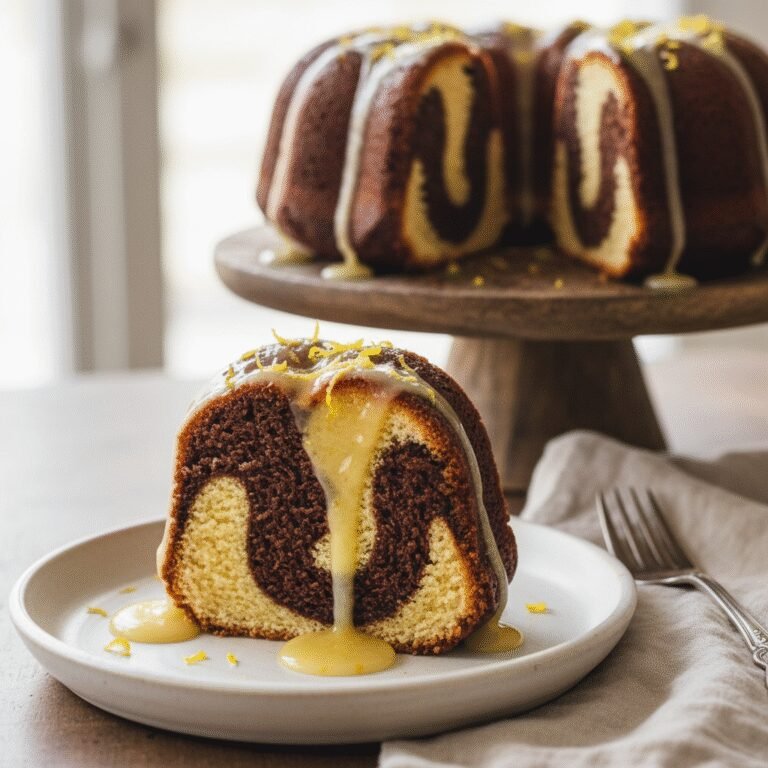
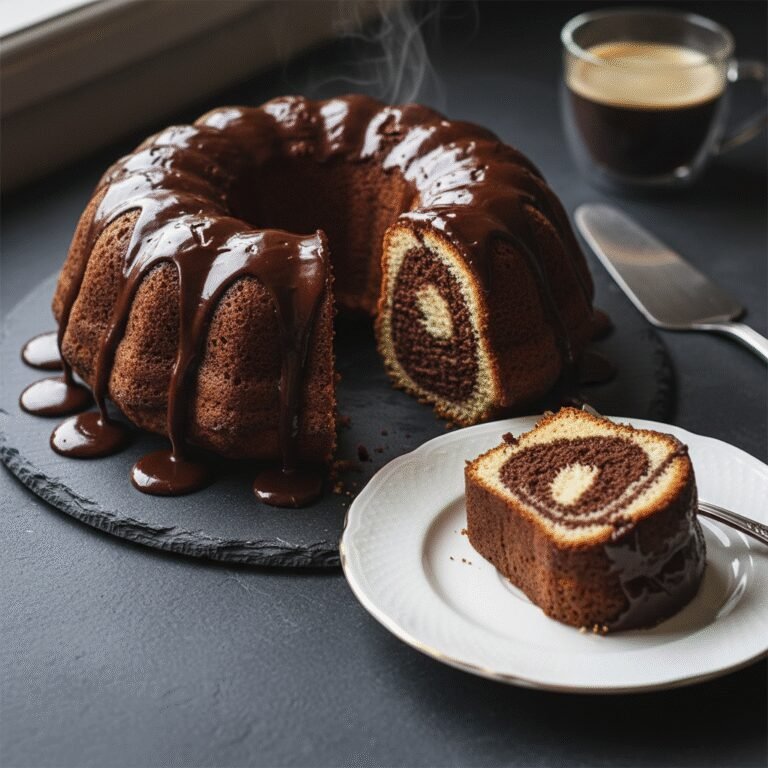
- To create the marble effect, alternate scoops of vanilla and chocolate batter into the prepared Bundt pan. You can layer them or drop dollops side-by-side. Once all batter is in, run a butter knife or skewer through the batter in a swirling motion just a few times. Do not over-swirl, or the colors will muddy.
- Bake for 50-60 minutes, or until a wooden skewer inserted into the thickest part of the cake comes out clean or with just a few moist crumbs attached.
- Let the cake cool in the pan for exactly 10 minutes. Then, invert it onto a wire rack to cool completely before glazing.
- Make the glaze: Place chopped chocolate in a heatproof bowl. Heat heavy cream in a saucepan until just simmering. Pour hot cream over chocolate and let sit for 5 minutes. Whisk gently until smooth and shiny. Stir in corn syrup if using.
- Pour the glaze over the completely cooled cake, allowing it to drip down the sides. Let the glaze set for 15 minutes before slicing.
Expert Cooking Tips
- ✓Room temperature ingredients are non-negotiable; cold eggs or sour cream will curdle the batter.
- ✓Grease the pan right before filling it so the oil doesn’t slide down the sides while you prep.
- ✓Weigh your flour if possible (approx 300g for 2.5 cups) to avoid a dense cake.
- ✓Do not over-swirl the batter; less is more for a defined marble pattern.
- ✓Tap the filled pan on the counter firmly before baking to release large air bubbles.
- ✓Cool in the pan for exactly 10 minutes; too short and it breaks, too long and it sticks.
- ✓Use Dutch-processed cocoa for a deeper color and smoother flavor than natural cocoa.
Substitutions and Variations
Baking is a science, but there is some room for flexibility with this marble bundt cake. If you do not have cake flour, you can make a substitute by removing 2 tablespoons of all-purpose flour per cup and replacing it with 2 tablespoons of cornstarch; sift them together twice. For the fat, full-fat Greek yogurt is an excellent 1:1 substitute for sour cream, providing similar tang and moisture. If you prefer buttermilk, you can use it, but the batter will be slightly thinner, so reduce the amount by about a tablespoon. In terms of oil, melted coconut oil or grapeseed oil works perfectly fine instead of vegetable oil. For the chocolate element, while Dutch-processed cocoa is preferred for its low acidity and dark color, natural cocoa powder will work, though the chocolate swirl will be lighter in color. For the glaze, you can use milk chocolate or dark chocolate depending on your sweetness preference, or simply dust the cake with powdered sugar for a lighter finish.
Common Mistakes to Avoid
The most heartbreaking mistake with Bundt cakes is the cake sticking to the pan. This usually happens because the pan wasn’t greased thoroughly enough, or the coating slid off because it was applied too early. Always use a pastry brush to get into the sharp corners of the design. Another common issue is a dry cake, which stems from over-baking or over-measuring flour. Always fluff your flour before spooning it into the cup, or better yet, use a scale. Over-mixing the batter after adding the flour creates a tough, rubbery texture due to gluten development; stop mixing as soon as the white streaks of flour disappear. Finally, swirling too vigorously is a frequent error. If you mix the two batters too much inside the pan, you lose the distinct contrast and end up with a light brown cake rather than a marble one.
Serving Suggestions
This Moist Marble Bundt Cake is versatile enough for both casual snacking and elegant entertaining. Serve thick slices at room temperature to ensure the butter in the cake is soft and the flavor is maximized. It pairs beautifully with a hot cup of dark roast coffee or an espresso, which complements the chocolate notes. For a dessert course, serve a slice with a dollop of lightly sweetened whipped cream and a handful of fresh raspberries or strawberries; the tart fruit cuts through the richness of the glaze. If you want to warm it up, a quick 10-second zap in the microwave restores that ‘fresh out of the oven’ warmth—just add a scoop of vanilla bean ice cream on the side for an indulgent treat.
Storage and Reheating Tips
This cake stores exceptionally well thanks to the oil and sour cream content. At room temperature, keep the cake in an airtight cake carrier or wrapped tightly in plastic wrap for up to 3-4 days. It actually tends to get moister the day after baking as the moisture redistributes. For longer storage, you can refrigerate it for up to a week, but allow it to come to room temperature before eating for the best texture. This cake is also freezer-friendly. You can freeze the whole unglazed cake or individual slices. Wrap tightly in plastic wrap followed by a layer of aluminum foil. It will keep in the freezer for up to 3 months. Thaw overnight on the counter before glazing and serving.
Nutrition Facts (Estimated)
| Serving Size | 1 slice |
| Calories | 480 |
| Fat | 24g |
| Saturated Fat | 14g |
| Unsaturated Fat | 8g |
| Trans Fat | 0g |
| Cholesterol | 85mg |
| Sodium | 210mg |
| Carbohydrates | 58g |
| Fiber | 2g |
| Sugar | 32g |
| Protein | 6g |
Frequently Asked Questions
Why did my marble cake turn out dry?
Dryness is usually caused by over-baking or measuring too much flour. Ensure you spoon and level your flour or use a kitchen scale. Also, check your oven temperature with an external thermometer.
Can I use all-purpose flour instead of cake flour?
Yes, but the texture won’t be quite as velvety. To mimic cake flour, remove 2 tablespoons of AP flour per cup and replace with cornstarch.
How do I prevent the cake from sticking to the Bundt pan?
Use a baking spray that contains flour, or grease thoroughly with solid shortening and dust with flour. Ensure every nook is coated.
Why did my chocolate batter sink to the bottom?
Chocolate batter is naturally heavier. By blooming the cocoa in water and ensuring the consistency matches the vanilla batter, you minimize sinking. Also, layering helps.
Can I make this cake ahead of time?
Absolutely. This cake tastes even better the next day. Bake it, let it cool, and store it airtight overnight. Glaze it on the day you plan to serve.
What if I don’t have sour cream?
Full-fat plain Greek yogurt is the best substitute. You can also use buttermilk, though the batter will be slightly thinner.
Can I use melted chocolate instead of cocoa powder for the swirl?
It is not recommended for this specific recipe. Melted chocolate can harden when it hits the cool batter, changing the texture. The cocoa paste method ensures a soft crumb.
Why is my glaze too thin?
The heavy cream might have been too hot or the ratio was off. Let the glaze sit at room temperature for 10-15 minutes; it will thicken as it cools.
Conclusion
Baking this Moist Marble Bundt Cake is a rewarding experience that delivers a massive payoff for a relatively simple process. The striking visual of the dark and light swirls, combined with the luxurious texture and rich chocolate glaze, makes it a dessert that feels special every single time. It is the kind of recipe that gets requested at every potluck and family gathering, quickly becoming a part of your own family’s history. So, grab your Bundt pan, preheat that oven, and get ready to enjoy a slice of pure, marbled bliss. Happy baking!