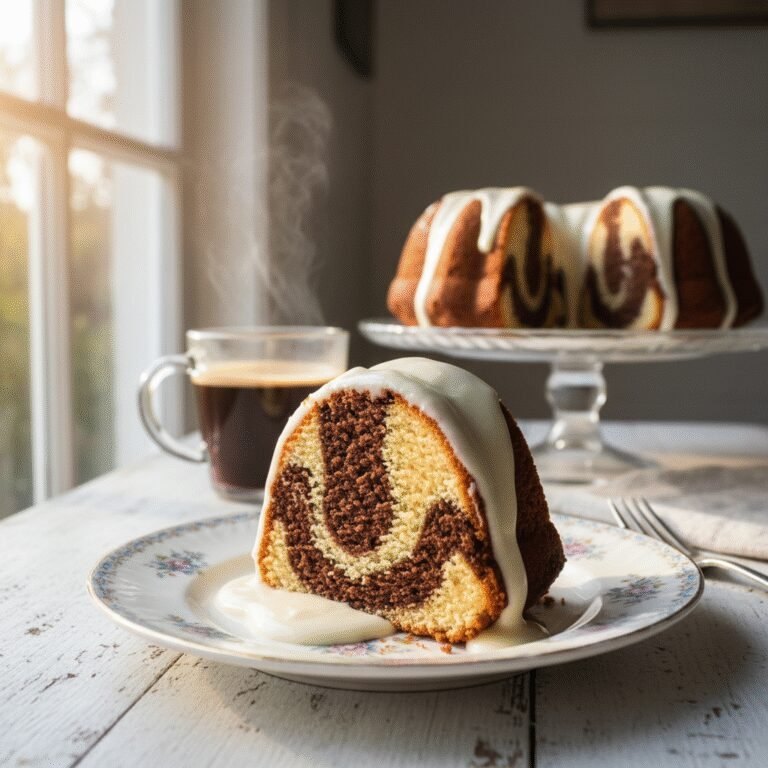
The Ultimate Moist Chocolate Bundt Cake With Powdered Sugar
Moist Chocolate Bundt Cake With Powdered Sugar Recipe
Experience the perfect balance of simplicity and decadence with this incredibly moist Chocolate Bundt Cake. Enriched with hot coffee and sour cream for a velvety crumb, it is finished with a classic dusting of powdered sugar for an elegant presentation.
20 minutes
55 minutes
1 hour 15 minutes
12-16 servings
Dessert
Baking
American
Vegetarian
There is something undeniably regal about a Bundt cake. Unlike its layered counterparts that require precarious stacking and elaborate frosting techniques, the Bundt cake relies entirely on the integrity of its batter and the beauty of its shape. This specific recipe for Moist Chocolate Bundt Cake with Powdered Sugar is the ‘Little Black Dress’ of the dessert world: timeless, elegant, and appropriate for absolutely every occasion. Whether you are hosting a sophisticated dinner party, bringing a comfort dish to a potluck, or simply satisfying a Tuesday night chocolate craving, this cake delivers.
The magic lies in the texture. We have all suffered through dry, crumbly chocolate cakes that require a glass of milk just to swallow. This recipe banishes that problem forever. By utilizing a combination of oil (rather than just butter), sour cream, and hot brewed coffee, we create a crumb that is dense, fudgy, and stays moist for days. The hot coffee doesn’t make the cake taste like a mocha latte; rather, it blooms the cocoa powder, intensifying the chocolate flavor to a deep, dark richness that interacts beautifully with the sweetness of the sugar.
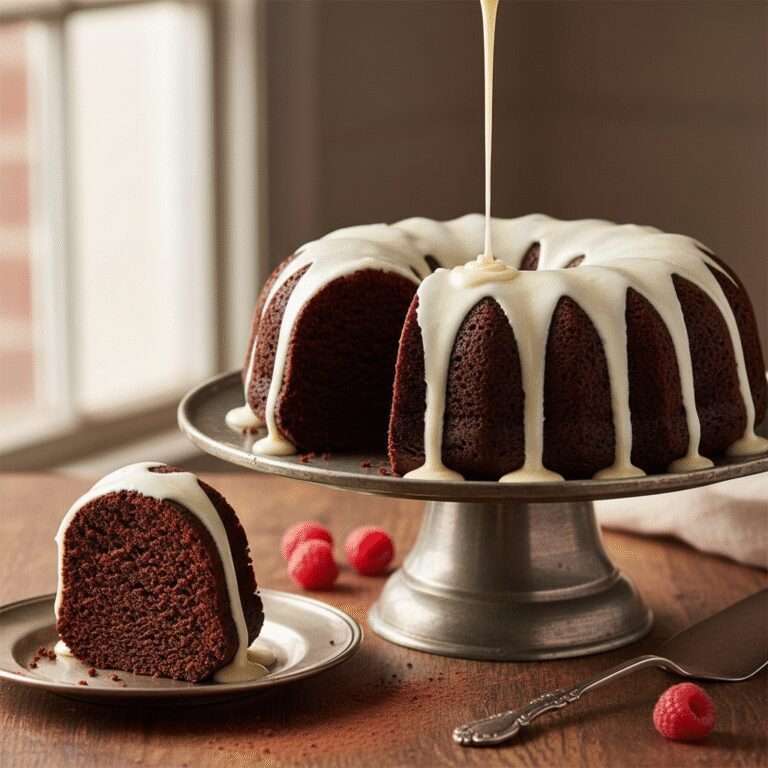
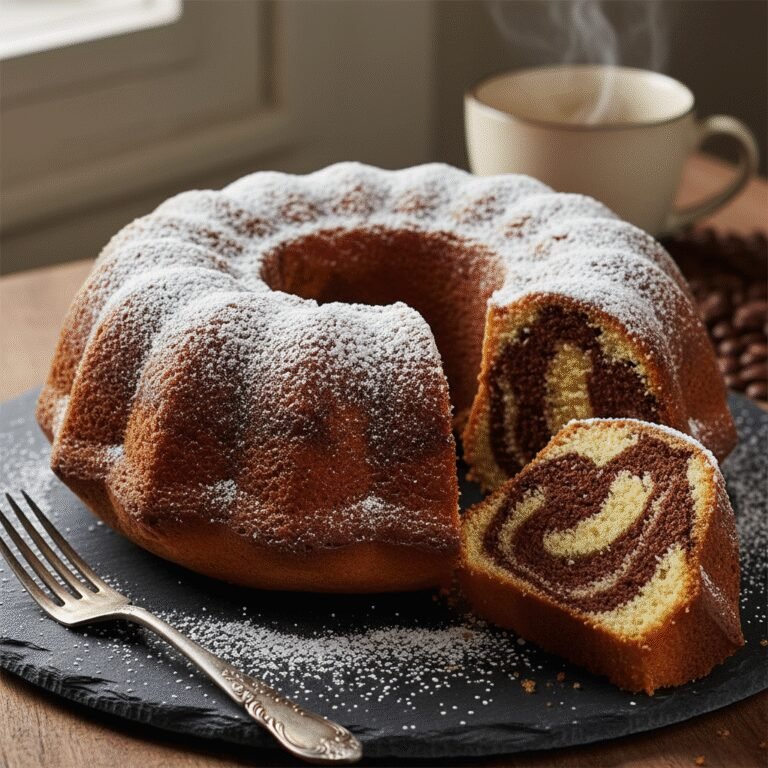
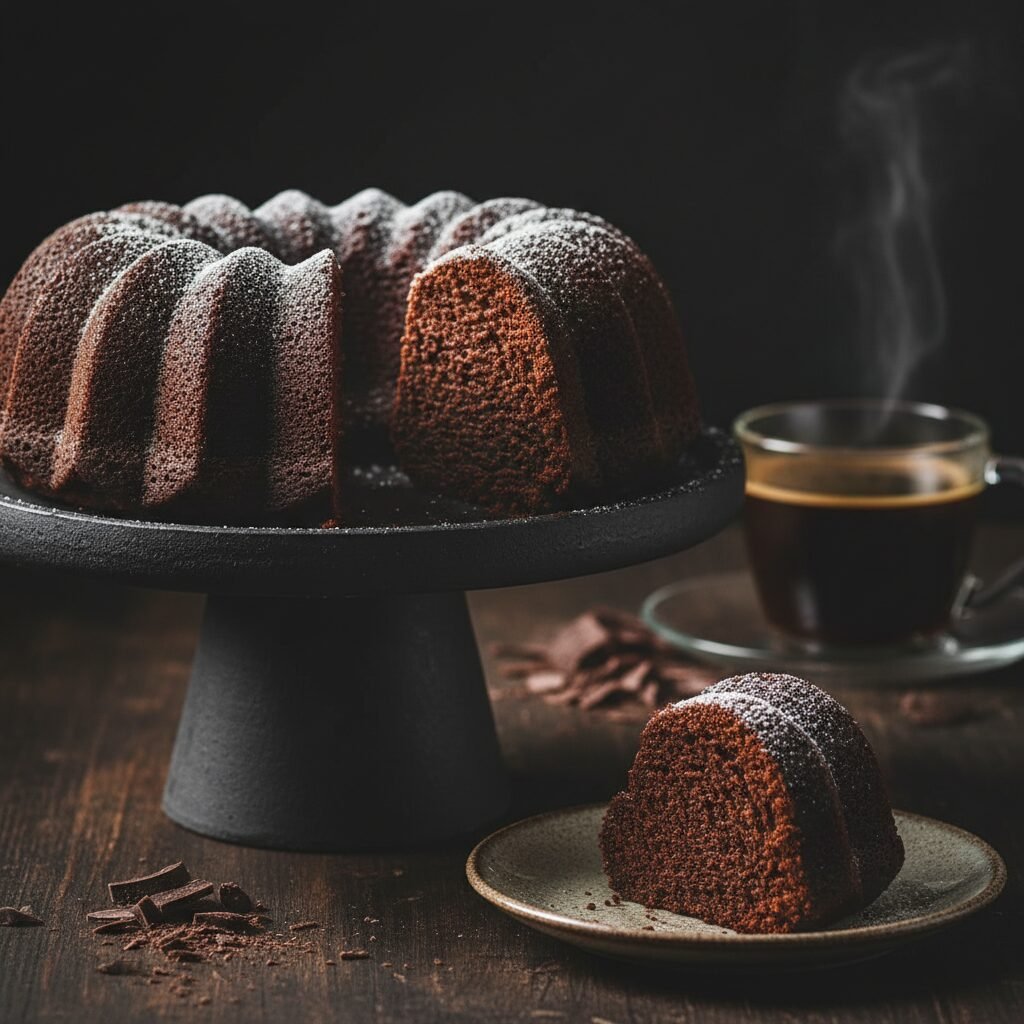
Visually, the contrast is stunning. The deep mahogany hue of the cake provides the perfect canvas for a snowfall of powdered sugar. It highlights the architectural ridges of the Bundt pan, making it look like a professional bakery creation with minimal effort. This isn’t just a cake; it is a centerpiece that fills the kitchen with the intoxicating aroma of baked chocolate, promising a slice of pure comfort.
History & Origins
The history of the Bundt cake is a fascinating journey that bridges Old World European traditions with mid-century American innovation. The cake’s lineage can be traced back to the European ‘Gugelhupf’ or ‘Kugelhopf,’ a brioche-style cake baked in a fluted, ring-shaped pan, popular in Germany, Austria, and Alsace. The hole in the center was practical, allowing heat to penetrate the thick batter evenly. However, the modern incarnation of the Bundt cake is a distinctly American story rooted in Minneapolis, Minnesota.
In 1950, H. David Dalquist, the founder of Nordic Ware, was approached by a group of women from the local Hadassah society. They wanted a modern version of the heavy cast-iron Gugelhupf pans their mothers used in the old country. Dalquist cast a lighter aluminum version and trademarked the name ‘Bundt,’ adding a ‘t’ to the German word ‘Bund’ (meaning an alliance or bond) to improve trademarking possibilities and distance the name from the German-American Bund.
For over a decade, the pans sold poorly. The turning point came in 1966 during the 17th Annual Pillsbury Bake-Off. A contestant named Ella Helfrich used a Nordic Ware pan to create the ‘Tunnel of Fudge’ cake. She placed second, but her recipe became a national sensation. Pillsbury received over 200,000 requests for the pan, sending Nordic Ware into round-the-clock production. Since then, the Bundt cake has become a staple of American baking, celebrated for its versatility and the nostalgic comfort it brings to kitchens across the country.
Why This Recipe Works
This recipe succeeds where others fail due to a precise balance of fat, acidity, and temperature. First, the decision to use vegetable oil instead of butter is crucial for longevity. While butter adds flavor, it is solid at room temperature, which can lead to a denser, drier texture once the cake cools. Oil remains liquid, coating the flour proteins and preventing gluten formation, resulting in a sensationally tender crumb that stays moist for days.
Secondly, the inclusion of sour cream serves a dual purpose. The fat content adds richness, but more importantly, the acidity breaks down the gluten strands in the flour, tenderizing the cake further. It also activates the baking soda, ensuring a proper rise in the heavy batter.
Thirdly, the ‘blooming’ technique used with the cocoa powder is a game-changer. By mixing the cocoa with hot coffee, we dissolve the cocoa butter and release flavor compounds that are otherwise locked away. The hot liquid also helps to emulsify the batter, creating a smooth, glossy mixture that bakes evenly. Finally, the Bundt shape itself is a tool for success; the central tube conducts heat to the middle of the cake, allowing a deep, dense batter to bake through without burning the edges, a feat difficult to achieve in a standard round pan.
Why You’ll Love This Recipe
- ✓Incredibly moist texture that lasts for days.
- ✓Deep, intense chocolate flavor enhanced by hot coffee.
- ✓No mixer required; can be made with two bowls and a whisk.
- ✓Elegant presentation with minimal decorating effort.
- ✓Freezes beautifully for make-ahead convenience.
Equipment You’ll Need
- ✓10-12 cup Bundt pan
- ✓Large mixing bowl
- ✓Medium mixing bowl
- ✓Whisk
- ✓Rubber spatula
- ✓Wire cooling rack
- ✓Fine-mesh sieve (for dusting)
Ingredients
- ✓2 cups granulated sugar
- ✓1 3/4 cups all-purpose flour
- ✓3/4 cup unsweetened cocoa powder (preferably Dutch-processed)
- ✓2 teaspoons baking soda
- ✓1 teaspoon baking powder
- ✓1 teaspoon salt
- ✓2 large eggs, room temperature
- ✓1 cup whole milk
- ✓1/2 cup vegetable oil (or canola oil)
- ✓2 teaspoons vanilla extract
- ✓1 cup boiling hot coffee (or boiling water)
- ✓1/2 cup sour cream, room temperature
- ✓2 tablespoons powdered sugar (for dusting)
Instructions
- Preheat your oven to 350°F (175°C). Thoroughly grease your Bundt pan with butter or shortening and dust with cocoa powder (avoid flour to prevent white streaks on the dark cake). Shake out excess cocoa.
- In a large mixing bowl, whisk together the granulated sugar, flour, cocoa powder, baking soda, baking powder, and salt until fully combined and free of lumps.
- In a medium bowl, whisk together the eggs, milk, vegetable oil, vanilla extract, and sour cream until smooth.
- Pour the wet ingredients into the dry ingredients. Mix with a whisk or electric hand mixer on low speed until just combined.
- Carefully pour the boiling hot coffee into the batter. Whisk gently by hand until the batter is smooth and glossy. Note: The batter will be very thin and liquid; this is normal.
- Pour the batter into the prepared Bundt pan. Tap the pan gently on the counter to release any large air bubbles.
- Bake for 50-60 minutes, or until a wooden skewer inserted into the center comes out clean or with just a few moist crumbs attached.
- Remove the cake from the oven and let it cool in the pan for exactly 10-15 minutes. Do not let it cool completely in the pan, or it may stick.
- Place a wire cooling rack over the top of the pan, then invert the cake onto the rack. Lift the pan off carefully.
- Allow the cake to cool completely to room temperature before decorating.
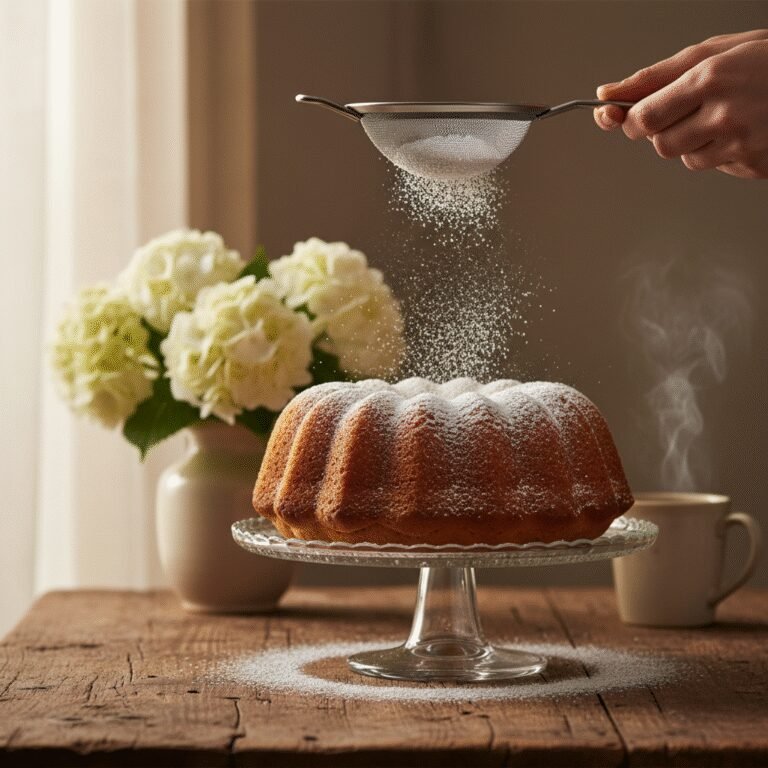
- Just before serving, place the powdered sugar in a fine-mesh sieve and generously dust the top of the cake.
Expert Cooking Tips
- ✓Grease every nook and cranny of the Bundt pan; using a pastry brush helps ensure coverage.
- ✓Use room temperature eggs and sour cream to ensure the batter emulsifies properly.
- ✓Don’t skip the coffee; if you are sensitive to caffeine, use decaf. It enhances the chocolate flavor without adding coffee taste.
- ✓Do not overmix the batter once the flour is added, as this can make the cake tough.
- ✓Time the cooling process; flipping too early can cause the cake to break, while flipping too late can cause it to stick.
- ✓If using a dark-colored non-stick pan, check the cake at 45 minutes as dark pans bake faster.
Substitutions and Variations
This recipe is quite forgiving, but specific substitutions will alter the texture. If you do not have sour cream, full-fat Greek yogurt is an excellent 1:1 substitute that provides similar acidity and moisture. For the vegetable oil, you can use melted coconut oil or melted butter, though butter will result in a slightly drier crumb the next day. If you want to make this gluten-free, use a high-quality 1:1 gluten-free all-purpose flour blend that contains xanthan gum. Regarding the coffee, hot water works if you absolutely cannot use coffee, but the chocolate flavor will be less intense. For a dairy-free version, substitute the milk with almond or soy milk and use a dairy-free yogurt alternative instead of sour cream.
Common Mistakes to Avoid
The most heartbreaking mistake with Bundt cakes is the cake sticking to the pan. This usually happens because the pan wasn’t greased thoroughly or the cake cooled in the pan for too long (creating a vacuum seal) or not long enough (structure hasn’t set). Another common error is over-baking. Because the pan is dark and deep, it’s easy to think the center isn’t done. Trust the skewer test; if it comes out dry, you’ve gone too far. A few moist crumbs are desirable. Finally, using cold ingredients can shock the batter and prevent proper rising, leading to a dense, rubbery texture.
Serving Suggestions
While this cake is stunning with just powdered sugar, you can elevate it for a dinner party. Serve warm slices with a dollop of freshly whipped cream and a handful of tart raspberries or strawberries to cut through the richness. A scoop of vanilla bean ice cream is a classic pairing that mimics a brownie sundae experience. For a winter twist, serve with a side of crème anglaise or a drizzle of warm salted caramel sauce. It pairs exceptionally well with a dark roast coffee or a glass of cold milk.
Storage and Reheating Tips
This cake has incredible staying power. Store it at room temperature in an airtight cake carrier or wrapped tightly in plastic wrap for up to 4 days. In fact, the flavor often improves on the second day. Avoid refrigerating the cake unless your kitchen is very hot and humid, as the refrigerator circulates dry air that can stale the cake faster. To freeze, wrap individual slices or the whole cake tightly in plastic wrap, followed by a layer of aluminum foil. It can be frozen for up to 3 months. Thaw at room temperature before serving.
Nutrition Facts (Estimated)
| Serving Size | 1 slice |
| Calories | 420 |
| Fat | 22g |
| Saturated Fat | 4g |
| Unsaturated Fat | 16g |
| Trans Fat | 0g |
| Cholesterol | 45mg |
| Sodium | 320mg |
| Carbohydrates | 52g |
| Fiber | 3g |
| Sugar | 35g |
| Protein | 6g |
Frequently Asked Questions
Why did my Bundt cake stick to the pan?
Sticking usually occurs due to insufficient greasing or attempting to flip the cake at the wrong temperature. Ensure you grease every ridge, preferably with shortening or a baking spray containing flour, and let it cool for exactly 10-15 minutes before inverting.
Can I use Dutch-process cocoa instead of natural cocoa?
Yes, and it is actually recommended for a darker color and fudgier flavor. However, because this recipe uses baking soda, natural cocoa (which is acidic) works well to activate it. If using Dutch-process (which is neutral), the sour cream provides the necessary acidity for the rise.
Why is the batter so thin?
The batter is intentionally thin because of the high liquid content (milk, oil, coffee). This hydration is necessary to create a moist cake that doesn’t dry out during the long bake time required for a Bundt pan.
Can I make this cake ahead of time?
Absolutely. This cake is actually better the next day as the flavors meld and the moisture redistributes. It is the perfect make-ahead dessert for parties.
How do I know when the cake is done?
Insert a wooden skewer into the thickest part of the cake. It should come out with a few moist crumbs attached. If it is coated in wet batter, it needs more time. If it is perfectly clean, remove it immediately to prevent drying.
Can I add chocolate chips to the batter?
Yes, you can add about 1 cup of mini chocolate chips. Toss them in a tablespoon of flour before adding to the batter to prevent them from sinking to the bottom.
What if I don’t have a Bundt pan?
You can bake this in two 9-inch round cake pans or a 9×13 inch rectangular pan, but you will need to drastically reduce the baking time to roughly 30-35 minutes.
Why did my cake sink in the middle?
Sinking is often caused by opening the oven door too early (releasing heat), over-mixing the batter (incorporating too much air), or using expired leavening agents (baking soda/powder).
Conclusion
The Moist Chocolate Bundt Cake with Powdered Sugar is a testament to the idea that the best things in life don’t need to be complicated. It is a recipe that respects your time while delivering a bakery-quality result that feels special. The deep, resonant chocolate flavor, combined with that impossibly tender crumb, makes it a recipe you will return to year after year. Whether you are a novice baker or a seasoned pro, this cake is a guaranteed win. So, brew a pot of coffee, dust off that Bundt pan, and prepare to fall in love with your new favorite chocolate cake.