The Ultimate Moist Chocolate Bundt Cake with Vanilla Glaze
Moist Chocolate Bundt Cake With Vanilla Glaze Recipe
Discover the secret to the most velvety, deeply chocolatey cake you will ever bake. This Moist Chocolate Bundt Cake is effortlessly elegant, drenched in a silky vanilla bean glaze, and guaranteed to be the star of any gathering.
20 minutes
55 minutes
1 hour 15 minutes
12-14 servings
Dessert
Baking
American
Vegetarian
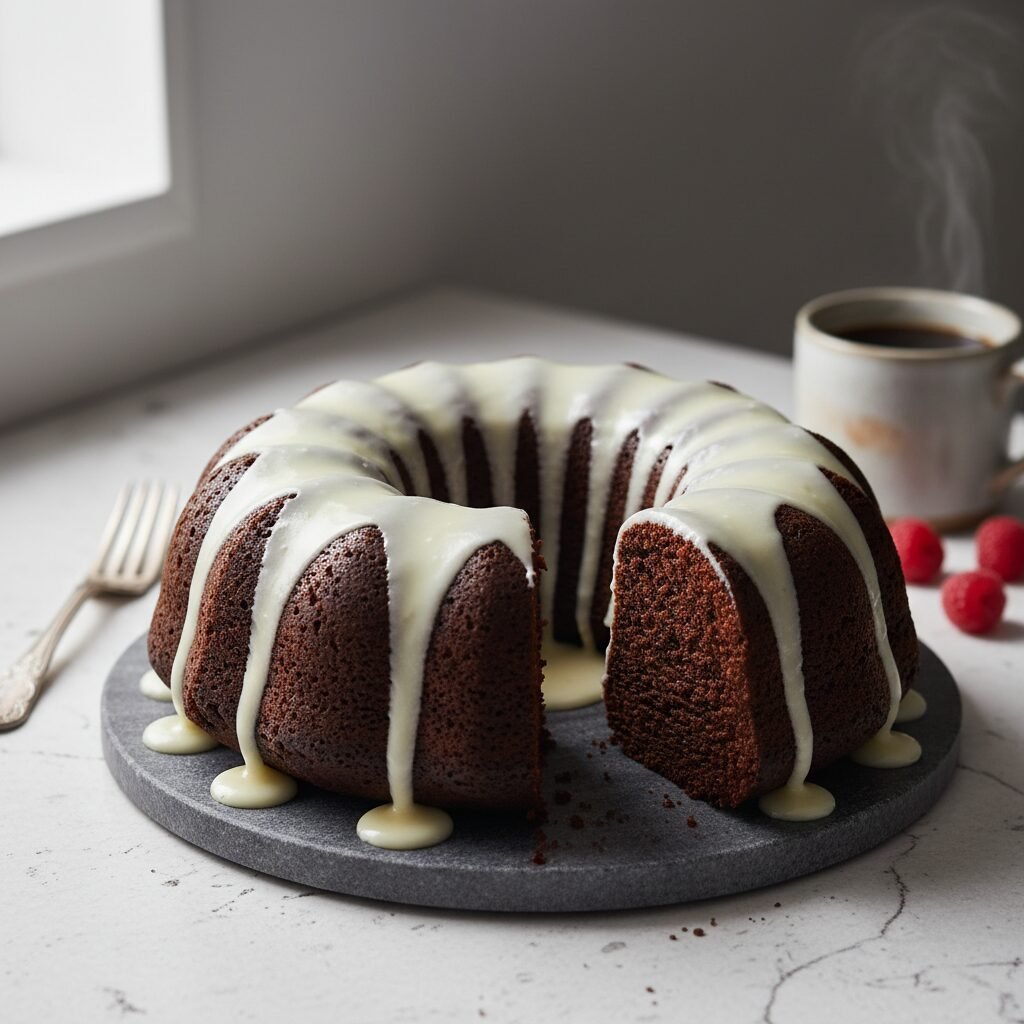
There is something undeniably majestic about a Bundt cake. Unlike layered confections that require precise leveling and intricate frosting techniques, the Bundt relies on the sheer beauty of its architectural shape and the integrity of its crumb. This Moist Chocolate Bundt Cake with Vanilla Glaze is a love letter to chocolate lovers everywhere. It is not just another chocolate cake; it is an experience in texture and flavor depth. The crumb is incredibly tender—almost pudding-like in its moisture content—yet structured enough to hold the beautiful ridges of the pan. We achieve this through a specific balance of fats and the crucial step of blooming the cocoa powder, which unlocks a complexity of flavor often missed in standard recipes.
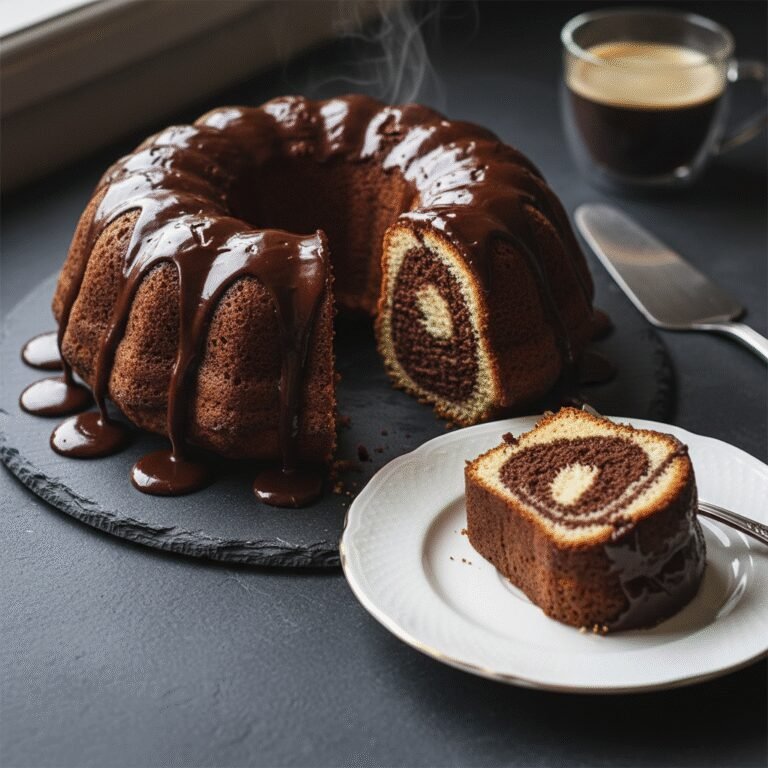
Imagine cutting a slice and seeing the dark, rich interior contrast against the stark, snowy white of the vanilla glaze. The glaze itself creates a delicate sugary crust that shatters slightly upon the first bite, giving way to the soft, decadent sponge beneath. This recipe is designed for the home baker who wants bakery-quality results without the stress of decorating. Whether you are hosting a holiday dinner, a casual brunch, or simply craving a midnight chocolate fix, this cake delivers on every front. It pairs perfectly with a hot cup of coffee, cutting through the richness, or a glass of cold milk. Prepare to add this to your permanent rotation, because once you taste how moist and flavorful a chocolate cake can actually be, there is no going back.
History & Origins
The history of the Bundt cake is a fascinating journey that bridges classic European baking traditions with mid-century American innovation. The cake’s lineage can be traced back to the ‘Gugelhupf,’ a yeast-based brioche-style cake popular in Germany, Austria, and Alsace for centuries. These cakes were baked in round, fluted pans with a central tube, designed to allow heat to penetrate the dense dough evenly. However, the Bundt cake as we know it in America is a relatively modern phenomenon, largely credited to H. David Dalquist, the founder of Nordic Ware. In 1950, Dalquist was approached by members of the Minneapolis chapter of the Hadassah Society who wanted a modern version of the ceramic Gugelhupf molds used by their European mothers.
Dalquist created the cast aluminum ‘Bundt’ pan (adding a ‘t’ to the German word ‘Bund’ for trademarking purposes). Initially, the pans sold poorly and were nearly discontinued. The turning point came in 1966 during the Pillsbury Bake-Off, when Ella Helfrich used a Nordic Ware pan to create the ‘Tunnel of Fudge’ cake. She won second place, but her cake won the hearts of the American public. Demand for the pans skyrocketed, cementing the Bundt cake as an icon of American hospitality. Since then, the Bundt has evolved from those heavy, nut-filled ring cakes of the 60s to the sophisticated, moist, and diverse dessert category we enjoy today. This chocolate version pays homage to that history while utilizing modern food science to ensure a texture that the bakers of the 1950s could only dream of.
Why This Recipe Works
This recipe succeeds where many others fail—specifically in the realm of moisture retention and flavor intensity. Many chocolate cakes suffer from being dry or having a muted chocolate flavor. We solve the flavor issue by ‘blooming’ the cocoa powder. By mixing unsweetened cocoa powder with hot liquid (in this case, hot coffee or water) before adding it to the batter, we dissolve the cocoa butter and release flavor compounds that remain dormant in cold mixing. The hot liquid essentially wakes up the chocolate, making it taste more like itself. Don’t worry, the cake won’t taste like coffee; the coffee simply amplifies the chocolate notes.
Structurally, we rely on oil rather than butter as the primary fat. While butter offers great flavor, it contains water and milk solids that can lead to a drier texture once the cake cools. Oil is 100% fat and remains liquid at room temperature, ensuring the cake stays incredibly moist and soft for days. We also incorporate sour cream, which serves a dual purpose: its acidity reacts with the baking soda to create a glorious rise, and its high fat content adds richness and a velvety mouthfeel. The combination of brown sugar and white sugar is another key factor; the molasses in the brown sugar is hygroscopic, meaning it attracts and holds moisture from the air, further preventing the cake from drying out.
Why You’ll Love This Recipe
- ✓Incredibly moist texture that stays soft for days.
- ✓Deep, intense chocolate flavor enhanced by hot coffee.
- ✓No mixer required; can be made with two bowls and a whisk.
- ✓Elegant presentation with minimal decorating effort.
- ✓Freezes beautifully for make-ahead convenience.
Equipment You’ll Need
- ✓10-12 cup Bundt pan
- ✓Large mixing bowl
- ✓Medium mixing bowl
- ✓Whisk
- ✓Rubber spatula
- ✓Wire cooling rack
- ✓Measuring cups and spoons
Ingredients
- ✓2 cups granulated sugar
- ✓1 3/4 cups all-purpose flour
- ✓3/4 cup unsweetened cocoa powder (Dutch-processed preferred)
- ✓2 teaspoons baking soda
- ✓1 teaspoon baking powder
- ✓1 teaspoon kosher salt
- ✓2 large eggs, room temperature
- ✓1 cup buttermilk or sour cream, room temperature
- ✓1 cup hot brewed strong coffee (or hot water)
- ✓1/2 cup vegetable oil or canola oil
- ✓2 teaspoons vanilla extract
- ✓For the Glaze: 1 1/2 cups powdered sugar
- ✓For the Glaze: 2-3 tablespoons whole milk
- ✓For the Glaze: 1 teaspoon vanilla bean paste or extract
- ✓For the Glaze: Pinch of salt
Instructions
- Preheat your oven to 350°F (175°C). Thoroughly grease your Bundt pan with baking spray (the kind with flour in it) or butter and dust with cocoa powder. Shake out excess cocoa. This step is critical to prevent sticking.
- In a large bowl, whisk together the sugar, flour, cocoa, baking soda, baking powder, and salt until well combined and no lumps remain.
- In a separate medium bowl, whisk together the eggs, buttermilk (or sour cream), oil, and vanilla extract until smooth.
- Pour the wet ingredients into the dry ingredients and whisk gently until just combined. Do not overmix.
- Carefully pour the hot coffee (or hot water) into the batter. Whisk gently until the liquid is fully incorporated and the batter is smooth. The batter will be very thin and liquidy; this is normal.
- Pour the batter into the prepared Bundt pan. Tap the pan gently on the counter 2-3 times to release any large air bubbles.
- Bake for 50-60 minutes, or until a wooden skewer inserted into the center comes out clean or with just a few moist crumbs attached. Do not overbake.
- Remove from the oven and let the cake cool in the pan for exactly 10 minutes. Set a timer.
- After 10 minutes, invert the pan onto a wire cooling rack. Lift the pan off carefully. Allow the cake to cool completely to room temperature before glazing.
- To make the glaze: Whisk together the powdered sugar, milk, vanilla, and salt in a small bowl until smooth. Adjust consistency with more milk (to thin) or sugar (to thicken) as desired. Pour over the cooled cake.
Expert Cooking Tips
- ✓Grease every nook and cranny of the Bundt pan to ensure a perfect release.
- ✓Use room temperature eggs and dairy to ensure a smooth emulsion in the batter.
- ✓Do not skip the hot liquid step; it blooms the cocoa for maximum flavor.
- ✓Let the cake cool in the pan for exactly 10 minutes—too short and it breaks, too long and it sticks.
- ✓Use Dutch-processed cocoa for a darker color and mellower flavor.
- ✓Check the cake at the 50-minute mark to prevent drying out.
- ✓Wait until the cake is 100% cool before glazing, or the glaze will melt and run off.
Substitutions and Variations
This recipe is quite forgiving with certain substitutions, though they may slightly alter the texture. If you do not have buttermilk, you can make a ‘sour milk’ by adding a tablespoon of vinegar or lemon juice to a cup of regular milk and letting it sit for 5 minutes. Alternatively, full-fat sour cream or plain Greek yogurt can be used in a 1:1 ratio for the buttermilk, resulting in an even denser crumb. For the oil, you can use melted coconut oil or melted butter, though melted butter will result in a cake that is slightly drier once cooled. If you need to make this gluten-free, a high-quality 1:1 gluten-free flour blend (specifically one containing xanthan gum) works well, though the structure may be slightly more fragile. For the coffee, if you are sensitive to caffeine or baking for children, hot water works perfectly fine, though the chocolate flavor may be slightly less robust. You can also use decaf coffee.
Common Mistakes to Avoid
The most heartbreaking mistake with Bundt cakes is the cake sticking to the pan. This usually happens because the pan wasn’t greased thoroughly or the coating on the pan is old and scratched. Always use a baking spray containing flour or manually grease and dust with cocoa powder. Another common error is overmixing the batter after adding the flour. Overmixing develops gluten, which can turn a tender cake into a rubbery, tough one. Since this batter is very thin, it is easy to mix by hand to avoid this. Finally, do not attempt to flip the cake too early or too late. The 10-minute cooling window is the ‘Goldilocks’ zone where the cake structure has set enough to move, but the sugars haven’t cooled enough to act like glue against the pan walls.
Serving Suggestions
This cake is a stunner on its own, but it can be dressed up for special occasions. Serve generous slices with a dollop of lightly sweetened whipped cream or a scoop of vanilla bean ice cream to contrast the warm chocolate notes. Fresh berries, particularly raspberries or strawberries, add a pop of color and a tart freshness that cuts through the richness of the chocolate. For a winter holiday twist, garnish the glazed cake with sugared cranberries and a sprig of fresh mint. If you are a coffee lover, an espresso or a cappuccino is the ideal beverage pairing.
Storage and Reheating Tips
Because this cake is oil-based, it stores exceptionally well. It can be kept at room temperature in an airtight container or cake dome for up to 4 days without losing moisture. In fact, many find it tastes even better the second day as the flavors meld. For longer storage, you can refrigerate it for up to a week, though you should let slices come to room temperature before eating for the best texture. To freeze, wrap individual slices or the entire unglazed cake tightly in plastic wrap, followed by a layer of aluminum foil. It will keep in the freezer for up to 3 months. Thaw on the counter before serving.
Nutrition Facts (Estimated)
| Serving Size | 1 slice |
| Calories | 480 |
| Fat | 24g |
| Saturated Fat | 6g |
| Unsaturated Fat | 16g |
| Trans Fat | 0g |
| Cholesterol | 55mg |
| Sodium | 320mg |
| Carbohydrates | 62g |
| Fiber | 3g |
| Sugar | 38g |
| Protein | 6g |
Frequently Asked Questions
Why did my Bundt cake stick to the pan?
Sticking usually occurs due to insufficient greasing or an old pan with a compromised non-stick coating. Ensure you grease every crevice, preferably with a baking spray that contains flour, right before pouring the batter.
Can I use melted butter instead of oil?
Yes, but oil is superior for moisture in chocolate cakes. Butter contains water which evaporates, and it solidifies at room temperature, making the cake feel drier. Oil keeps the cake soft and moist for days.
Do I have to use coffee?
No, you can use hot water. However, coffee enhances the chocolate flavor significantly without making the cake taste like coffee. It adds depth and richness.
Why is my batter so runny?
This is completely normal for this recipe! The high liquid content helps create steam during baking, which contributes to the moist, tender crumb. Do not add extra flour.
Can I make this cake in a regular cake pan?
Yes. This recipe yields enough batter for two 9-inch round cake pans or a 9×13 rectangular pan. You will need to reduce the baking time to approximately 30-35 minutes.
How do I know when the cake is done?
Insert a long wooden skewer into the thickest part of the cake. It should come out clean or with a few moist crumbs. If you see wet batter, it needs more time.
Can I freeze the cake with the glaze on it?
It is better to freeze the cake unglazed, as the glaze can become sticky or dissolve slightly upon thawing. However, if necessary, it can be frozen glazed; just wrap it very carefully.
What is Dutch-processed cocoa?
Dutch-processed cocoa has been treated with an alkalizing agent to neutralize its acidity. It is darker in color and has a smoother, more earthy flavor compared to natural cocoa powder.
Conclusion
There are few things in the culinary world as satisfying as pulling a perfect Bundt cake out of the oven. This Moist Chocolate Bundt Cake with Vanilla Glaze is more than just a recipe; it is a reliable companion for celebrations, comfort, and everything in between. The deep, complex chocolate flavor combined with the ease of preparation makes it a winner for bakers of all skill levels. Whether you are a seasoned pro or trying your first Bundt, this recipe promises a result that looks professional and tastes divine. So, brew that coffee, grease that pan, and get ready to enjoy the best chocolate cake you have ever had. Happy baking!