The Ultimate Moist Chocolate Bundt Cake with Silky Ganache Glaze
Moist Chocolate Bundt Cake Recipe
Discover the secret to the most decadent, fudgy, and incredibly moist chocolate Bundt cake you will ever bake. Topped with a glossy chocolate ganache, this fool-proof recipe is the ultimate showstopper for birthdays, holidays, or any chocolate lover’s craving.
20 minutes
55 minutes
1 hour 30 minutes
12-14 servings
Dessert
Baking
American
Vegetarian
There is something undeniably magical about a Bundt cake. Unlike layered cakes that require meticulous leveling and frosting skills, a Bundt cake relies on the sheer beauty of its shape and the depth of its flavor. But not all chocolate cakes are created equal. We have all experienced the disappointment of a dry, crumbly slice that desperately needs a glass of milk to wash it down. This recipe is the complete opposite. It is the ‘Matilda’ cake of your dreams—dark, dense, and unapologetically moist.
The secret lies in the balance of fat, sugar, and liquid. We are moving away from the traditional butter-cream method and embracing oil and sour cream, the dynamic duo responsible for a crumb that stays soft for days. When you take your first bite, you are greeted with an intense chocolate hit, amplified by hot coffee which blooms the cocoa powder, releasing its full aromatic potential. It is not just a dessert; it is an experience. The texture is somewhere between a fudgy brownie and a velvety sponge, capable of holding up a thick layer of rich chocolate ganache without collapsing.
Whether you are a seasoned baker or a novice in the kitchen, this recipe is designed to be forgiving yet impressive. It is the kind of cake that makes people stop mid-conversation to ask for the recipe. So, preheat your oven and prepare your Bundt pan, because you are about to bake the best chocolate cake of your life.
History & Origins
The Bundt cake is an iconic piece of American culinary history, but its roots trace back to traditional European cakes. The name ‘Bundt’ is derived from the German word ‘Bundkuchen,’ a ring-shaped cake that was popular in Germany, Austria, and Hungary. The word ‘Bund’ loosely translates to a gathering or alliance, fitting for a cake designed to be shared among friends and family. However, the specific fluted pan we know and love today is a distinctly American invention.
In 1950, H. David Dalquist, the founder of Nordic Ware in Minneapolis, was approached by a group of Jewish women from the local Hadassah society. They wanted a modern, lightweight aluminum version of the heavy ceramic or cast-iron kugelhopf pans they had used in the Old Country. Dalquist obliged and trademarked the name ‘Bundt’ by adding a ‘t’ to the end. For over a decade, the pans sold poorly and were nearly discontinued.
The turning point came in 1966 during the influential Pillsbury Bake-Off. A contestant named Ella Helfrich placed second with her ‘Tunnel of Fudge’ cake, baked in a Nordic Ware Bundt pan. The recipe became an overnight sensation, sparking a nationwide craze. Suddenly, every household in America needed a Bundt pan. Since then, the Bundt cake has cemented its place in the pantheon of classic desserts, evolving from simple pound cakes to elaborate, glazed masterpieces like this rich chocolate version.
Why This Recipe Works
This recipe succeeds where others fail due to a meticulous understanding of baking chemistry. First and foremost, we use vegetable oil instead of butter. While butter offers great flavor, it contains water and solidifies at room temperature, which can lead to a drier texture over time. Oil remains liquid at room temperature, coating the flour proteins and preventing gluten over-development, ensuring the cake remains incredibly moist and tender for days.
Secondly, we incorporate sour cream. The acidity in the sour cream does two things: it tenderizes the gluten strands in the flour, resulting in a velvety crumb, and it activates the baking soda, providing the necessary lift to this heavy batter.
Third, the ‘blooming’ technique is essential. By pouring hot coffee over the cocoa powder, we dissolve the cocoa butter and release flavor compounds that are otherwise locked away. The hot liquid also helps to emulsify the batter, creating a smooth, glossy mixture. Don’t worry, the cake won’t taste like a latte; the coffee merely deepens the chocolate profile, making it taste more like chocolate than cocoa alone ever could. Finally, the ratio of brown sugar to white sugar adds moisture and a subtle caramel note that rounds out the bitterness of the dark cocoa.
Why You’ll Love This Recipe
- ✓Incredibly moist texture that lasts for days
- ✓Deep, intense chocolate flavor enhanced by coffee
- ✓No mixer required—just two bowls and a whisk
- ✓Fool-proof ganache glaze that sets perfectly
- ✓Beautiful presentation with minimal effort
Equipment You’ll Need
- ✓10-12 cup Bundt pan
- ✓Large mixing bowl
- ✓Medium mixing bowl
- ✓Whisk
- ✓Rubber spatula
- ✓Wire cooling rack
- ✓Small saucepan (for ganache)
- ✓Measuring cups and spoons
Ingredients
- ✓2 cups granulated sugar
- ✓1 3/4 cups all-purpose flour
- ✓3/4 cup unsweetened cocoa powder (preferably Dutch-process)
- ✓2 tsp baking soda
- ✓1 tsp baking powder
- ✓1 tsp salt
- ✓2 large eggs, room temperature
- ✓1 cup whole milk, room temperature
- ✓1 cup vegetable oil or canola oil
- ✓2 tsp vanilla extract
- ✓1 cup boiling hot coffee (or boiling water)
- ✓For the Ganache: 4 oz semi-sweet chocolate, chopped
- ✓For the Ganache: 1/2 cup heavy cream
Instructions
- Preheat your oven to 350°F (175°C). Generously grease your Bundt pan with baking spray (the kind with flour in it) or butter and dust with cocoa powder. Shake out excess cocoa.
- In a large bowl, whisk together the sugar, flour, cocoa powder, baking soda, baking powder, and salt until well combined and no lumps remain.
- In a separate medium bowl, whisk together the eggs, milk, oil, and vanilla extract until smooth.
- Pour the wet ingredients into the dry ingredients and mix with a whisk or electric mixer on low speed until just combined.
- Carefully pour the boiling hot coffee into the batter. Whisk gently until the batter is smooth and glossy. The batter will be very thin and liquidy—this is normal!
- Pour the batter into the prepared Bundt pan. Tap the pan gently on the counter to release any trapped air bubbles.
- Bake for 50-60 minutes, or until a wooden skewer inserted into the center comes out clean or with just a few moist crumbs attached.
- Remove the cake from the oven and let it cool in the pan for exactly 10 minutes. Then, place a wire rack over the top of the pan, invert it, and gently lift the pan off the cake. Let it cool completely on the rack.
- Make the ganache: Place the chopped chocolate in a heatproof bowl. Heat the heavy cream in a small saucepan until it just begins to simmer (do not boil). Pour the hot cream over the chocolate and let sit for 5 minutes.
- Gently whisk the ganache from the center outwards until smooth and glossy. Let it thicken slightly for about 10 minutes.
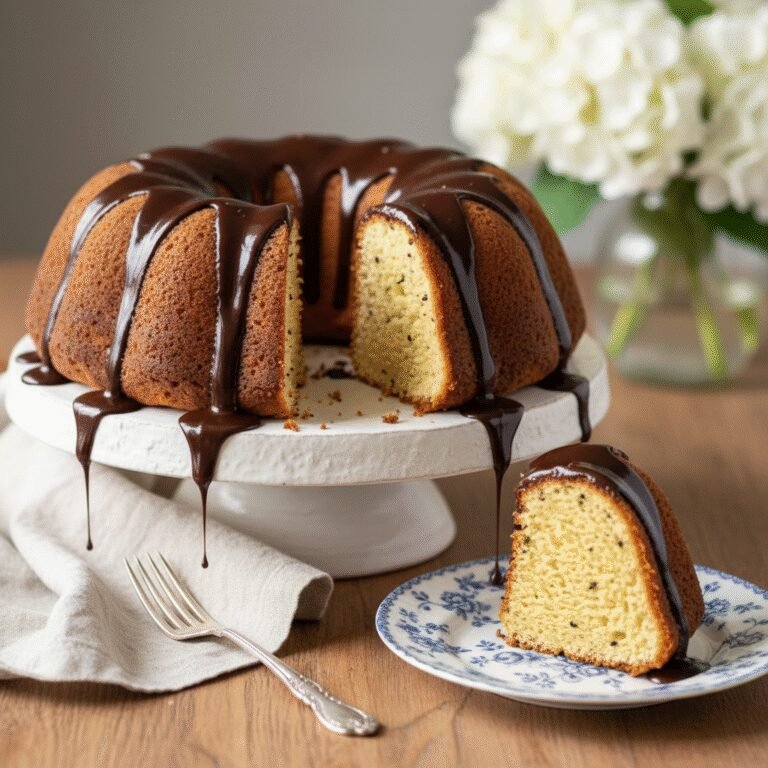
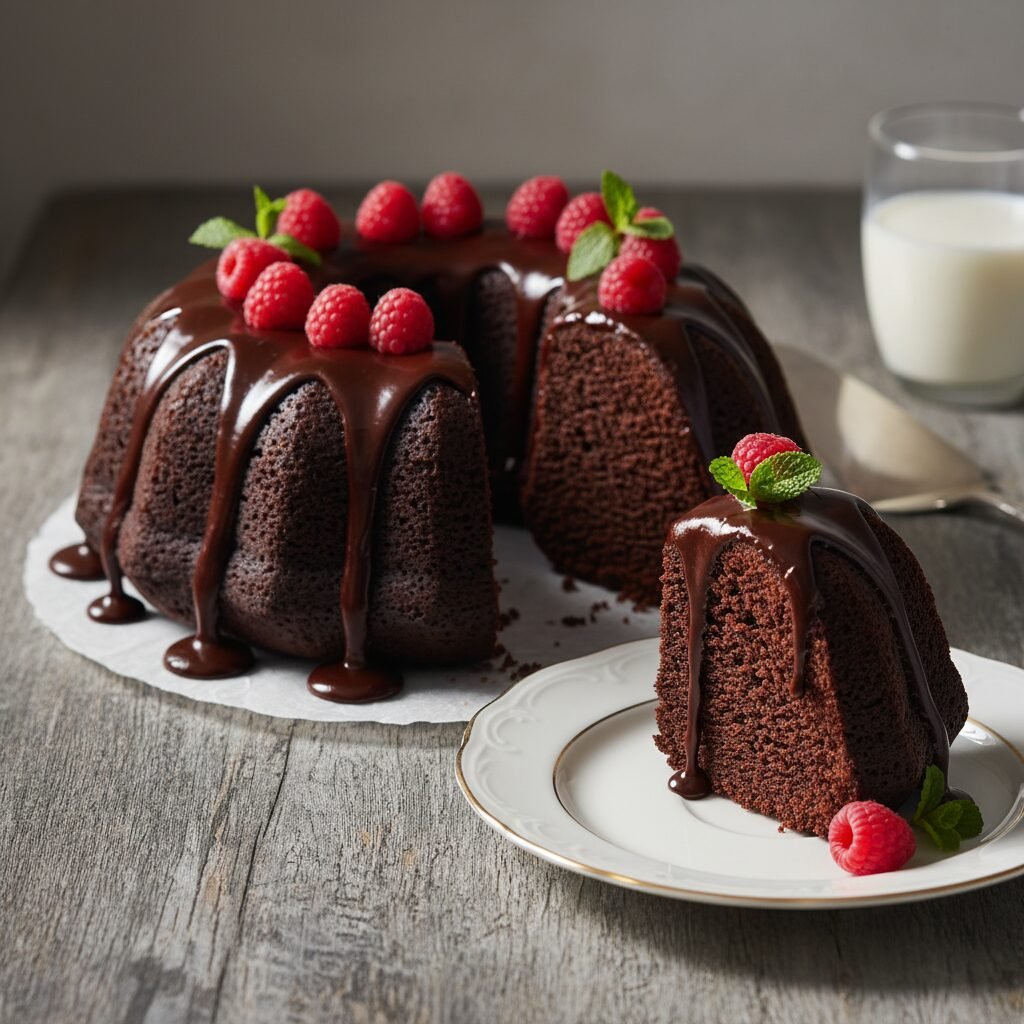
- Pour the ganache over the cooled Bundt cake, letting it drip down the sides. Allow the glaze to set before slicing.
Expert Cooking Tips
- ✓Grease the pan thoroughly: Bundt pans are notorious for sticking. Use a baking spray that contains flour, or brush with melted shortening and dust with cocoa powder.
- ✓Use room temperature ingredients: Ensure your eggs and milk are at room temperature to create a smooth, emulsified batter without curdling.
- ✓Don’t overmix: Once the flour is added, mix only until combined. Overmixing develops gluten, which can make the cake tough instead of tender.
- ✓Check for doneness early: Ovens vary. Start checking at the 50-minute mark to avoid drying out the cake.
- ✓Cooling time is key: Letting the cake cool in the pan for 10 minutes allows the structure to set. If you flip it too soon, it may break; too late, and it may stick.
Substitutions and Variations
This recipe is versatile enough to handle several substitutions without sacrificing quality. If you do not have buttermilk (or the recipe calls for milk and you want more tang), you can make a DIY version by adding a tablespoon of vinegar or lemon juice to a cup of regular milk and letting it sit for 5 minutes. For the oil, melted coconut oil works beautifully and adds a subtle tropical aroma, though vegetable or canola oil is best for a neutral flavor. If you are avoiding caffeine, decaf coffee works perfectly, or you can simply use boiling water—though the chocolate flavor may be slightly less intense. For a gluten-free version, substitute the all-purpose flour with a high-quality 1:1 gluten-free baking flour blend that includes xanthan gum. Regarding the cocoa powder, Dutch-process cocoa yields a darker, fudgier cake, but natural cocoa powder will also work if that is all you have on hand.
Common Mistakes to Avoid
The most heartbreaking mistake with Bundt cakes is the cake getting stuck in the pan. This usually happens because the pan wasn’t greased into every nook and cranny, or the cake was left to cool in the pan for too long, causing the sugars to solidify and act like glue. Another common error is overbaking. Because the batter is dark, it is hard to tell visually when it is done. Rely on the skewer test—moist crumbs are good; wet batter is not. Avoid opening the oven door frequently during the first 30 minutes of baking, as the fluctuation in temperature can cause the cake to sink in the middle. Finally, do not skip the boiling water/coffee step. It may seem odd to add water to a cake batter, but it is crucial for the moisture content and for blooming the cocoa.
Serving Suggestions
This cake is a masterpiece on its own, but proper styling elevates it to a special occasion dessert. Serve slices slightly warm or at room temperature. A dollop of freshly whipped cream lightly sweetened with vanilla bean paste cuts through the richness of the chocolate. Fresh berries, particularly raspberries or strawberries, add a pop of color and a tart contrast to the sweet ganache. For a holiday twist, sprinkle crushed peppermint candies or pomegranate arils over the wet ganache before it sets. If you want to go strictly classic, a scoop of vanilla bean ice cream melting into the cake crumb is unbeatable.
Storage and Reheating Tips
One of the best qualities of this oil-based cake is its shelf life. It can be stored at room temperature in an airtight cake dome for up to 4 days, and it often tastes even better on the second day as the flavors meld. If you live in a very hot or humid climate, you may want to store it in the refrigerator to keep the ganache from melting, but bring it to room temperature before serving for the best texture. This cake also freezes exceptionally well. You can freeze individual slices wrapped tightly in plastic wrap and foil for up to 3 months. Thaw on the counter for an hour before enjoying.
Nutrition Facts (Estimated)
| Serving Size | 1 slice |
| Calories | 480 |
| Fat | 26g |
| Saturated Fat | 8g |
| Unsaturated Fat | 16g |
| Trans Fat | 0g |
| Cholesterol | 65mg |
| Sodium | 310mg |
| Carbohydrates | 58g |
| Fiber | 3g |
| Sugar | 38g |
| Protein | 6g |
Frequently Asked Questions
Can I use butter instead of oil?
You can, but the texture will change. Butter makes a denser, slightly drier cake that hardens in the fridge. Oil ensures the moistest, softest crumb.
Why did my cake sink in the middle?
This can happen if the oven door was opened too early, the batter was overmixed (incorporating too much air), or if there was too much leavening (baking soda/powder).
Do I have to use coffee?
No, you can use boiling water instead. However, coffee enhances the chocolate flavor significantly without imparting a coffee taste.
How do I prevent the cake from sticking to the Bundt pan?
Use a baking spray that contains flour, or grease thoroughly with shortening and dust with cocoa powder. Ensure every crevice is coated.
Can I make this in a regular cake pan?
Yes, this batter can be divided into two 9-inch round cake pans. Reduce the baking time to approximately 30-35 minutes.
Why is my batter so runny?
This is intentional! The high liquid content allows the flour to hydrate fully and results in a very moist cake. Do not add more flour.
Can I use semi-sweet chocolate chips for the ganache?
Yes, high-quality chocolate chips work well. Avoid low-quality brands as they contain stabilizers that may prevent a smooth melt.
What is Dutch-process cocoa?
It is cocoa that has been treated with an alkalizing agent to neutralize acidity, resulting in a darker color and smoother, mellower flavor.
Conclusion
There you have it—the blueprint for the ultimate chocolate Bundt cake. This recipe is a testament to the fact that sometimes the simplest methods yield the most spectacular results. Whether you are baking for a crowd or just treating yourself to a weekend indulgence, this moist, fudgy, and deeply chocolatey cake is sure to become a permanent fixture in your recipe box. The combination of the tender crumb and the silky ganache is pure bliss. Don’t forget to snap a photo before it disappears—it never lasts long! Happy baking!