The Ultimate Moist Vanilla Bundt Cake With Powdered Sugar Dusting
Moist Vanilla Bundt Cake With Powdered Sugar Recipe
Experience the pure elegance of a classic vanilla Bundt cake, boasting an incredibly tender crumb and rich buttery flavor. This fail-proof recipe uses sour cream for extra moisture and is finished with a simple, snowy dusting of powdered sugar, making it the perfect centerpiece for any gathering.
20 minutes
55 minutes
1 hour 15 minutes
12-14 servings
Dessert
Baking
American
Vegetarian
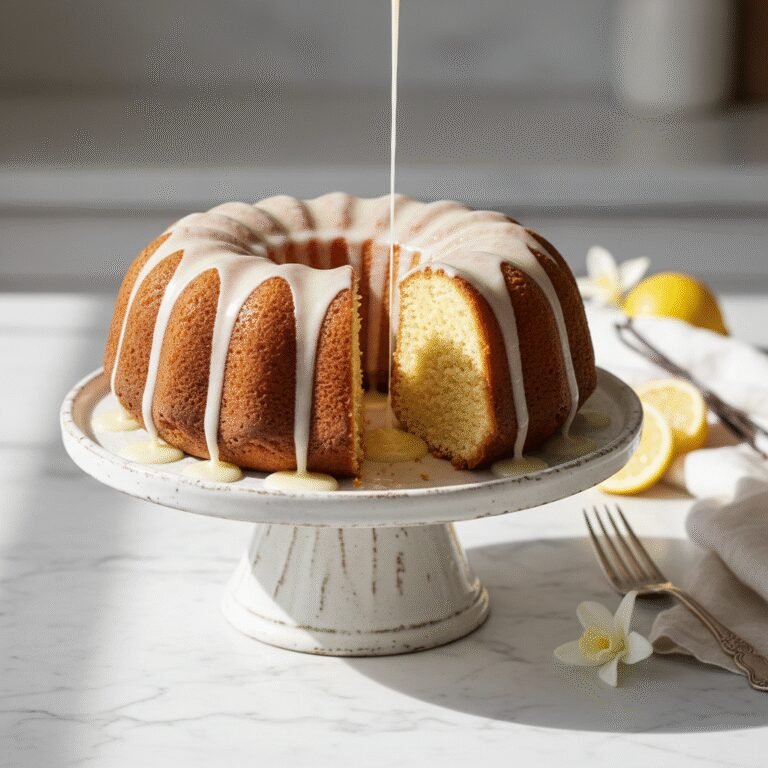
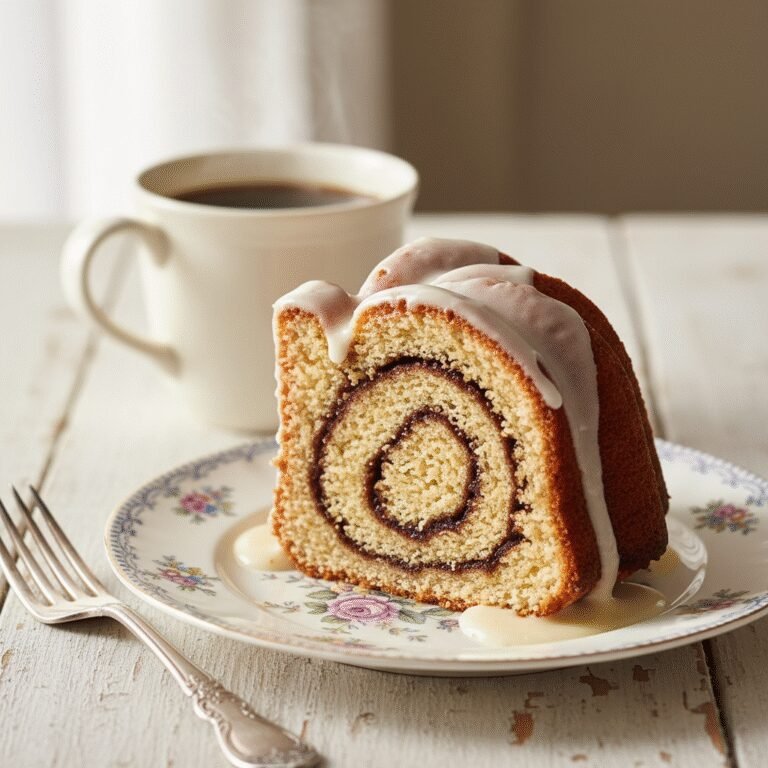
There is something undeniably sophisticated about a Bundt cake. Unlike its layered cousins, which rely heavily on frosting to hide imperfections or add flavor, a Bundt cake stands proudly on its own structure and crumb. This Moist Vanilla Bundt Cake is a love letter to simplicity, proving that you don’t need complex decorations to create a show-stopping dessert. The magic lies in the texture: a dense, velvety crumb that manages to be substantial yet melt-in-your-mouth tender. It is the kind of cake that beckons you from the counter, perfect for a mid-morning coffee break or an elegant dessert course at a dinner party.
What sets this specific recipe apart is the depth of the vanilla flavor paired with an unparalleled moisture content. We aren’t just using a splash of extract here; we are building a flavor profile that celebrates the floral and woody notes of high-quality vanilla. The inclusion of sour cream is the secret weapon, providing acidity that tenderizes the gluten strands while adding a richness that milk alone cannot achieve. As the cake bakes, the kitchen fills with the intoxicating aroma of butter and sugar, a nostalgic scent that promises comfort. When turned out of the pan, the fluted edges of the cake catch the light, and a gentle dusting of powdered sugar highlights every curve, resembling fresh snow on a mountain peak. This isn’t just a cake; it’s a centerpiece that invites conversation and creates memories.
History & Origins
The history of the Bundt cake is a fascinating journey that bridges European tradition with mid-century American innovation. The cake’s lineage can be traced back to the ‘Gugelhupf,’ a brioche-style yeast cake popular in Germany, Austria, and Alsace for centuries. These cakes were traditionally baked in ceramic or metal pans with a central tube, which allowed heat to penetrate the dense dough more evenly. However, the Bundt cake as we know it in America has a distinct origin story tied to Minneapolis in the 1950s.
H. David Dalquist, the founder of Nordic Ware, was approached by members of the local Hadassah Society (a Jewish women’s organization) who wanted a modern aluminum version of the traditional ceramic Gugelhupf pans used by their mothers and grandmothers. Dalquist created the cast aluminum pan and trademarked the name ‘Bundt,’ adding a ‘t’ to the German word ‘Bund’ (meaning an alliance or gathering) to aid in trademarking and perhaps to dissociate from the German-American Bund organizations of the pre-war era. Initially, the pans were a slow seller. It wasn’t until the 1966 Pillsbury Bake-Off, where Ella Helfrich used the pan to create her ‘Tunnel of Fudge’ cake, that the Bundt pan exploded in popularity. It became the most requested pan in the United States almost overnight. Today, over 70 million households possess a Bundt pan, and it remains a symbol of American hospitality and baking ingenuity.
Why This Recipe Works
This recipe succeeds where many dry, crumbly Bundt cakes fail because of a carefully calculated balance of fat, sugar, and liquid. First, the use of both butter and sour cream creates a ‘double-fat’ matrix. Butter provides the essential flavor and structure, incorporating air during the creaming process to assist in the rise. Sour cream, however, is the game-changer. It contributes fat for richness, but its acidity also reacts with the baking soda to create carbon dioxide, aiding lift, while simultaneously shortening gluten strands to ensure the cake remains tender rather than tough.
Furthermore, the method of adding ingredients is crucial. We utilize the ‘creaming method,’ beating the butter and sugar until pale and fluffy. This mechanical aeration is vital because Bundt pans are deep; the batter needs enough structural integrity to rise without collapsing. We also use a specific ratio of granulated sugar, which is hygroscopic (water-attracting). This ensures that the cake retains moisture long after it has cooled, preventing it from staling quickly. Finally, the temperature is set to 350°F (175°C), which is the sweet spot for Bundt pans. It allows the heat to travel up the central tube and cook the cake from the inside out and outside in simultaneously, resulting in an even bake without a burnt crust or raw center.
Why You’ll Love This Recipe
- ✓Incredibly moist texture thanks to full-fat sour cream.
- ✓Deep, aromatic vanilla flavor using vanilla bean paste.
- ✓Stays fresh for days due to the high moisture content.
- ✓Elegant presentation with minimal decorating effort required.
- ✓Versatile base recipe that can be adapted with citrus or spices.
- ✓Perfect golden crust that releases easily from the pan.
Equipment You’ll Need
- ✓10-12 cup Bundt pan
- ✓Stand mixer or electric hand mixer
- ✓Large mixing bowl
- ✓Medium mixing bowl
- ✓Whisk
- ✓Rubber spatula
- ✓Cooling rack
- ✓Sifter or fine-mesh sieve
Ingredients
- ✓3 cups all-purpose flour, spooned and leveled
- ✓1 teaspoon baking powder
- ✓1/2 teaspoon baking soda
- ✓1 teaspoon fine sea salt
- ✓1 cup (2 sticks) unsalted butter, softened to room temperature
- ✓2 cups granulated sugar
- ✓4 large eggs, room temperature
- ✓1 tablespoon vanilla bean paste (or high-quality pure vanilla extract)
- ✓1 cup full-fat sour cream, room temperature
- ✓1/2 cup powdered sugar (confectioners’ sugar), for dusting
Instructions
- Preheat your oven to 350°F (175°C). Thoroughly grease your Bundt pan with butter or non-stick baking spray (the kind with flour in it is best) and dust with flour, tapping out the excess. Ensure every nook and cranny is coated.
- In a medium bowl, whisk together the flour, baking powder, baking soda, and salt. Set this dry mixture aside.
- In the bowl of a stand mixer fitted with the paddle attachment (or a large bowl with a hand mixer), cream the softened butter and granulated sugar together on medium-high speed for 5-7 minutes. The mixture should look pale, fluffy, and aerated.
- Reduce the mixer speed to medium-low. Add the eggs one at a time, beating well after each addition. Scrape down the sides and bottom of the bowl with a rubber spatula to ensure everything is incorporated.
- Mix in the vanilla bean paste.
- Reduce the mixer speed to low. Add the flour mixture in three parts, alternating with the sour cream in two parts, starting and ending with the flour (Flour -> Sour Cream -> Flour -> Sour Cream -> Flour). Mix only until just combined to avoid overworking the gluten.
- Give the batter a final stir by hand with the spatula to ensure no flour pockets remain at the bottom.
- Pour the batter into the prepared Bundt pan. Smooth the top with the spatula and gently tap the pan on the counter 2-3 times to release any large air bubbles.
- Bake for 50-60 minutes, or until a cake tester or wooden skewer inserted into the deepest part of the cake comes out clean or with just a few moist crumbs attached.
- Remove from the oven and let the cake cool in the pan for exactly 10 minutes. This allows the structure to set.
- Place a wire cooling rack over the top of the pan, then carefully invert the cake onto the rack. Lift the pan off gently. Allow the cake to cool completely to room temperature.
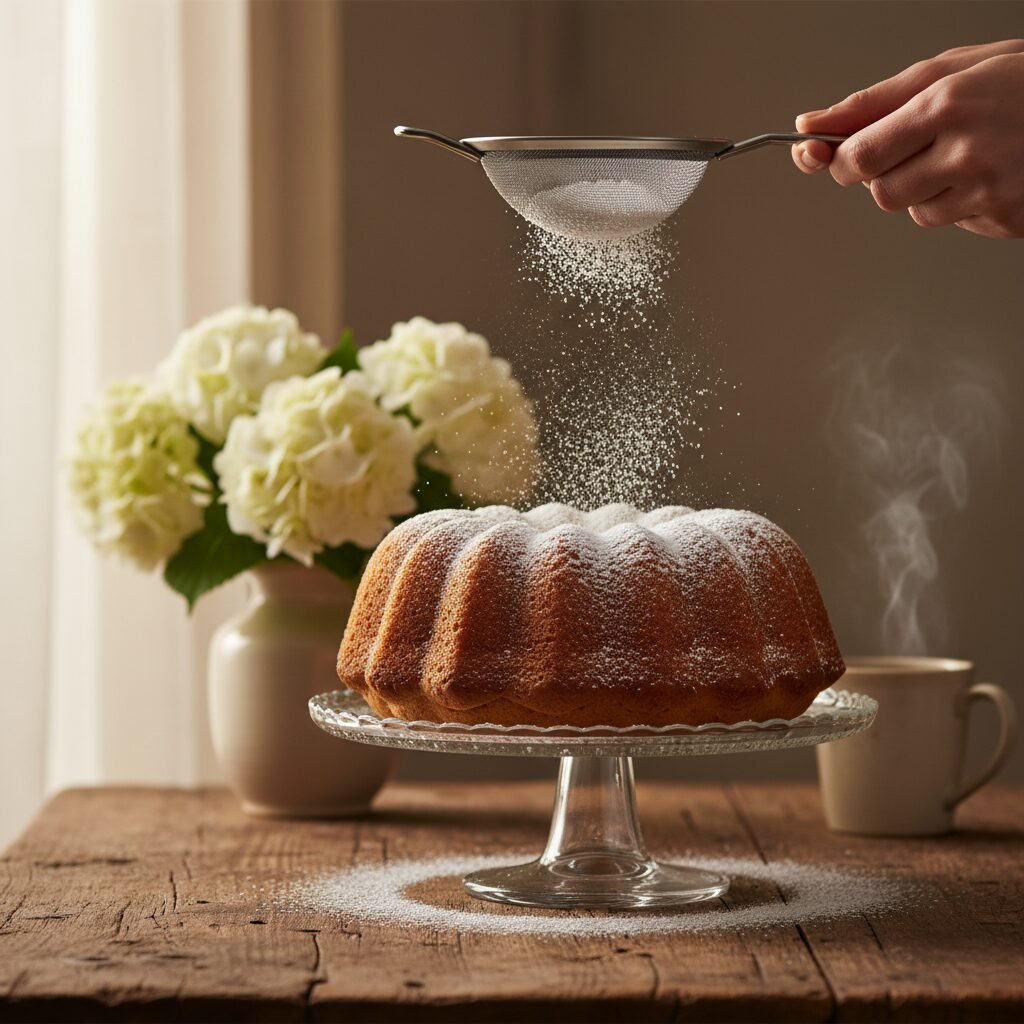
- Once fully cooled, sift powdered sugar generously over the top before slicing and serving.
Expert Cooking Tips
- ✓Room temperature ingredients are non-negotiable; they emulsify better, creating a smoother batter and fluffier cake.
- ✓Do not skimp on greasing the pan. Use a pastry brush to get the grease into every intricate design of the Bundt mold.
- ✓Measure flour correctly by spooning it into the measuring cup and leveling it off, rather than scooping directly from the bag, to prevent a dry cake.
- ✓Don’t open the oven door before the 45-minute mark, as the draft can cause the cake to collapse.
- ✓Use vanilla bean paste if available; the visible specks of vanilla add a gourmet touch and intense flavor.
- ✓Cooling in the pan for too long can cause the cake to stick as the sugars solidify; stick to the 10-minute rule.
- ✓If the top of the cake (which is the bottom in the pan) is browning too fast, tent it loosely with aluminum foil.
Substitutions and Variations
Baking is a science, but there is some room for flexibility in this recipe. If you don’t have sour cream, full-fat plain Greek yogurt is an excellent 1:1 substitute that provides similar acidity and moisture. In a pinch, you can also use buttermilk, though the batter will be slightly thinner. For the flour, cake flour can be used instead of all-purpose flour for an even lighter, more delicate crumb; use 3 cups plus 2 tablespoons of cake flour to replace the 3 cups of all-purpose. If you are avoiding refined white sugar, you can use cane sugar, but avoid brown sugar as it changes the moisture balance and texture too drastically for this specific vanilla profile. For a dairy-free version, use a high-quality plant-based butter stick and a dairy-free sour cream alternative or coconut yogurt, though the texture may be slightly denser.
Common Mistakes to Avoid
The most common tragedy with Bundt cakes is the cake sticking to the pan. This usually happens because the pan wasn’t greased thoroughly enough or the non-stick coating on an old pan has worn off. Always grease right before filling the pan, not way in advance, so the oil doesn’t pool at the bottom. Another mistake is over-mixing the batter after adding the flour. Once the flour hits the liquid, gluten development begins. Over-mixing leads to a tough, rubbery cake rather than a tender one. Finally, ensure your baking powder and baking soda are fresh; expired leavening agents will result in a dense, heavy brick of a cake that fails to rise.
Serving Suggestions
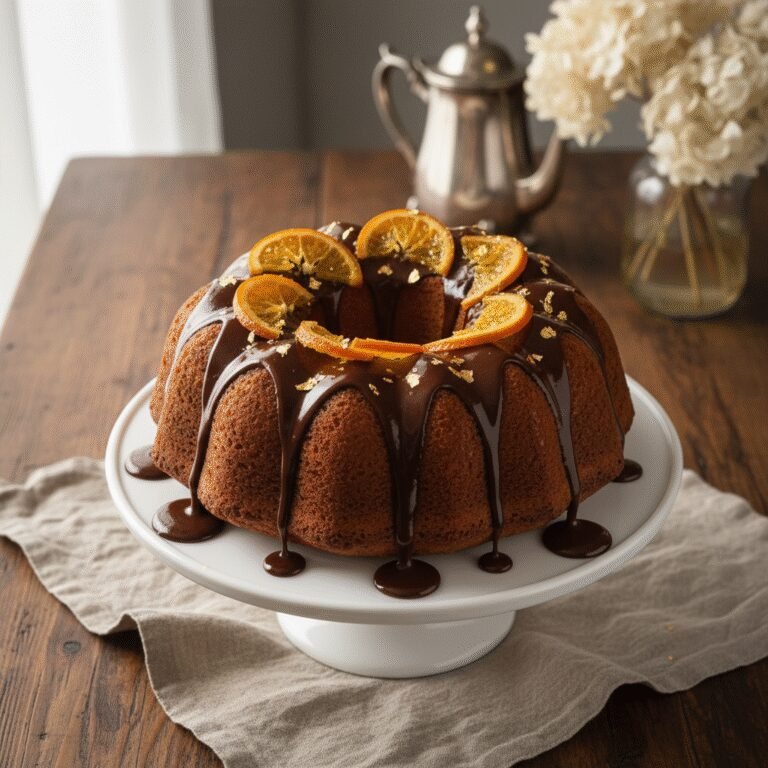
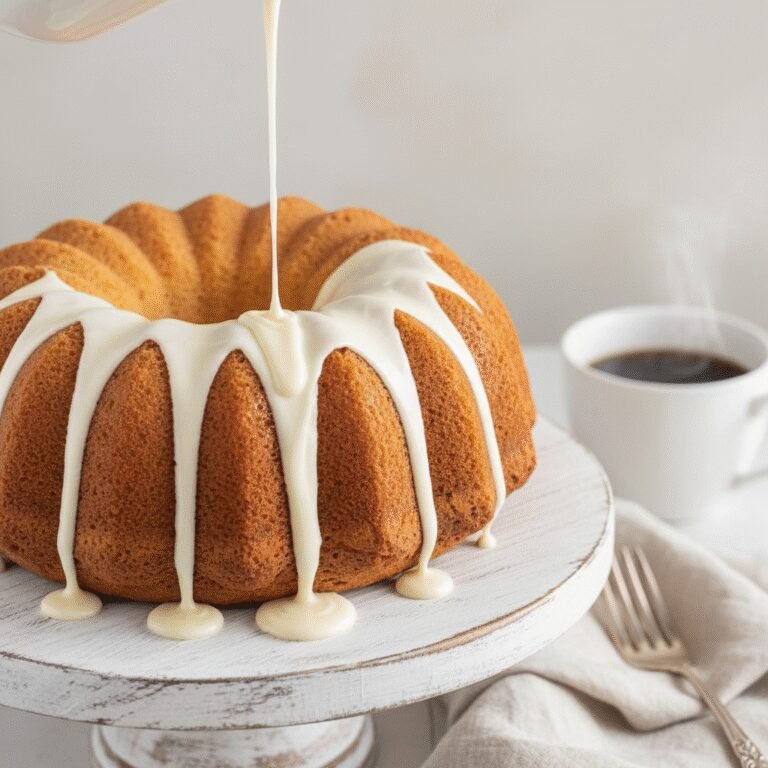
While this cake is stunning with just powdered sugar, it serves as a wonderful canvas for other toppings. Serve slices with a dollop of lightly sweetened whipped cream and fresh berries like strawberries, raspberries, or blueberries for a summer treat. For a warmer, cozier vibe, serve it with a warm caramel sauce or a fruit compote. It pairs exceptionally well with beverages; try it with a dark roast coffee to cut the sweetness, a classic Earl Grey tea, or even a glass of cold milk. If you want to dress it up for a birthday, a simple vanilla bean glaze (powdered sugar, milk, and vanilla) can replace the powdered sugar dusting.
Storage and Reheating Tips
This cake stores beautifully and often tastes even better the next day as the flavors meld. Keep the cake covered in a cake dome or an airtight container at room temperature for up to 3-4 days. Avoid refrigerating the cake, as the cold environment circulates dry air that will stale the cake faster than room temperature storage. If you need to keep it longer, this cake freezes exceptionally well. Wrap individual slices or the whole cake tightly in plastic wrap, followed by a layer of aluminum foil. It can be frozen for up to 3 months. Thaw at room temperature before serving. If you’ve already dusted it with powdered sugar, the sugar may dissolve upon thawing, so apply a fresh coat before serving.
Nutrition Facts (Estimated)
| Serving Size | 1 slice |
| Calories | 420 |
| Fat | 22g |
| Saturated Fat | 13g |
| Unsaturated Fat | 8g |
| Trans Fat | 0g |
| Cholesterol | 85mg |
| Sodium | 210mg |
| Carbohydrates | 52g |
| Fiber | 1g |
| Sugar | 28g |
| Protein | 5g |
Frequently Asked Questions
Why did my Bundt cake stick to the pan?
Sticking usually occurs due to insufficient greasing or removing the cake too early or too late. Ensure every crevice is coated with shortening/flour or baking spray. Let it cool for exactly 10 minutes—too hot and it’s fragile; too cold and the sugars act like glue.
Can I use salted butter instead of unsalted?
Yes, you can use salted butter, but you should reduce the added salt in the recipe to 1/2 teaspoon to maintain the correct flavor balance.
How do I know when the cake is done?
Insert a long wooden skewer into the thickest part of the cake. It should come out clean or with a few moist crumbs. If it has wet batter on it, it needs more time.
Can I make this recipe into cupcakes or a sheet cake?
Yes, but baking times will vary significantly. Cupcakes will take about 18-22 minutes, and a 9×13 sheet cake will take about 30-35 minutes. Check for doneness early.
Why did my cake sink in the middle?
Sinking is often caused by opening the oven door too early, underbaking the cake, or having too much leavening agent. Ensure your oven temperature is accurate using an oven thermometer.
What is the best way to sift powdered sugar?
Use a fine-mesh sieve or a small handheld sifter. hold it high above the cake and tap it gently to create a fine, snowy mist rather than clumps.
Can I add mix-ins like chocolate chips or nuts?
Absolutely. You can fold in up to 1 cup of chocolate chips, chopped nuts, or dried fruit. Toss them in a tablespoon of flour first to prevent them from sinking to the bottom.
My cake looks dry, what happened?
You likely over-measured the flour or over-baked the cake. Always spoon and level your flour, and start checking for doneness 5 minutes before the suggested time.
Conclusion
Mastering the classic Vanilla Bundt Cake is a milestone for any home baker. It is a recipe that rewards precision and patience with a dessert that is universally loved. Whether you are baking for a holiday, a neighborhood potluck, or simply to have a sweet treat on the counter for your family, this moist, tender cake will never disappoint. The beauty of the powdered sugar finish lies in its simplicity, allowing the buttery, vanilla-rich flavor to shine through without distraction. We hope this recipe becomes a cherished staple in your kitchen, bringing warmth and sweetness to your table for years to come. Happy baking!