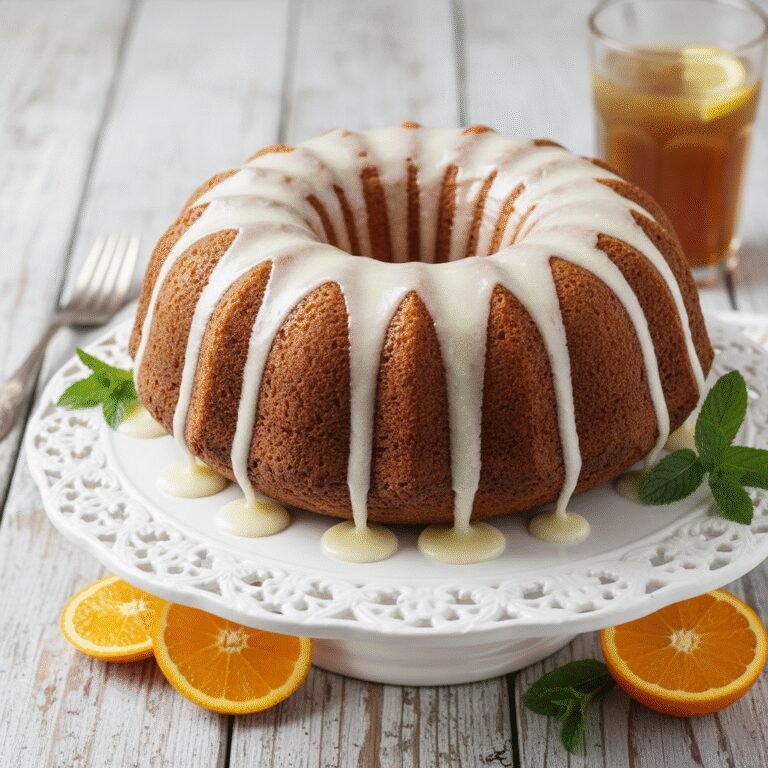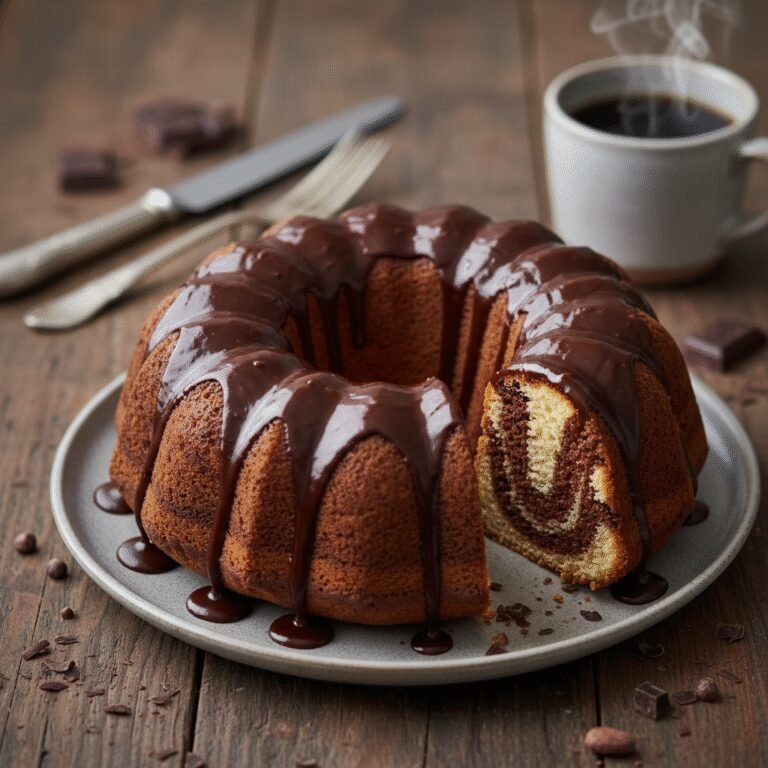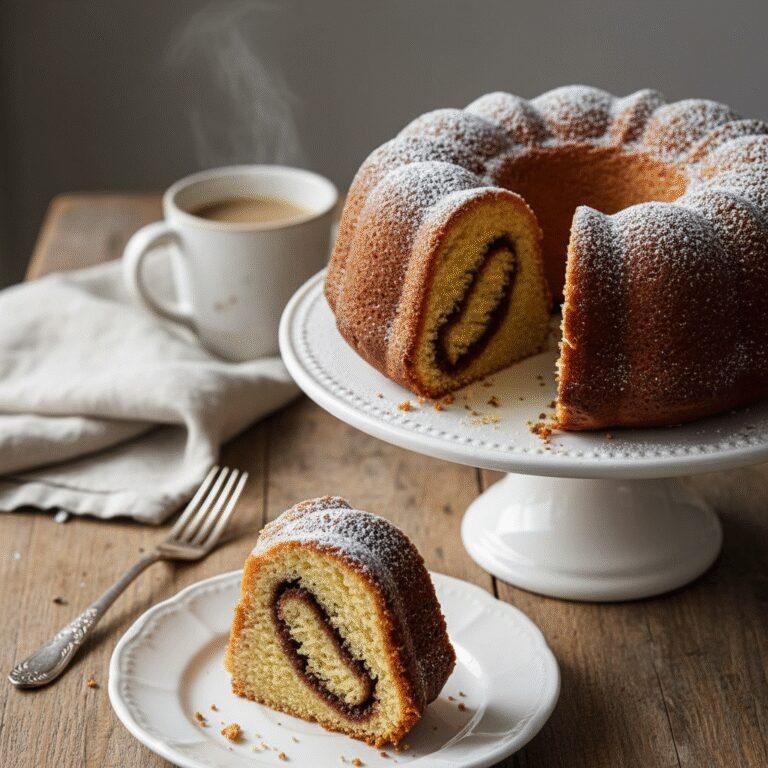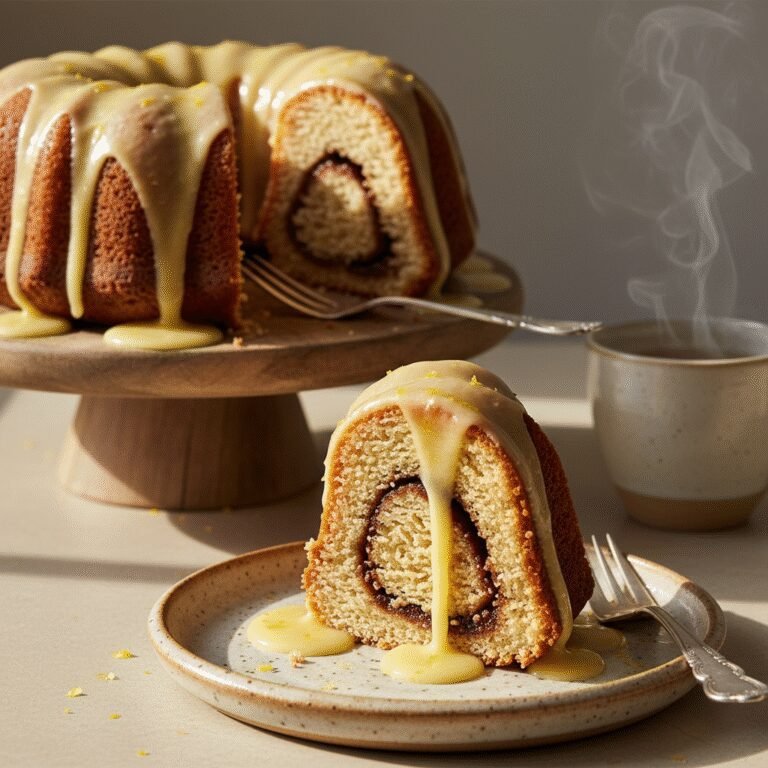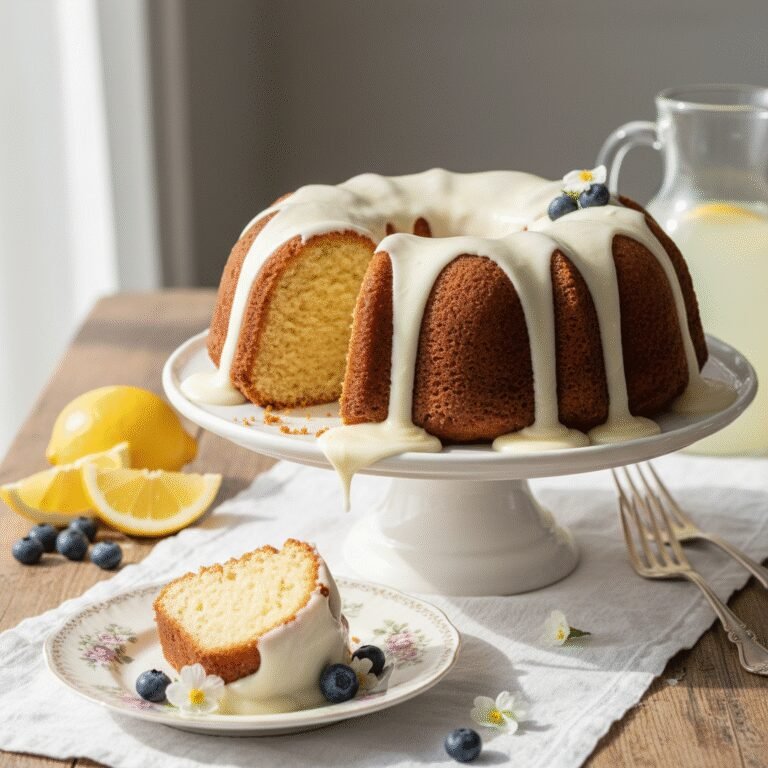

The Ultimate Moist Vanilla Bundt Cake With Cream Cheese Glaze
Moist Vanilla Bundt Cake With Cream Cheese Glaze Recipe
Experience the perfect marriage of a dense, velvety crumb and a tangy, sweet topping with this foolproof Vanilla Bundt Cake recipe. Infused with pure vanilla bean and kept incredibly moist with a secret blend of sour cream and oil, this cake is the centerpiece your dessert table deserves.
20 minutes
55 minutes
1 hour 15 minutes
12-14 servings
Dessert
Baking
American
Vegetarian
There is something undeniably regal yet wonderfully approachable about a Bundt cake. Unlike layered cakes that require leveling, precise frosting, and architectural stability, the Bundt relies on the beauty of its shape and the integrity of its crumb. This Moist Vanilla Bundt Cake with Cream Cheese Glaze is the epitome of comfort baking elevated to an art form. It is not just a cake; it is a sensory experience. From the moment the scent of warm butter and floral vanilla wafts through your kitchen, to the first slice revealing a tight, golden crumb that is tender without being airy, you know you are in for a treat.
Many vanilla cakes suffer from being dry or flavorless, relying too heavily on sugar to mask a lack of depth. This recipe changes the narrative. By utilizing a ‘dual-fat’ method—combining the rich flavor of butter with the moisture-retaining properties of vegetable oil—we achieve a texture that stays soft for days. The addition of full-fat sour cream introduces a subtle tang and acidity that tenderizes the gluten strands, resulting in a melt-in-your-mouth consistency that feels luxurious on the palate.
But the cake is only half the story. The thick, luscious cream cheese glaze draped over the ridges of the Bundt adds a necessary contrast. The slight saltiness and tang of the cream cheese cut through the sweetness of the vanilla, creating a balanced bite that keeps you coming back for more. Whether you are serving this for a festive holiday gathering, a casual Sunday brunch, or simply because you crave a slice of nostalgia with your afternoon coffee, this recipe promises to be a showstopper that delivers on both visual appeal and incredible flavor.
History & Origins
The history of the Bundt cake is a fascinating journey that bridges Old World European traditions with mid-century American innovation. The distinct ring shape of the cake traces its lineage back hundreds of years to the German, Austrian, and Polish ‘Gugelhupf’ or ‘Kugelhopf,’ a yeast-based brioche-style cake often studded with fruit and nuts. These cakes were baked in heavy ceramic or cast-iron molds with a central chimney, designed to help the dense dough bake evenly by allowing heat to penetrate the center.
However, the modern American Bundt cake has a specific birthday: 1950. It was in Minneapolis, Minnesota, that H. David Dalquist, the founder of Nordic Ware, was approached by a group of women from the local Hadassah society. They wanted to recreate the kugelhopf cakes of their mothers but lacked the proper heavy-walled pans. Dalquist cast a version in aluminum and trademarked the name ‘Bundt’ (adding a ‘t’ to the German word ‘Bund,’ meaning an alliance or bond, possibly to aid in trademarking or to distance the name from the German-American Bund).
For over a decade, the pan sold poorly and was nearly discontinued. The turning point came in 1966 during the prestigious Pillsbury Bake-Off. A contestant named Ella Helfrich used the Nordic Ware pan to bake her ‘Tunnel of Fudge’ cake. When she won second place, the publicity sent American bakers into a frenzy. Nordic Ware went from producing a few pans a day to running their factory around the clock to meet demand. Since then, the Bundt pan has become a staple in American kitchens, symbolizing a style of baking that is communal, decorative, and deeply rooted in the culture of sharing food.
Why This Recipe Works
This recipe succeeds where many others fail because it is engineered to combat the two biggest enemies of Bundt cakes: dryness and sticking. First, let’s talk about moisture. Standard butter cakes can dry out because butter is 80% fat and 20% water; when the water evaporates, the cake toughens. By substituting a portion of the butter with neutral oil (which is 100% fat), we coat the flour proteins more thoroughly, inhibiting gluten formation and ensuring the cake remains moist even after it cools. We further enhance this with sour cream. The acidity in sour cream reacts with the baking soda to create lift, while its high fat content adds a creamy richness that milk alone cannot provide.
Secondly, the flavor profile is built on ‘blooming’ the vanilla. By mixing the vanilla extract (or paste) into the creamed butter and sugar mixture rather than adding it at the end, the fat encapsulates the flavor compounds, preventing them from baking off in the high heat.
Finally, the structural integrity is managed by using a combination of baking powder and baking soda. The heavy batter of a Bundt cake needs significant leavening power to rise in the deep pan. This specific ratio ensures a rise that fills the intricate designs of the mold without overflowing or collapsing, resulting in a cake that is dense enough to slice cleanly but light enough to melt on the tongue.
Why You’ll Love This Recipe
- ✓Stays moist for up to 5 days due to the oil-butter combination.
- ✓Deep, authentic vanilla flavor using vanilla bean paste or high-quality extract.
- ✓The glaze is thick and opaque, creating a beautiful bakery-style presentation.
- ✓Versatile enough for breakfast, brunch, or dessert.
- ✓The sturdy crumb structure makes it perfect for dipping in coffee or tea.
Equipment You’ll Need
- ✓10-12 cup Bundt pan
- ✓Stand mixer or electric hand mixer
- ✓Large mixing bowl
- ✓Medium mixing bowl
- ✓Whisk
- ✓Rubber spatula
- ✓Wire cooling rack
- ✓Measuring cups and spoons
Ingredients
- ✓3 cups (360g) Cake flour, sifted
- ✓1 teaspoon Salt
- ✓1 teaspoon Baking powder
- ✓1/2 teaspoon Baking soda
- ✓1 cup (226g) Unsalted butter, softened to room temperature
- ✓2 cups (400g) Granulated sugar
- ✓1/4 cup (60ml) Vegetable or Canola oil
- ✓4 large Eggs, room temperature
- ✓1 tablespoon Pure vanilla extract or vanilla bean paste
- ✓1 cup (240g) Full-fat sour cream, room temperature
- ✓4 ounces (113g) Cream cheese, softened (for glaze)
- ✓2 tablespoons Unsalted butter, softened (for glaze)
- ✓1 1/2 cups (180g) Powdered sugar, sifted (for glaze)
- ✓1 teaspoon Vanilla extract (for glaze)
- ✓2-3 tablespoons Milk or heavy cream (for glaze)
Instructions
- 1. Preheat your oven to 350°F (175°C). Thoroughly grease your Bundt pan with butter or non-stick baking spray (the kind with flour in it works best). Dust with a little extra flour if using butter, tapping out the excess. This is the most critical step to prevent sticking.
- 2. In a medium bowl, whisk together the sifted cake flour, salt, baking powder, and baking soda. Set this dry mixture aside.
- 3. In the bowl of a stand mixer fitted with the paddle attachment (or a large bowl with a hand mixer), beat the softened butter and granulated sugar on medium-high speed for 4-5 minutes. The mixture should look pale, fluffy, and aerated.
- 4. Pour in the vegetable oil and vanilla extract. Beat for another minute until fully incorporated.
- 5. Add the eggs one at a time, beating well after each addition. Scrape down the sides and bottom of the bowl with a rubber spatula to ensure everything is mixing evenly.
- 6. Reduce the mixer speed to low. Add one-third of the flour mixture, followed by half of the sour cream. Mix just until combined.
- 7. Repeat with another third of the flour, the remaining sour cream, and finally the last of the flour. Stop mixing as soon as the flour streaks disappear. Do not overmix.
- 8. Give the batter one final stir by hand with a spatula to catch any unmixed bits at the bottom. Pour the batter into the prepared Bundt pan and smooth the top.
- 9. Tap the pan firmly on the counter 2-3 times to release any large air bubbles trapped in the batter.
- 10. Bake for 55-65 minutes. The cake is done when a wooden skewer inserted into the thickest part comes out clean or with just a few moist crumbs attached. The top should be golden brown and spring back when lightly touched.
- 11. Remove from the oven and let the cake cool inside the pan for exactly 10-15 minutes. If you flip it too soon, it may break; too late, and it may stick.
- 12. Invert the cake onto a wire cooling rack and lift the pan off. Allow the cake to cool completely before glazing.
- 13. To make the glaze: Beat the softened cream cheese and butter together until smooth. Gradually add the powdered sugar and vanilla. Add milk one tablespoon at a time until you reach a thick but pourable consistency.
- 14. Spoon or pour the glaze over the cooled cake, letting it drip naturally down the sides. Slice and serve.
Expert Cooking Tips
- ✓Room temperature ingredients are non-negotiable; cold eggs or sour cream will cause the batter to curdle.
- ✓If you don’t have cake flour, make your own by removing 2 tablespoons of all-purpose flour from 1 cup and replacing it with 2 tablespoons of cornstarch.
- ✓Use a pastry brush to grease every nook and cranny of the Bundt pan, especially if it has an intricate design.
- ✓Tap the pan on the counter before baking to prevent air tunnels in your cake.
- ✓Check the cake at the 50-minute mark; if the top is browning too fast, tent it loosely with aluminum foil.
- ✓Let the glaze set for about 15 minutes before slicing for clean cuts.
- ✓Weigh your flour if possible; scooping directly with a cup often leads to packing too much flour, resulting in a dry cake.
Substitutions and Variations
Baking is a science, but there is some room for flexibility in this recipe. If you do not have cake flour, you can use all-purpose flour, though the crumb will be slightly less tender; try to sift it twice to aerate it. For the fat, you can substitute the vegetable oil with melted coconut oil, though this will impart a slight coconut flavor. Greek yogurt (full fat) is an excellent 1:1 substitute for sour cream if you want a slightly tangier profile or don’t have sour cream on hand; buttermilk can also work, but because it is thinner, you may need to increase the flour by 1-2 tablespoons. If you want to make this a lemon vanilla cake, simply rub 1 tablespoon of lemon zest into the sugar before creaming it with the butter. For the glaze, if you dislike cream cheese, a simple vanilla glaze made of powdered sugar, milk, and vanilla is a classic alternative.
Common Mistakes to Avoid
The most heartbreaking mistake with Bundt cakes is the cake sticking to the pan. This usually happens because the pan wasn’t greased thoroughly enough or the cake was left to cool in the pan for too long (sugar condenses and acts like glue as it cools). Another common error is overmixing the batter after adding the flour. This develops gluten, turning a tender cake into a rubbery, tough one. Always mix on low speed and stop as soon as the ingredients are combined. Finally, opening the oven door repeatedly to check on the cake causes temperature fluctuations that can cause the cake to collapse in the center. Trust your timer and only check towards the end.
Serving Suggestions
This cake is elegant enough to stand alone, but it pairs beautifully with fresh fruit. Serve slices with a side of macerated strawberries, fresh raspberries, or a compote of mixed berries to cut through the richness. A dollop of freshly whipped cream or a scoop of vanilla bean ice cream makes it an indulgent dessert. For a cozy afternoon treat, it pairs exceptionally well with a dark roast coffee or an Earl Grey tea, as the citrus notes in the tea complement the vanilla and cream cheese.
Storage and Reheating Tips
Because of the cream cheese in the glaze, this cake is best stored in the refrigerator if you are keeping it for more than 24 hours. It can stay at room temperature in an airtight container for the first day. In the fridge, it will last up to 5 days; just be sure to let slices come to room temperature before eating for the best texture. To freeze, wrap the unglazed cake tightly in plastic wrap and then foil; it will keep for up to 3 months. Thaw overnight in the fridge. You can also freeze individual slices wrapped in parchment and plastic for a quick treat.
Nutrition Facts (Estimated)
| Serving Size | 1 slice |
| Calories | 480 |
| Fat | 24g |
| Saturated Fat | 14g |
| Unsaturated Fat | 9g |
| Trans Fat | 0g |
| Cholesterol | 85mg |
| Sodium | 210mg |
| Carbohydrates | 62g |
| Fiber | 1g |
| Sugar | 38g |
| Protein | 5g |
Frequently Asked Questions
Why did my Bundt cake sink in the middle?
This usually happens if the cake is underbaked or if the oven door was opened too early, causing a drop in temperature. It can also result from over-leavening (too much baking powder/soda).
Can I make this cake ahead of time?
Yes! Bundt cakes are actually sturdier than layer cakes and often taste better the next day as the flavors meld. Bake it the day before and add the glaze on the day of serving.
My glaze is too runny, how do I fix it?
Simply add more sifted powdered sugar, a tablespoon at a time, until it thickens. If it’s too thick, add a teaspoon of milk.
Do I have to use a Bundt pan?
Technically no, but the baking time will change drastically. You could bake this in two 9-inch round pans (check at 30-35 mins) or a 9×13 pan, but the texture and crust ratio will be different.
Why is my cake dry?
Dryness usually comes from over-baking or measuring flour incorrectly (packing it into the cup). Always spoon and level your flour or use a scale.
Can I use salted butter?
Yes, but reduce the added salt in the recipe to 1/2 teaspoon to maintain the flavor balance.
How do I get the cake out if it sticks?
If it’s stuck, leave it inverted on the rack and place a warm, damp kitchen towel over the pan for 10 minutes. The steam often helps release the cake.
Can I add nuts or chocolate chips?
Absolutely. Toss 1 cup of nuts or chips in a tablespoon of flour before folding them into the batter to prevent them from sinking to the bottom.
Is vanilla bean paste better than extract?
Paste provides a stronger flavor and beautiful black specks in the cake, but high-quality extract works perfectly fine. Avoid imitation vanilla for this recipe as vanilla is the primary flavor.
Can I use low-fat sour cream?
It is not recommended. The fat in the sour cream is essential for the moist texture. Low-fat versions have more water and fillers that can affect the crumb.
Conclusion
Mastering the perfect Vanilla Bundt Cake is a feather in the cap of any home baker. It is a recipe that proves you don’t need complicated techniques or exotic ingredients to create something truly spectacular. The combination of the tender, aromatic sponge with the rich, tangy cream cheese glaze creates a harmony of flavors that feels like a warm hug. Whether you are baking for a celebration or just to brighten up a Tuesday, this cake delivers joy in every slice. So, dust off that Bundt pan, buy the good vanilla, and get ready to bake your new favorite dessert.