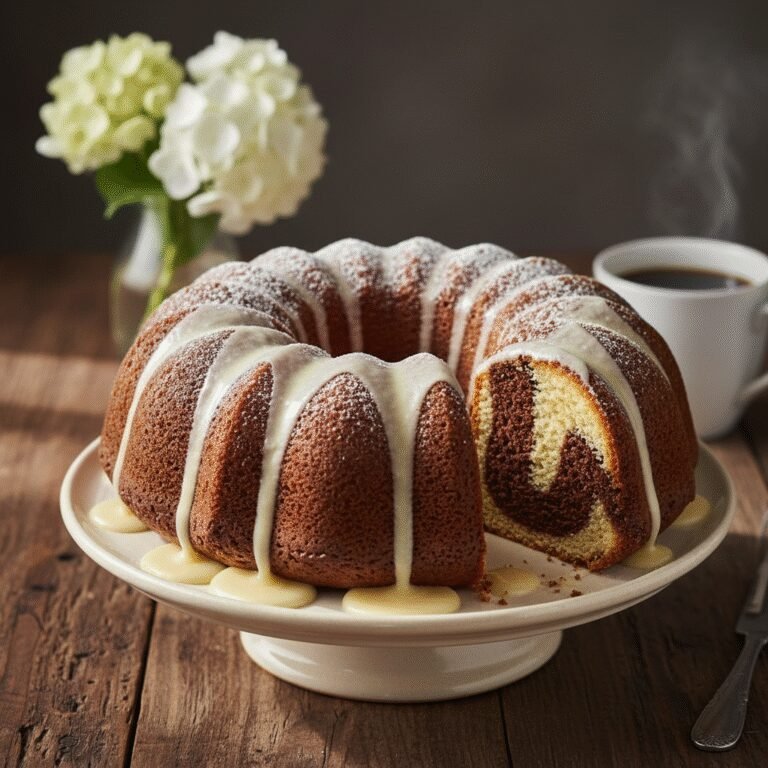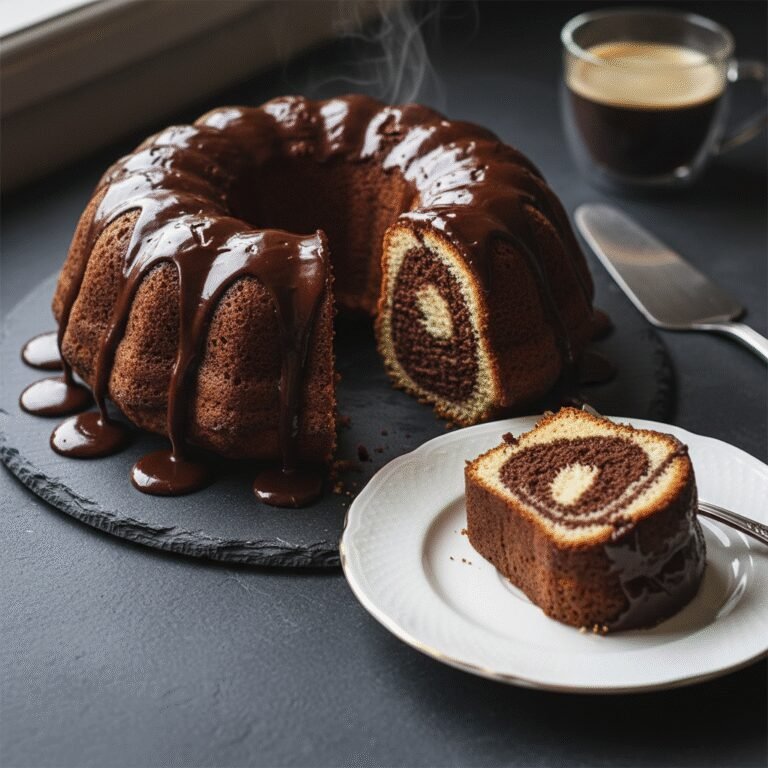
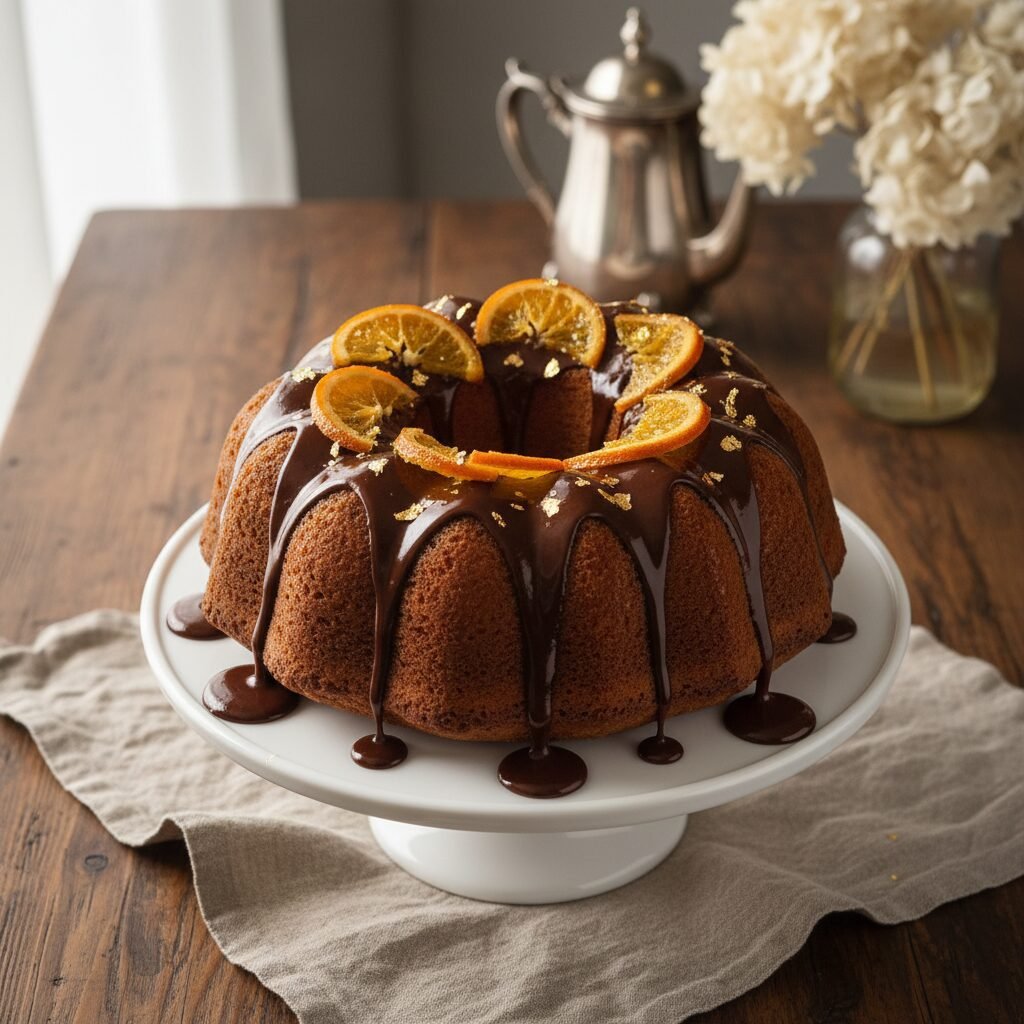
The Ultimate Moist Orange Bundt Cake With Rich Chocolate Glaze
Moist Orange Bundt Cake With Chocolate Glaze Recipe
Experience the perfect marriage of zesty citrus and decadent cocoa with this foolproof Orange Bundt Cake recipe. Drenched in a glossy chocolate glaze, this moist, dense cake is the ultimate showstopper for holiday brunches or cozy afternoon teas.
25 minutes
55 minutes
1 hour 20 minutes
12 servings
Dessert
Baking
American
Vegetarian
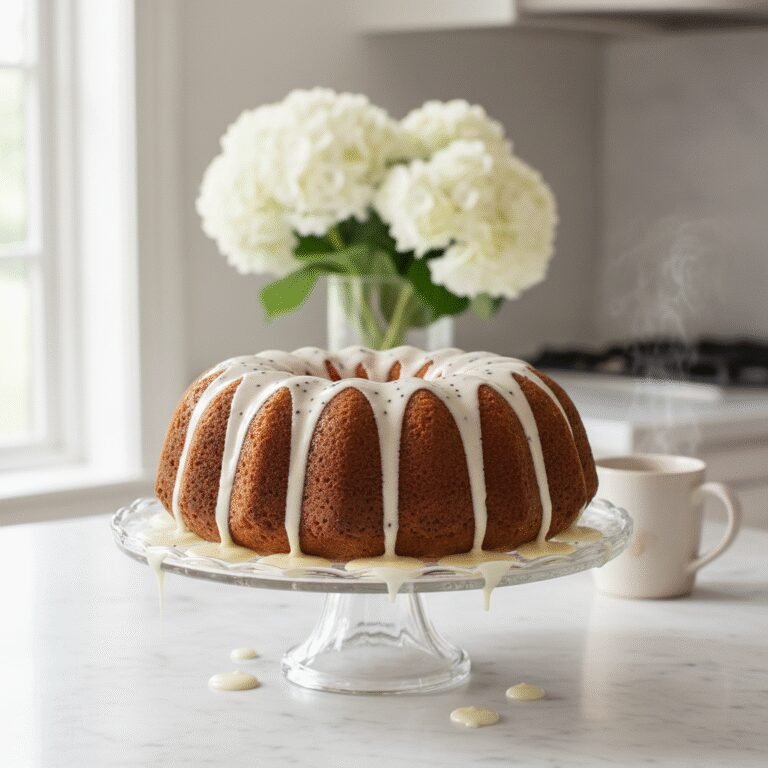
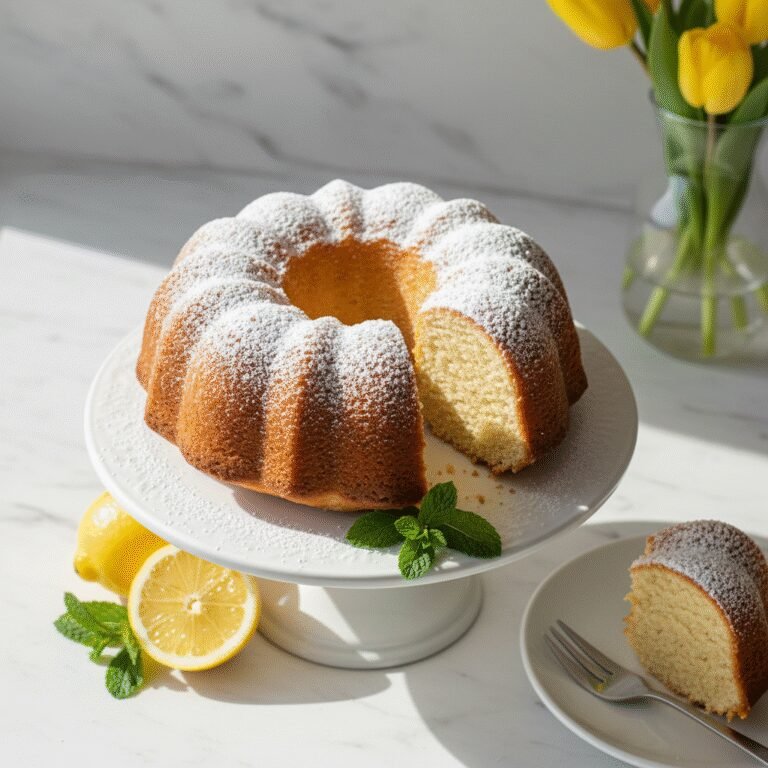
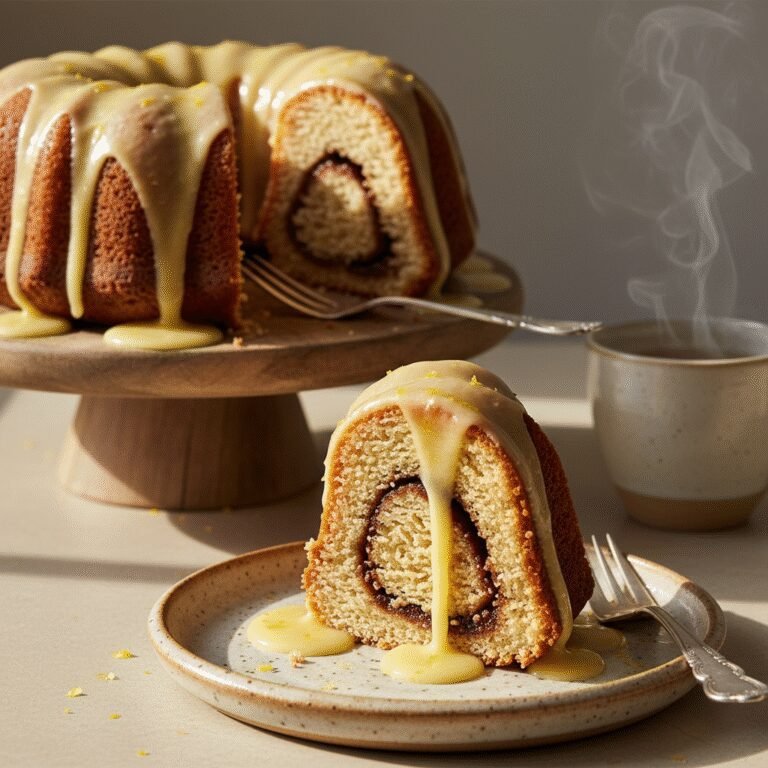
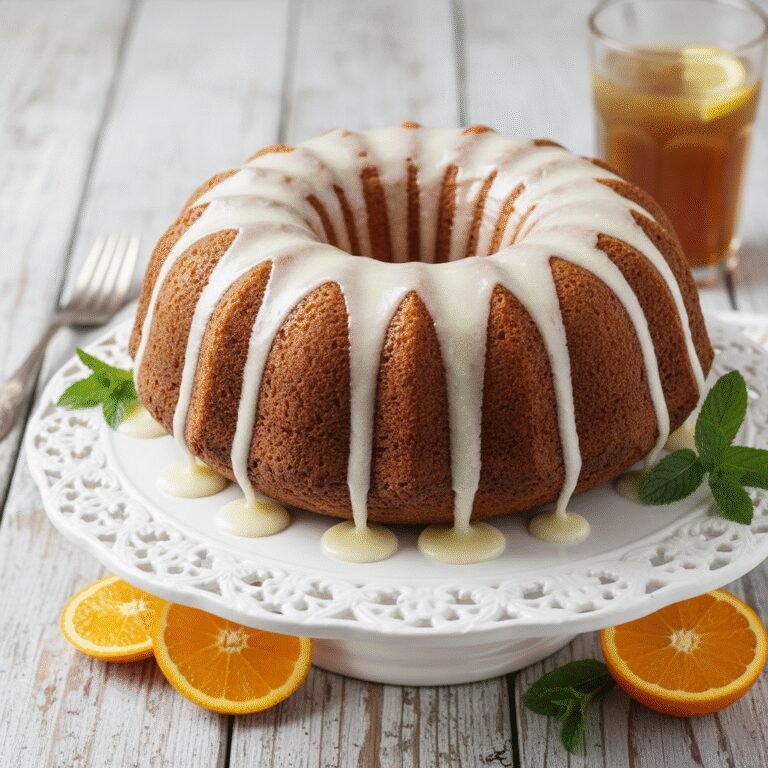
There are few flavor combinations in the culinary world as sophisticated and universally adored as chocolate and orange. This recipe for Moist Orange Bundt Cake with Chocolate Glaze is a love letter to that classic pairing, elevating it from a simple confection to a centerpiece-worthy dessert. Imagine slicing into a cake that boasts a tight, tender crumb—characteristic of the best Bundt cakes—infused with the aromatic oils of fresh orange zest and the tang of freshly squeezed juice. The cake itself is not overly sweet; it relies on the brightness of the citrus to provide a refreshing counterpoint to the buttery richness of the batter. But the true magic happens when you pour over the glaze. We aren’t talking about a thin, watery icing here. This is a robust, ganache-style chocolate glaze that clings lovingly to every ridge and curve of the Bundt pan’s design, setting into a finish that is both glossy and fudgy.
For many home bakers, the Bundt cake is a source of anxiety—will it stick? Will it be dry? This recipe puts those fears to rest. By incorporating sour cream and using a specific ratio of fat to flour, we ensure a texture that stays moist for days. The aroma that fills your kitchen while this bakes is nothing short of intoxicating, smelling of warm vanilla, caramelized sugar, and bright orange oils. Whether you are looking for a dessert to bring to a potluck, a treat for your family’s Sunday dinner, or simply a companion for your morning coffee, this cake delivers on all fronts. It strikes that elusive balance between elegance and comfort, making it just as suitable for a fancy dinner party as it is for a casual snack right off the counter.
History & Origins
The history of the Bundt cake is a fascinating journey that bridges Old World European traditions with mid-century American innovation. The cake’s lineage can be traced back to the ‘Gugelhupf’ or ‘Kugelhopf,’ a yeast-based brioche-style cake popular in Germany, Austria, and Alsace for centuries. These cakes were traditionally baked in fluted, ring-shaped ceramic molds. However, the Bundt cake as we know it in America owes its existence to H. David Dalquist, the founder of Nordic Ware. In 1950, a group of Jewish women from the Hadassah Society in Minneapolis approached Dalquist, asking him to create a modern aluminum version of the heavy ceramic Kugelhopf molds they used for their traditional cakes. Dalquist obliged, trademarking the name ‘Bundt’ (adding a ‘t’ to the German word ‘Bund,’ meaning an alliance or gathering).
For over a decade, the pan sold poorly, but everything changed in 1966 when the ‘Tunnel of Fudge’ cake won second place at the Pillsbury Bake-Off. Suddenly, the Bundt pan became a staple in every American kitchen. The combination of chocolate and orange, while not specific to the Bundt’s origin, has deep roots in Mediterranean cuisine where oranges are abundant. It was later popularized globally by confectioners in the 20th century, most notably with the invention of the chocolate orange ball. This recipe pays homage to that history, utilizing the iconic American pan shape to deliver a flavor profile that has delighted palates across Europe for generations.
Why This Recipe Works
This recipe succeeds where many others fail due to three critical factors: the infusion of citrus oils, the moisture retention agents, and the glaze consistency. First, simply adding orange juice to a batter often results in a faint flavor that disappears during baking. To combat this, we use a technique called ‘sugar rubbing,’ where the fresh orange zest is massaged into the granulated sugar before any wet ingredients are added. The friction releases the essential oils from the zest, infusing the sugar itself with a potent orange aroma that permeates the entire cake.
Secondly, the texture of a Bundt cake needs to be dense enough to hold its shape but moist enough to be palatable. We achieve this by using full-fat sour cream. The acidity in the sour cream not only tenderizes the gluten strands in the flour, resulting in a softer crumb, but the high fat content also ensures the cake remains moist long after it has cooled. Finally, the chocolate glaze is designed to be poured warm. By using a mixture of chocolate and heavy cream (ganache) rather than a powdered sugar icing, the glaze remains soft and fudge-like even when set, preventing that brittle, cracking texture that can ruin the eating experience. The bitterness of the dark chocolate glaze perfectly cuts through the sweet, floral notes of the orange cake.
Why You’ll Love This Recipe
- ✓Infused with real orange zest for maximum natural flavor.
- ✓Uses sour cream to guarantee a moist, tender crumb every time.
- ✓The ganache-style glaze is rich, glossy, and easy to make.
- ✓Beautiful presentation that requires minimal decorating skills.
- ✓Stays fresh and moist for several days at room temperature.
- ✓Perfect balance of sweet, tart, and rich chocolate flavors.
Equipment You’ll Need
- ✓10-12 cup Bundt pan
- ✓Stand mixer or electric hand mixer
- ✓Large mixing bowl
- ✓Medium mixing bowl
- ✓Whisk
- ✓Rubber spatula
- ✓Zester or microplane
- ✓Citrus juicer
- ✓Wire cooling rack
- ✓Small saucepan (for glaze)
Ingredients
- ✓3 cups All-Purpose Flour
- ✓2 1/2 teaspoons Baking Powder
- ✓1/2 teaspoon Baking Soda
- ✓1 teaspoon Salt
- ✓2 cups Granulated Sugar
- ✓3 tablespoons Fresh Orange Zest (approx. 2-3 oranges)
- ✓1 cup Unsalted Butter, room temperature
- ✓4 large Eggs, room temperature
- ✓1 teaspoon Pure Vanilla Extract
- ✓1 cup Full-Fat Sour Cream, room temperature
- ✓1/3 cup Freshly Squeezed Orange Juice
- ✓4 oz Semi-Sweet Chocolate, chopped (for glaze)
- ✓1/2 cup Heavy Cream (for glaze)
- ✓1 tablespoon Unsalted Butter (for glaze)
- ✓Candied Orange Slices (optional garnish)
Instructions
- Preheat your oven to 350°F (175°C). Thoroughly grease your Bundt pan with butter or non-stick baking spray, ensuring you get into every crevice. Dust with flour and tap out the excess.
- In a medium bowl, whisk together the flour, baking powder, baking soda, and salt. Set aside.
- In the bowl of a stand mixer, combine the granulated sugar and fresh orange zest. Rub the zest into the sugar with your fingertips until the sugar is fragrant and looks like wet sand.
- Add the room temperature butter to the sugar mixture. Beat on medium-high speed for about 3-4 minutes until the mixture is pale, light, and fluffy.
- Add the eggs one at a time, beating well after each addition. Scrape down the sides of the bowl as needed. Mix in the vanilla extract.
- Reduce the mixer speed to low. Add the flour mixture in three parts, alternating with the sour cream and orange juice, starting and ending with the flour. Mix only until just combined; do not overmix.
- Pour the batter into the prepared Bundt pan and smooth the top with a spatula. Tap the pan gently on the counter to release any air bubbles.
- Bake for 50-60 minutes, or until a toothpick inserted into the thickest part of the cake comes out clean or with just a few moist crumbs.
- Allow the cake to cool in the pan for exactly 10 minutes. Then, invert it onto a wire rack to cool completely before glazing.
- To make the glaze, place the chopped chocolate, heavy cream, and 1 tablespoon of butter in a small saucepan over low heat. Stir constantly until melted and smooth. Let it cool slightly to thicken.
- Pour the glaze over the cooled cake, letting it drip down the sides. Garnish with candied orange slices if desired.
Expert Cooking Tips
- ✓Room temperature ingredients are non-negotiable; they emulsify better, creating a smoother batter and better rise.
- ✓Don’t skimp on greasing the pan. Use a pastry brush to ensure the grease reaches every nook of the Bundt design.
- ✓Rubbing the zest into the sugar releases essential oils that would otherwise be lost, intensifying the orange flavor significantly.
- ✓Measure flour correctly by spooning it into the measuring cup and leveling it off, rather than scooping directly from the bag.
- ✓Cool the cake in the pan for only 10 minutes. If left too long, it may stick; if removed too soon, it may crumble.
- ✓Use fresh orange juice, not bottled, for the brightest flavor profile.
- ✓If the glaze is too thin, let it sit for 5 more minutes; if too thick, gently reheat it for a few seconds.
Substitutions and Variations
Baking is a science, but there is some room for flexibility in this recipe. If you do not have sour cream, full-fat plain Greek yogurt is an excellent 1:1 substitute that provides a similar tang and moisture content. In a pinch, you can also use buttermilk, though the batter will be slightly thinner. For the flour, cake flour can be used for an even lighter crumb, but all-purpose flour provides the classic sturdy structure of a Bundt cake. If you need to make this gluten-free, use a high-quality 1:1 gluten-free flour blend that contains xanthan gum. For the glaze, dark chocolate (60-70% cocoa) can be substituted for semi-sweet if you prefer a less sweet, more intense chocolate flavor. You can also use blood oranges or tangerines instead of navel oranges for a different citrus profile.
Common Mistakes to Avoid
The most common mistake with Bundt cakes is improper pan preparation, leading to a cake that tears upon release. Do not rely solely on the non-stick coating of the pan; always grease and flour it. Another frequent error is overmixing the batter after adding the flour. Once the flour hits the wet ingredients, gluten begins to form. Overmixing will result in a tough, rubbery cake rather than a tender one. Additionally, opening the oven door too early to check on the cake can cause it to collapse, so resist the urge to peek until at least 45 minutes have passed. Finally, glazing the cake while it is still warm will cause the glaze to melt and slide off entirely, soaking into the cake and making it soggy rather than sitting beautifully on top.
Serving Suggestions
This cake is a versatile masterpiece that serves beautifully as a centerpiece. Serve thick slices at room temperature to ensure the glaze is soft and the butter in the cake is not solidified. It pairs exceptionally well with a hot cup of Earl Grey tea, which complements the citrus notes, or a strong black coffee to contrast the sweetness. For a dessert course, add a dollop of lightly sweetened whipped cream or a scoop of vanilla bean ice cream on the side. If you want to elevate the presentation for a holiday, garnish the platter with fresh mint leaves and additional curls of orange zest or candied orange slices.
Storage and Reheating Tips
This Moist Orange Bundt Cake stores remarkably well thanks to the sour cream and butter content. It can be kept at room temperature in an airtight cake carrier for up to 3 days. In fact, the flavors often meld and improve on the second day. If you live in a particularly hot or humid climate, you may want to store it in the refrigerator, but be sure to bring it back to room temperature before serving for the best texture. For longer storage, the cake freezes beautifully. You can freeze individual slices wrapped tightly in plastic wrap and then foil for up to 3 months. Thaw on the counter for an hour before eating.
Nutrition Facts (Estimated)
| Serving Size | 1 slice |
| Calories | 480 |
| Fat | 24g |
| Saturated Fat | 14g |
| Unsaturated Fat | 8g |
| Trans Fat | 0g |
| Cholesterol | 85mg |
| Sodium | 210mg |
| Carbohydrates | 62g |
| Fiber | 2g |
| Sugar | 32g |
| Protein | 6g |
Frequently Asked Questions
Can I use store-bought orange juice?
While you can, we highly recommend fresh squeezed juice. Bottled juice often contains added sugars and lacks the bright, floral acidity that balances the cake’s richness.
Why did my Bundt cake stick to the pan?
Sticking usually happens if the pan wasn’t greased thoroughly enough or if the non-stick coating on an old pan has worn off. Use a baking spray with flour included, or butter and flour the pan generously.
Can I make this cake ahead of time?
Yes! This cake actually tastes better the next day as the moisture redistributes. You can bake it one day in advance and glaze it on the day of serving.
My glaze is too runny, what did I do wrong?
The glaze might be too hot or the ratio of cream to chocolate was off. Let it cool for 5-10 minutes to thicken up before pouring. If it’s still too thin, melt a bit more chocolate and stir it in.
Can I use oil instead of butter?
Butter provides flavor and structure that oil cannot replicate in this specific recipe. Stick to butter for that classic pound cake texture and taste.
How do I know when the cake is done?
Insert a wooden skewer or toothpick into the deepest part of the cake. It should come out clean or with a few moist crumbs attached. If it has wet batter, it needs more time.
Why did my cake sink in the middle?
This can happen if the oven door was opened too early, the oven temperature was too low, or if there was too much leavening (baking powder/soda) measured incorrectly.
Can I add chocolate chips to the batter?
Yes, you can fold in about 1 cup of mini chocolate chips. Toss them in a tablespoon of flour first to prevent them from sinking to the bottom of the pan.
Conclusion
There is something deeply satisfying about pulling a flawless Bundt cake out of the oven. The golden crust, the intricate shape, and the promise of a tender interior make it one of the most rewarding baking projects. This Moist Orange Bundt Cake with Chocolate Glaze is more than just a recipe; it’s a reliable classic that you will find yourself returning to time and time again. Whether you are an experienced baker or a novice in the kitchen, following these steps will ensure a delicious result that looks like it came from a professional bakery. So grab your zester, preheat your oven, and get ready to fill your home with the irresistible scent of chocolate and orange. Happy baking!