The Ultimate Moist Lemon Bundt Cake with Powdered Sugar
Moist Lemon Bundt Cake With Powdered Sugar Recipe
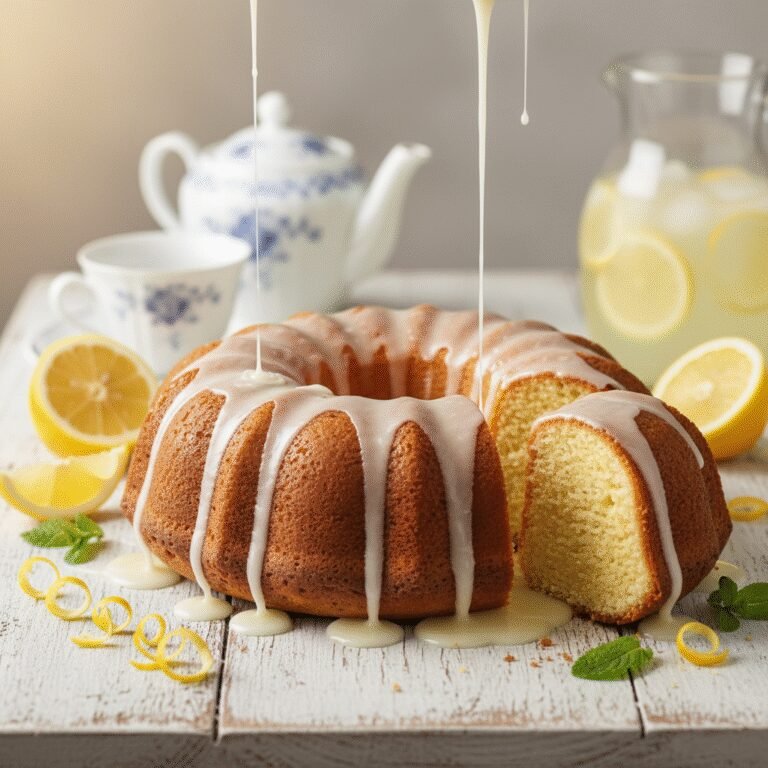
Bright, zesty, and impossibly tender, this Lemon Bundt Cake is the sunshine your kitchen needs. Bursting with fresh citrus flavor and finished with a delicate dusting of powdered sugar, it is the perfect balance of sweet and tart for any occasion.
20 minutes
55 minutes
1 hour 15 minutes
12-14 servings
Dessert
Baking
American
Vegetarian
There is something undeniably cheerful about a lemon cake. It captures the essence of sunshine on a plate, lifting spirits with its bright aroma and zesty flavor profile. While chocolate cakes have their place in the pantheon of desserts, a truly moist Lemon Bundt Cake offers a refreshing sophistication that feels right for breakfast, afternoon tea, or a light dessert after a heavy meal. This recipe is not just another fruit cake; it is a labor of love designed to achieve the perfect crumb—dense enough to hold its shape, yet tender enough to melt in your mouth. The secret lies in the balance of acidity and fat, creating a texture that stays moist for days.
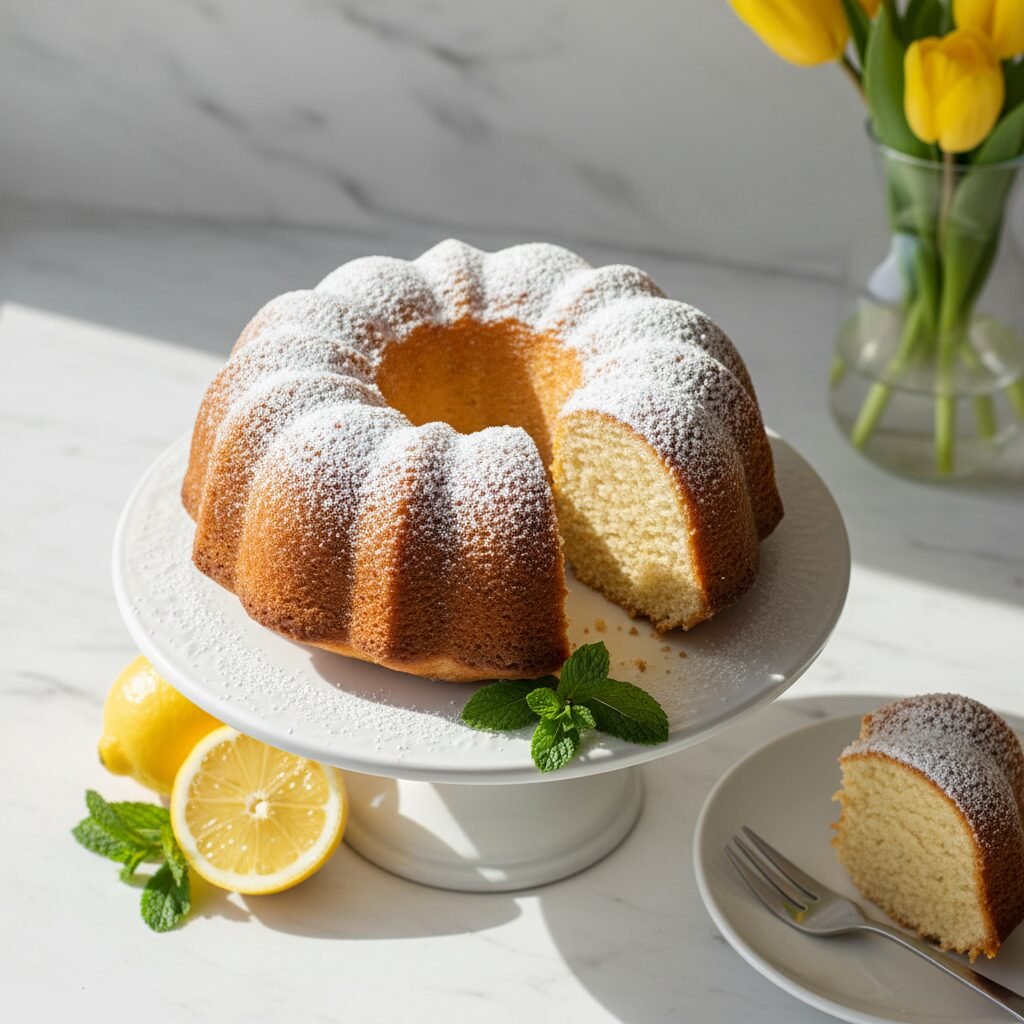
When you slice into this bundt, you are greeted by a vibrant yellow interior speckled with fresh zest. The aroma fills the entire house, smelling of sweet butter and tangy lemons, evoking memories of spring mornings and family gatherings. Unlike layer cakes that require fussy frosting and leveling, the beauty of the bundt lies in its simplicity and its stunning architectural shape. A simple dusting of powdered sugar is all the adornment it needs, allowing the pure, unadulterated lemon flavor to shine through. Whether you are a seasoned baker or a novice in the kitchen, this recipe is designed to be foolproof, delivering bakery-quality results that will have your friends and family begging for the recipe. It is comfort food at its most elegant, a timeless classic that deserves a permanent spot in your recipe box.
History & Origins
The history of the Bundt cake is a fascinating journey that bridges Old World European traditions with mid-century American innovation. The cake’s lineage can be traced back to the ‘Gugelhupf,’ a yeast-based cake traditionally baked in a fluted, ring-shaped pan, which was popular in Germany, Austria, and Alsace for centuries. The central tube in the pan was not merely decorative; it served a crucial engineering purpose, allowing heat to penetrate the center of the dense batter, ensuring an even bake.
However, the ‘Bundt’ as we know it in America is largely thanks to H. David Dalquist, the founder of Nordic Ware. In 1950, at the request of a group of Jewish women in Minneapolis who wanted to recreate the traditional kugelhopf cakes of their heritage, Dalquist designed a cast aluminum pan with the distinctive fluted design. Initially, the pan was a slow seller and was nearly discontinued. The turning point came in 1966 during the Pillsbury Bake-Off, when a contestant named Ella Helfrich used a Nordic Ware Bundt pan to create the ‘Tunnel of Fudge’ cake. She won second place, but the cake became a national sensation. Suddenly, every household in America wanted a Bundt pan.
Since then, the Bundt cake has evolved from heavy, yeast-based doughs to the lighter, chemically leavened batters we prefer today. Lemon variations became particularly popular in the 1970s as home bakers sought fresher, lighter flavors to contrast with the heavy, rich desserts of the previous decades. Today, the Lemon Bundt Cake stands as a testament to this culinary evolution—a modern American classic rooted in centuries of European baking history.
Why This Recipe Works
This recipe succeeds where many dry, lackluster lemon cakes fail because it is engineered for maximum moisture retention and flavor saturation. First, we utilize a combination of butter and oil. Butter provides that unmistakable rich flavor and sturdy crumb structure, while oil—which remains liquid at room temperature—ensures the cake stays sensationally moist days after baking. If we used butter alone, the cake might become too firm once cooled; if we used only oil, we would lose that buttery depth. The blend offers the best of both worlds.
Secondly, the inclusion of sour cream (or full-fat Greek yogurt) is chemically significant. The acidity in the sour cream not only tenderizes the gluten strands in the flour, preventing toughness, but it also reacts with the baking soda to create a superior lift. This results in a crumb that is tight yet incredibly soft—the hallmark of a great pound cake or bundt.
Furthermore, we don’t just rely on lemon juice in the batter. We use a massive amount of lemon zest, rubbed directly into the sugar before mixing. The friction releases the essential oils from the zest into the sugar crystals, infusing the entire batter with a floral, aromatic lemon flavor that juice alone cannot achieve. Finally, the shape of the Bundt pan allows for more surface area contact with the heat, creating a delicious, golden-brown crust that contrasts beautifully with the tender interior.
Why You’ll Love This Recipe
- ✓Stays moist for up to 4 days thanks to the butter-oil blend.
- ✓Intense lemon flavor from zest-infused sugar.
- ✓No fancy decorating skills required—just a dust of sugar.
- ✓Freezes beautifully for make-ahead convenience.
- ✓Perfect balance of tart and sweet.
Equipment You’ll Need
- ✓10-12 cup Bundt pan
- ✓Stand mixer or electric hand mixer
- ✓Large mixing bowl
- ✓Medium mixing bowl
- ✓Microplane or zester
- ✓Citrus juicer
- ✓Rubber spatula
- ✓Wire cooling rack
- ✓Sifter (for powdered sugar)
Ingredients
- ✓3 cups All-Purpose Flour
- ✓1 teaspoon Baking Powder
- ✓1/2 teaspoon Baking Soda
- ✓1 teaspoon Salt
- ✓1 cup Unsalted Butter, softened to room temperature
- ✓2 cups Granulated Sugar
- ✓1/4 cup Vegetable Oil (or Canola Oil)
- ✓4 Large Eggs, room temperature
- ✓1/3 cup Fresh Lemon Juice (approx. 2-3 lemons)
- ✓3 tablespoons Lemon Zest (approx. 3 lemons)
- ✓1 cup Full-Fat Sour Cream (or Greek Yogurt), room temperature
- ✓1 teaspoon Pure Vanilla Extract
- ✓1/2 cup Powdered Sugar (Confectioners’ Sugar) for dusting
Instructions
- Preheat your oven to 350°F (175°C). Thoroughly grease your Bundt pan with butter or non-stick baking spray (the kind with flour in it works best). Dust with flour if using butter, tapping out the excess. This is the most critical step to ensure your cake releases.
- In a medium bowl, whisk together the flour, baking powder, baking soda, and salt. Set this dry mixture aside.
- In the bowl of a stand mixer, place the granulated sugar and the lemon zest. Use your fingers to rub the zest into the sugar until it resembles wet sand and is very fragrant. This releases the lemon oils.
- Add the softened butter and vegetable oil to the lemon-sugar mixture. Beat on medium-high speed for about 5 minutes until the mixture is pale, light, and fluffy. Scrape down the sides of the bowl as needed.
- Add the eggs one at a time, beating well after each addition. Mix in the vanilla extract and fresh lemon juice. (Note: The mixture might look slightly curdled after adding the lemon juice; this is normal).
- Reduce the mixer speed to low. Add one-third of the flour mixture, followed by half of the sour cream. Repeat with another third of the flour, then the remaining sour cream, and finish with the final third of flour. Mix only until just combined—do not overmix.
- Remove the bowl from the mixer and give it a final stir by hand with a rubber spatula to ensure no flour pockets remain at the bottom.
- Pour the batter into the prepared Bundt pan and smooth the top with your spatula. Tap the pan firmly on the counter two or three times to release any large air bubbles.
- Bake for 50-60 minutes, or until a toothpick inserted into the thickest part of the cake comes out clean or with just a few moist crumbs attached.
- Remove from the oven and let the cake cool in the pan for exactly 10 minutes. Then, place a wire rack over the pan and invert the cake onto the rack. Lift the pan off carefully.
- Allow the cake to cool completely on the wire rack. Once fully cool, sift powdered sugar generously over the top before serving.
Expert Cooking Tips
- ✓Room Temperature Ingredients: Ensure butter, eggs, and sour cream are at room temperature to create a smooth emulsion.
- ✓Zest First: Zest your lemons before you juice them; it is much harder to zest a squashed lemon.
- ✓Grease Generously: Bundt pans have many crevices. Use a pastry brush to ensure every nook is coated with release agent.
- ✓Measure Flour Correctly: Spoon flour into the measuring cup and level it off. Scooping directly packs the flour and leads to a dry cake.
- ✓Don’t Overmix: Once the flour is added, mix gently to avoid developing gluten, which makes the cake tough.
- ✓Cooling Time: Adhere strictly to the 10-minute cooling rule in the pan. Too hot and it breaks; too cold and it sticks.
Substitutions and Variations
Baking is a science, but there is some room for flexibility in this recipe. If you do not have sour cream, full-fat Greek yogurt is an excellent 1:1 substitute that maintains the moisture and acidity required. For a dairy-free version, you can use a high-quality plant-based butter and a dairy-free yogurt (like coconut or almond based), though the texture may vary slightly. If you prefer a different citrus profile, this recipe works wonderfully with oranges, blood oranges, or even grapefruits—simply swap the zest and juice quantities equally. Regarding the oil, any neutral oil works, such as canola, vegetable, or grapeseed oil; melted coconut oil can be used but will impart a slight coconut flavor. Do not substitute the all-purpose flour for cake flour directly without adjusting quantities, as cake flour lacks the structure needed to support this heavy batter.
Common Mistakes to Avoid
The most heartbreaking mistake with Bundt cakes is the failure to release from the pan. This usually happens because the pan wasn’t greased thoroughly or the cake cooled in the pan for too long, causing the sugars to solidify and act like glue. Another common error is over-baking. Because the pan is dark and heavy, it retains heat well; check the cake at the 50-minute mark. If the top is browning too fast but the center is raw, tent it loosely with aluminum foil. Additionally, using cold ingredients often results in a batter that separates or ‘curdles,’ leading to an uneven bake. Finally, avoid opening the oven door repeatedly during the first 40 minutes of baking, as the fluctuation in temperature can cause the cake to collapse.
Serving Suggestions
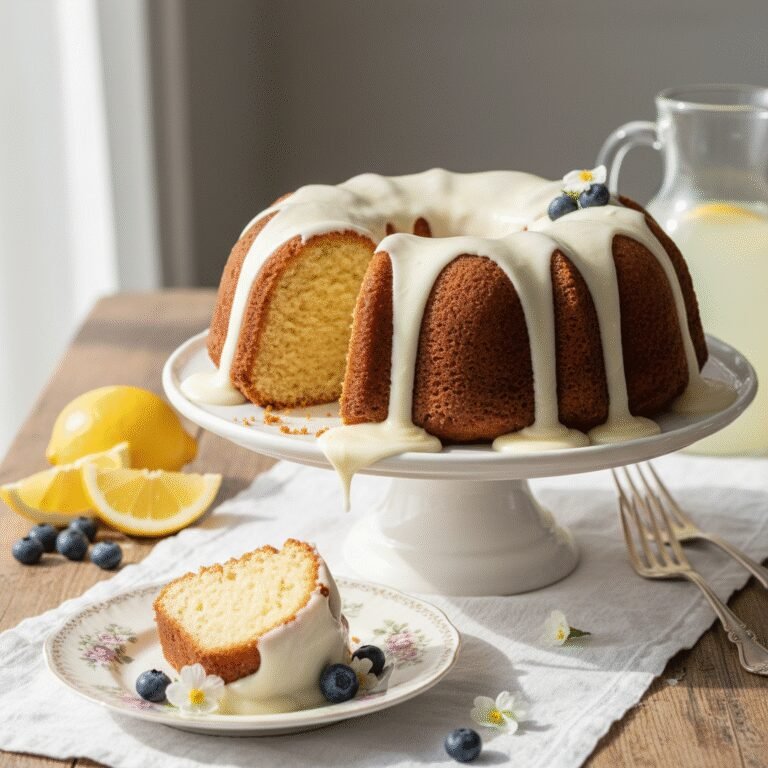
This Moist Lemon Bundt Cake is stunning in its simplicity, served simply with a heavy dusting of powdered sugar. However, to elevate the presentation for a dinner party, serve slices with a dollop of homemade whipped cream and a handful of fresh berries like raspberries or blueberries, which contrast beautifully with the yellow cake. A scoop of vanilla bean ice cream is also a classic pairing. For a brunch setting, pair this cake with a hot Earl Grey tea or a crisp, cold brew coffee. If you want to add a bit more texture, a sprinkle of toasted almond slices or candied lemon peel on top adds a lovely crunch.
Storage and Reheating Tips
This cake has excellent keeping qualities thanks to the oil and sour cream. Store the cake in an airtight container at room temperature for up to 4 days; the flavor often improves on the second day as the moisture redistributes. If you live in a very hot or humid climate, you may prefer to store it in the refrigerator for up to a week, but be sure to bring it to room temperature before eating for the best texture. This cake also freezes exceptionally well. You can freeze the whole cake (without powdered sugar) wrapped tightly in plastic wrap and then foil for up to 3 months. Alternatively, freeze individual slices separated by parchment paper for a quick treat on demand. Thaw on the counter for an hour before serving.
Nutrition Facts (Estimated)
| Serving Size | 1 slice |
| Calories | 420 |
| Fat | 22g |
| Saturated Fat | 12g |
| Unsaturated Fat | 8g |
| Trans Fat | 0g |
| Cholesterol | 85mg |
| Sodium | 210mg |
| Carbohydrates | 54g |
| Fiber | 1g |
| Sugar | 28g |
| Protein | 5g |
Frequently Asked Questions
Why did my Bundt cake stick to the pan?
Sticking usually occurs due to insufficient greasing or cooling too long in the pan. Use a baking spray containing flour, or butter and flour the pan meticulously. Invert the cake after exactly 10 minutes of cooling.
Can I use bottled lemon juice instead of fresh?
Technically yes, but we strongly advise against it. Bottled juice lacks the vibrant floral notes of fresh lemon, and since lemon is the primary flavor, fresh juice makes a significant difference.
Why is my cake dense or heavy?
Density is often caused by overmixing the batter after adding the flour, or by measuring the flour incorrectly (packing it down). It can also happen if your baking powder or soda is expired.
Can I make this cake gluten-free?
Yes, you can use a high-quality 1:1 Gluten-Free All-Purpose Flour blend that contains xanthan gum. The texture will be slightly different but still delicious.
Can I add a glaze instead of powdered sugar?
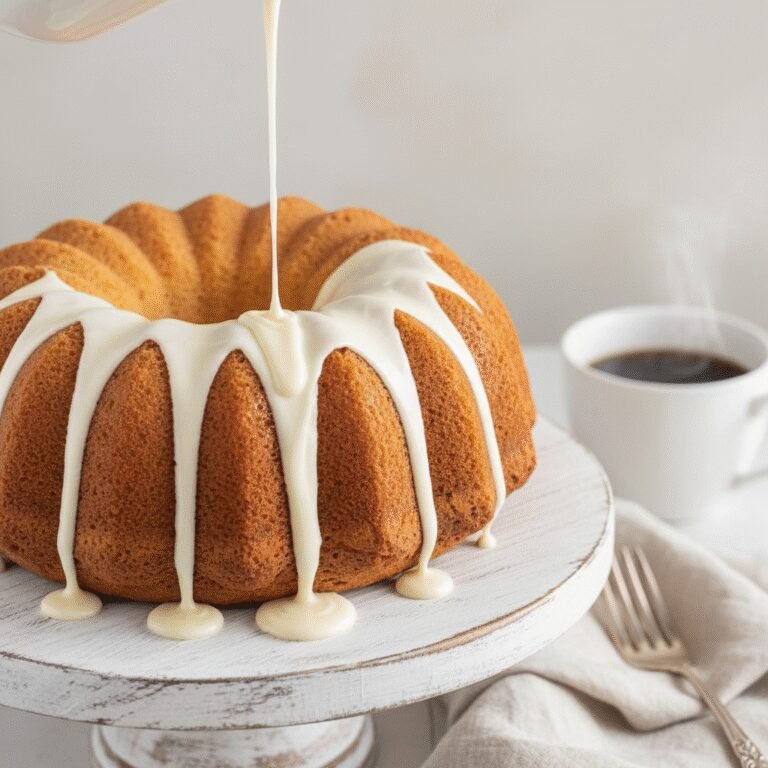
Absolutely. A simple glaze of 1 cup powdered sugar mixed with 2 tablespoons of lemon juice creates a zesty, dripping topping that looks beautiful.
My cake sank in the middle, what happened?
This can happen if the oven door was opened too early, the oven temperature was too low, or there was too much leavening (baking powder/soda) used.
Can I use Meyer lemons?
Yes, Meyer lemons work wonderfully! They are sweeter and less acidic than standard lemons, so the cake will have a more floral, subtle lemon flavor.
Do I have to use a Bundt pan?
While this recipe is designed for a Bundt pan, you can split the batter between two 9×5 inch loaf pans. You will need to adjust the baking time, likely checking around 40-45 minutes.
Conclusion
There are few things in the culinary world as satisfying as pulling a perfect, golden Bundt cake out of the oven. This Moist Lemon Bundt Cake recipe is more than just a set of instructions; it’s a ticket to creating a warm, inviting atmosphere in your home. With its tender crumb, bright citrus punch, and elegant appearance, it is sure to become a requested favorite for birthdays, holidays, and casual weekends alike. So, grab your lemons, preheat your oven, and get ready to bake a slice of sunshine. Happy baking!