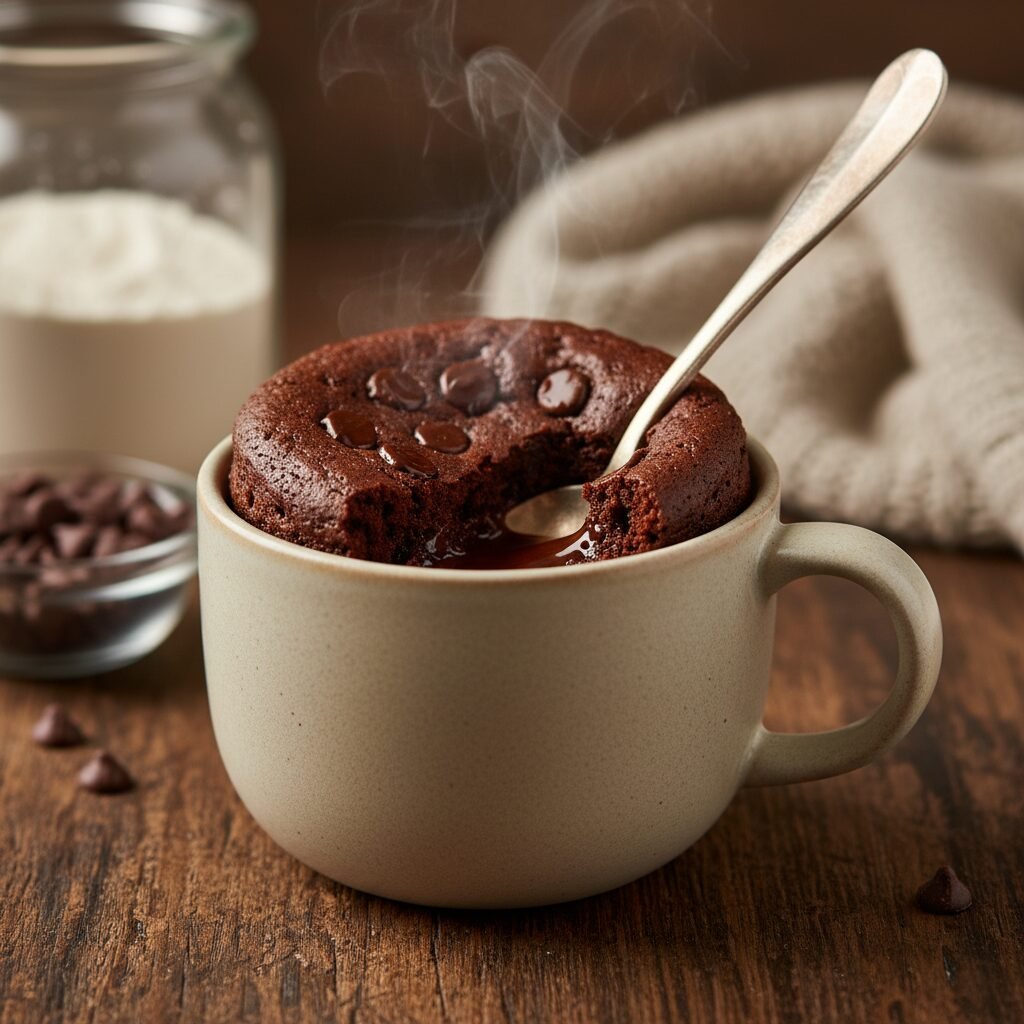
The Ultimate 5-Minute Chocolate Mug Cake with Melty Chocolate Chips
Easy Chocolate Mug Cake With Chocolate Chips Recipe
Satisfy your deepest chocolate cravings in just five minutes with this rich, fudgy chocolate mug cake. It is the perfect single-serving dessert that requires no mixer, minimal cleanup, and delivers a moist, brownie-like texture every single time.
2 minutes
1 minute
3 minutes
1 serving
Dessert
Microwave
American
Vegetarian
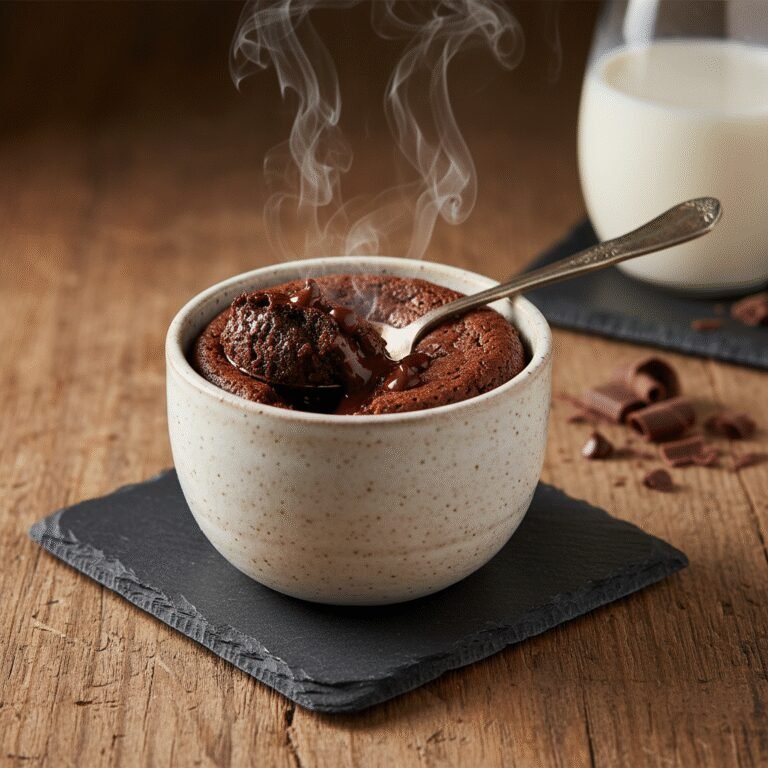
There is a specific kind of magic that happens when you combine simple pantry staples in a mug and zap them in the microwave for sixty seconds. We have all been there: it is late at night, the kitchen is clean, and suddenly, a craving for something intensely chocolatey strikes. You do not want to drag out the stand mixer, preheat the oven, or commit to an entire sheet cake that will tempt you for days. Enter the humble yet heroic chocolate mug cake. This isn’t just any mug cake; this is the result of endless testing to find the perfect balance between a fluffy cake and a dense, fudgy brownie. Many mug recipes suffer from a rubbery texture or a lack of depth, often tasting merely of sweet sponge. This recipe, however, uses a precise ratio of fat to flour and relies on oil rather than butter for that superior moist crumb that stays soft even as it cools. The addition of semi-sweet chocolate chips elevates it from a quick fix to a gourmet experience, creating pockets of molten chocolate that ooze with every spoonful. Whether you are a college student in a dorm, a busy parent needing a moment of solace, or just someone who appreciates the finer things in life without the wait, this chocolate mug cake is your answer. It is warm, comforting, and unapologetically decadent, proving that fast food can indeed be good food.
History & Origins
The concept of the ‘mug cake’ is a relatively modern phenomenon, inextricably linked to the rise of the microwave oven and the internet age, though its roots can be traced back to the earliest traditions of small cakes. Historically, ‘cup cakes’ in the 18th and 19th centuries were literally cakes baked in pottery cups or ramekins, a practical method before the invention of muffin tins. However, the microwave mug cake as we know it today gained viral popularity in the late 2000s and early 2010s. As food blogging and social media platforms like Pinterest began to explode, the allure of a ‘5-minute cake’ captured the global imagination. It spoke to a culture increasingly focused on instant gratification, single-serving portion control, and hack-based cooking. Early iterations were often criticized for their texture—frequently described as spongy or dry—largely because they were simply scaled-down versions of traditional oven recipes which do not translate perfectly to the steaming environment of a microwave. Over the last decade, culinary enthusiasts have refined the science, realizing that microwave baking requires different hydration levels and often the omission of eggs, which can turn a small amount of batter into a rubbery omelet-like puck. This evolution has turned the mug cake from a desperate dorm-room hack into a respected category of dessert, with dedicated cookbooks and gourmet variations appearing in kitchens worldwide. It represents a shift in how we view baking: not always as a weekend project, but as an accessible, everyday joy.
Why This Recipe Works
This recipe succeeds where many others fail due to three critical factors: the fat source, the absence of egg, and the cooking method. First, we use neutral oil (like vegetable or canola) instead of butter. While butter offers flavor, it contains water and milk solids that can lead to a drier texture in the microwave. Oil is 100% fat and ensures the cake remains incredibly moist and tender. Second, this recipe is egg-free. In a standard cake, an egg provides structure and lift, but in a tiny mug cake, a whole egg is simply too much protein, leading to a tough, rubbery texture that feels overcooked. By relying on baking powder for lift and milk for hydration, we achieve a velvety crumb that mimics a steamed pudding. Finally, the inclusion of chocolate chips is not just for flavor; they introduce textural contrast and moisture. As the cake cooks, the chips melt, creating a gooey interior that compensates for the rapid cooking process of the microwave, ensuring that even if you accidentally overcook it by a few seconds, the molten chocolate keeps the mouthfeel luxurious. The pinch of salt is the secret weapon, cutting through the sugar and cocoa to make the chocolate flavor pop.
Why You’ll Love This Recipe
- ✓Ready in under 5 minutes from start to finish
- ✓No egg required, preventing a rubbery texture
- ✓Uses standard pantry ingredients you likely have on hand
- ✓Perfect single-serving portion control
- ✓Minimal cleanup with only a mug and a spoon needed
- ✓Rich, fudgy texture with pockets of melted chocolate
Equipment You’ll Need
- ✓Microwave-safe mug (12-16 oz)
- ✓Measuring spoons
- ✓Spoon for mixing
Ingredients
- ✓1/4 cup All-purpose flour
- ✓2 tablespoons Unsweetened cocoa powder
- ✓1/4 teaspoon Baking powder
- ✓2 tablespoons Granulated sugar (add 1 tbsp more for sweeter cake)
- ✓1 pinch Salt
- ✓1/4 cup + 1 tablespoon Milk (dairy or non-dairy)
- ✓2 tablespoons Vegetable oil or melted coconut oil
- ✓1/4 teaspoon Vanilla extract
- ✓2 tablespoons Semi-sweet chocolate chips
Instructions
- Place the flour, cocoa powder, baking powder, sugar, and salt directly into your microwave-safe mug.
- Mix the dry ingredients thoroughly with a spoon, ensuring there are no clumps of flour or cocoa powder at the bottom.
- Add the milk, vegetable oil, and vanilla extract to the dry mixture.
- Stir gently but thoroughly until the batter is smooth and glossy. Be sure to scrape the bottom edges of the mug to incorporate all dry bits.
- Sprinkle the chocolate chips on top of the batter. You can gently push a few down into the center, but leave some on top.
- Place the mug in the microwave and cook on high power for 60 to 90 seconds. Start with 60 seconds; the cake should look set and risen but slightly shiny and sticky on top.
- If it looks very raw, cook for another 10-15 seconds. Do not overcook, or it will become dry.
- Remove carefully from the microwave (the mug will be hot!) and let it sit for 1-2 minutes to cool and finish setting.
- Enjoy warm, optionally topped with whipped cream or ice cream.
Expert Cooking Tips
- ✓Use a wide mug rather than a tall, narrow one to ensure even cooking and prevent overflow.
- ✓Do not overmix the batter once the wet ingredients are added; stir just until combined to keep the cake tender.
- ✓Microwave wattages vary significantly; if you have a high-powered microwave (1000W+), 60 seconds is likely enough. For lower wattage (700W), you may need up to 90 seconds.
- ✓Place a paper towel or plate under the mug in the microwave just in case the batter rises too high and spills over.
- ✓Eat this cake while it is warm. Mug cakes are best enjoyed immediately and can dry out if left to sit for hours.
Substitutions and Variations
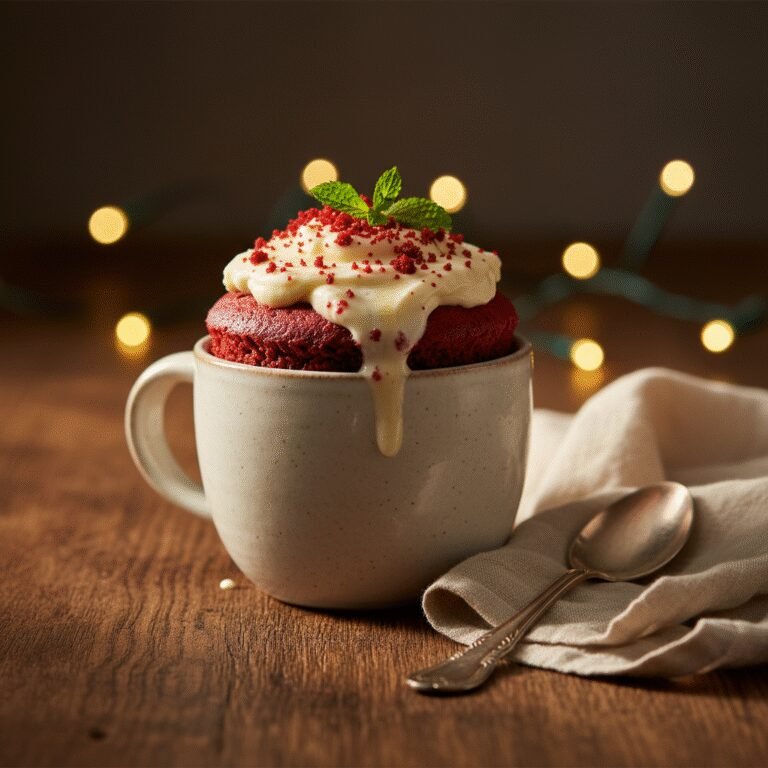
This recipe is incredibly versatile and forgiving with substitutions. For a gluten-free version, you can swap the all-purpose flour for a 1:1 gluten-free baking blend; the texture remains surprisingly good due to the small serving size. If you are vegan or dairy-free, simply use any plant-based milk like almond, soy, or oat milk, and ensure your chocolate chips are dairy-free. The vegetable oil can be replaced with melted coconut oil for a slight coconut flavor, or melted butter if you prefer a richer, more traditional taste, though oil yields the moistest result. Regarding sweeteners, you can substitute granulated sugar with brown sugar for a deeper, caramel-like flavor, or use coconut sugar. Liquid sweeteners like maple syrup or honey can be used, but you may need to slightly increase the flour by a teaspoon to balance the hydration. Lastly, the chocolate chips can be swapped for peanut butter chips, white chocolate chips, or even chopped nuts for a crunch.
Common Mistakes to Avoid
The most common mistake with mug cakes is overcooking them. Because microwaves cook from the inside out and very rapidly, a difference of 15 seconds can take a cake from moist to rock-hard. Always err on the side of undercooking; the cake continues to cook for a minute after you take it out. Another frequent error is not mixing the dry ingredients at the bottom of the mug. It is disappointing to dig into your cake and find a pocket of dry, bitter flour and cocoa powder. Make sure to scrape the bottom corners of the mug well. Using a mug that is too small is another pitfall; the batter rises significantly due to the baking powder and microwave heat. Always use a mug that holds at least 12 ounces to avoid a messy overflow. Finally, omitting the salt results in a flat flavor profile; that tiny pinch is essential to round out the sweetness.
Serving Suggestions
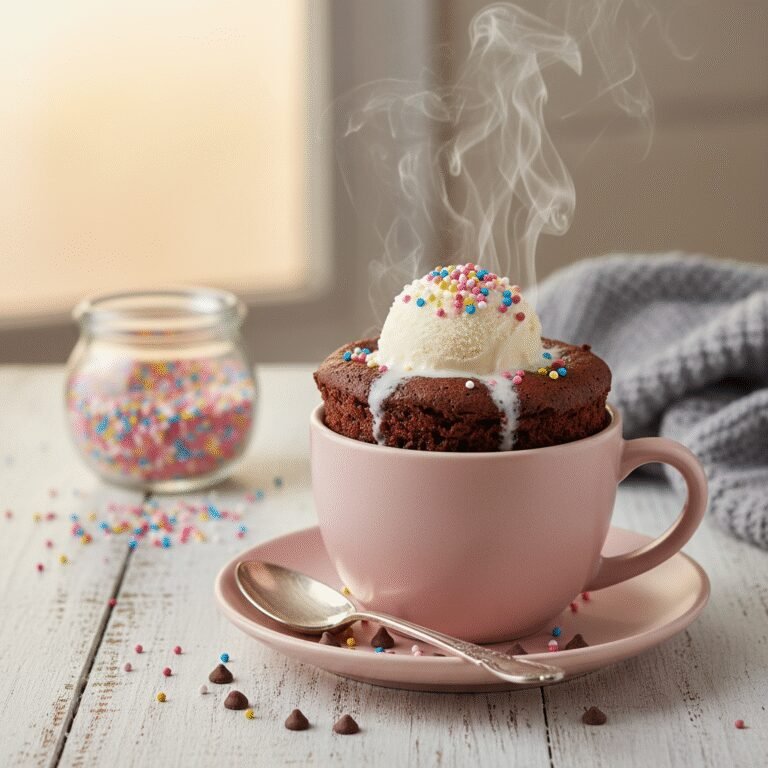
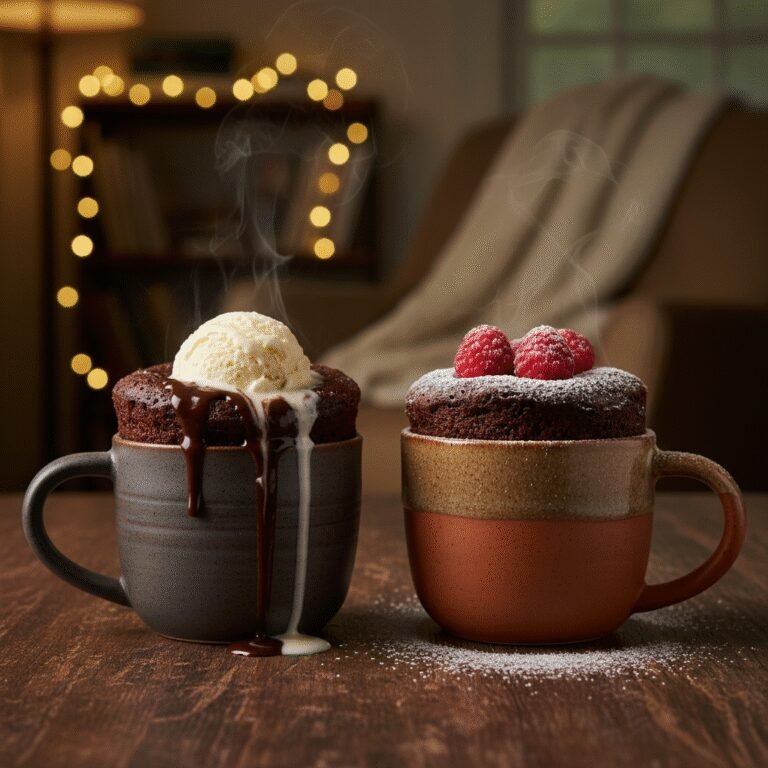
While this mug cake is delicious on its own, toppings can take it to the next level. A classic scoop of vanilla bean ice cream is the ultimate pairing, as the cold cream melts into the hot cake creating a sauce. Fresh berries, such as raspberries or strawberries, add a tart brightness that cuts through the rich chocolate. For a cozy winter vibe, top with a dollop of homemade whipped cream and a dusting of cinnamon or cocoa powder. If you are a peanut butter lover, drizzle melted peanut butter or warm Nutella over the top just before serving. For texture, crushed walnuts or pecans add a nice crunch. Serve it with a cold glass of milk or a hot espresso to balance the sweetness.
Storage and Reheating Tips
Mug cakes are designed to be single-serving treats eaten immediately after cooking. They do not store well because they lack the preservatives and structural integrity of standard baked goods, and the microwave cooking method causes them to stale rapidly once cool. If you absolutely must save it, cover the mug tightly with plastic wrap and store it in the refrigerator for up to 24 hours. To reheat, sprinkle a teaspoon of water over the top to rehydrate it and microwave in 10-15 second bursts until warm. However, for the best experience, it is highly recommended to mix and bake a fresh one whenever the craving strikes, as the batter takes only minutes to prepare.
Nutrition Facts (Estimated)
| Serving Size | 1 mug cake |
| Calories | 420 |
| Fat | 22g |
| Saturated Fat | 6g |
| Unsaturated Fat | 14g |
| Trans Fat | 0g |
| Cholesterol | 5mg |
| Sodium | 180mg |
| Carbohydrates | 52g |
| Fiber | 4g |
| Sugar | 28g |
| Protein | 6g |
Frequently Asked Questions
Can I make this without a microwave?
Yes, you can bake this in an oven-safe ramekin at 350°F (175°C) for about 15-20 minutes, but the texture might be slightly drier than the microwave version.
Why is my mug cake rubbery?
Rubbery texture usually comes from overmixing the batter (developing too much gluten) or overcooking it. It can also happen if you add an egg to this small amount of batter.
Can I use self-rising flour?
Yes, if you use self-rising flour, omit the baking powder and the salt from the recipe.
Can I double the recipe?
Do not double the recipe in a single mug as it will overflow and cook unevenly. It is better to make two separate mugs.
Is it safe to eat the batter raw?
Since this recipe contains no eggs, the main risk with raw batter is raw flour, which can contain bacteria. It is best to cook it, or heat-treat your flour beforehand if you intend to eat it raw.
Can I use water instead of milk?
You can, but the cake will be less rich and flavorful. Milk adds fat and sugar that contribute to a tender crumb.
Why did my cake explode over the mug?
The mug was likely too small for the amount of batter and the rise caused by the baking powder. Use a larger mug (12oz+) next time.
Can I add protein powder?
Yes, you can replace about 1 tablespoon of flour with protein powder, but you may need to add a slightly more liquid to prevent it from becoming dry.
How do I make it less sweet?
You can reduce the sugar to 1 or 1.5 tablespoons, or use dark chocolate chips which have less sugar than semi-sweet ones.
Can I mix the dry ingredients ahead of time?
Absolutely! You can make ‘mug cake mix’ packets by portioning the dry ingredients into small ziplock bags. When ready to eat, just dump a bag into a mug and add the wet ingredients.
Conclusion
In the world of desserts, few things compete with the chocolate mug cake for the title of ultimate comfort food. It bridges the gap between the immediate need for something sweet and the desire for a homemade treat. By following this simple method, you avoid the common pitfalls of rubbery microwave disasters and instead achieve a lush, chocolate-packed delight that rivals any oven-baked brownie. Whether you are celebrating a small win, comforting a bad day, or just treating yourself because you deserve it, this Easy Chocolate Mug Cake with Chocolate Chips is your faithful companion. Keep these ingredients in your pantry, and you will never be more than five minutes away from chocolate paradise.