Fluffy Easy Vanilla Mug Cake With Sprinkles (Ready in 2 Minutes!)
Easy Vanilla Mug Cake With Sprinkles Recipe
Satisfy your sweet tooth instantly with this fluffy, moist vanilla mug cake speckled with colorful sprinkles. It takes less than 5 minutes from pantry to spoon and is the perfect single-serving dessert for late-night cravings or a quick afternoon pick-me-up.
2 minutes
1 minute
3 minutes
1 serving
Dessert
Microwave
American
Vegetarian
There is a specific kind of magic found in the world of mug cakes. It is the magic of instant gratification, the alchemy of turning a few pantry staples into a warm, steaming cake in less time than it takes to brew a pot of coffee. This Easy Vanilla Mug Cake with Sprinkles, often affectionately known as a ‘birthday cake in a mug,’ is the ultimate solution for when you need a dessert fix but lack the energy or time to bake a whole cake. Unlike many microwave recipes that turn out rubbery or spongy, this recipe has been meticulously tested to ensure a tender, moist crumb that rivals any oven-baked cupcake.
The beauty of this dessert lies in its simplicity and its nostalgia. The flavor profile mimics the classic white cake with vanilla buttercream you likely grew up eating at birthday parties, enhanced by the cheerful pop of rainbow sprinkles. It is a ‘hug in a mug’ that requires no mixer, no preheating, and barely any cleanup. Whether you are a college student in a dorm, a busy parent needing a quiet treat after bedtime, or simply someone who believes that cake should be accessible at a moment’s notice, this recipe is for you. We skip the egg—which is often the culprit behind tough mug cakes—and rely on baking powder and the right ratio of fat to flour to achieve that perfect, fluffy texture. Get ready to discover your new favorite midnight snack.
History & Origins
The concept of the ‘mug cake’ is a relatively modern phenomenon, though its roots can be traced back to the invention of the cupcake and the microwave oven. The cupcake itself dates back to 1796, when a recipe for ‘a cake to be baked in small cups’ was written in ‘American Cookery’ by Amelia Simmons. However, these were baked in pottery cups in hearth ovens. The true revolution began with Percy Spencer’s accidental invention of the microwave in 1945, though it wasn’t until the late 1970s and 1980s that microwaves became a common household appliance.
The specific trend of mixing cake batter in a coffee mug and zapping it for immediate consumption exploded in the internet era, specifically around the late 2000s and early 2010s. Early viral recipes were often for chocolate variations, frequently dubbed ‘the 5-minute chocolate cake.’ As food blogging and Pinterest grew in popularity, the humble mug cake evolved from a dense, brownie-like experiment into a refined culinary category of its own.
The ‘Funfetti’ or confetti style aspect of this recipe pays homage to the Pillsbury Company’s introduction of Funfetti cake mix in 1989. This product defined a generation of birthday parties, embedding the combination of vanilla cake and rainbow sprinkles deep into the American culinary psyche. This mug cake marries the modern convenience of microwave cooking with that deep-seated 90s nostalgia, creating a dish that is both contemporary and comforting.
Why This Recipe Works
Mug cakes have a reputation for being rubbery, dry, or oddly textured. This usually happens for two reasons: the use of eggs and the aggressive cooking method of the microwave. A standard whole egg is far too much binding agent for the small amount of flour in a mug cake, turning the texture from ‘cake’ into ‘sweetened omelet.’ By removing the egg entirely, we eliminate that rubbery chew and the risk of an eggy aftertaste.
Instead, this recipe relies on a precise balance of baking powder for lift and milk combined with melted butter for moisture and tenderness. The melted butter coats the flour proteins, inhibiting gluten formation, which keeps the crumb soft. We also use a splash of vanilla extract to ensure the flavor is rich and aromatic, masking the ‘floury’ taste that some quick breads can have. Finally, the cooking time is short—usually between 60 to 90 seconds. Microwaves cook by agitating water molecules, which generates heat. Because the volume is so small, overcooking by even 10 seconds can dry it out. This recipe is calibrated to be cooked just until set, allowing the residual heat to finish the process as it cools slightly, resulting in a perfect, spoonable texture every time.
Why You’ll Love This Recipe
- ✓Ready in under 5 minutes from start to finish.
- ✓Egg-free recipe ensures a fluffy, non-rubbery texture.
- ✓Perfect single-serving portion control.
- ✓Minimal cleanup—mix and cook in the same mug.
- ✓Highly customizable with different mix-ins and toppings.
- ✓Nostalgic birthday cake flavor.
Equipment You’ll Need
- ✓Microwave-safe mug (12oz or larger)
- ✓Tablespoon
- ✓Teaspoon
- ✓Microwave
Ingredients
- ✓4 tablespoons All-Purpose Flour
- ✓2 tablespoons Granulated Sugar
- ✓1/2 teaspoon Baking Powder
- ✓1 pinch Salt
- ✓3 tablespoons Milk (any kind)
- ✓1 tablespoon Unsalted Butter, melted
- ✓1/2 teaspoon Pure Vanilla Extract
- ✓1 tablespoon Rainbow Sprinkles (jimmies work best)
Instructions
- In a microwave-safe mug (approx. 12oz capacity), add the all-purpose flour, granulated sugar, baking powder, and salt.
- Use a spoon to mix the dry ingredients together thoroughly, ensuring there are no large lumps of flour or baking powder.
- Pour in the milk, melted butter, and vanilla extract.
- Stir the batter gently but thoroughly until smooth. Be sure to scrape the bottom edges of the mug to incorporate any dry pockets of flour.
- Gently fold in the rainbow sprinkles, being careful not to overmix, which can cause the colors to bleed.
- Place the mug in the microwave and cook on high power for 60 to 90 seconds. The cake should rise and look set on top. If it looks wet in the center, microwave in additional 10-second intervals.
- Carefully remove the mug from the microwave (it will be hot!). Let it sit for 1-2 minutes to cool slightly and finish setting.
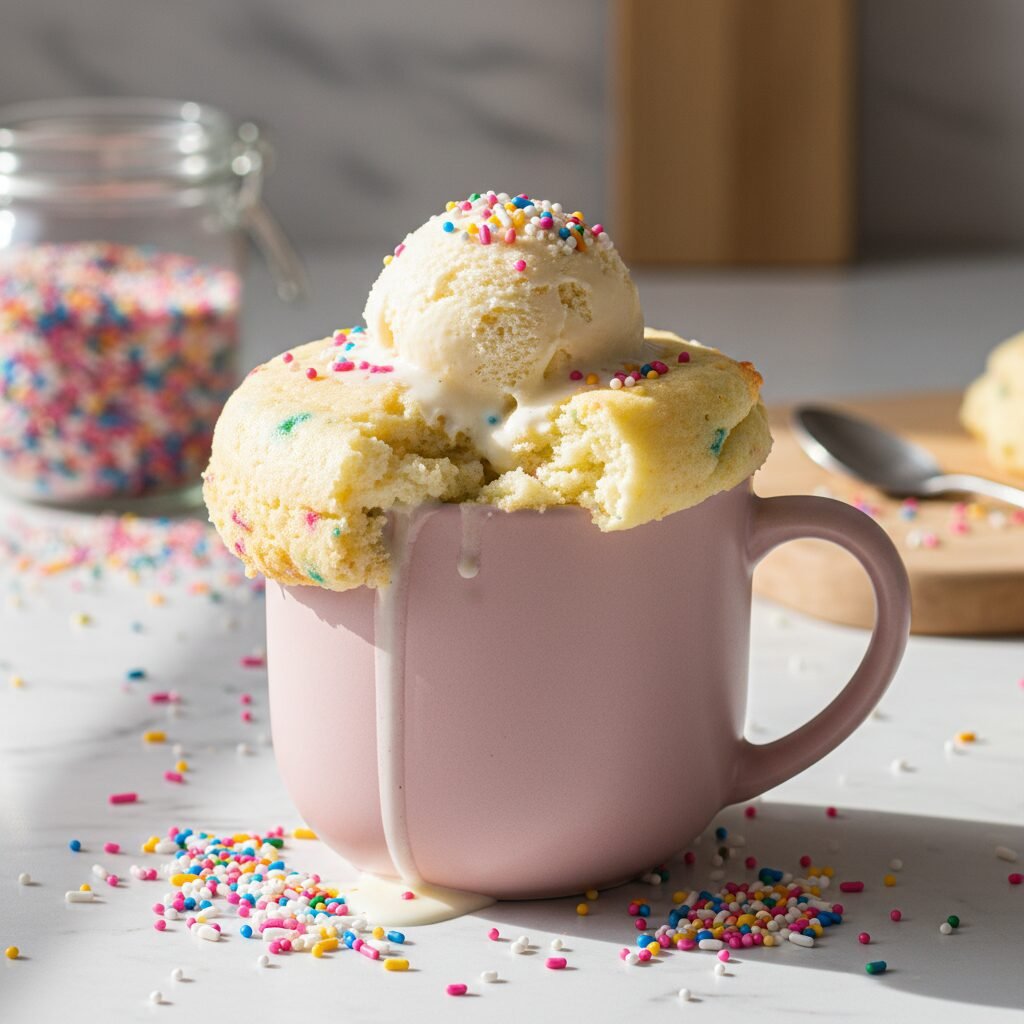
- Top with whipped cream, frosting, or extra sprinkles if desired, and enjoy warm.
Expert Cooking Tips
- ✓Use a wide mug rather than a tall, narrow one to help the cake cook evenly.
- ✓Do not overmix the batter once the wet ingredients are added; stop as soon as it is combined to keep it tender.
- ✓Microwave wattages vary significantly; start with 60 seconds and check before adding more time.
- ✓Use ‘jimmies’ (the rod-shaped sprinkles) rather than nonpareils (the tiny balls), as nonpareils tend to bleed color into the batter.
- ✓If you want a richer flavor, use whole milk or even half-and-half.
- ✓Grease the inside of the mug lightly with butter or cooking spray for easier cleanup.
- ✓Eat the cake while it is still warm; mug cakes tend to dry out as they cool completely.
Substitutions and Variations
This recipe is highly adaptable to various dietary needs. For a **gluten-free** version, substitute the all-purpose flour with a high-quality 1:1 gluten-free baking flour blend; the texture may be slightly denser but still delicious. To make this **vegan or dairy-free**, use a plant-based milk like almond, soy, or oat milk, and swap the butter for melted coconut oil or a vegan butter alternative. If you are watching your **sugar intake**, you can use a granular sweetener like erythritol or monk fruit, though the texture might be slightly drier. For the **fat**, vegetable oil or canola oil can be used instead of melted butter, which actually yields a moister cake, though you lose the buttery flavor profile. Lastly, feel free to swap vanilla extract for almond extract for a ‘wedding cake’ flavor profile.
Common Mistakes to Avoid
The most common mistake is **overcooking** the cake. Because microwaves are powerful, even 15 extra seconds can turn a fluffy cake into a hard rock. Always err on the side of undercooking slightly, as the cake continues to cook as it sits. Another issue is **using the wrong size mug**. If the mug is too small, the batter will overflow as it rises, creating a mess in your microwave. Always use a mug that holds at least 10-12 ounces. **Overmixing** is another culprit; stirring vigorously activates the gluten in the flour, leading to a tough, chewy texture. Finally, **forgetting the baking powder** or using baking soda by mistake will result in a flat, dense paste rather than a cake.
Serving Suggestions
While delicious on its own, this mug cake shines with toppings. A dollop of **whipped cream** or a scoop of **vanilla bean ice cream** creates a delightful hot-cold contrast. For a true birthday cake experience, pipe some **vanilla buttercream frosting** on top once the cake has cooled slightly. You can also drizzle it with **white chocolate ganache** or a simple glaze made from powdered sugar and milk. Fresh berries, such as strawberries or raspberries, add a nice tartness to cut through the sweetness.
Storage and Reheating Tips
Mug cakes are designed to be eaten immediately. They do not store well and will become hard and stale within a few hours. If you absolutely must save it, cover the mug tightly with plastic wrap and store it at room temperature for up to 2 hours. Reheating is generally not recommended as it will dry the cake out further, but a quick 10-second zap in the microwave might revive it slightly. It is best to mix the dry ingredients in advance (meal prep style) and add the wet ingredients right when you are ready to eat.
Nutrition Facts (Estimated)
| Serving Size | 1 mug cake |
| Calories | 380 |
| Fat | 16g |
| Saturated Fat | 10g |
| Unsaturated Fat | 5g |
| Trans Fat | 0g |
| Cholesterol | 40mg |
| Sodium | 210mg |
| Carbohydrates | 52g |
| Fiber | 1g |
| Sugar | 28g |
| Protein | 4g |
Frequently Asked Questions
Why is my mug cake rubbery?
Rubbery texture is usually caused by overmixing the batter (developing too much gluten) or overcooking it. It can also happen if you use an egg in a single-serving recipe, which is why this recipe is egg-free.
Can I make this in the oven?
Technically yes, but it defeats the purpose of a quick mug cake. If you must, bake it in an oven-safe ramekin at 350°F (175°C) for about 15-20 minutes.
Can I double the recipe?
Do not double the recipe in the same mug, as it will likely overflow and cook unevenly. It is better to make two separate mugs.
Can I use self-rising flour?
Yes. If you use self-rising flour, omit the baking powder and the salt from the recipe.
Why did my sprinkles bleed?
This happens if you overmix the batter after adding the sprinkles, or if you use ‘nonpareils’ (the tiny round balls) which bleed easily. Use ‘jimmies’ (cylinder shapes) and fold them in gently at the very end.
Can I add chocolate chips?
Absolutely! You can add 1 tablespoon of white or semi-sweet chocolate chips along with, or instead of, the sprinkles.
Is it safe to eat without eggs?
Yes, since there are no raw eggs, the risk of salmonella is removed. However, raw flour can technically carry bacteria, so it is important to cook the cake fully.
What if I don’t have a microwave?
This recipe is specifically designed for microwave cooking. If you don’t have one, it’s better to look for a standard cupcake recipe to bake in an oven or toaster oven.
Conclusion
This Easy Vanilla Mug Cake with Sprinkles is the ultimate hack for satisfying sweet cravings without the hassle of traditional baking. It captures the joy and flavor of a celebration cake in a fraction of the time, making any ordinary day feel a little more special. With its fluffy texture, customizable options, and pantry-staple ingredients, it is a recipe you will find yourself returning to again and again. So grab your favorite mug, spend three minutes in the kitchen, and treat yourself to a warm, delicious dessert—you deserve it!