The Best Easy Vanilla Mug Cake Recipe (Ready in 2 Minutes)
Easy Vanilla Mug Cake Recipe
Craving a homemade dessert but short on time? This moist, fluffy vanilla mug cake comes together in just 2 minutes using simple pantry staples. It is the perfect single-serving treat to satisfy your sweet tooth without the hassle or mess of baking a full-sized cake.
2 minutes
1 minute
3 minutes
1 serving
Dessert
Microwave
American
Vegetarian
There is a specific kind of magic that happens when you realize you are less than five minutes away from a warm, fluffy, homemade cake. We have all been there: it is 9:00 PM on a Tuesday, the craving for something sweet hits hard, but the idea of dragging out the stand mixer, preheating the oven, and waiting an hour for a cake to bake is simply out of the question. Enter the humble, yet heroic, vanilla mug cake. This isn’t just a compromise for when you can’t bake a real cake; when done correctly, a mug cake is a culinary delight in its own right.
For years, mug cakes suffered from a bad reputation. Many recipes resulted in rubbery, dry, or flavorless sponges that were more reminiscent of an omelet than a dessert. However, after extensive testing in my kitchen, I have cracked the code to the perfect texture. This recipe yields a cake that is tender, moist, and bursting with pure vanilla flavor. It is essentially a vanilla butter cake scaled down to a personal portion size. The beauty of this recipe lies in its simplicity and its blank-canvas nature. While it is absolutely delicious on its own, it serves as the perfect base for confetti sprinkles, chocolate chips, a dollop of strawberry jam, or a scoop of melting vanilla bean ice cream. Whether you are a college student with limited kitchen access, a busy parent needing a quick treat, or just someone who loves cake but doesn’t want a whole 9-inch round tempting them on the counter, this easy vanilla mug cake is about to become your new best friend.
History & Origins
To understand the phenomenon of the mug cake, we must first look back at the domestication of the microwave oven. Invented accidentally by Percy Spencer in the 1940s, the microwave didn’t become a common household staple until the late 1970s and early 1980s. Early microwave cookbooks were ambitious, attempting to teach housewives how to cook entire Thanksgiving turkeys or roast beef dinners in these new machines. The results were often gray, unappetizing, and texturally unpleasant. As a result, the microwave was largely relegated to reheating leftovers and popping popcorn.
However, the concept of ‘cup cooking’ has roots in 18th and 19th-century ‘cup cakes’ (cakes baked in pottery cups or molds), though these were oven-baked. The modern microwave mug cake as we know it truly exploded with the rise of the internet and food blogging in the late 2000s and early 2010s. As Pinterest took over the social media landscape, highly visual, quick, and ‘life-hack’ style recipes became viral sensations. The mug cake promised instant gratification—a dessert that bypassed the traditional rules of baking.
Initially, these internet recipes were hit-or-miss, often relying on standard cake batter ratios that didn’t translate well to microwave radiation. Over the last decade, food scientists and bloggers have refined the method. We moved away from using whole eggs (which cook too fast and create rubbery textures in small portions) and adjusted fat-to-flour ratios. Today, the mug cake is recognized not just as ‘dorm food,’ but as a legitimate category of pastry that offers comfort, convenience, and endless creativity for the modern home cook.
Why This Recipe Works
The biggest pitfall of most mug cake recipes is the texture. Microwaves cook food by exciting water molecules, which generates heat very quickly. In a standard oven-baked cake, the slow rise allows the gluten network to develop gently and the egg proteins to set slowly. In a microwave, an egg will cook almost instantly, turning a delicate batter into a tough, rubbery puck. That is why this specific recipe works so well: it is entirely egg-free. By eliminating the egg, we remove the risk of that rubbery texture and the ‘eggy’ sulfur smell that often plagues microwave desserts.
Instead of egg for structure and richness, we rely on a precise balance of melted butter and milk. The melted butter coats the flour proteins, inhibiting excessive gluten formation (which causes toughness), resulting in a tender crumb. We also use a slightly higher ratio of baking powder than you might expect in a full-sized cake. Because the cooking time is so short (60 to 90 seconds), we need a rapid rise to create air pockets before the structure sets. Finally, the addition of a pinch of salt is crucial; it doesn’t make the cake salty, but it cuts through the sugar and flour to amplify the vanilla notes, ensuring the flavor profile is robust rather than bland. This chemical balance ensures a cake that is soft, spoonable, and indistinguishable from an oven-baked treat.
Why You’ll Love This Recipe
- ✓Ready in under 5 minutes from start to finish
- ✓Egg-free recipe ensures a moist, non-rubbery texture
- ✓Uses standard pantry ingredients you likely already have
- ✓Perfect single-serving portion control
- ✓Highly customizable with mix-ins and toppings
- ✓Minimal cleanup required—just one mug and a spoon
Equipment You’ll Need
- ✓Microwave-safe mug (12oz capacity recommended)
- ✓Tablespoon
- ✓Teaspoon
- ✓Microwave
Ingredients
- ✓4 tablespoons All-Purpose Flour
- ✓2 tablespoons Granulated Sugar
- ✓1/2 teaspoon Baking Powder
- ✓1 pinch Salt
- ✓3 tablespoons Milk (dairy or plant-based)
- ✓1 tablespoon Unsalted Butter, melted
- ✓1/2 teaspoon Pure Vanilla Extract
- ✓1 teaspoon Sprinkles (optional, for Funfetti style)
Instructions
- Select a microwave-safe mug that holds at least 10-12 ounces of liquid to prevent overflowing.
- Add the dry ingredients (flour, sugar, baking powder, and salt) directly into the mug.
- Whisk the dry ingredients together with a fork or small spoon to remove any lumps and ensure the baking powder is evenly distributed.
- Add the wet ingredients (milk, melted butter, and vanilla extract) to the mug.
- Stir the mixture gently but thoroughly. Be sure to scrape the bottom edges of the mug where pockets of dry flour often hide. Stop mixing as soon as the batter is smooth to keep the cake tender.
- If using sprinkles or chocolate chips, fold them in now.
- Microwave on high power for 60 to 90 seconds. The exact time depends on your microwave’s wattage (usually 700W-1200W). Start with 60 seconds; the cake should look set and springy to the touch, perhaps slightly tacky in the very center.
- Remove the mug from the microwave carefully (the handle may be hot).
- Let the cake cool for 1-2 minutes. This resting period completes the cooking process and allows the crumb structure to stabilize.
- Top with whipped cream, ice cream, or fresh berries and enjoy warm.
Expert Cooking Tips
- ✓Use a wide mug rather than a tall, skinny one for more even cooking.
- ✓Do not overmix the batter; stir just until the flour streaks disappear to avoid a tough texture.
- ✓Check your microwave wattage; if you have a very powerful microwave (1000W+), 60 seconds is likely enough.
- ✓Place a paper towel under the mug in the microwave just in case of accidental overflow.
- ✓Eat the cake while it is still warm; mug cakes tend to dry out if left to sit for too long.
- ✓If you want a richer flavor, swap the granulated sugar for brown sugar.
- ✓Always melt the butter before adding it; cold butter will not mix properly.
Substitutions and Variations
This recipe is highly adaptable to various dietary needs and pantry situations. **Flour:** You can substitute the all-purpose flour with a 1:1 gluten-free baking flour blend if you are gluten-intolerant. Avoid using almond flour or coconut flour directly as a 1:1 sub, as they require different moisture ratios. **Milk:** Any milk works here. Whole milk provides the richest taste, but almond, soy, oat, or skim milk are perfectly fine. You can even use water in a pinch, though the cake will be less rich. **Fat:** If you don’t have butter, you can use a neutral oil (like canola or vegetable oil), coconut oil, or even applesauce for a lower-fat version. However, butter offers the best flavor. **Sugar:** Brown sugar, coconut sugar, or a granulated sweetener like erythritol (for a lower-sugar option) can be swapped in equal amounts. **Vegan:** Use plant-based milk and oil or vegan butter to make this recipe entirely vegan.
Common Mistakes to Avoid
The most common mistake with mug cakes is **overcooking**. Because the portion is so small, even 10 extra seconds can turn a fluffy cake into a rock. Always err on the side of undercooking; you can always zap it for another 10 seconds, but you cannot un-cook it. Another frequent error is **using the wrong size mug**. A standard 8oz coffee cup might be too small, causing the batter to spill over the sides as it rises rapidly. Use a larger 12-14oz mug to be safe. Finally, **forgetting to mix the bottom** is a classic blunder. It is very easy to leave a pocket of dry flour at the base of the mug, which results in a powdery, unpleasant surprise when you dig into the bottom of your dessert.
Serving Suggestions
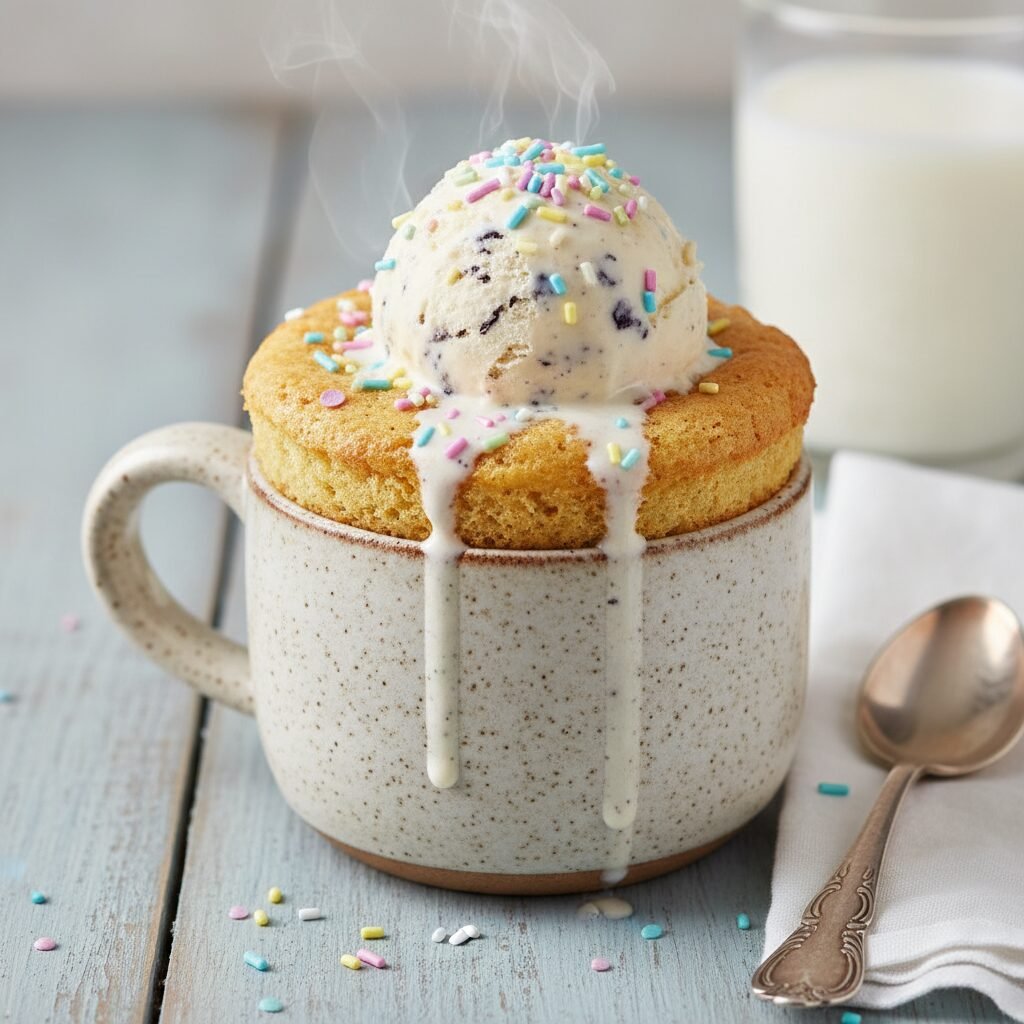
While this vanilla mug cake is delicious on its own, toppings take it to the next level. For a classic approach, add a scoop of vanilla bean ice cream immediately after cooking so it melts into the warm sponge. A dollop of fresh whipped cream and some sliced strawberries make for a lighter, ‘strawberries and cream’ vibe. For chocolate lovers, a drizzle of hot fudge or Nutella is fantastic. You can also dust the top with powdered sugar for a simple, elegant finish. If you are eating this for breakfast (we won’t judge!), try topping it with Greek yogurt and honey.
Storage and Reheating Tips
Mug cakes are designed to be eaten immediately. Unlike traditional cakes, they do not have preservatives or the structural integrity to stay fresh for days. As they cool completely, the texture can become chewy or dry due to the microwave cooking method (retrogradation of starch happens faster). However, if you absolutely cannot finish it, you can cover the mug tightly with plastic wrap and store it in the refrigerator for up to 24 hours. To eat, you *must* reheat it in the microwave for 10-15 seconds to soften the crumb again. Freezing is not recommended for this recipe.
Nutrition Facts (Estimated)
| Serving Size | 1 mug cake |
| Calories | 380 |
| Fat | 18g |
| Saturated Fat | 11g |
| Unsaturated Fat | 6g |
| Trans Fat | 0g |
| Cholesterol | 45mg |
| Sodium | 210mg |
| Carbohydrates | 48g |
| Fiber | 1g |
| Sugar | 24g |
| Protein | 4g |
Frequently Asked Questions
Why did my mug cake turn out rubbery?
Rubbery texture usually comes from two things: overmixing the batter (which develops too much gluten) or overcooking it. Next time, mix gently and reduce the cooking time by 10-15 seconds.
Can I bake this in an oven instead of a microwave?
Technically yes, but it defeats the purpose of a ‘quick’ mug cake. If you must, use an oven-safe ramekin and bake at 350°F (175°C) for about 12-15 minutes.
Can I double the recipe?
Do not try to double the ingredients in a single mug; it will definitely overflow and cook unevenly. It is better to make two separate mug cakes in two separate mugs.
Can I make this without baking powder?
Baking powder is essential for the lift. Without it, you will have a dense, heavy puck. If you have self-rising flour, you can use that and omit the baking powder and salt.
Is it safe to eat if it looks slightly wet on top?
Yes! Mug cakes continue to cook for a minute or two after you take them out of the microwave. A slightly moist top usually indicates a perfect, fudge-like texture inside.
Can I add cocoa powder to make this chocolate?
For a chocolate version, replace 1 tablespoon of flour with 1 tablespoon of unsweetened cocoa powder and add an extra teaspoon of sugar.
Why did my cake sink?
Mug cakes rise rapidly and often sink a little bit as they cool—this is normal. However, if it collapses completely, your baking powder might be expired.
Can I use almond flour for a Keto version?
You cannot simply swap all-purpose flour for almond flour 1:1 here. You would need a specific Keto mug cake recipe that accounts for the lack of gluten and absorbency differences.
Conclusion
The easy vanilla mug cake is the ultimate solution for emergency sweet cravings. It proves that you don’t need a lot of time, equipment, or ingredients to create something truly comforting and delicious. By following the tips on mixing and timing, you can say goodbye to rubbery microwave disasters and hello to warm, fluffy cake whenever the mood strikes. Whether you dress it up with sprinkles and ice cream or enjoy it plain with a cup of coffee, this recipe is a keeper. So grab your favorite mug, head to the pantry, and treat yourself—you are only two minutes away from dessert bliss.