
Zesty & Rich: Moist Lemon Cupcakes with Creamy Peanut Butter Frosting
Moist Lemon Cupcake With Peanut Butter Frosting Recipe
Discover the unexpectedly addictive combination of bright, zesty citrus and rich, savory-sweet nuttiness in these moist lemon cupcakes with peanut butter frosting. This recipe delivers a tender crumb bursting with fresh lemon flavor, perfectly balanced by a velvety, peanut-packed topping that will change the way you think about dessert pairings.
20 minutes
18 minutes
45 minutes
12 cupcakes
Dessert
Baking
American
Vegetarian
When we think of classic flavor pairings, chocolate and peanut butter or lemon and blueberry often come to mind. However, the culinary world is full of hidden gems, and the combination of zesty lemon and rich peanut butter is one of the most underrated yet spectacular duos in baking. This recipe for Moist Lemon Cupcakes with Peanut Butter Frosting challenges the status quo, offering a sophisticated interplay between the sharp, acidic brightness of fresh citrus and the earthy, salty-sweet depth of creamy peanut butter. It is a flavor profile that hits every note on the palate: tart, sweet, salty, and savory.
The base of this dessert is a meticulously tested lemon cupcake. Unlike dry or dense variations, this sponge relies on the reaction between acidic lemon juice, buttermilk, and leavening agents to create a crumb that is impossibly light yet moist enough to hold up to a heavy frosting. We use both lemon zest and fresh juice to infuse the batter with a perfume-like aroma that fills the kitchen as they bake. The texture is tender, almost melting in your mouth, providing a refreshing canvas for the topping.
Then comes the frosting. This isn’t just a standard buttercream; it is a whipped peanut butter masterpiece. By beating high-quality peanut butter with butter and confectioners’ sugar, we achieve a texture that is fluffy rather than heavy. The saltiness of the nuts cuts through the sugar, preventing the cupcake from becoming cloyingly sweet. When you take that first bite, the initial hit of creamy, nutty richness is immediately brightened by the lemon sponge, creating a harmonious balance that is surprisingly refreshing. Whether you are a adventurous baker looking for something new or a peanut butter lover wanting to branch out from chocolate, this recipe is a conversation starter and a crowd-pleaser wrapped in a golden wrapper.
History & Origins
The history of the cupcake is a charming journey through American culinary evolution. The term ‘cupcake’ first appeared in 1828 in Eliza Leslie’s ‘Receipts,’ though the concept of baking small cakes in individual cups (often pottery or ramekins) dates back even further. Originally, these were sometimes called ‘number cakes’ because of the easy-to-remember ratios of ingredients—one cup of butter, two cups of sugar, three cups of flour, and four eggs. This revolutionary method democratized baking, allowing home cooks to produce consistent treats without weighing ingredients on scales. Over the next century, the cupcake evolved from a simple tea-time snack into the frosted, decorated phenomenon we know today, particularly exploding in popularity during the early 2000s with the rise of boutique bakeries like Magnolia Bakery in New York City.
Peanut butter, on the other hand, has a distinctly different lineage. While the Aztecs mashed peanuts into a paste centuries ago, the modern spreadable version was patented by Marcellus Gilmore Edson in 1884. It gained traction as a protein source for patients who couldn’t chew meat, eventually becoming a staple of the American diet by the mid-20th century. The marriage of citrus and nuts is actually quite old, often seen in Mediterranean and Middle Eastern desserts where lemon and almonds or pistachios are paired. However, the specific combination of lemon and peanut butter is a more modern, distinctly American innovation. It likely emerged from the Southern tradition of experimenting with peanut butter in various confections, moving beyond the standard chocolate pairing. Today, it represents the adventurous spirit of modern baking, where contrasting flavor profiles—acid and fat—are celebrated for their complexity.
Why This Recipe Works
This recipe succeeds because it masters the science of moisture retention and flavor balance. First, let’s talk about the texture. Lemon juice is acidic, and when introduced to flour proteins, it can sometimes toughen the gluten if not handled correctly. To counteract this, we incorporate buttermilk and a touch of oil alongside the butter. The buttermilk’s acidity tenderizes the gluten strands, resulting in a softer crumb, while the oil ensures the cupcakes stay moist for days, unlike all-butter cakes which can dry out once cool. The addition of lemon zest is crucial because the essential oils in the skin hold the most potent citrus flavor without adding extra liquid that could throw off the batter’s hydration ratio.
Secondly, the flavor pairing works on the principle of contrast. The human palate craves balance. The lemon cupcake provides a high-acid, bright, and slightly tart base. Peanut butter is high in fat and has a savory, salty undertone. When you eat them together, the acid from the lemon cuts through the fat of the peanut butter, cleansing the palate and making the frosting feel lighter than it actually is. Conversely, the savory notes of the peanut butter ground the ethereal, airy lemon flavor, giving the bite substance. It is the same principle that makes apples and peanut butter such a classic snack; the crisp acidity needs the rich creaminess to feel complete.
Why You’ll Love This Recipe
- ✓Unique flavor combination that surprises and delights.
- ✓Ultra-moist crumb thanks to buttermilk and oil.
- ✓Frosting is fluffy and stable, perfect for piping.
- ✓Uses fresh lemon zest for a natural, aromatic citrus punch.
- ✓Perfect balance of sweet, tart, and salty.
- ✓Keeps well for several days without drying out.
Equipment You’ll Need
- ✓12-cup muffin tin
- ✓Cupcake liners
- ✓Stand mixer or electric hand mixer
- ✓Large mixing bowl
- ✓Medium mixing bowl
- ✓Whisk
- ✓Rubber spatula
- ✓Microplane or zester
- ✓Cooling rack
- ✓Piping bag and star tip (optional)
Ingredients
- ✓1 1/2 cups all-purpose flour
- ✓1 1/2 tsp baking powder
- ✓1/4 tsp baking soda
- ✓1/4 tsp salt
- ✓3/4 cup granulated sugar
- ✓1/2 cup unsalted butter, softened
- ✓2 large eggs, room temperature
- ✓1 tsp pure vanilla extract
- ✓1/2 cup buttermilk, room temperature
- ✓2 tbsp vegetable oil
- ✓2 tbsp fresh lemon juice
- ✓1 tbsp fresh lemon zest
- ✓FOR THE FROSTING:
- ✓1/2 cup creamy peanut butter (standard commercial brand recommended)
- ✓1/2 cup unsalted butter, softened
- ✓1 1/2 cups powdered sugar, sifted
- ✓1-2 tbsp heavy cream or milk
- ✓1/2 tsp vanilla extract
- ✓Pinch of salt
Instructions
- Preheat your oven to 350°F (175°C). Line a 12-cup muffin tin with paper liners.
- In a medium bowl, whisk together the flour, baking powder, baking soda, and salt. Set aside.
- In the bowl of a stand mixer fitted with the paddle attachment (or a large bowl using a hand mixer), cream the softened butter and granulated sugar together on medium-high speed for about 3-4 minutes until light and fluffy.
- Add the eggs one at a time, beating well after each addition. Scrape down the sides of the bowl.
- Beat in the vanilla extract, vegetable oil, and lemon zest until combined.
- Reduce the mixer speed to low. Add half of the dry ingredients to the butter mixture and mix until just combined.
- Pour in the buttermilk and fresh lemon juice, mixing gently. Then, add the remaining dry ingredients.
- Mix until just incorporated. Do not overmix; a few small lumps are okay. Overmixing will lead to tough cupcakes.
- Divide the batter evenly among the cupcake liners, filling them about 2/3 full.
- Bake for 16-19 minutes, or until a toothpick inserted into the center comes out clean or with just a few moist crumbs.
- Remove from the oven and let the cupcakes cool in the pan for 5 minutes before transferring them to a wire rack to cool completely.
- While cupcakes cool, prepare the frosting. In a clean mixing bowl, beat the softened butter and creamy peanut butter together on medium-high speed until smooth and creamy (about 2 minutes).
- Gradually add the powdered sugar, about 1/2 cup at a time, mixing on low speed initially to prevent a sugar cloud, then increasing to high.
- Add the vanilla extract, salt, and 1 tablespoon of heavy cream. Whip on high speed for 3-4 minutes until the frosting is aerated and fluffy. If the frosting is too stiff, add the second tablespoon of cream.
- Once the cupcakes are completely cool, pipe or spread the peanut butter frosting generously on top.
- Garnish with a small slice of lemon or crushed peanuts if desired.
Expert Cooking Tips
- ✓Room temperature ingredients are non-negotiable. Cold eggs or buttermilk can cause the batter to curdle.
- ✓Rub the lemon zest into the sugar with your fingers before creaming it with the butter to release more oils.
- ✓Do not use natural peanut butter (the kind that separates) for the frosting; it can be too oily and cause the frosting to break.
- ✓Sift your powdered sugar to ensure a silky smooth frosting without grainy lumps.
- ✓Fill liners only 2/3 full to prevent the cupcakes from spilling over the edges and creating flat ‘muffin tops’.
- ✓If you don’t have buttermilk, make a substitute by adding 1/2 tbsp of lemon juice to 1/2 cup of milk and letting it sit for 5 minutes.
Substitutions and Variations
If you need to adapt this recipe for dietary restrictions or pantry shortages, there are several options. For a gluten-free version, use a high-quality 1:1 gluten-free flour blend that contains xanthan gum; the texture will remain remarkably similar. If you are out of buttermilk, you can use plain Greek yogurt or sour cream thinned with a tablespoon of milk. For the oil, melted coconut oil or canola oil works perfectly. In the frosting, if you have a peanut allergy, almond butter or sunflower seed butter can be used, though the flavor profile will shift. For a dairy-free cupcake, substitute the butter with a plant-based butter block and the buttermilk with almond milk mixed with lemon juice. Note that dairy-free frostings may be slightly softer, so you might need a bit more powdered sugar to stiffen it up.
Common Mistakes to Avoid
The most common mistake with lemon cupcakes is overmixing the batter. Once the flour hits the liquid, gluten begins to form. If you mix too vigorously, you’ll end up with dense, rubbery cakes rather than fluffy ones. Another error is adding the lemon juice directly to the milk without mixing it into the batter correctly, which can sometimes cause weird curdling issues if not done in the right order (alternating wet and dry helps this). Regarding the frosting, using cold butter will result in lumps that are impossible to beat out, while using melted butter will create a greasy soup that won’t hold its shape. Finally, frosting the cupcakes before they are 100% cool is a recipe for disaster; the heat will melt the fat in the frosting, causing it to slide right off the cake.
Serving Suggestions
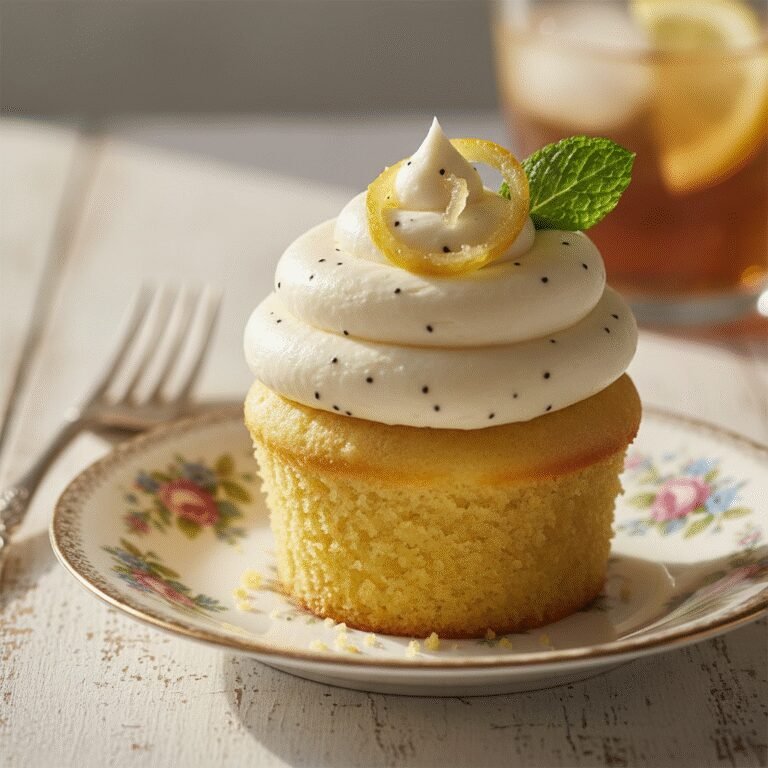
These cupcakes are visually striking with the golden frosting against the pale yellow cake. Serve them on a rustic wooden board or a clean white ceramic platter to let the colors pop. They pair wonderfully with a hot cup of Earl Grey tea, as the bergamot notes complement the lemon, or a cold glass of milk to wash down the rich peanut butter. For a party, garnish them with candied lemon peel or a drizzle of melted chocolate to signal the indulgence factor. They are perfect for spring picnics, summer barbecues, or even a quirky addition to a holiday dessert spread.
Storage and Reheating Tips
Store these cupcakes in an airtight container at room temperature for up to 2 days. The sugar and fat content act as preservatives. If you live in a very hot or humid climate, you may want to refrigerate them to keep the frosting from melting, but be sure to bring them back to room temperature before eating, as cold cake can taste dry and the frosting will be hard. You can also freeze the unfrosted cupcakes for up to 3 months; wrap them individually in plastic wrap and then place in a freezer bag. The frosting can also be frozen in a sealed container; just thaw it in the fridge overnight and re-whip it before using.
Nutrition Facts (Estimated)
| Serving Size | 1 cupcake |
| Calories | 340 |
| Fat | 18g |
| Saturated Fat | 8g |
| Unsaturated Fat | 9g |
| Trans Fat | 0g |
| Cholesterol | 45mg |
| Sodium | 190mg |
| Carbohydrates | 42g |
| Fiber | 2g |
| Sugar | 28g |
| Protein | 6g |
Frequently Asked Questions
Can I use bottled lemon juice instead of fresh?
It is highly recommended to use fresh lemon juice. Bottled juice often contains preservatives that give it a metallic or slightly artificial taste, which can be noticeable in a delicate cupcake. Fresh lemons also provide the zest, which is essential for the aroma.
Why did my cupcakes sink in the middle?
Sinking usually happens if the oven door was opened too early, causing a sudden temperature drop, or if the cupcakes were underbaked. It can also result from over-leavening (too much baking powder/soda). Ensure your oven is fully preheated and resist checking until the minimum bake time has passed.
Can I make these into mini cupcakes?
Absolutely! For mini cupcakes, bake at the same temperature (350°F) but reduce the baking time to 10-12 minutes. Keep an eye on them as they bake much faster.
My frosting is too stiff, what do I do?
If your frosting is too thick to pipe or spread, add more heavy cream or milk, one teaspoon at a time, beating in between additions until you reach the desired consistency.
Can I use natural peanut butter?
It is best to avoid natural peanut butter (the kind with oil separation) for frosting. The oil tends to separate, making the frosting greasy and unstable. Commercial brands like Jif or Skippy work best for baking and frostings.
How do I get a strong lemon flavor?
The secret is the zest. Most of the lemon flavor comes from the oils in the skin, not just the juice. Rubbing the zest into the sugar at the beginning of the recipe helps release these oils throughout the batter.
Can I double this recipe?
Yes, this recipe doubles easily. Just ensure you have a large enough mixing bowl and mixer capacity. You may need to rotate the pans in the oven if baking multiple trays at once.
Is the peanut butter frosting overwhelming?
Not at all. While peanut butter is a strong flavor, the brightness of the lemon cake cuts through the richness. The ratio of frosting to cake in this recipe is designed to create a balanced bite.
Conclusion
These Moist Lemon Cupcakes with Peanut Butter Frosting are a testament to the joy of stepping outside your culinary comfort zone. The journey from the zesty, aromatic batter to the creamy, savory-sweet finish creates a dessert experience that is complex, satisfying, and undeniably delicious. Whether you are baking for a special occasion or simply treating yourself on a weekend, this recipe promises to deliver bakery-quality results right in your own kitchen. So grab your lemons, open that jar of peanut butter, and get ready to fall in love with your new favorite flavor combination. Happy baking!