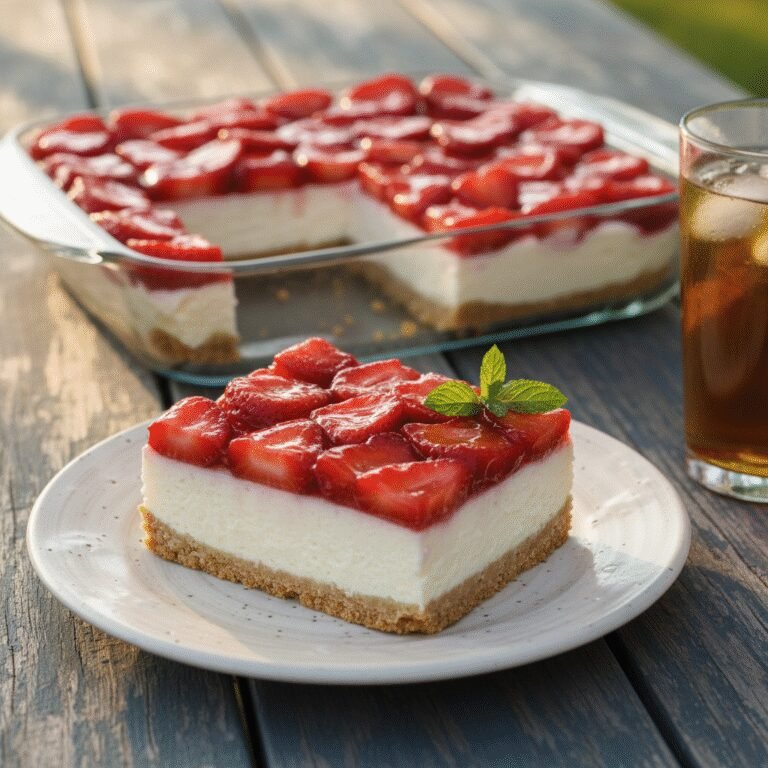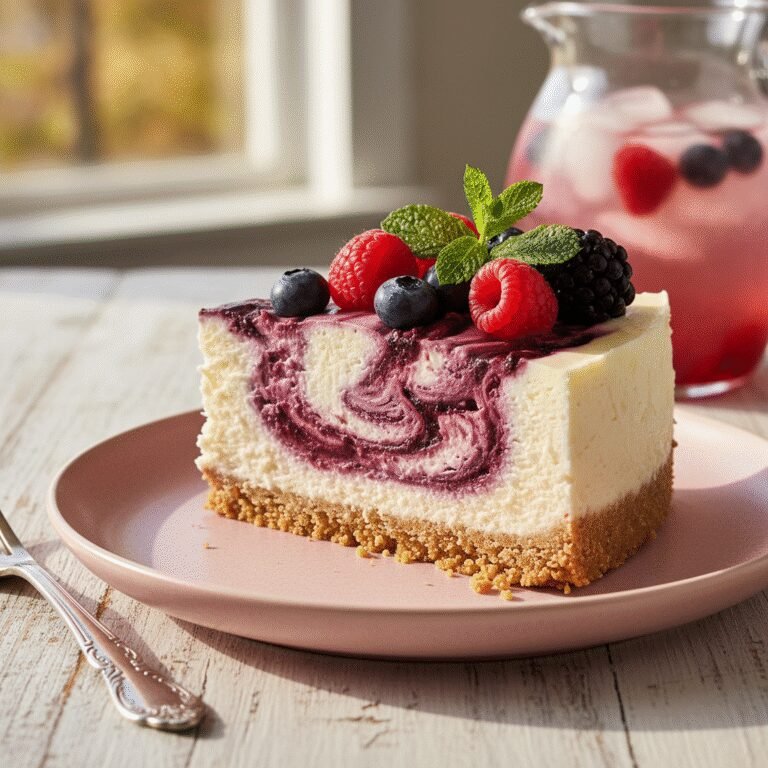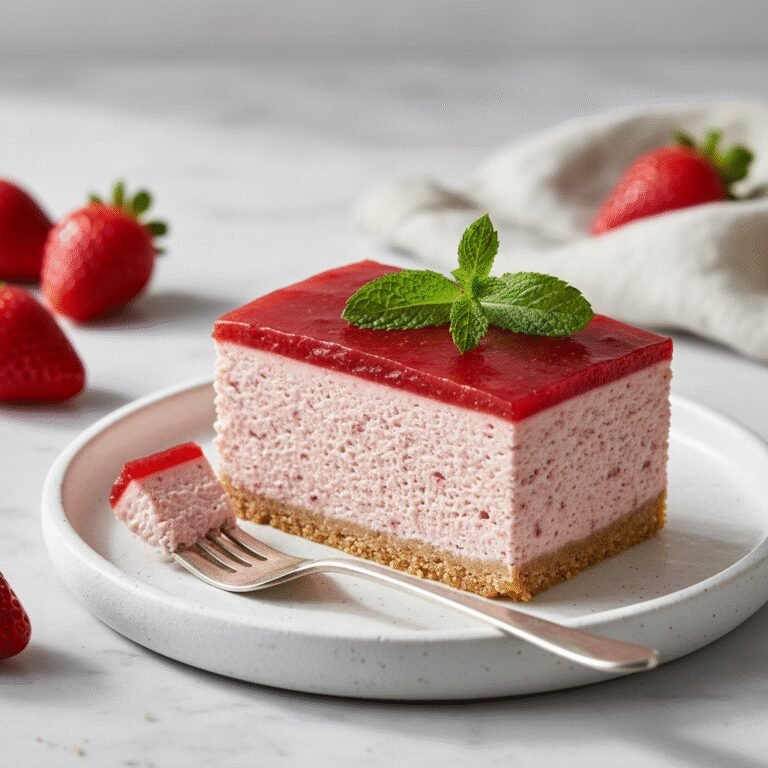
The Ultimate Easy No-Bake Strawberry Cheesecake with Fresh Berry Glaze
Easy No Bake Strawberry Cheesecake With Fresh Berries Recipe
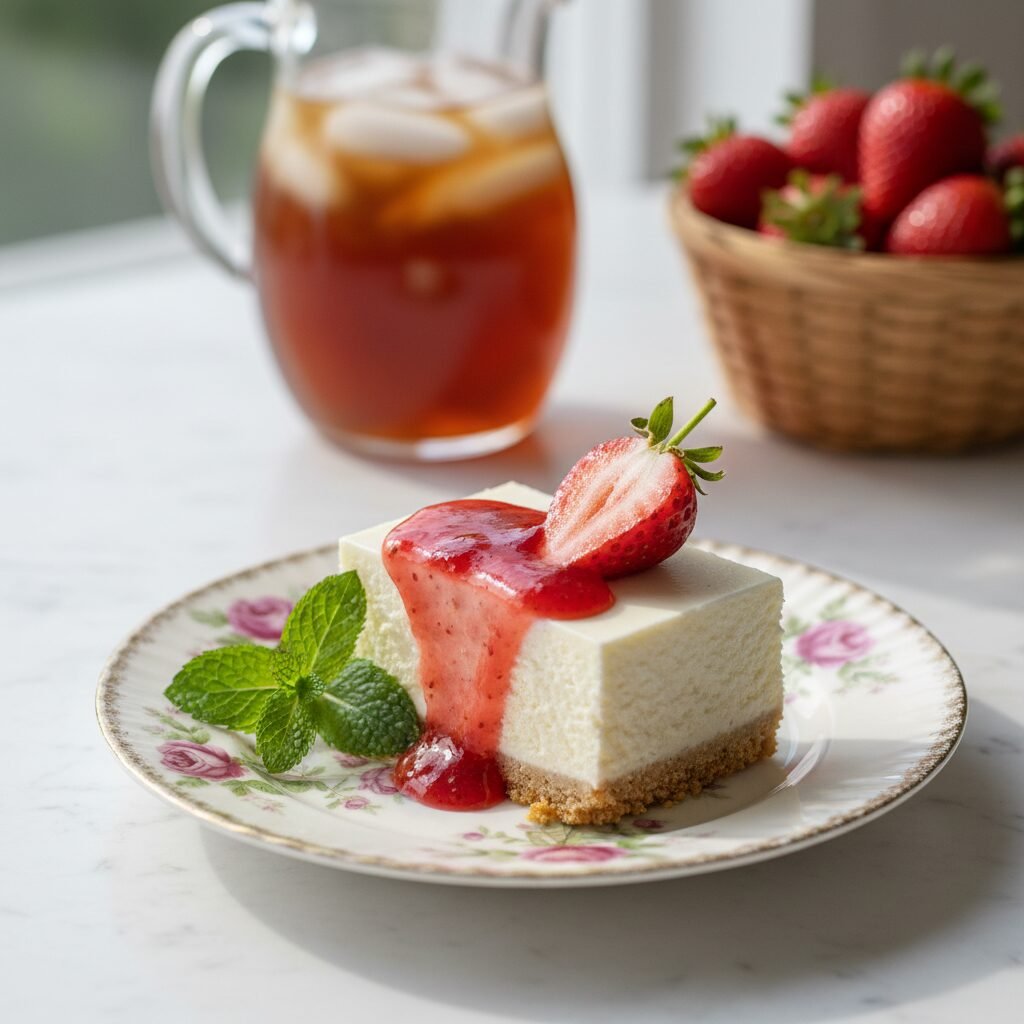
Indulge in the perfect summer treat with this velvety, mousse-like no-bake strawberry cheesecake. Featuring a buttery graham cracker crust and topped with a glistening fresh strawberry sauce, this dessert delivers gourmet flavor without ever turning on the oven.
30 minutes
5 minutes (stovetop for sauce)
6 hours 35 minutes (includes chilling)
10-12 servings
Dessert
Refrigeration/No-Bake
American
Vegetarian
There is something undeniably magical about a dessert that looks like a masterpiece, tastes like a slice of heaven, yet requires absolutely zero time in a hot oven. As the temperatures rise and summer gatherings fill our calendars, the last thing any home baker wants is to heat up the kitchen. Enter the Easy No-Bake Strawberry Cheesecake: a dessert that bridges the gap between effortless preparation and elegant presentation. Unlike its dense, baked New York-style cousin, the no-bake cheesecake offers a texture that is light, airy, and almost mousse-like, while still maintaining that signature tangy richness we all crave.
The beauty of this recipe lies in its balance. The crust provides a salty-sweet crunch that grounds the ethereal, cloud-like filling, while the fresh strawberry topping adds a burst of acidity and fruitiness that cuts through the cream. This isn’t just a recipe; it’s a celebration of seasonal produce and stress-free entertaining. Whether you are hosting a backyard barbecue, a bridal shower, or simply treating your family on a Tuesday night, this cheesecake commands attention on the table. The vibrant red of the fresh strawberries against the pale, creamy white filling creates a visual contrast that is as appetizing as it is beautiful. Plus, the make-ahead nature of this dish means you can relax and enjoy your company instead of fussing in the kitchen at the last minute.
History & Origins
The concept of cheesecake is far more ancient than most people realize, dating back over 4,000 years to ancient Greece. In fact, physical anthropologists have excavated cheese molds on the island of Samos that date to circa 2,000 B.C. These early versions were likely simple mixtures of honey, flour, and soft cheese, served to athletes at the first Olympic Games in 776 B.C. to provide energy. The Romans later adopted the recipe after conquering Greece, adding eggs and baking it under hot bricks, naming it ‘libum.’ As the Roman Empire expanded, the recipe traveled across Europe, evolving with local ingredients and culinary techniques.
However, the cheesecake we know and love today took a significant turn in 1872 in Chester, New York. A dairyman named William Lawrence was attempting to replicate the French cheese Neufchâtel but accidentally created a richer, creamier ‘unripened cheese’—what we now know as cream cheese. This invention revolutionized the dessert, leading to the dense, baked New York Style cheesecake. The ‘no-bake’ variation is a more modern mid-20th-century innovation, born out of the desire for convenience and the widespread availability of electric mixers and refrigeration. By utilizing the stabilizing power of whipped cream or gelatin rather than eggs and heat, home cooks discovered they could create a lighter, more delicate version of the classic, perfectly suited for warmer climates and quick preparation.
Why This Recipe Works
This recipe succeeds where many other no-bake cheesecakes fail because of the specific structural integrity created by the ratio of heavy cream to cream cheese. Many no-bake recipes rely heavily on gelatin, which can sometimes result in a rubbery, artificial texture. This recipe, however, relies primarily on the mechanical aeration of high-fat heavy whipping cream. When whipped to stiff peaks, the fat globules in the cream trap air bubbles, creating a stable foam. When this is gently folded into the softened, sweetened cream cheese, it lightens the mixture while providing enough structure to hold its shape once chilled.
Furthermore, the addition of a small amount of lemon juice does double duty: it provides the characteristic tang that mimics the fermentation flavor of traditional cheesecake, and the acid helps to slightly coagulate the proteins in the cream cheese, adding firmness. The crust is also optimized with a higher butter-to-crumb ratio to ensure it sets hard in the fridge without needing to be baked, preventing the dreaded crumbly bottom that falls apart when sliced. Finally, the fresh strawberry topping is thickened with cornstarch rather than gelatin, preserving the natural texture and bright flavor of the berries without turning them into a stiff jelly.
Why You’ll Love This Recipe
- ✓Requires absolutely no baking, keeping your kitchen cool.
- ✓Light, mousse-like texture that is less heavy than baked cheesecake.
- ✓Can be made up to 2 days in advance for stress-free hosting.
- ✓Features a vibrant, homemade fresh strawberry sauce.
- ✓Versatile base that can be adapted with other fruits or toppings.
- ✓Foolproof crust that holds together perfectly when sliced.
Equipment You’ll Need
- ✓9-inch Springform Pan
- ✓Electric Hand Mixer or Stand Mixer
- ✓Large Mixing Bowls
- ✓Rubber Spatula
- ✓Small Saucepan
- ✓Food Processor (for crumbs)
- ✓Measuring Cups and Spoons
Ingredients
- ✓2 cups graham cracker crumbs (about 14 full sheets)
- ✓1/2 cup unsalted butter, melted
- ✓1/4 cup granulated sugar (for crust)
- ✓24 oz (3 blocks) full-fat cream cheese, softened to room temperature
- ✓1 1/2 cups powdered sugar, sifted
- ✓1 teaspoon pure vanilla extract
- ✓1 tablespoon fresh lemon juice
- ✓1 1/4 cups heavy whipping cream, cold
- ✓1 lb fresh strawberries, hulled and halved
- ✓1/3 cup granulated sugar (for topping)
- ✓1 tablespoon cornstarch
- ✓1 tablespoon water
Instructions
- Prepare the crust: In a medium bowl, combine the graham cracker crumbs, melted butter, and 1/4 cup granulated sugar. Stir until the mixture resembles wet sand.
- Press the mixture firmly into the bottom and slightly up the sides of a 9-inch springform pan. Use the bottom of a measuring cup to pack it down tightly. Place in the freezer for 10-15 minutes to set while you make the filling.
- Make the filling: In a large mixing bowl using a hand mixer (or stand mixer with paddle attachment), beat the softened cream cheese until completely smooth and creamy, about 2-3 minutes. Ensure there are no lumps.
- Add the powdered sugar, vanilla extract, and lemon juice to the cream cheese. Beat for another minute until combined and smooth.
- Whip the cream: In a separate cold bowl, whip the heavy whipping cream until stiff peaks form. Be careful not to over-whip into butter, but ensure the peaks are firm and hold their shape.
- Combine: Gently fold the whipped cream into the cream cheese mixture using a rubber spatula. Do this in two batches to avoid deflating the air. Fold until just combined and no streaks of white cream remain.
- Assemble: Pour the filling over the chilled crust. Use an offset spatula to smooth the top evenly.
- Chill: Cover the pan loosely with plastic wrap and refrigerate for at least 6 hours, preferably overnight, to allow the cheesecake to set completely.
- Make the topping: About an hour before serving, chop half of the strawberries. Place them in a small saucepan with 1/3 cup sugar. Cook over medium heat until the berries break down and release juices (about 5-7 minutes). mash slightly if desired.
- Thicken sauce: Mix cornstarch and water in a small bowl to make a slurry. Stir this into the simmering strawberry mixture. Cook for another 1-2 minutes until thickened. Remove from heat and let cool completely.
- Serve: Once the sauce is cool and cheesecake is set, run a thin knife around the edge of the springform pan before releasing the ring. Top with the cooled strawberry sauce and the remaining fresh strawberry halves. Slice and serve.
Expert Cooking Tips
- ✓Room temperature cream cheese is non-negotiable; cold cheese causes lumps.
- ✓Use full-fat brick style cream cheese, not the spreadable tub variety.
- ✓Chill the bowl and beaters before whipping the cream for faster volume.
- ✓Do not rush the chilling time; 6 hours is the minimum for clean slices.
- ✓Press the crust very firmly to prevent it from crumbling when served.
- ✓Sift the powdered sugar to ensure a silky smooth texture.
- ✓Wait until the strawberry sauce is completely cool before pouring over the cheesecake.
Substitutions and Variations
This recipe is highly adaptable to various dietary needs and pantry staples. For the crust, if graham crackers aren’t available, you can use digestive biscuits, vanilla wafers, or even Oreos for a chocolate twist (omit the sugar in the crust if using Oreos). For a gluten-free version, simply use gluten-free graham cracker crumbs. If you want to reduce the sugar, you can use a powdered erythritol sweetener for the filling, though the texture may be slightly less creamy. The topping is equally versatile; while strawberries are classic, you can substitute them with raspberries, blueberries, or a mix of forest fruits. If you don’t have cornstarch for the topping, arrowroot powder works as an excellent thickening agent. For the dairy, unfortunately, no-bake cheesecakes are difficult to make vegan without specialized ingredients, but high-quality vegan cream cheese and coconut cream can work if you are experienced with plant-based baking.
Common Mistakes to Avoid
The most common mistake with no-bake cheesecake is not whipping the heavy cream to stiff peaks. If the cream is too soft, the cheesecake will not set properly and will puddle when the ring is removed. Another frequent error is using tub cream cheese or ‘whipped’ cream cheese; these contain more air and water content, leading to a runny filling—always use the brick blocks. Rushing the chilling process is also a recipe for disaster; if you cut into it too soon, it won’t hold its shape. Lastly, avoid over-mixing the whipped cream into the cheese base; if you mix too aggressively, you knock out the air bubbles that give the cheesecake its structure, resulting in a dense, heavy dessert.
Serving Suggestions
This cheesecake is a showstopper on its own, but you can elevate the presentation by serving each slice with a sprig of fresh mint or a dusting of powdered sugar. For an extra indulgent touch, add a dollop of fresh whipped cream on the side or a drizzle of white chocolate ganache. It pairs beautifully with a glass of chilled prosecco, a light Moscato, or freshly brewed coffee to cut the richness. If serving for a 4th of July party, add blueberries to the topping for a patriotic red, white, and blue theme.
Storage and Reheating Tips
Leftover cheesecake should be stored in the refrigerator, tightly covered with plastic wrap or in an airtight cake container, for up to 5 days. The crust may soften slightly over time as it absorbs moisture from the filling. This cheesecake also freezes exceptionally well. To freeze, let it set completely in the fridge first. Then, wrap the whole cheesecake (without the strawberry topping) or individual slices in plastic wrap, followed by a layer of aluminum foil. It can be frozen for up to 3 months. Thaw in the refrigerator overnight before serving. It is best to add the fresh fruit topping just before serving after thawing.
Nutrition Facts (Estimated)
| Serving Size | 1 slice |
| Calories | 450 |
| Fat | 32g |
| Saturated Fat | 19g |
| Unsaturated Fat | 11g |
| Trans Fat | 0g |
| Cholesterol | 95mg |
| Sodium | 210mg |
| Carbohydrates | 38g |
| Fiber | 2g |
| Sugar | 28g |
| Protein | 5g |
Frequently Asked Questions
Can I use frozen strawberries for the topping?
Yes, you can use frozen strawberries for the cooked sauce portion. They actually break down faster than fresh ones. However, for the garnish on top, fresh strawberries look and taste much better.
Why is my cheesecake runny?
A runny cheesecake usually happens because the heavy cream wasn’t whipped to stiff peaks, the mixture was over-mixed during folding, or it wasn’t chilled long enough. Using low-fat cream cheese can also cause this.
Can I make this recipe ahead of time?
Absolutely. In fact, it’s better if made a day in advance. It allows the flavors to meld and the texture to firm up perfectly. Just add the topping right before serving.
Do I need to use gelatin?
No, this specific recipe relies on the structure of whipped cream and the firmness of cream cheese. It yields a creamier, mousses-like texture compared to gelatin-based recipes.
Can I use Cool Whip instead of heavy cream?
You can, but the taste and texture will be different. It will be sweeter and have a more artificial flavor. If using Cool Whip, use about 3 cups and omit the 1/4 cup sugar in the filling.
How do I get clean slices?
Run a sharp chef’s knife under hot water, wipe it dry, and then make a cut. Repeat this process for every single slice to ensure clean, smooth edges.
Can I use a different size pan?
Yes, an 8-inch pan will yield a taller cheesecake (may need longer chill time), while a 10-inch pan will be thinner. You can also make these in individual jars or dessert cups.
Is the lemon juice necessary?
Technically you can omit it, but it is highly recommended. It cuts the richness of the cheese and sugar, and the acid helps the proteins set, making the cheesecake firmer.
Conclusion
The Easy No-Bake Strawberry Cheesecake is the ultimate testament to the fact that great food doesn’t have to be complicated. It brings together the nostalgic crunch of graham crackers, the luxurious silkiness of cream cheese, and the bright, summery burst of fresh berries in perfect harmony. Whether you are a seasoned baker looking for a break from the oven or a beginner wanting to impress guests with a foolproof dessert, this recipe is a guaranteed winner. So grab your mixer, pick up some fresh berries, and prepare to fall in love with your new favorite summer dessert.