The Ultimate Moist Gingerbread Loaf Cake with Spiced Cream Cheese Glaze
Moist Gingerbread Cake Loaf Cake Recipe
Embrace the cozy warmth of the holiday season with this incredibly moist gingerbread loaf cake. Infused with rich molasses, aromatic ginger, and cinnamon, and topped with a velvety spiced cream cheese glaze, this recipe is the perfect companion for your morning coffee or a festive dessert spread.
20 minutes
55 minutes
1 hour 15 minutes
1 loaf (10-12 slices)
Dessert
Baking
American / European
Vegetarian
There is something undeniably magical about the scent of gingerbread baking in the oven. It is the olfactory signal that the holidays have officially arrived, bringing with it a sense of nostalgia and comfort that few other baked goods can rival. This Moist Gingerbread Loaf Cake is not just a recipe; it is a celebration of winter spices and deep, caramelized flavors. Unlike the crisp snap of a gingerbread man cookie, this loaf cake offers a tender, dense crumb that melts in your mouth, reminiscent of a traditional sticky toffee pudding but with the robust kick of ground ginger, cloves, and cinnamon.
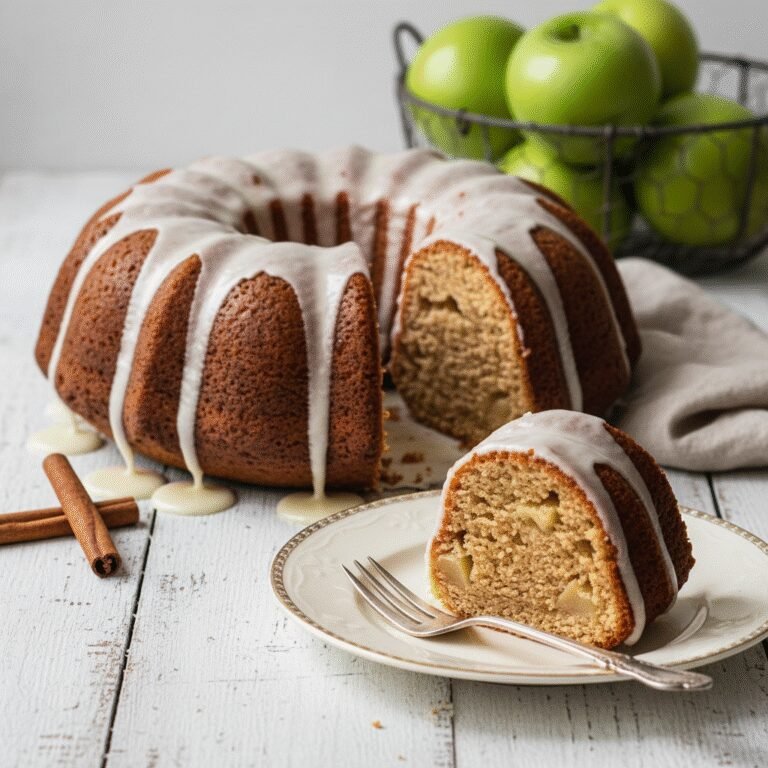
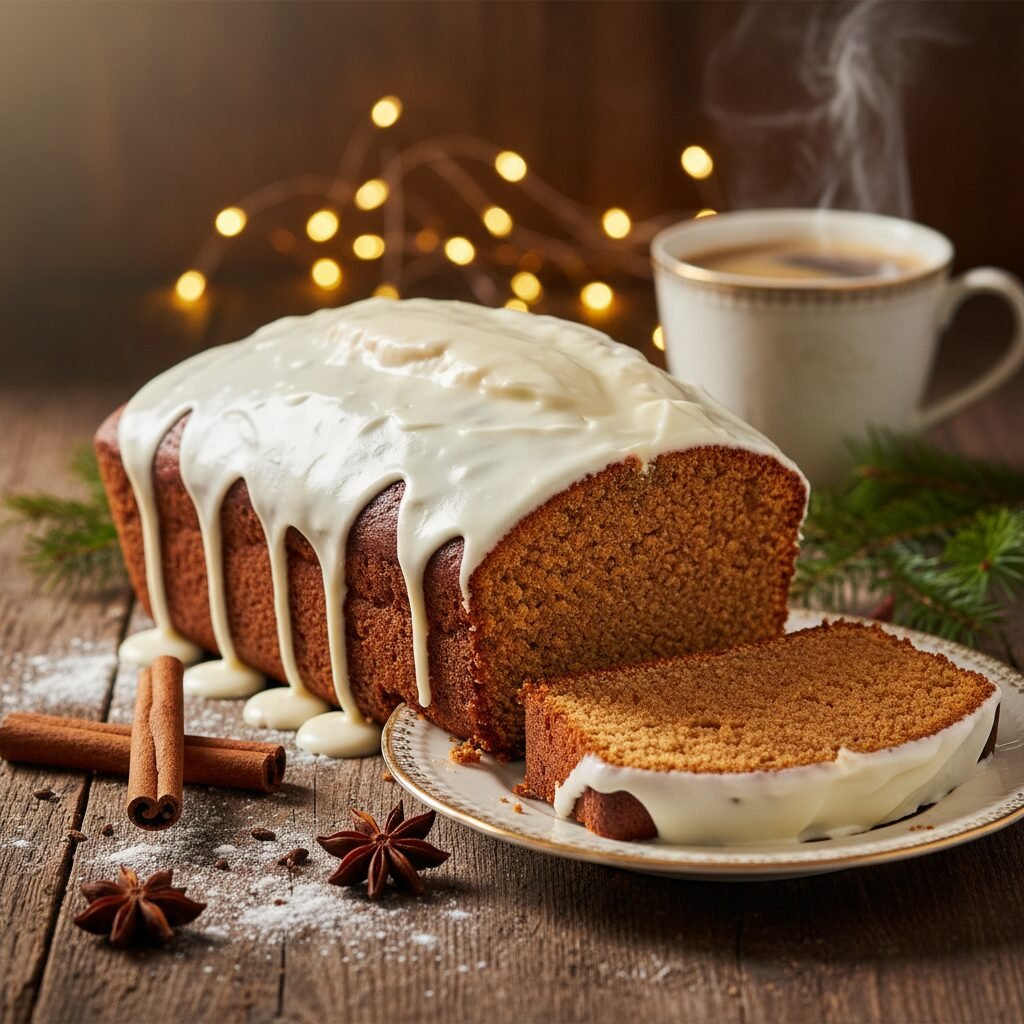
What sets this specific loaf apart is its texture. We have all encountered dry, crumbly spice cakes that require a gallon of milk to wash down. This recipe, however, leverages the science of baking to ensure a crumb that stays soft for days. The secret lies in the balance of rich molasses and the precise hydration levels, creating a cake that is substantial yet surprisingly light. As you slice into the dark, golden-brown loaf, you will notice how the glaze drips dramatically down the sides, inviting you to take that first bite. The flavor profile is a sophisticated dance between the slight bitterness of molasses and the sweetness of brown sugar, all lifted by the bright heat of ginger. Whether you are hosting a Christmas brunch, looking for a thoughtful homemade gift, or simply craving a slice of comfort on a rainy afternoon, this gingerbread loaf is your answer. It is rustic enough for a casual breakfast but elegant enough to serve as the finale to a holiday feast.
History & Origins
The history of gingerbread is as rich and complex as its flavor profile, spanning thousands of years and crossing continents. The root of the recipe, ginger, was first cultivated in ancient China for medical treatments and eventually made its way to Europe via the Silk Road. Ancient Greeks and Egyptians used it for ceremonial purposes, but it was during the Middle Ages in Europe that gingerbread began to take the forms we recognize today. Crusaders returning from the Middle East brought back spicy gingerbread, and it quickly became a favorite at medieval fairs in England, France, Holland, and Germany. In fact, strictly regulated guilds for gingerbread bakers were established in Europe, with Nürnberg, Germany, becoming the ‘Gingerbread Capital of the World’ due to its famous Lebkuchen.
The concept of the gingerbread ‘loaf’ or cake is closely related to the French ‘pain d’épices’ (spice bread) and early American recipes that utilized molasses—a cheaper byproduct of sugar refining—instead of expensive refined sugar. In colonial America, soft gingerbread cakes were more common than the hard cookies we decorate today. The iconic gingerbread man is often credited to Queen Elizabeth I, who had cookies made to resemble visiting dignitaries, but the loaf cake remained a staple of home cooking due to its simplicity and heartiness. George Washington’s mother, Mary Ball Washington, even had a famous recipe for soft gingerbread that she served to the Marquis de Lafayette. Over centuries, the recipe evolved from a dense, honey-sweetened bread to the chemically leavened, molasses-rich cake we adore today, proving that good taste truly stands the test of time.
Why This Recipe Works
This recipe succeeds where others fail primarily due to the moisture-retaining properties of its key ingredients and the specific mixing method employed. First and foremost, the heavy use of molasses is crucial. Molasses is hygroscopic, meaning it attracts and holds water molecules, which prevents the cake from drying out even days after baking. Furthermore, molasses is acidic, which reacts vigorously with the baking soda. This reaction creates carbon dioxide bubbles that lift the heavy batter, ensuring the loaf is dense but not brick-like.
Secondly, the inclusion of hot water (or hot coffee) at the end of the mixing process is a game-changer. The heat helps to ‘bloom’ the spices—cocoa, cinnamon, cloves, and ginger—releasing their essential oils for a more potent flavor profile. It also melts the butter and sugar completely, ensuring a uniform batter that bakes evenly. We also use a combination of butter and oil; butter provides that classic dairy richness, while oil remains liquid at room temperature, contributing to a softer crumb sensation. Finally, the use of brown sugar adds extra moisture and a deep toffee note that white sugar simply cannot achieve. The result is a loaf that balances structural integrity with a luscious, pudding-like mouthfeel.
Why You’ll Love This Recipe
- ✓Incredibly moist texture that lasts for days
- ✓Deep, robust spice flavor with a kick of ginger
- ✓Easy one-bowl mixing method
- ✓Perfect for holiday gifting and freezing
- ✓Versatile: serves as breakfast or dessert
Equipment You’ll Need
- ✓9×5 inch Loaf Pan
- ✓Large Mixing Bowl
- ✓Medium Mixing Bowl
- ✓Whisk
- ✓Rubber Spatula
- ✓Measuring Cups and Spoons
- ✓Wire Cooling Rack
- ✓Stand Mixer or Hand Mixer (for glaze)
Ingredients
- ✓1/2 cup (113g) unsalted butter, softened
- ✓1/2 cup (100g) granulated sugar
- ✓1 large egg, room temperature
- ✓1 cup (240ml) unsulphured molasses (do not use blackstrap)
- ✓2 1/2 cups (315g) all-purpose flour
- ✓1 1/2 teaspoons baking soda
- ✓1 teaspoon ground cinnamon
- ✓1 teaspoon ground ginger
- ✓1/2 teaspoon ground cloves
- ✓1/2 teaspoon salt
- ✓1 cup (240ml) hot water
- ✓4 oz cream cheese, softened (for glaze)
- ✓1 cup powdered sugar (for glaze)
- ✓1 tablespoon milk (for glaze)
- ✓1/2 teaspoon vanilla extract (for glaze)
Instructions
- Preheat your oven to 350°F (175°C). Generously grease a 9×5 inch loaf pan with butter or non-stick spray and line it with parchment paper, leaving an overhang on the sides for easy removal.
- In a large mixing bowl, beat the softened butter and granulated sugar together until light and fluffy, about 2-3 minutes.
- Add the egg and beat until fully incorporated. Then, mix in the molasses until the mixture is smooth and uniform.
- In a separate medium bowl, whisk together the all-purpose flour, baking soda, cinnamon, ginger, cloves, and salt.
- Gradually add the dry ingredients to the wet mixture in three parts, stirring gently with a spatula or wooden spoon. Do not overmix; the batter will be thick.
- Carefully pour the hot water into the batter. Whisk gently until the water is fully incorporated and the batter becomes smooth and somewhat thin. Ensure there are no lumps.
- Pour the batter into the prepared loaf pan. Tap the pan gently on the counter to release any large air bubbles.
- Bake in the preheated oven for 50-60 minutes. Check for doneness by inserting a toothpick into the center; it should come out clean or with just a few moist crumbs attached.
- Remove the loaf from the oven and let it cool in the pan for about 15 minutes. Then, lift it out using the parchment paper overhang and transfer it to a wire rack to cool completely before glazing.
- To make the glaze: In a small bowl, beat the softened cream cheese until smooth. Whisk in the powdered sugar, milk, and vanilla until you reach a pourable consistency. Drizzle over the cooled cake.
Expert Cooking Tips
- ✓Use standard unsulphured molasses (like Grandma’s brand) rather than blackstrap molasses, which can be overly bitter and alter the texture.
- ✓Do not skip the hot water step; it activates the baking soda immediately and helps dissolve the molasses for a smoother crumb.
- ✓If the top of the loaf is browning too quickly before the center is set, tent the pan loosely with aluminum foil after 30 minutes.
- ✓Ensure all refrigerated ingredients like eggs and butter are at room temperature to prevent the batter from curdling.
- ✓For a deeper flavor, you can substitute half of the hot water with strong brewed coffee.
- ✓Let the cake cool completely before slicing; warm gingerbread can be fragile and crumble easily.
Substitutions and Variations
This recipe is quite robust, but there are several substitutions you can make based on dietary needs or pantry availability. For the fat, you can substitute the butter with coconut oil or vegetable oil for a dairy-free version (omit the cream cheese glaze or use vegan cream cheese). If you don’t have molasses, dark corn syrup, maple syrup, or honey can be used, though the flavor will be significantly lighter and less ‘gingerbread-like.’ You can replace the all-purpose flour with a 1:1 gluten-free baking flour blend if you are avoiding gluten; look for a blend that contains xanthan gum. For the sugar, dark brown sugar can be used instead of granulated sugar for an even moister, more caramel-flavored loaf. Fresh grated ginger can replace ground ginger for a spicy kick—use about 1 tablespoon of fresh ginger for the 1 teaspoon of ground.
Common Mistakes to Avoid
The most common mistake with gingerbread is using blackstrap molasses. Blackstrap is much more concentrated, less sweet, and higher in sodium and potassium, which can lead to a bitter, metallic taste and a dry texture. Always stick to ‘mild’ or ‘full’ flavor unsulphured molasses. Another frequent error is overmixing the batter after adding the flour. This develops the gluten too much and results in a tough, rubbery loaf. Mix the dry ingredients until just combined. Additionally, be careful not to overbake. Because the batter is dark, it is hard to judge doneness by color alone. Rely on the toothpick test and remember that the cake will continue to firm up as it cools. Finally, adding the hot water too quickly can sometimes scramble the egg if you pour it directly onto the egg mixture without stirring constantly; pour slowly and whisk continuously.
Serving Suggestions
This gingerbread loaf is incredibly versatile. Serve it slightly warm with a dollop of freshly whipped cream and a dusting of cinnamon for an elegant dessert. It pairs beautifully with poached pears or a compote of tart fruits like cranberries or apricots to cut through the richness. For breakfast, a slice toasted with salted butter is divine. If you want to elevate the presentation for a holiday party, garnish the glazed loaf with crystallized ginger pieces, toasted pecans, or even pomegranate arils for a pop of festive color. It is best enjoyed alongside a hot cup of coffee, chai tea, or a mulled cider.
Storage and Reheating Tips
Gingerbread is one of those rare cakes that actually tastes better the next day as the spices have time to meld and the moisture redistributes. Store the cooled loaf in an airtight container at room temperature for up to 4 days. If you have applied the cream cheese glaze, it is safer to store it in the refrigerator, where it will last for up to a week; just bring it to room temperature before serving for the best texture. For long-term storage, wrap the unglazed loaf tightly in plastic wrap, then in aluminum foil, and freeze for up to 3 months. Thaw overnight on the counter before glazing and serving.
Nutrition Facts (Estimated)
| Serving Size | 1 slice |
| Calories | 320 |
| Fat | 14g |
| Saturated Fat | 8g |
| Unsaturated Fat | 5g |
| Trans Fat | 0g |
| Cholesterol | 45mg |
| Sodium | 210mg |
| Carbohydrates | 45g |
| Fiber | 1g |
| Sugar | 22g |
| Protein | 4g |
Frequently Asked Questions
Can I make this into muffins instead of a loaf?
Yes, absolutely. Pour the batter into a lined muffin tin, filling each cup about 3/4 full. Bake at 350°F for 18-22 minutes. The baking time is significantly shorter, so keep an eye on them.
Why did my gingerbread sink in the middle?
Sinking usually happens if the cake was underbaked in the center or if the oven door was opened too early, causing a sudden temperature drop. It can also result from using too much leavening (baking soda).
Can I add mix-ins like nuts or dried fruit?
Definitely. Chopped walnuts, pecans, or raisins make excellent additions. Toss them in a teaspoon of flour before folding them into the batter to prevent them from sinking to the bottom.
Is fresh ginger better than ground ginger?
They offer different flavor profiles. Ground ginger provides a warm, spicy background note that is classic for gingerbread. Fresh ginger is zestier and sharper. You can use a mix of both for a complex flavor.
What is the difference between sulphur and unsulphured molasses?
Unsulphured molasses is made from ripe sugar cane and has a cleaner, sweeter flavor. Sulphured molasses comes from green sugar cane and is treated with sulphur dioxide, which can leave a chemical aftertaste. Always choose unsulphured for baking.
Can I use self-rising flour?
It is not recommended because this recipe relies on a specific amount of baking soda to react with the acidic molasses. Self-rising flour has baking powder already added, which might throw off the chemical balance.
Why do I need hot water?
Hot water helps to bloom the cocoa (if used) and spices, and it ensures the molasses dissolves easily into the batter. It also helps create a uniform emulsion with the fats.
Can I reduce the sugar?
You can reduce the granulated sugar by about 25% without ruining the structure, but keep in mind that sugar also contributes to moisture. Reducing it too much may lead to a drier cake.
Conclusion
This Moist Gingerbread Loaf Cake is more than just a sweet treat; it is a slice of holiday tradition that warms the home and the heart. With its perfect balance of spice, sweetness, and rich molasses depth, it is destined to become a requested favorite year after year. Whether you are a seasoned baker or a novice in the kitchen, this forgiving and rewarding recipe guarantees a delicious result. So, put on your favorite holiday playlist, brew a pot of coffee, and fill your kitchen with the comforting aroma of ginger and cinnamon. Happy baking!