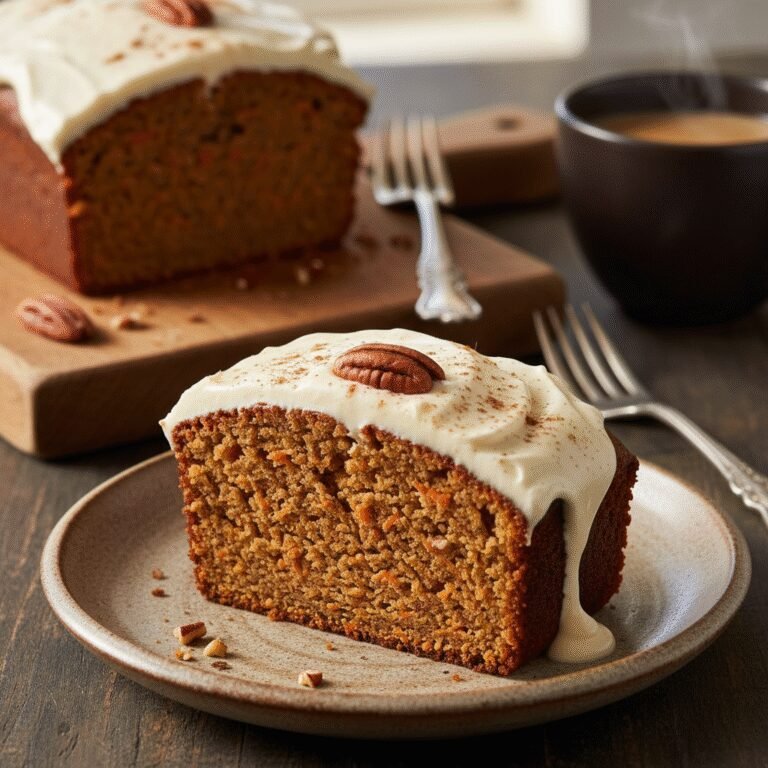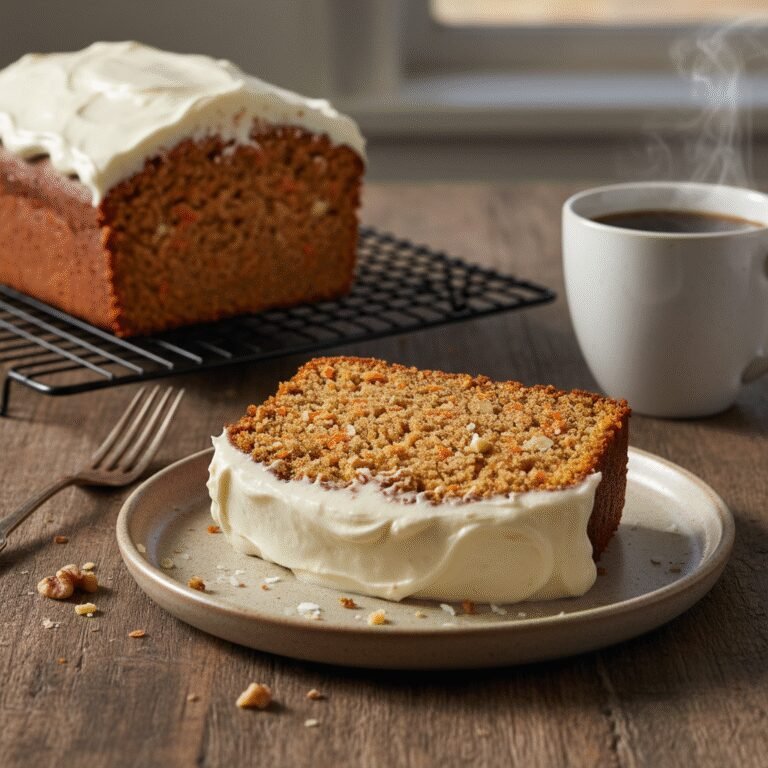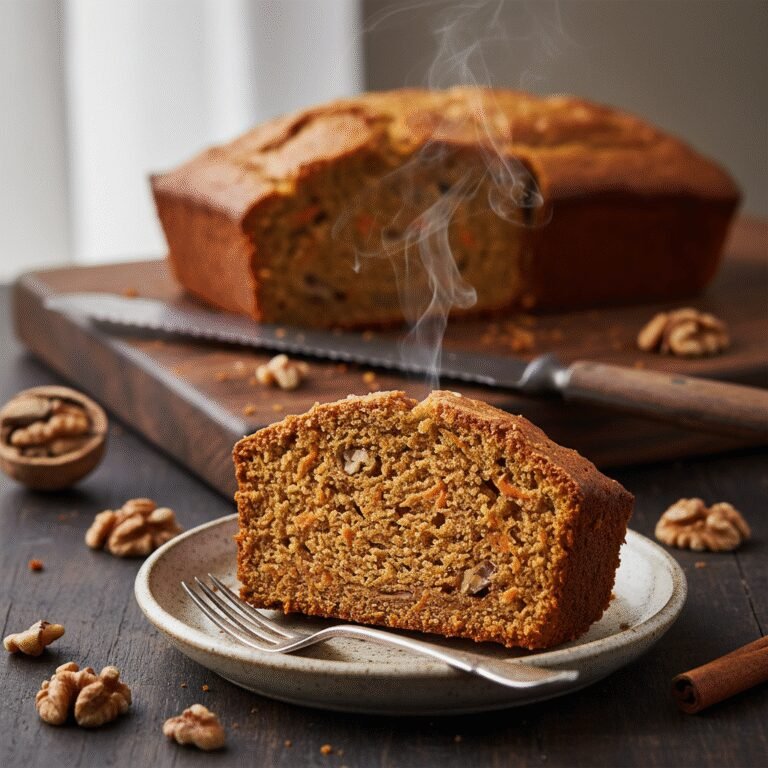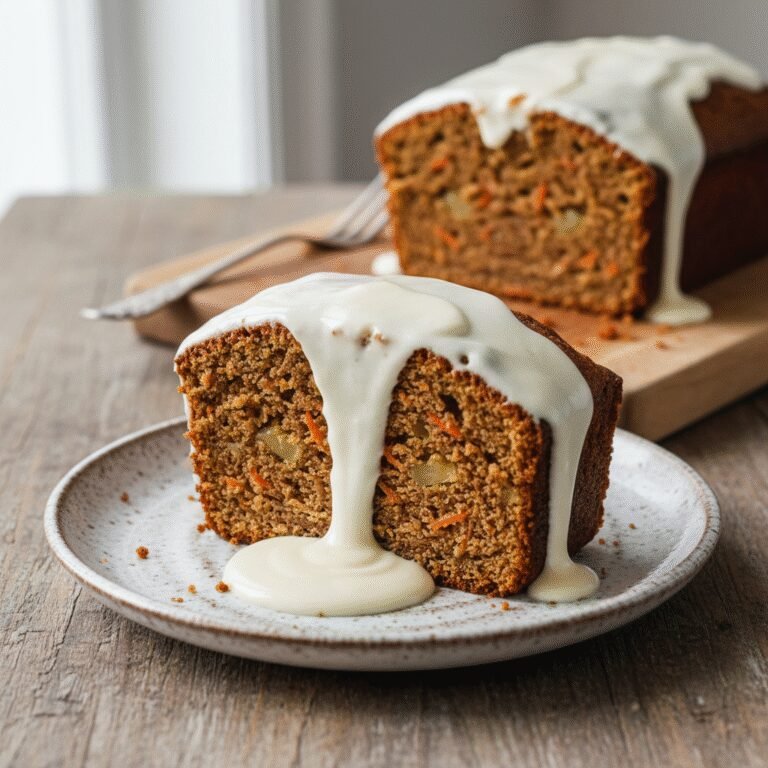
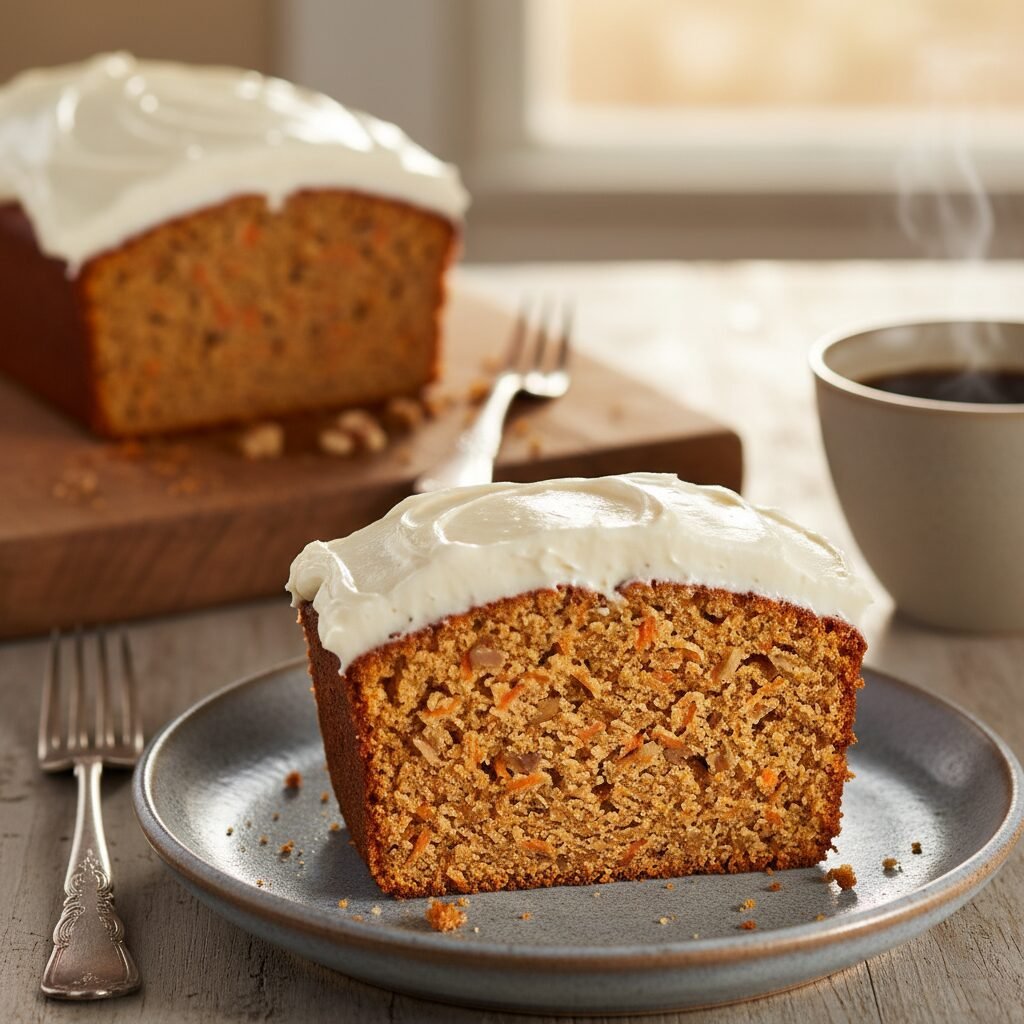
The Ultimate Moist Carrot Loaf Cake With Tangy Cream Cheese Frosting
Moist Carrot Loaf Cake With Cream Cheese Frosting Recipe
Discover the secret to the moistest carrot loaf cake you’ll ever bake. This foolproof recipe combines sweet, freshly grated carrots with warm spices and a luscious, tangy cream cheese frosting, creating a comforting treat perfect for breakfast, dessert, or an afternoon pick-me-up.
20 minutes
55 minutes
1 hour 15 minutes
1 Loaf (8-10 Slices)
Dessert
Baking
American
Vegetarian
There is something undeniably comforting about the smell of warm spices wafting through the kitchen on a crisp afternoon. Carrot cake has long been a staple in the pantheon of classic home baking, but transforming it into a loaf cake elevates the experience into something both rustic and refined. This Moist Carrot Loaf Cake with Cream Cheese Frosting is not just another recipe; it is a celebration of texture and flavor balance. The crumb is incredibly tender, bordering on creamy, thanks to a specific balance of oil and brown sugar, while the freshly grated carrots provide natural sweetness and moisture that keeps the cake fresh for days.
Unlike elaborate layer cakes that require structural integrity and precise decoration, a loaf cake is forgiving and approachable. It invites you to slice a thick piece, grab a fork, and curl up with a hot cup of coffee. The magic lies in the spices—a blend of cinnamon, nutmeg, and a whisper of ginger—that cuts through the richness of the batter. But the crowning glory is, without a doubt, the frosting. It is a thick, tangy, velvety blanket of cream cheese and butter that perfectly offsets the spice of the cake. Whether you are a novice baker looking for a guaranteed win or a seasoned pro searching for the ultimate loaf recipe, this dish delivers on every front. It’s the kind of recipe that gets requested at every potluck, family gathering, and holiday brunch, proving that simple ingredients, treated with care, can produce extraordinary results.
History & Origins
The origins of carrot cake are somewhat debated, but food historians often trace its lineage back to medieval Europe. During the Middle Ages, sugar was a rare and expensive luxury, accessible only to the wealthy. To sweeten their puddings and desserts, cooks turned to vegetables that were naturally high in sugar, specifically carrots and parsnips. These early iterations were more akin to a dense, steamed carrot pudding than the fluffy cakes we know today. As time progressed, these puddings evolved, slowly incorporating leavening agents and moving toward a baked format.
A significant resurgence in the use of carrots in baking occurred during World War II. With strict rationing of sugar in the United Kingdom, the government disseminated recipes that utilized carrots as a sweetener to stretch limited supplies. This ‘War Cake’ kept morale high and bellies full without depleting the precious sugar ration. However, the modern American version of carrot cake, complete with its iconic cream cheese frosting, didn’t truly explode in popularity until the 1960s and 1970s. It became a symbol of the health food craze of the era—after all, it had a vegetable in it! While the ‘healthy’ label might be a stretch given the sugar and oil content, it cemented carrot cake’s place in American culinary history. Today, the loaf format serves as a nod to the quick breads of the mid-century, offering a nostalgic yet timeless appeal that bridges the gap between a morning muffin and a decadent dessert.
Why This Recipe Works
This recipe succeeds where many others fail because of three critical factors: the fat source, the sugar ratio, and the carrot preparation. First, we use a neutral oil (like canola or vegetable) instead of butter for the batter. While butter adds flavor, it contains water and milk solids that can lead to a drier cake once cooled. Oil is 100% fat and remains liquid at room temperature, ensuring the loaf stays incredibly moist and tender for days.
Secondly, the use of dark brown sugar is pivotal. Brown sugar contains molasses, which is hygroscopic—meaning it attracts and holds onto moisture from the air. This contributes to a dense, fudgy crumb rather than a light, airy sponge, which is exactly what you want in a substantial loaf cake. Finally, the carrots must be freshly grated. Pre-shredded carrots from the grocery store are coated in starch to prevent clumping and are often dried out. Grating them yourself releases their natural juices, which steam within the batter as it bakes, infusing the cake with moisture and flavor. Combined with the acidity of the cream cheese frosting which cuts through the sweetness, these elements create a scientifically balanced and gastronomically perfect bite.
Why You’ll Love This Recipe
- ✓Incredibly moist crumb that stays fresh for up to 5 days.
- ✓Rich, tangy cream cheese frosting that balances the sweet spices.
- ✓Easy one-bowl method for the wet ingredients.
- ✓Perfectly spiced with cinnamon, nutmeg, and ginger.
- ✓Versatile enough for breakfast, brunch, or dessert.
- ✓Freezes beautifully for meal prep or future treats.
Equipment You’ll Need
- ✓9×5 inch Loaf Pan
- ✓Large Mixing Bowl
- ✓Medium Mixing Bowl
- ✓Box Grater or Food Processor
- ✓Electric Hand Mixer or Stand Mixer
- ✓Whisk
- ✓Rubber Spatula
- ✓Wire Cooling Rack
- ✓Parchment Paper
Ingredients
- ✓1 1/2 cups all-purpose flour
- ✓1 teaspoon baking soda
- ✓1/2 teaspoon baking powder
- ✓1/2 teaspoon salt
- ✓1 1/2 teaspoons ground cinnamon
- ✓1/2 teaspoon ground ginger
- ✓1/4 teaspoon ground nutmeg
- ✓1/2 cup granulated white sugar
- ✓1/2 cup dark brown sugar, packed
- ✓3/4 cup neutral oil (vegetable, canola, or grapeseed)
- ✓2 large eggs, room temperature
- ✓1 teaspoon pure vanilla extract
- ✓1 1/2 cups freshly grated carrots (approx. 3-4 medium carrots)
- ✓1/2 cup chopped pecans or walnuts (optional)
- ✓4 oz cream cheese, softened (for frosting)
- ✓2 tablespoons unsalted butter, softened (for frosting)
- ✓1 1/2 cups powdered sugar (for frosting)
- ✓1/2 teaspoon vanilla extract (for frosting)
- ✓1 tablespoon milk or cream (if needed for consistency)
Instructions
- Preheat your oven to 350°F (175°C). Grease a 9×5 inch loaf pan with butter or cooking spray and line it with parchment paper, leaving an overhang on the sides for easy removal.
- In a medium bowl, whisk together the flour, baking soda, baking powder, salt, cinnamon, ginger, and nutmeg until well combined. Set aside.
- In a large mixing bowl, whisk together the granulated sugar, brown sugar, oil, eggs, and vanilla extract until the mixture is smooth and slightly thickened.
- Gradually add the dry ingredients to the wet ingredients. Use a rubber spatula to fold them together gently. Stop mixing as soon as no streaks of flour remain to avoid overworking the gluten.
- Fold in the freshly grated carrots and the chopped nuts (if using) until they are evenly distributed throughout the batter.
- Pour the batter into the prepared loaf pan and smooth the top with your spatula.
- Bake for 50-60 minutes. Test for doneness by inserting a toothpick into the center of the loaf; it should come out clean or with just a few moist crumbs attached. If the top is browning too quickly, tent it loosely with aluminum foil after 40 minutes.
- Remove the loaf from the oven and let it cool in the pan for about 15 minutes. Then, use the parchment paper handles to lift it out and transfer it to a wire rack to cool completely before frosting.
- While the cake cools, make the frosting. In a medium bowl, use an electric mixer to beat the softened cream cheese and butter together until smooth and creamy (about 2 minutes).
- Gradually add the powdered sugar and vanilla extract. Beat on low speed until incorporated, then increase to high speed and whip for 1-2 minutes until fluffy. Add a splash of milk if the frosting is too stiff.
- Once the cake is completely cool to the touch, spread the frosting generously over the top. Slice and serve.
Expert Cooking Tips
- ✓Use room temperature eggs to ensure they emulsify properly with the oil.
- ✓Grate your own carrots using the medium holes of a box grater; do not use pre-bagged shreds as they are too dry.
- ✓Do not overmix the batter once the flour is added, or the loaf will become tough and rubbery.
- ✓Tent the loaf with foil if you notice the top darkening before the center is cooked through.
- ✓Wait until the cake is 100% cool before frosting, otherwise, the cream cheese mixture will melt and slide off.
- ✓Toast the nuts beforehand for a deeper, nuttier flavor profile.
- ✓Weigh your flour if possible (approx. 120g per cup) to avoid a dense, dry cake.
Substitutions and Variations
This recipe is highly adaptable to suit various dietary needs and pantry staples. If you are out of neutral oil, you can substitute melted coconut oil or even applesauce for a lower-fat version, though applesauce will change the texture slightly, making it denser. For the flour, a 1:1 gluten-free baking flour blend works wonderfully for those with gluten sensitivities; just ensure the blend contains xanthan gum. If you prefer a darker, richer flavor, swap the granulated sugar entirely for brown sugar. The nuts are completely optional and can be replaced with raisins, dried cranberries, or even shredded coconut for a tropical twist. For the frosting, if you don’t have cream cheese, a simple vanilla buttercream or a lemon glaze made with powdered sugar and lemon juice offers a lighter alternative.
Common Mistakes to Avoid
The most common mistake when making carrot cake is using pre-shredded carrots from the grocery store. These are often hard and dry, leading to a cake that lacks moisture and has crunchy bits of carrot. Always grate them fresh. Another pitfall is overmixing the batter; once the wet and dry ingredients meet, you want to mix only until combined to keep the crumb tender. Opening the oven door too frequently can cause the center of the loaf to sink, so try to rely on your oven light until the baking time is nearly up. Finally, frosting a warm cake is a recipe for disaster. Patience is key—let the loaf cool completely to room temperature to ensure that beautiful thick layer of frosting stays put.
Serving Suggestions
This Moist Carrot Loaf Cake is versatile enough to be served at any time of day. For a decadent breakfast or brunch, serve a slice slightly chilled alongside a hot mug of dark roast coffee or an Earl Grey tea; the bergamot in the tea pairs beautifully with the spices in the cake. As a dessert, it shines on its own, but you can elevate it by adding a sprinkle of chopped candied pecans on top of the frosting or a drizzle of salted caramel sauce. If you are serving this for a holiday gathering, garnish the top with edible flowers or carrot curls made from candied carrot strips for a professional bakery look.
Storage and Reheating Tips
Because of the cream cheese frosting, this cake should be stored in the refrigerator. Place the loaf in an airtight container or wrap it tightly in plastic wrap to prevent it from drying out. It will stay fresh for up to 5 days in the fridge. In fact, many find the flavor improves on the second day as the spices meld. If you wish to freeze it, it is best to freeze the loaf unfrosted. Wrap the cooled loaf in plastic wrap and then aluminum foil, and freeze for up to 3 months. Thaw overnight in the fridge before frosting. If you must freeze it frosted, flash freeze individual slices on a baking sheet until hard, then wrap them individually.
Nutrition Facts (Estimated)
| Serving Size | 1 slice |
| Calories | 420 |
| Fat | 24g |
| Saturated Fat | 8g |
| Unsaturated Fat | 15g |
| Trans Fat | 0g |
| Cholesterol | 45mg |
| Sodium | 210mg |
| Carbohydrates | 48g |
| Fiber | 2g |
| Sugar | 32g |
| Protein | 5g |
Frequently Asked Questions
Can I bake this in a round cake pan instead of a loaf pan?
Yes, you can bake this in an 8-inch or 9-inch round cake pan or square pan. The baking time will need to be reduced to approximately 30-40 minutes. Keep an eye on it and use the toothpick test.
Why did my carrot cake sink in the middle?
Sinking usually happens if the cake is underbaked in the center, if the oven door was opened too early, or if there was too much leavening (baking soda/powder). Ensure your oven temperature is accurate and avoid opening the door until the end.
Can I reduce the amount of sugar?
You can reduce the sugar by about 1/4 cup without ruining the structure, but keep in mind that sugar contributes to moisture as well as sweetness. Reducing it too much may result in a drier loaf.
My frosting is too runny, what should I do?
If your kitchen is warm or the butter was too soft, the frosting might run. Add more powdered sugar, a tablespoon at a time, to stiffen it up, or place the bowl in the fridge for 15-20 minutes to firm up before spreading.
Can I add pineapple to this recipe?
Yes, crushed pineapple is a classic addition. If you add about 1/2 cup of drained crushed pineapple, you may need to bake the cake for an extra 5-10 minutes to account for the extra moisture.
Is it necessary to peel the carrots?
It is recommended to peel the carrots for the best texture and color. Unpeeled carrots can sometimes add a bitter taste and the skin can be tough even after baking.
Can I make this recipe into muffins?
Absolutely. This batter makes excellent muffins. Line a standard muffin tin with paper liners and bake at 350°F for 18-22 minutes.
What is the best way to grate the carrots?
The medium holes of a standard box grater are ideal. This size allows the carrots to cook through and almost melt into the batter while still providing speckles of color. A food processor with a grating attachment also works well and is faster.
Conclusion
This Moist Carrot Loaf Cake with Cream Cheese Frosting is truly a keeper of a recipe. It strikes the perfect balance between homey comfort and indulgent flavor, making it a standout addition to your baking repertoire. Whether you are baking for a special occasion or simply treating yourself to a delicious weekend project, the results are guaranteed to bring a smile to your face. The combination of the spiced, tender crumb and the cool, tangy frosting is timeless. Don’t forget to share your creations on social media and tag us—we love seeing your beautiful loaves! Happy baking!