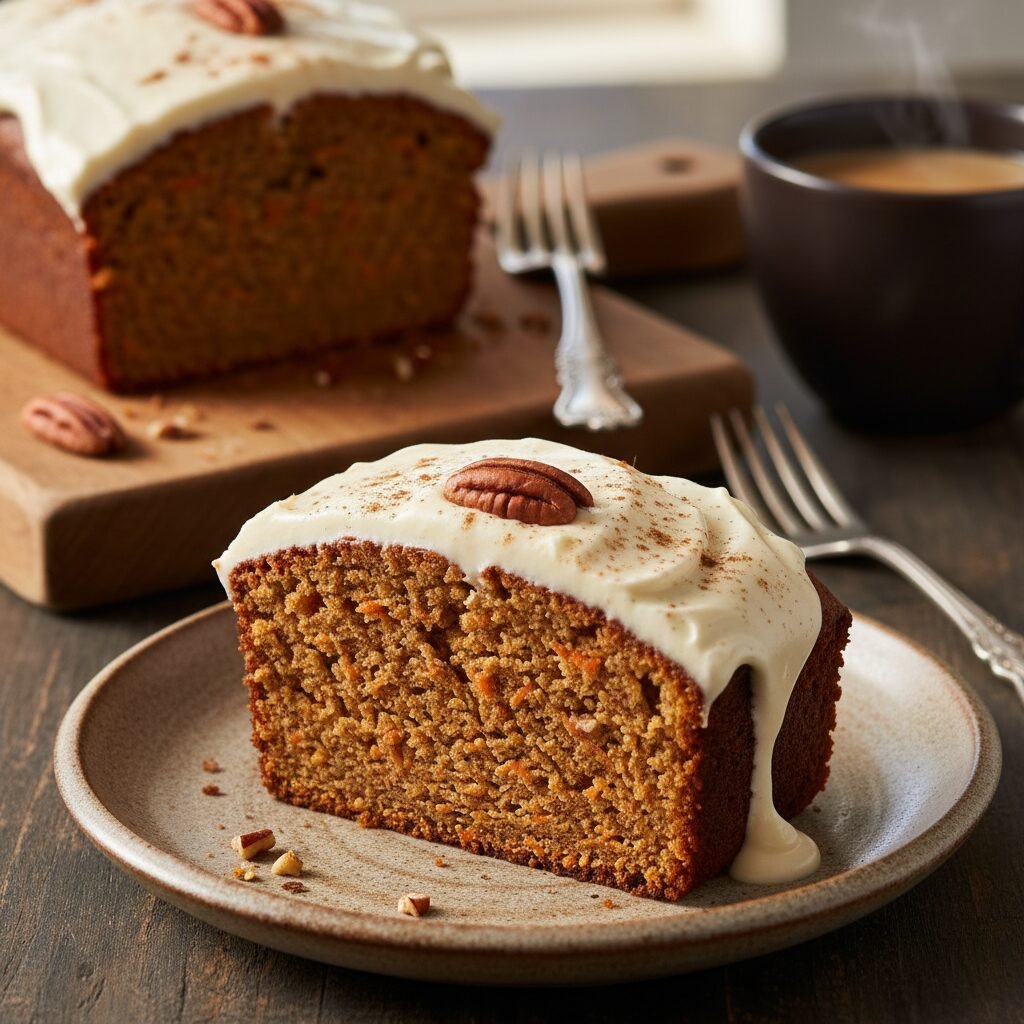
The Ultimate Moist Carrot Loaf Cake With Pecans
Moist Carrot Loaf Cake With Pecans Recipe
Discover the perfect balance of spice and sweetness with this incredibly moist carrot loaf cake. Packed with fresh carrots, crunchy toasted pecans, and topped with a luscious cream cheese glaze, it’s the ultimate comfort bake for any season.
20 minutes
55 minutes
1 hour 15 minutes
1 Loaf (10-12 slices)
Dessert
Baking
American
Vegetarian
There is something undeniably comforting about the aroma of cinnamon, nutmeg, and roasting pecans filling the kitchen. This Moist Carrot Loaf Cake with Pecans is not just another recipe; it is a celebration of texture and flavor that transforms humble ingredients into a show-stopping dessert or an indulgent breakfast treat. Unlike traditional layered carrot cakes which can sometimes feel heavy or overly sweet, this loaf version offers a refined crumb that is dense yet incredibly tender. The secret lies in the specific balance of moisture-rich ingredients—oil, brown sugar, and a generous amount of freshly grated carrots—which ensure the cake stays soft for days.
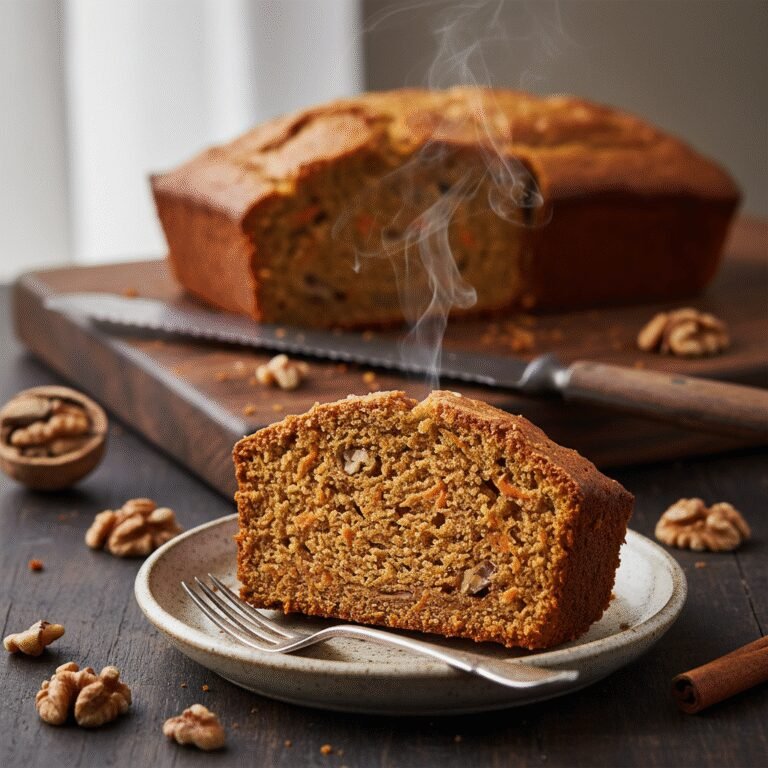
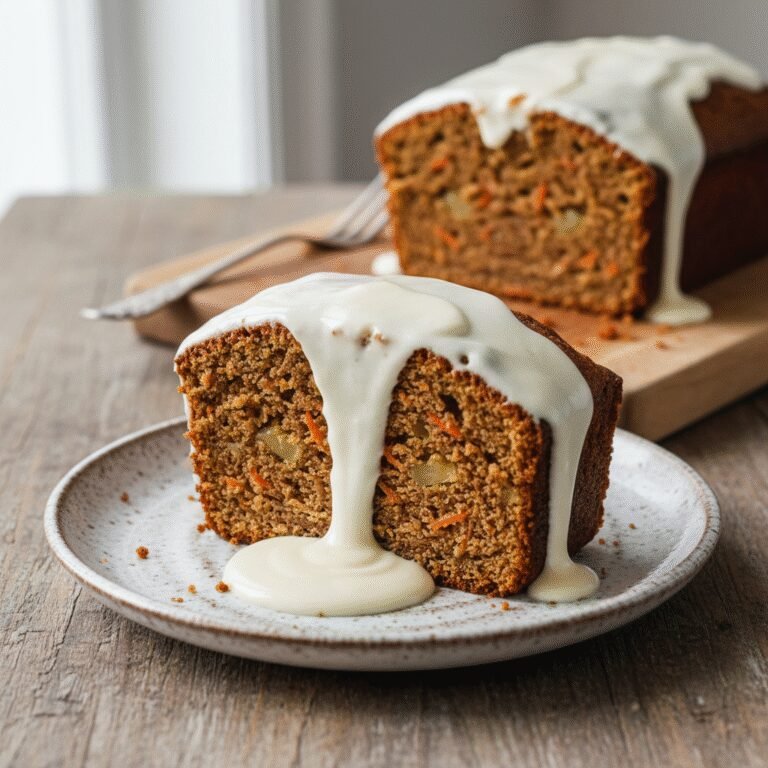
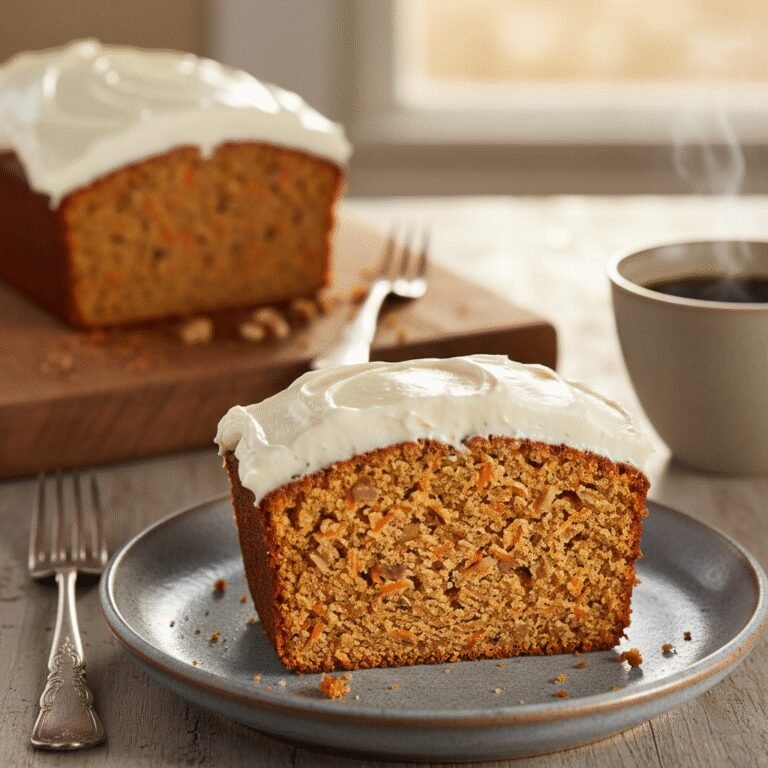
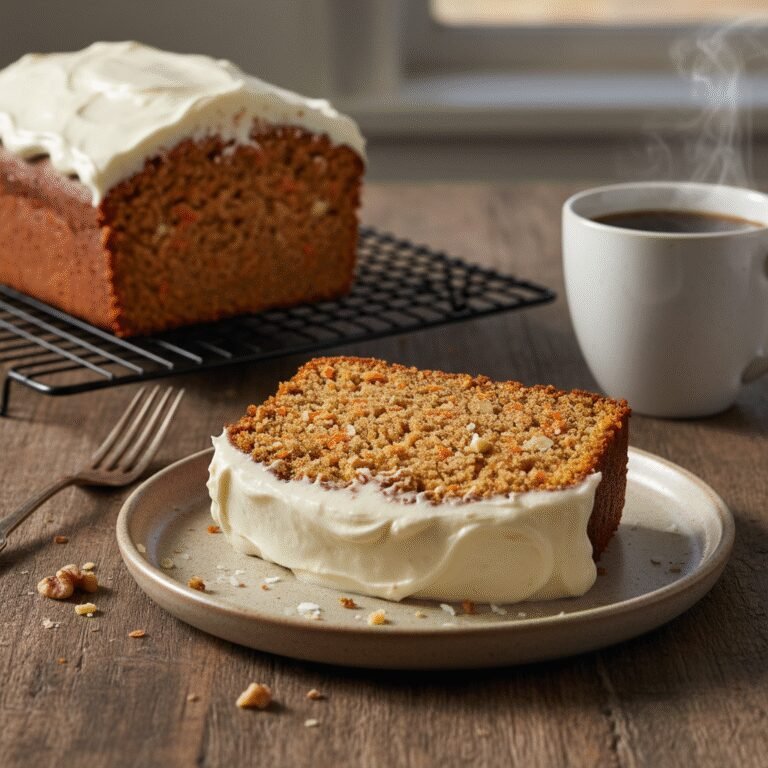
As you slice into the loaf, you are greeted with a vibrant interior speckled with bright orange carrot shreds and earthy, toasted pecans. The spices are warm but not overpowering, allowing the natural sweetness of the carrots to shine through. We top this masterpiece with a tangy, velvety cream cheese glaze that cuts through the richness of the spice cake, providing that classic flavor pairing we all know and love. Whether you are a seasoned baker looking for a reliable staple or a novice wanting to impress guests, this recipe delivers consistent, bakery-quality results. It is the kind of cake that tastes even better the next day, making it perfect for meal prepping or gifting to friends and family. So, preheat your oven and get ready to bake the most satisfying loaf cake you have ever tasted.
History & Origins
The history of carrot cake is a fascinating journey that dates back to medieval times. Before sugar was widely available or affordable, cooks looked to vegetables with high natural sugar content to sweeten their desserts. Carrots, which contain more sugar than almost any other vegetable besides sugar beets, became a primary candidate. Medieval Europeans often used carrots in puddings and sweet pies, laying the groundwork for the modern carrot cake.
However, the cake as we know it today saw a significant revival during World War II in the United Kingdom. With strict rationing of sugar and other luxury ingredients, the British government promoted recipes that utilized carrots to add sweetness and moisture to baked goods. This necessity-driven innovation kept the concept alive, but it wasn’t until the 1960s and 1970s in the United States that carrot cake truly exploded in popularity. It became a staple in cafes and restaurants, often marketed as a ‘healthier’ alternative to chocolate or vanilla cakes due to its vegetable content—though the addition of oil and cream cheese frosting certainly made it a decadent treat.
The addition of nuts, particularly pecans or walnuts, became a defining characteristic of American-style carrot cake, adding a necessary crunch to contrast the soft crumb. Over the decades, the recipe has evolved from simple puddings to elaborate multi-layered cakes, and now, to the rustic and accessible loaf form. This loaf cake pays homage to that rich history, combining the traditional utility of using carrots for moisture with the modern luxury of spices and rich nuts.
Why This Recipe Works
This recipe succeeds where many others fail due to the meticulous balance of fat, sugar, and moisture. First, we use vegetable oil instead of butter. While butter adds flavor, it contains water which can evaporate during baking, sometimes leading to a drier crumb. Oil is 100% fat and remains liquid at room temperature, coating the flour proteins and preventing gluten over-development, which guarantees a tender, moist texture that lasts for days.
Secondly, the use of brown sugar is crucial. Brown sugar contains molasses, which is hygroscopic—meaning it attracts and holds onto moisture from the air. This keeps the loaf soft long after it has left the oven. We also insist on freshly grated carrots rather than pre-shredded ones. Pre-packaged carrots are often dry and hard; grating them yourself releases their natural juices into the batter, steaming the cake from the inside as it bakes.
Finally, the toasted pecans provide a textural contrast that prevents the loaf from feeling too heavy or ‘gummy.’ Toasting the nuts releases their essential oils, amplifying their flavor profile to stand up against the bold spices like cinnamon and ginger. The result is a scientifically sound formulation that delivers maximum flavor and optimal texture every single time.
Why You’ll Love This Recipe
- ✓Incredibly moist crumb that stays fresh for days
- ✓Richly spiced with cinnamon, nutmeg, and ginger
- ✓Loaded with crunchy, toasted pecans for texture
- ✓Easy-to-make, no-mixer-required batter
- ✓Topped with a tangy, silky cream cheese glaze
- ✓Freezer-friendly for make-ahead convenience
Equipment You’ll Need
- ✓9×5 inch loaf pan
- ✓Large mixing bowl
- ✓Medium mixing bowl
- ✓Box grater
- ✓Whisk
- ✓Rubber spatula
- ✓Cooling rack
- ✓Measuring cups and spoons
Ingredients
- ✓1 1/2 cups all-purpose flour
- ✓1 teaspoon baking soda
- ✓1/2 teaspoon baking powder
- ✓1/2 teaspoon salt
- ✓1 1/2 teaspoons ground cinnamon
- ✓1/2 teaspoon ground ginger
- ✓1/4 teaspoon ground nutmeg
- ✓3/4 cup vegetable oil or canola oil
- ✓1/2 cup granulated sugar
- ✓1/2 cup packed light brown sugar
- ✓2 large eggs, room temperature
- ✓1 teaspoon pure vanilla extract
- ✓1 1/2 cups freshly grated carrots (approx. 3-4 medium carrots)
- ✓3/4 cup chopped pecans, toasted
- ✓For the Glaze: 4 oz cream cheese (softened), 2 tbsp butter (softened), 3/4 cup powdered sugar, 1 tsp vanilla extract, 1 tbsp milk
Instructions
- Preheat your oven to 350°F (175°C). Grease a 9×5 inch loaf pan with non-stick spray or line it with parchment paper leaving an overhang for easy removal.
- Spread the chopped pecans on a baking sheet and toast in the oven for 5-7 minutes until fragrant. Watch closely to prevent burning. Remove and let cool.
- In a medium bowl, whisk together the flour, baking soda, baking powder, salt, cinnamon, ginger, and nutmeg until well combined.
- In a large bowl, whisk together the vegetable oil, granulated sugar, brown sugar, eggs, and vanilla extract until the mixture is smooth and slightly thickened.
- Gradually add the dry ingredients to the wet ingredients. Use a rubber spatula to fold them together gently until just combined. Do not overmix.
- Fold in the freshly grated carrots and the toasted pecans until they are evenly distributed throughout the thick batter.
- Pour the batter into the prepared loaf pan and smooth the top with the spatula.
- Bake for 50-60 minutes, or until a toothpick inserted into the center comes out clean or with just a few moist crumbs attached. If the top browns too quickly, tent loosely with foil after 40 minutes.
- Remove from the oven and let the cake cool in the pan for 10 minutes. Then, lift it out using the parchment paper handles and transfer to a wire rack to cool completely.
- While the cake cools, prepare the glaze. Beat the softened cream cheese and butter together until smooth. Whisk in the powdered sugar, vanilla, and milk until it reaches a pourable but thick consistency.
- Once the loaf is completely cool, drizzle the glaze generously over the top. Slice and serve.
Expert Cooking Tips
- ✓Grate your own carrots using the medium holes of a box grater for the best moisture content.
- ✓Ensure all cold ingredients like eggs and cream cheese are at room temperature for a smooth batter.
- ✓Do not overmix the batter once the flour is added, or the loaf will become dense and tough.
- ✓Toast the pecans beforehand to unlock a deeper, nuttier flavor profile.
- ✓Let the loaf cool completely before glazing, otherwise, the frosting will melt and slide off.
- ✓Check the expiration date on your baking soda to ensure the cake rises properly.
- ✓Weigh your flour using a kitchen scale for the most accurate results.
Substitutions and Variations
This recipe is quite versatile and allows for several substitutions to suit your dietary needs or pantry availability. If you have a nut allergy, you can simply omit the pecans or replace them with sunflower seeds or pepitas for a similar crunch. Walnuts are a classic alternative if you prefer them over pecans. For the oil, melted coconut oil or applesauce can be used; however, using 100% applesauce will result in a denser, more rubbery texture, so a 50/50 blend of oil and applesauce is recommended for a lighter version. To make this gluten-free, substitute the all-purpose flour with a high-quality 1:1 gluten-free baking flour blend that contains xanthan gum. You can also swap the white sugar for more brown sugar if you prefer a deeper molasses flavor, though this will make the cake slightly darker and moister.
Common Mistakes to Avoid
The most common mistake when making carrot cake is using pre-shredded carrots from the grocery store. These are often dry and coated in preservatives that prevent them from breaking down properly during baking, leading to hard, crunchy bits in your cake. Always grate them fresh. Another pitfall is overmixing the batter; once the wet and dry ingredients meet, stir only until the flour streaks disappear. Overmixing develops gluten, which turns a tender loaf into a chewy bread. Additionally, baking times can vary based on your oven and pan material (glass vs. metal). Always rely on the toothpick test rather than the timer alone. Lastly, slicing the cake while it is still warm might be tempting, but it can cause the loaf to crumble and fall apart; patience allows the structure to set.
Serving Suggestions
This Moist Carrot Loaf Cake is delightful on its own, but it shines when served with a hot cup of coffee or tea, making it perfect for a mid-morning break or afternoon snack. For a dessert presentation, serve a thick slice with a dollop of extra whipped cream or a scoop of vanilla bean ice cream on the side. A dusting of extra cinnamon or a garnish of candied pecans can elevate the look for guests. During the holidays, it pairs beautifully with spiced cider or eggnog. If you are serving it for brunch, it complements savory dishes like quiche or bacon perfectly, acting as the sweet finale to the meal.
Storage and Reheating Tips
To keep your carrot loaf fresh, store it in an airtight container at room temperature for up to 3 days. If your kitchen is particularly warm or humid, or if you have applied the cream cheese glaze, it is best to store it in the refrigerator where it will keep for up to a week. Ensure the container is sealed tight to prevent the fridge air from drying out the cake. For long-term storage, this loaf freezes beautifully. You can freeze the whole unglazed loaf or individual slices. Wrap them tightly in plastic wrap and then a layer of aluminum foil. Frozen carrot cake will last for up to 3 months. Thaw overnight in the refrigerator or at room temperature for a few hours before glazing and serving.
Nutrition Facts (Estimated)
| Serving Size | 1 slice |
| Calories | 380 |
| Fat | 22g |
| Saturated Fat | 4g |
| Unsaturated Fat | 18g |
| Trans Fat | 0g |
| Cholesterol | 45mg |
| Sodium | 210mg |
| Carbohydrates | 42g |
| Fiber | 2g |
| Sugar | 28g |
| Protein | 5g |
Frequently Asked Questions
Can I use baby carrots for this recipe?
While you technically can, it is not recommended. Baby carrots are often harder and drier than full-sized carrots. It is also much more difficult and dangerous to grate small baby carrots. Stick to large, whole carrots for the best texture and moisture.
Why did my carrot loaf sink in the middle?
A sunken center usually means the cake was underbaked. The structure wasn’t set enough to hold its weight. It can also be caused by opening the oven door too early, causing a sudden temperature drop, or using too much leavening (baking soda/powder).
Can I reduce the sugar in this recipe?
You can reduce the sugar by about 1/4 cup without significantly affecting the structure, but keep in mind that sugar contributes to the moisture and tenderness of the cake, not just the sweetness. Reducing it too much may result in a drier loaf.
Do I need to peel the carrots before grating?
Yes, it is best to peel the carrots. Carrot skins can sometimes be bitter and tough. Peeling them ensures a sweet, clean flavor and a uniform soft texture throughout the cake.
Can I bake this in a muffin tin instead?
Absolutely! This batter makes excellent muffins. Line a standard muffin tin with paper liners and bake at 350°F for 18-22 minutes. Check for doneness with a toothpick.
My glaze is too runny, how do I fix it?
If your glaze is too thin, simply add more powdered sugar, a tablespoon at a time, whisking until you reach the desired consistency. If it’s too thick, add a teaspoon of milk.
Can I add raisins or pineapple?
Yes, these are classic additions. You can fold in 1/2 cup of raisins or well-drained crushed pineapple along with the carrots. Just be aware that pineapple adds extra moisture, so you might need to bake it a few minutes longer.
Is olive oil a good substitute for vegetable oil?
You can use olive oil, but choose a ‘light’ or ‘refined’ olive oil. Extra virgin olive oil has a strong flavor that might clash with the warm spices of the cake.
Conclusion
This Moist Carrot Loaf Cake with Pecans is truly a keeper of a recipe. It combines the nostalgic, homey flavors of traditional carrot cake with the ease and simplicity of a quick bread. The contrast between the tender, spiced crumb, the crunchy, nutty pecans, and the smooth, sweet glaze creates a symphony of textures and tastes that is hard to resist. Whether you are baking for a special occasion, a holiday gathering, or just a quiet weekend at home, this loaf is guaranteed to bring warmth and joy to your table. We hope this recipe becomes a beloved staple in your kitchen, just as it is in ours. Happy baking!