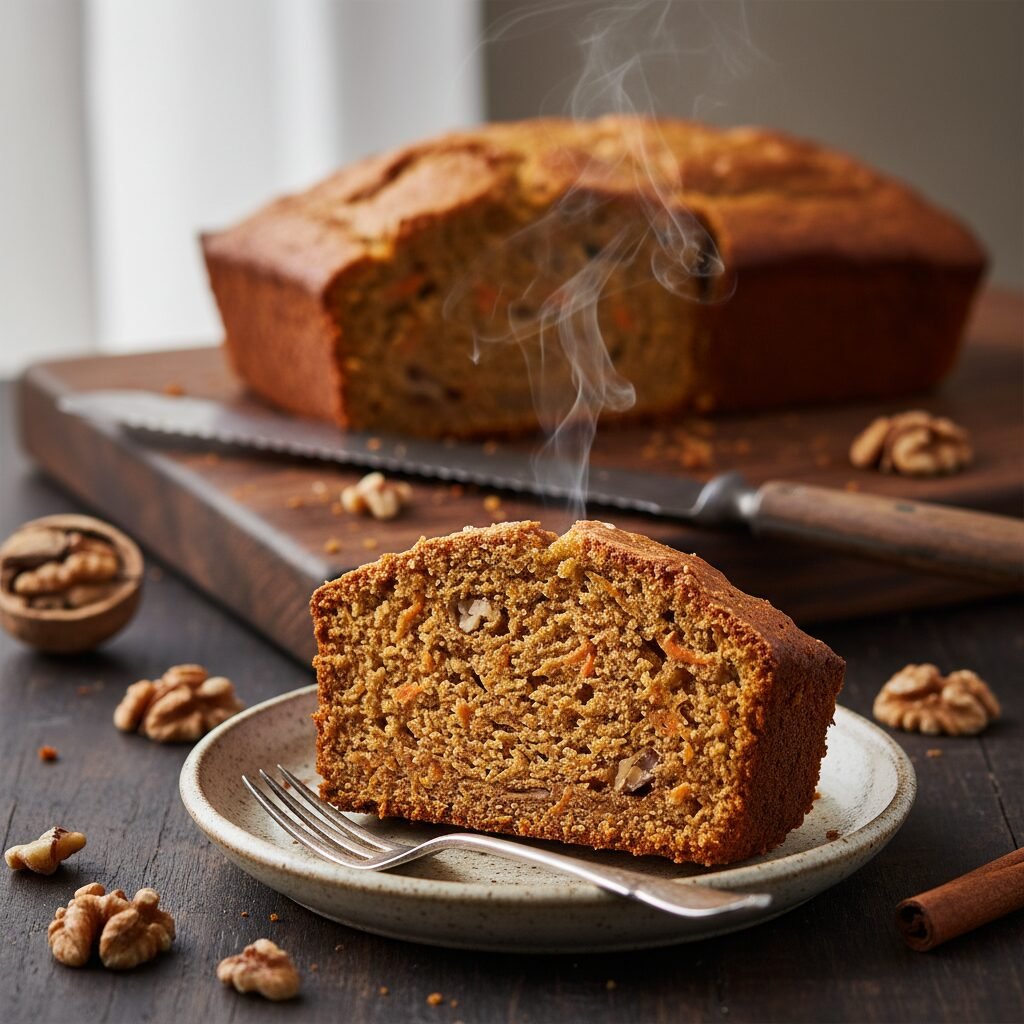
The Ultimate Moist Carrot Loaf Cake With Walnuts
Moist Carrot Loaf Cake With Walnuts Recipe
This incredibly moist carrot loaf cake is packed with freshly grated carrots, warm spices, and crunchy toasted walnuts for the perfect texture. It is an easy-to-make, freezer-friendly treat that tastes even better the next day, making it the ultimate comfort food for breakfast or dessert.
20 minutes
60 minutes
1 hour 20 minutes
1 loaf (10-12 slices)
Dessert / Breakfast
Baking
American
Vegetarian
There is something undeniably comforting about the aroma of cinnamon, nutmeg, and ginger wafting through the kitchen on a crisp afternoon. This Moist Carrot Loaf Cake with Walnuts is the embodiment of that comfort—a rustic, hearty, yet incredibly tender bake that bridges the gap between a morning quick bread and a decadent dessert. Unlike its towering layer-cake cousin, which often relies heavily on a mountain of cream cheese frosting, this loaf cake focuses on the integrity of the crumb itself. The texture is the star here: dense but not heavy, incredibly moist without being greasy, and studded with the earthy crunch of toasted walnuts that perfectly offsets the sweetness of the carrots.
As a food blogger who has tested dozens of carrot cake iterations, I have found that the loaf format offers a superior crust-to-crumb ratio, giving you that delightful golden-brown exterior in every single slice. This recipe is specifically designed for the home baker who wants bakery-quality results with minimal fuss. We rely on simple pantry staples, but the magic lies in the technique—specifically how we treat the carrots and the precise blend of sugars. Whether you are serving this with a simple dusting of powdered sugar, a smear of salted butter, or a full-on cream cheese glaze, this loaf is versatile enough to be the centerpiece of a holiday brunch or a humble Tuesday afternoon snack. It is the kind of recipe that invites you to slow down, pour a cup of coffee, and savor the simple pleasure of homemade baking.
History & Origins
The history of carrot cake is a fascinating journey that dates back much further than the 1960s health food craze that popularized it in the United States. Historians believe the origins of using carrots in baking can be traced back to the Middle Ages in Europe. During this period, sweeteners like sugar and honey were expensive and difficult to come by for the average person. Carrots, however, were abundant and naturally high in sugar content—second only to sugar beets among vegetables. As a result, medieval cooks used them to sweeten puddings and desserts, creating early precursors to the modern carrot cake.
Fast forward to World War II, and the carrot cake experienced a resurgence in the United Kingdom due to strict rationing. The government promoted carrots as a healthy, homegrown sweetener, leading to a proliferation of carrot-based recipes. However, the modern version of carrot cake—rich, spiced, and often containing nuts—truly found its footing in American culture during the mid-20th century. It was initially marketed as a ‘healthier’ alternative to chocolate or vanilla cakes, thanks to the inclusion of a vegetable, though the generous amounts of oil and sugar certainly blur that line. The addition of walnuts is a classic American twist, adding texture and a nutty depth that complements the spices. Over the decades, it has evolved from a utilitarian pudding to a beloved coffee shop staple, and this loaf version pays homage to that rustic, wholesome lineage while delivering the indulgence modern palates expect.
Why This Recipe Works
This recipe succeeds where many others fail due to three critical factors: the fat source, the sugar balance, and the moisture management. First, we use oil instead of butter. While butter provides flavor, it contains water which evaporates during baking, sometimes leading to a drier crumb in dense cakes. Oil is 100% fat and remains liquid at room temperature, ensuring the loaf stays incredibly moist and tender for days. Neutral oils like vegetable or canola allow the spices and carrot flavor to shine without interference.
Secondly, we use a specific ratio of brown sugar to white sugar. Brown sugar contains molasses, which is hygroscopic—meaning it attracts and holds onto moisture from the air. This not only contributes to the cake’s longevity but also adds a deep, caramel-like undertone that pairs beautifully with the cinnamon and ginger. Finally, the carrots are grated freshly by hand. Pre-shredded carrots from the grocery store are often dry and coated in starch to prevent clumping, which ruins the texture of the cake. By grating them yourself, you release the natural juices of the carrot into the batter, steaming the cake from the inside as it bakes. The walnuts are toasted beforehand to release their essential oils, ensuring they remain crunchy rather than turning soggy in the batter.
Why You’ll Love This Recipe
- ✓Stays moist for up to 5 days due to the oil-based batter.
- ✓Perfect balance of spices: cinnamon, nutmeg, and ginger.
- ✓Toasted walnuts add a satisfying crunch and nutty flavor.
- ✓No mixer required—this is a simple one-bowl method.
- ✓Freezes beautifully for quick breakfasts or last-minute guests.
Equipment You’ll Need
- ✓9×5 inch Loaf Pan
- ✓Large Mixing Bowl
- ✓Medium Mixing Bowl
- ✓Box Grater
- ✓Whisk
- ✓Rubber Spatula
- ✓Wire Cooling Rack
- ✓Measuring Cups and Spoons
Ingredients
- ✓1 1/2 cups all-purpose flour
- ✓1 teaspoon baking soda
- ✓1/2 teaspoon baking powder
- ✓1/2 teaspoon salt
- ✓1 1/2 teaspoons ground cinnamon
- ✓1/2 teaspoon ground ginger
- ✓1/4 teaspoon ground nutmeg
- ✓3/4 cup neutral oil (vegetable, canola, or grapeseed)
- ✓1/2 cup granulated white sugar
- ✓1/2 cup packed light brown sugar
- ✓2 large eggs, room temperature
- ✓1 teaspoon pure vanilla extract
- ✓1 1/2 cups freshly grated carrots (approx. 3-4 medium carrots)
- ✓3/4 cup walnuts, roughly chopped and toasted
Instructions
- Preheat your oven to 350°F (175°C). Grease a 9×5 inch loaf pan generously with butter or cooking spray, or line it with parchment paper leaving an overhang for easy removal.
- Spread the chopped walnuts on a baking sheet and toast in the preheating oven for 5-7 minutes until fragrant. Watch them closely to prevent burning. Remove and let cool.
- In a medium bowl, whisk together the flour, baking soda, baking powder, salt, cinnamon, ginger, and nutmeg until well combined and lump-free.
- In a large mixing bowl, whisk together the oil, granulated sugar, and brown sugar until the mixture looks smooth and glossy.
- Add the eggs one at a time, whisking well after each addition. Stir in the vanilla extract.
- Gradually add the dry ingredients to the wet ingredients. Switch to a rubber spatula and mix gently until just combined and no streaks of flour remain. Do not overmix.
- Fold in the grated carrots and the cooled toasted walnuts until evenly distributed throughout the batter.
- Pour the batter into the prepared loaf pan and smooth the top with the spatula.
- Bake for 55 to 65 minutes, or until a toothpick inserted into the center comes out clean or with just a few moist crumbs attached. If the top is browning too quickly, tent it loosely with aluminum foil after 40 minutes.
- Remove from the oven and let the loaf cool in the pan for 15 minutes. Then, lift it out using the parchment paper or invert it onto a wire rack to cool completely before slicing.
Expert Cooking Tips
- ✓Always grate your own carrots. Pre-bagged shreds are too dry and thick.
- ✓Toast your walnuts to enhance their flavor and texture.
- ✓Do not overmix the batter once the flour is added, or the loaf will be tough.
- ✓Check for doneness early at the 50-minute mark as oven temperatures vary.
- ✓Let the cake cool completely before slicing to prevent it from crumbling.
- ✓Use room temperature eggs to ensure they emulsify properly with the oil.
- ✓If you like texture, stir in a handful of raisins or coconut flakes alongside the walnuts.
Substitutions and Variations
This recipe is highly adaptable to suit various dietary needs and pantry limitations. If you need a gluten-free version, a high-quality 1:1 gluten-free all-purpose flour blend works exceptionally well; just ensure it contains xanthan gum. For the nuts, pecans are a fantastic 1:1 substitute for walnuts if you prefer a sweeter, more buttery nut flavor, or you can omit nuts entirely for a nut-free version. If you are out of neutral oil, melted coconut oil is a great alternative that adds a subtle tropical scent, though applesauce can also be used to replace half the oil for a lower-fat version (note that this will change the texture slightly). For the sugars, dark brown sugar can be used instead of light brown for a deeper molasses flavor. Finally, if you don’t have nutmeg or ginger, you can increase the cinnamon or use a pumpkin pie spice blend.
Common Mistakes to Avoid
The most common mistake when making carrot loaf is using pre-shredded carrots from the grocery store. These are often hard, dry, and coated in preservatives that prevent them from melting into the batter, resulting in a dry cake with crunchy carrot strings. Another frequent error is overmixing the batter. Once the wet and dry ingredients meet, you should mix only until combined; excessive stirring develops the gluten in the flour and leads to a rubbery, dense loaf. Additionally, failing to measure flour correctly by scooping the cup directly into the bag packs the flour down, leading to a dry cake. Instead, spoon the flour into the measuring cup and level it off. Lastly, be patient with the cooling process. Slicing the loaf while it is still hot allows steam to escape rapidly, which can dry out the crumb.
Serving Suggestions
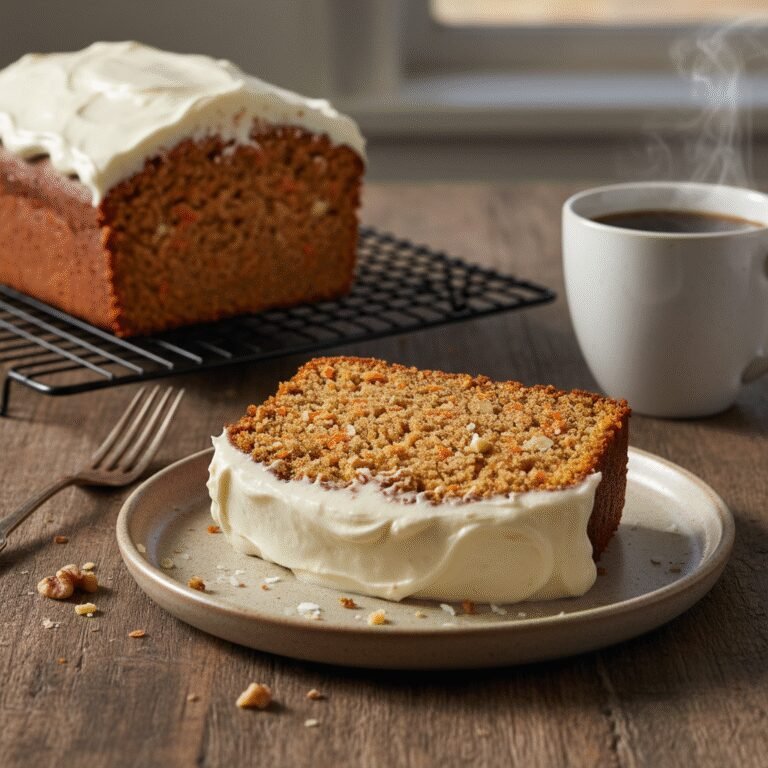
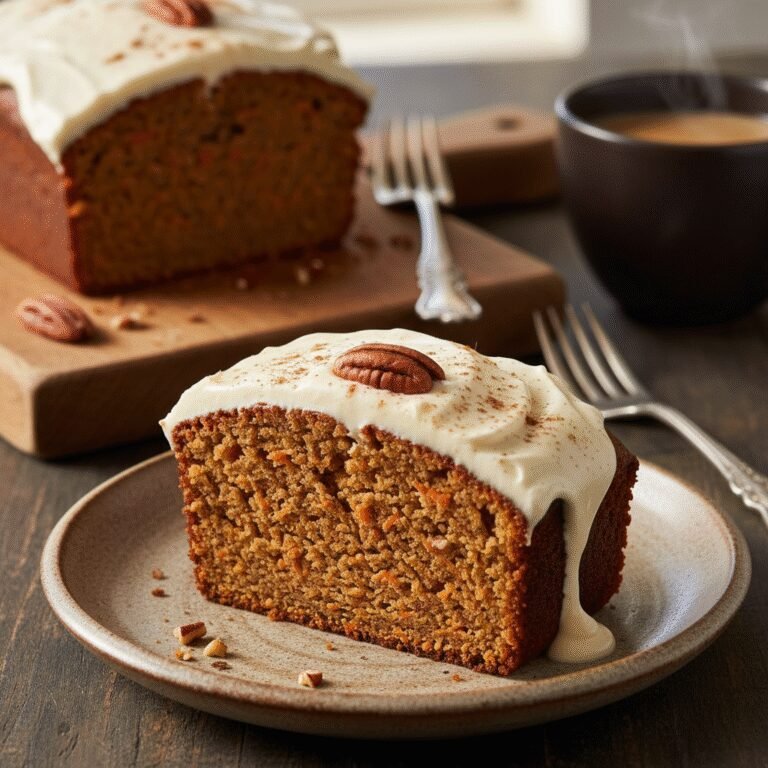
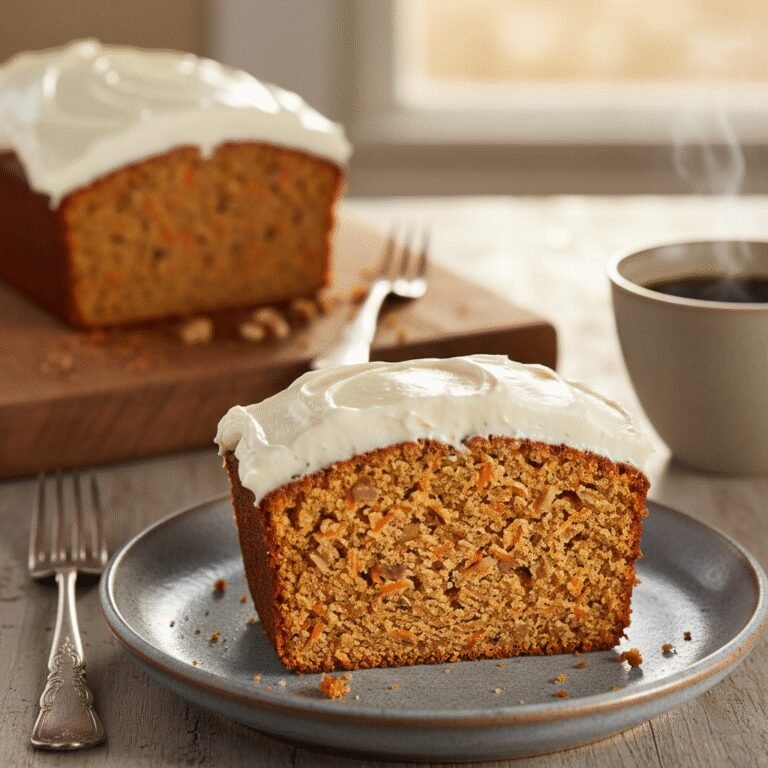
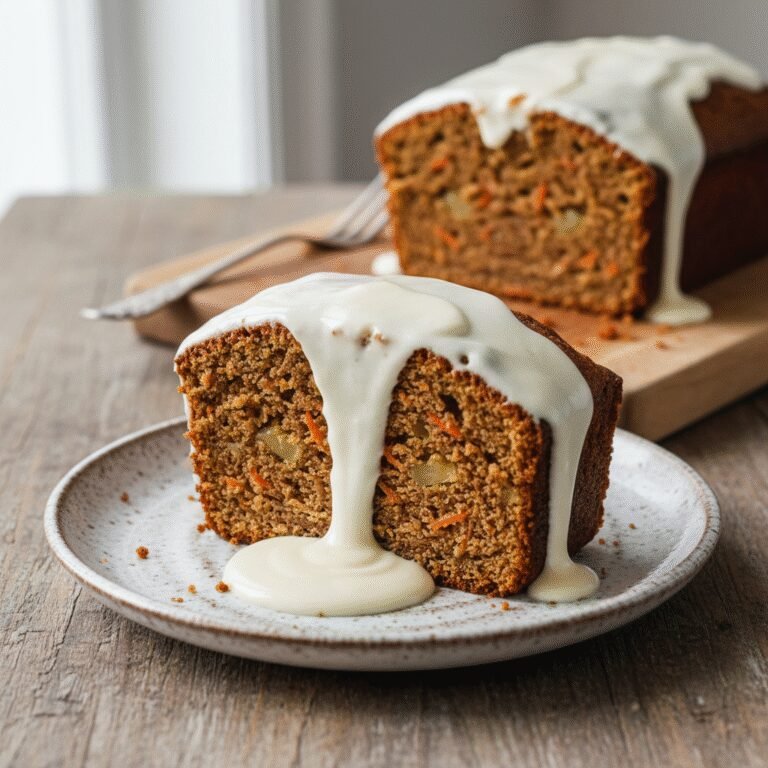
This Moist Carrot Loaf Cake is versatile enough to be served in several ways. For a classic approach, serve a thick slice slightly warmed with a pat of salted butter melting into the crumb. It pairs wonderfully with a hot cup of black coffee or chai tea in the morning. If you want to elevate it for dessert, top it with a tangy cream cheese frosting or a simple vanilla glaze. For a brunch spread, serve slices alongside a bowl of Greek yogurt and fresh berries. You can also toast leftover slices in a skillet with a little butter for a delightful crispy exterior.
Storage and Reheating Tips
This loaf keeps incredibly well and actually tastes better the day after baking as the flavors have time to meld. Store the cooled loaf in an airtight container or wrap it tightly in plastic wrap at room temperature for up to 4 days. For longer storage, refrigerate it for up to a week, though this may firm up the texture slightly. To freeze, wrap the entire loaf or individual slices tightly in plastic wrap, followed by a layer of aluminum foil. Freeze for up to 3 months. Thaw wrapped slices at room temperature or warm them gently in the microwave before serving.
Nutrition Facts (Estimated)
| Serving Size | 1 slice |
| Calories | 340 |
| Fat | 18g |
| Saturated Fat | 2g |
| Unsaturated Fat | 14g |
| Trans Fat | 0g |
| Cholesterol | 45mg |
| Sodium | 180mg |
| Carbohydrates | 38g |
| Fiber | 2g |
| Sugar | 22g |
| Protein | 5g |
Frequently Asked Questions
Can I use butter instead of oil?
You can, but I don’t recommend it. Oil ensures the cake stays moist for much longer and gives it a tender crumb. If you must use butter, melt it first, but expect a slightly drier texture after the first day.
Why did my carrot cake sink in the middle?
This usually happens if the cake was underbaked or if the oven door was opened too early, causing a sudden temperature drop. It can also result from over-leavening (too much baking soda/powder).
Can I add pineapple to this recipe?
Yes! You can add about 1/2 cup of drained crushed pineapple. You may need to bake it for an extra 5-10 minutes to account for the extra moisture.
Do I have to peel the carrots?
It is best to peel them for the cleanest flavor and brightest color, but if you scrub them very well, unpeeled carrots are safe to eat. The skin can sometimes add a slight bitterness.
Can I make this into muffins instead?
Absolutely. Pour the batter into a lined muffin tin and bake at 350°F for 18-22 minutes. This recipe yields about 12-14 standard muffins.
Is this recipe dairy-free?
Yes, the loaf cake batter itself is completely dairy-free as it uses oil instead of butter. Just ensure you don’t add a dairy-based frosting or butter when serving.
How do I know when it is done?
Insert a toothpick or cake tester into the center of the loaf. It should come out clean or with a few moist crumbs. If there is wet batter on it, it needs more time.
Why is my carrot cake green?
This is a rare chemical reaction between the baking soda and the pigments in the carrots/walnuts. It is harmless but can be avoided by ensuring the baking soda is mixed evenly and not using too much.
Conclusion
This Moist Carrot Loaf Cake with Walnuts is more than just a recipe; it is a reliable staple that brings warmth and joy to any kitchen. Whether you are a novice baker looking for an easy win or a seasoned pro searching for the perfect texture, this loaf delivers on every front. The combination of sweet, tender carrots, aromatic spices, and the satisfying crunch of walnuts creates a flavor profile that is timeless. I hope this recipe becomes a cherished part of your baking rotation, filling your home with delicious scents and your table with happy faces. Happy baking!