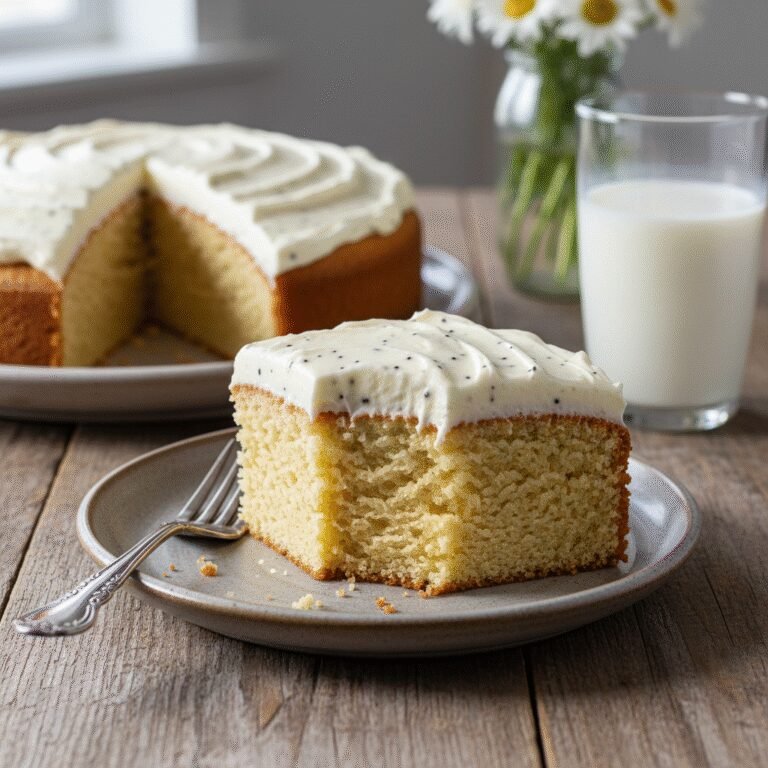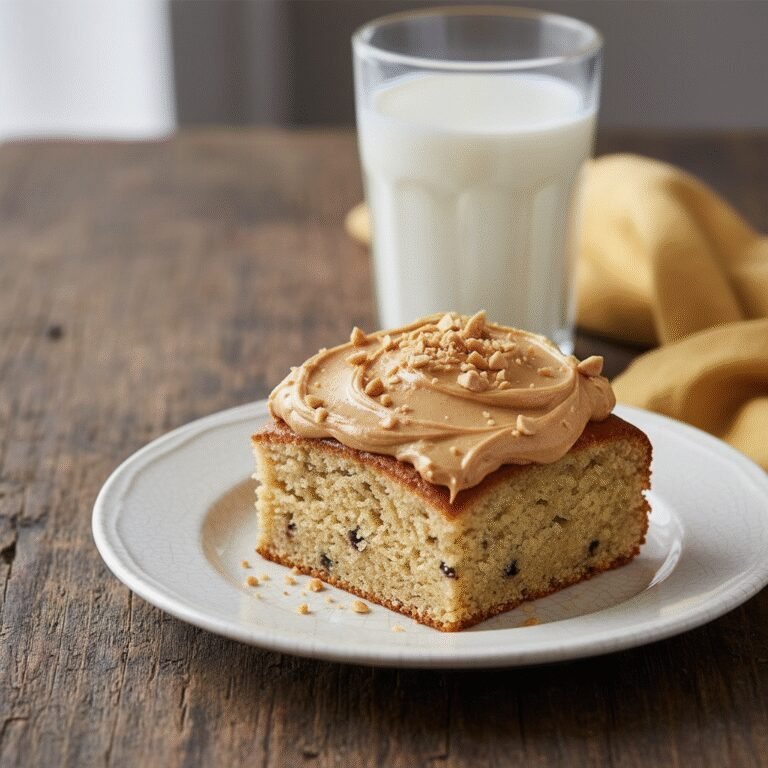

The Ultimate Moist Banana Snack Cake with Tangy Cream Cheese Frosting
Moist Banana Snack Cake For Potluck Recipe
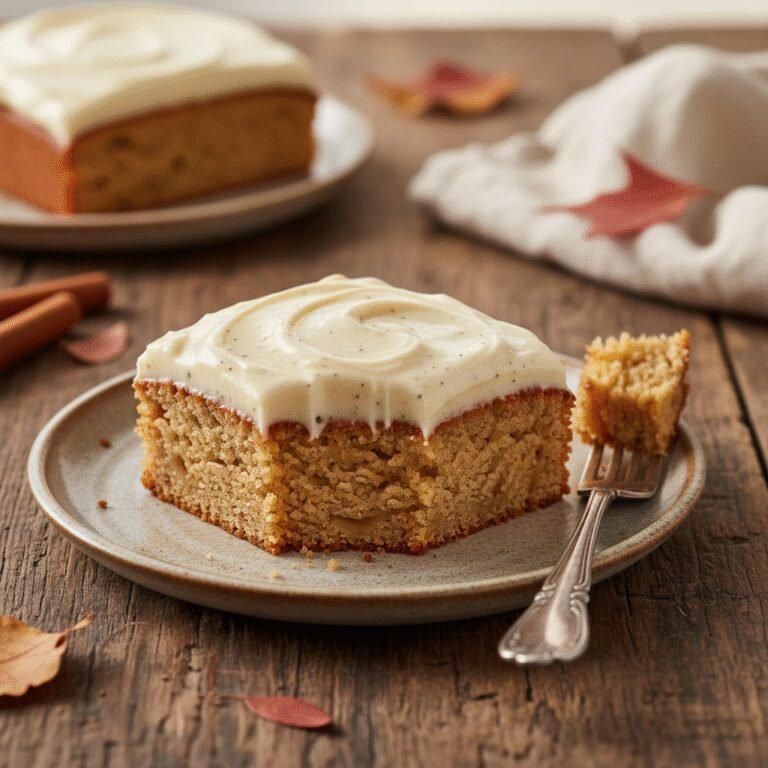
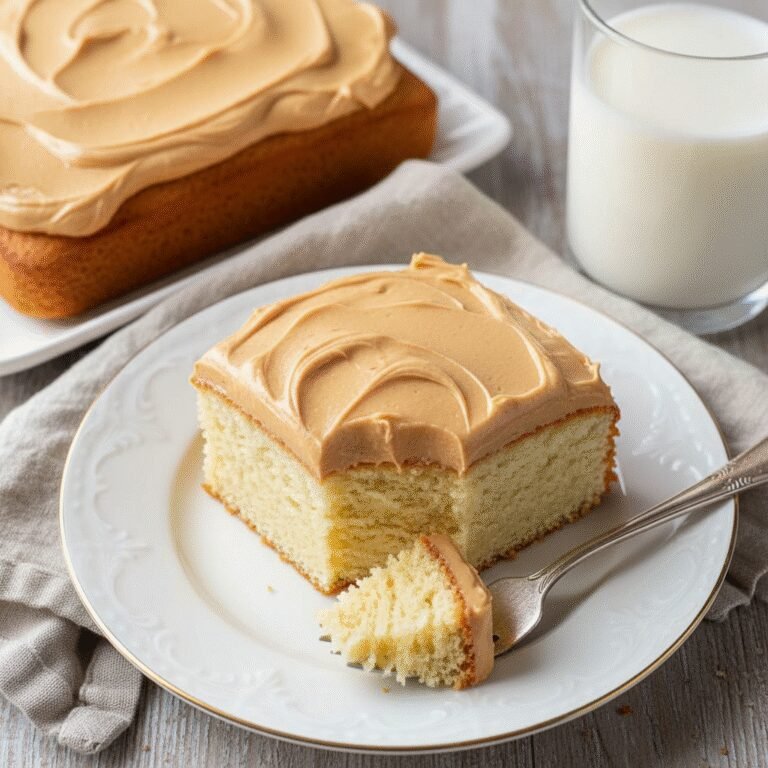
This incredibly moist banana snack cake is the unsung hero of potlucks and picnics. Featuring a tender, oil-based crumb and topped with a luscious layer of tangy cream cheese frosting, it travels perfectly and tastes even better the next day.
20 minutes
35 minutes
1 hour 15 minutes (includes cooling)
15 servings
Dessert
Baking
American
Vegetarian
There is a distinct and delightful category of baking that sits comfortably between the morning humility of a quick bread and the evening elegance of a tiered gateau: the snack cake. Specifically, the Banana Snack Cake. While banana bread often masquerades as a healthy breakfast option, this recipe embraces its identity as a true dessert, offering a crumb that is lighter, sweeter, and infinitely more tender. If you have ever panicked about what to bring to a potluck, church social, or backyard barbecue, this recipe is your new secret weapon. Unlike delicate layer cakes that slide apart in transport or cupcakes that require cumbersome carriers, this cake is baked, frosted, and served straight from a single 9×13 pan. It is unassuming yet undeniably delicious. The flavor profile strikes a perfect balance; the deep, caramel-like sweetness of brown sugar and spotted bananas is cut through by the sharp, savory tang of a thick layer of cream cheese frosting. The texture is what truly sets it apart—it is impossibly moist, bordering on pudding-like, yet it holds its structure when sliced. This isn’t just a way to use up dying fruit on your counter; it is a deliberate culinary choice to create a crowd-pleasing masterpiece that evokes nostalgia with every bite. Whether you are an experienced baker or a novice, this foolproof recipe delivers high-impact flavor with minimal effort, making it the ultimate comfort food for sharing.
History & Origins
The history of the banana cake is inextricably linked to two major developments in American culinary history: the mass importation of bananas and the chemical leavening revolution of the Great Depression. Bananas were a luxury item in the US until the late 19th century, but by the 1930s, they had become a staple. During the Great Depression, wasting food was culturally and economically taboo. Housewives found themselves with overripe bananas that were too soft to eat out of hand but too precious to throw away. Simultaneously, the availability of baking soda and baking powder allowed home cooks to experiment with heavy fruit mashes that yeast could not easily lift. Thus, banana bread was born. However, the evolution from ‘bread’ to ‘cake’ occurred mid-century. As the American economy boomed in the 1950s and 60s, the ‘Snack Cake’ era began. This was a time defined by convenience and the rise of the suburban potluck culture. Companies like General Mills and Pillsbury popularized the idea of single-layer cakes baked in rectangular pans that could be frosted and left on the counter for after-school treats. The banana snack cake emerged as a richer, sweeter cousin to the depression-era loaf, often incorporating sour cream or buttermilk—ingredients that were becoming more readily available in supermarkets. It became a staple of community cookbooks across the Midwest and South, solidifying its place as a symbol of hospitality and home baking. Today, it remains a beloved classic, bridging the gap between a thrifty use of leftovers and a decadent celebration dessert.
Why This Recipe Works
This recipe succeeds where many others fail due to a specific interplay of ingredients designed to maximize moisture retention and flavor depth. First, we utilize oil instead of butter for the batter. While butter provides flavor, it consists of milk solids and water, and it solidifies at room temperature, which can lead to a drier texture over time. Oil remains liquid at room temperature, coating the flour proteins and preventing gluten over-development, resulting in a sensationally tender crumb that stays soft for days. Secondly, the inclusion of sour cream is scientifically crucial. The acidity in the sour cream reacts with the baking soda, creating carbon dioxide bubbles that give the heavy banana batter a necessary lift, preventing it from becoming dense or rubbery. Furthermore, the fat content in the sour cream adds a richness that oil alone cannot provide. We also use a blend of brown and granulated sugars; the molasses in the brown sugar adds moisture (hygroscopy) and a complex caramel note that pairs beautifully with the fruit. Finally, the frosting ratio is calculated to provide the perfect counterpoint to the cake. The cake is sweet, so the frosting relies heavily on the tang of cream cheese and a pinch of salt to prevent the overall bite from being cloying. This balance of fat, acid, and sugar is why this specific formulation yields the perfect potluck treat.
Why You’ll Love This Recipe
- ✓Stays moist for days thanks to the oil and sour cream base.
- ✓travels easily in a 9×13 pan without sliding layers.
- ✓Perfect way to use up 3-4 heavily spotted bananas.
- ✓Cream cheese frosting adds a tangy contrast to the sweet crumb.
- ✓Requires no fancy decorating skills—rustic swirls look best.
- ✓Can be made a day ahead, as flavors meld and deepen overnight.
Equipment You’ll Need
- ✓9×13 inch baking pan
- ✓Large mixing bowl
- ✓Medium mixing bowl
- ✓Electric hand mixer or stand mixer
- ✓Whisk
- ✓Rubber spatula
- ✓Measuring cups and spoons
- ✓Offset spatula for frosting
Ingredients
- ✓2 cups all-purpose flour
- ✓1 teaspoon baking soda
- ✓1/2 teaspoon baking powder
- ✓1/2 teaspoon salt
- ✓1 teaspoon ground cinnamon
- ✓1/2 cup vegetable oil (or canola oil)
- ✓3/4 cup light brown sugar, packed
- ✓1/2 cup granulated white sugar
- ✓2 large eggs, room temperature
- ✓1 1/2 cups mashed overripe bananas (about 3-4 medium bananas)
- ✓1/2 cup full-fat sour cream, room temperature
- ✓2 teaspoons vanilla extract
- ✓FOR THE FROSTING: 8 oz block cream cheese, softened slightly cool
- ✓1/2 cup unsalted butter, softened
- ✓3 cups powdered sugar, sifted
- ✓1 teaspoon vanilla extract
- ✓Pinch of salt
- ✓Optional: 1/2 cup chopped walnuts or pecans for topping
Instructions
- Preheat your oven to 350°F (175°C). Grease a 9×13 inch baking pan with non-stick spray or butter, and set aside.
- In a medium bowl, whisk together the flour, baking soda, baking powder, salt, and cinnamon until well combined. This ensures the leavening agents are evenly distributed.
- In a large bowl (or the bowl of a stand mixer), combine the vegetable oil, brown sugar, and granulated sugar. Beat on medium speed for about 2 minutes until the mixture looks wet and sandy.
- Add the eggs one at a time, beating well after each addition. Scrape down the sides of the bowl.
- Mix in the mashed bananas, sour cream, and vanilla extract until the batter is smooth and uniform.
- Reduce the mixer speed to low. Gradually add the dry ingredients to the wet ingredients. Mix only until streaks of flour disappear. Do not overmix, or the cake will be tough.
- Pour the batter into the prepared 9×13 pan and smooth the top with a spatula. Tap the pan gently on the counter to release any large air bubbles.
- Bake for 30-35 minutes, or until a toothpick inserted into the center comes out clean or with just a few moist crumbs attached. The top should be golden brown.
- Remove the cake from the oven and place the pan on a wire rack. Allow the cake to cool completely in the pan. This usually takes about 1 hour. Do not frost a warm cake.
- While the cake cools, make the frosting. In a large bowl, beat the softened butter and cream cheese together on medium-high speed until completely smooth and creamy (about 3 minutes).
- Reduce speed to low and gradually add the powdered sugar, one cup at a time. Once incorporated, add the vanilla and salt. Increase speed to high and whip for 2 minutes until fluffy.
- Spread the frosting generously over the cooled cake using an offset spatula. Make decorative swirls if desired.
- Sprinkle with chopped nuts if using. Slice into squares and serve.
Expert Cooking Tips
- ✓Use bananas that are heavily spotted or even black. The darker the skin, the sweeter and more aromatic the cake will be.
- ✓Ensure your sour cream and eggs are at room temperature. This helps them emulsify better with the oil, creating a smoother batter.
- ✓Weigh your flour if possible (approx 240g), or use the spoon-and-level method. Scooping directly into the bag packs the flour and leads to a dry cake.
- ✓Do not skip the salt in the frosting. It cuts the sweetness and highlights the tang of the cream cheese.
- ✓If your frosting feels too soft, refrigerate it for 10-15 minutes before spreading it on the cake.
- ✓For a deeper flavor, toast the nuts before sprinkling them on top of the frosting.
- ✓Use an offset spatula to frost the cake right in the pan; it makes getting into the corners much easier.
Substitutions and Variations
Baking is a science, but there is room for flexibility in this recipe. If you do not have sour cream, full-fat Greek yogurt is an excellent 1:1 substitution that provides similar acidity and fat content. In a pinch, buttermilk can work, though the batter will be slightly thinner. For the oil, melted coconut oil or melted butter can be used, though melted butter will result in a slightly denser crumb than vegetable oil. If you want to make this gluten-free, a high-quality 1:1 gluten-free flour blend (specifically one containing xanthan gum) works very well; simply swap it for the all-purpose flour by weight. For the sugar, you can use all brown sugar for a more molasses-heavy flavor, though the top may not brown as crisply. If you are out of cream cheese, a simple vanilla buttercream or even a dusting of powdered sugar is a lighter alternative, though the cream cheese tang is the traditional pairing. Finally, mix-ins are welcome: feel free to fold in 1/2 cup of chocolate chips or walnuts directly into the batter before baking.
Common Mistakes to Avoid
The most common mistake with banana cake is using under-ripe bananas. Yellow or green-tipped bananas have high starch content and low sugar, leading to a bland, dry cake. You must use bananas that are soft and spotted. Another frequent error is overmixing the batter once the flour is added. Overmixing develops gluten strands, which is great for bread but terrible for cake, resulting in a rubbery, tough texture. Stop mixing as soon as the flour disappears. Regarding the frosting, impatience is the enemy. If you apply the cream cheese frosting while the cake is even slightly warm, the butter in the frosting will melt, causing the topping to slide off and become greasy. Ensure the cake is cool to the touch in the center. Lastly, using cold cream cheese for the frosting will result in lumps that are impossible to whip out. Make sure your cream cheese is softened but still slightly cool to the touch for the best consistency.
Serving Suggestions
This cake is the quintessential ‘snack cake,’ meaning it is casual and versatile. It is best served straight from the pan, cut into generous squares. For a potluck, you can pre-slice it to make the line move faster. It pairs exceptionally well with a hot cup of black coffee or an espresso, as the bitterness of the coffee cuts through the sweetness of the frosting. For children, a cold glass of milk is the classic accompaniment. If you want to elevate it for a dinner party, plate individual squares and garnish with a slice of fresh banana and a drizzle of caramel sauce. Because it is rich, you don’t necessarily need ice cream on the side, but a scoop of vanilla bean or salted caramel ice cream is never a bad idea.
Storage and Reheating Tips
Because of the cream cheese frosting, this cake should ideally be stored in the refrigerator. However, it can sit out at cool room temperature for a few hours during a party without issue. To store, cover the pan tightly with plastic wrap or aluminum foil, ensuring a tight seal to keep the cut edges from drying out. It will keep in the fridge for up to 5 days. In fact, many find the texture improves on day two as the moisture redistributes. If you want to freeze the cake, you can do so frosted or unfrosted. To freeze frosted slices, place them on a baking sheet in the freezer for an hour to harden the frosting, then wrap them individually in plastic wrap and foil. Thaw in the refrigerator overnight before eating. If freezing the whole cake unfrosted, wrap the cooled cake tightly and freeze for up to 3 months.
Nutrition Facts (Estimated)
| Serving Size | 1 square |
| Calories | 380 |
| Fat | 18g |
| Saturated Fat | 7g |
| Unsaturated Fat | 10g |
| Trans Fat | 0g |
| Cholesterol | 45mg |
| Sodium | 210mg |
| Carbohydrates | 52g |
| Fiber | 2g |
| Sugar | 32g |
| Protein | 4g |
Frequently Asked Questions
Can I make this cake ahead of time?
Absolutely. In fact, this cake is often better the next day. You can bake and frost it the day before your event and store it in the fridge. Just let it sit on the counter for 20 minutes before serving to take the chill off.
Why did my cake sink in the middle?
Sinking usually happens if the cake was underbaked (the structure wasn’t set) or if the oven door was opened too early, causing a temperature drop. It can also happen if there was too much leavening (baking soda/powder) relative to the structure builders (flour/eggs).
Can I use frozen bananas?
Yes! Frozen bananas work perfectly. Thaw them completely in a bowl first. They will release a lot of liquid—do not drain this liquid! Pour it all into the batter, as it contains intense banana flavor and sugar.
My frosting is too runny, how do I fix it?
Runny frosting usually comes from butter that was too melted or cream cheese that was too warm. Try adding more sifted powdered sugar, 1/4 cup at a time. Alternatively, put the bowl in the fridge for 20 minutes and then whip it again.
Can I bake this in a different size pan?
Yes. This recipe makes about 24 cupcakes (bake for 18-22 mins) or two 9-inch round cakes (bake for 25-30 mins). Watch the baking time closely as it will vary with pan size.
Is it necessary to sift the powdered sugar?
For cream cheese frosting, it is highly recommended. Powdered sugar clumps easily, and once those clumps are in the frosting, it is very difficult to beat them out without over-softening the mixture.
Can I reduce the sugar in the recipe?
You can reduce the sugar in the cake batter by about 1/4 cup without ruining the structure, but the texture may be less moist. Reducing sugar in the frosting will affect the consistency, making it softer.
Why do you use both baking soda and baking powder?
Baking soda reacts immediately with the acid in the sour cream and brown sugar to start the rise. Baking powder provides a ‘double acting’ lift that happens when heat hits the batter, ensuring a fluffy, sustained rise.
How do I ripen bananas quickly?
If your bananas are yellow, place them on a baking sheet in their skins and bake at 300°F for 15-20 minutes until they turn black and soft. Let them cool completely before peeling and using.
Conclusion
The Moist Banana Snack Cake is more than just a recipe; it is a reliable companion for all of life’s gatherings. Its beauty lies in its simplicity—no layers to stack, no fondant to sculpt, just honest, high-quality ingredients coming together to create something memorable. The combination of the dense, aromatic banana crumb and the silky, tangy frosting hits every pleasure point on the palate. It is the kind of dessert that disappears first at the potluck table and prompts friends to text you later asking for the recipe. Whether you are baking for a crowd, a family weekend treat, or just to salvage some overripe fruit, this cake delivers satisfaction every single time. So, grab that vintage 9×13 pan, preheat your oven, and get ready to make the best banana cake you have ever tasted.