The Ultimate Moist Pumpkin Bundt Cake with Tangy Cream Cheese Glaze
Moist Pumpkin Bundt Cake Recipe
Embrace the essence of autumn with this incredibly moist pumpkin bundt cake, infused with warm spices and topped with a luscious cream cheese glaze. It is the perfect centerpiece for Thanksgiving or a cozy weekend treat that stays soft for days.
20 minutes
60 minutes
1 hour 30 minutes
12-16 Servings
Dessert
Baking
American
Vegetarian
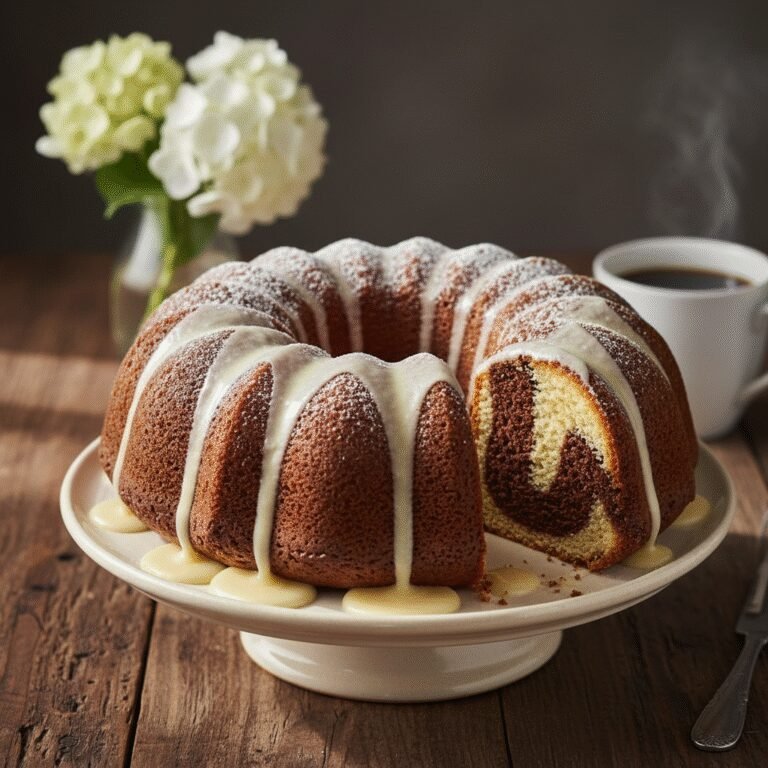
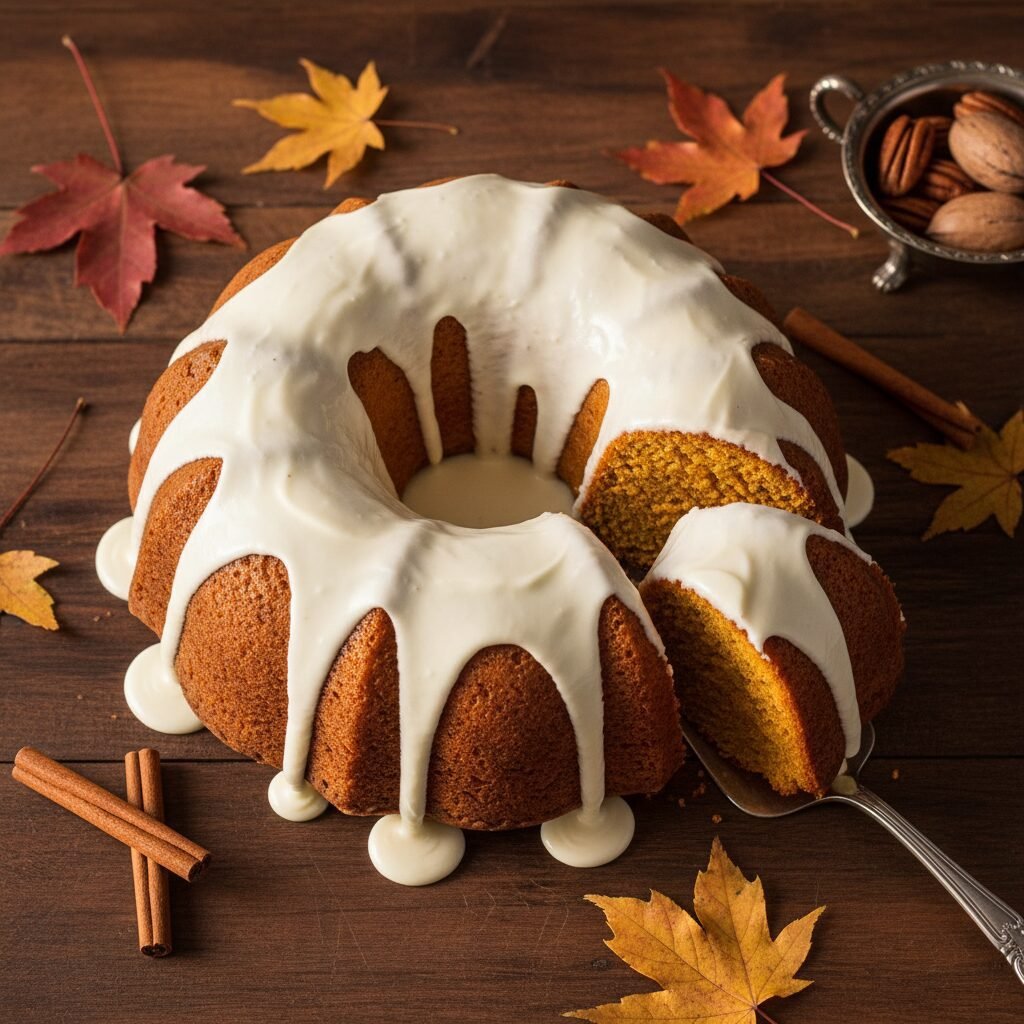
As the air turns crisp and the leaves begin to paint the landscape in hues of amber and gold, there is nothing quite like the aroma of warm spices filling the kitchen to signal the arrival of fall. This Moist Pumpkin Bundt Cake is not just a dessert; it is a celebration of the season, capturing the very soul of comfort baking. While pumpkin pie often claims the spotlight during the holidays, this bundt cake makes a compelling argument for taking center stage. The magic lies in its texture—an impossibly tender, dense, and velvety crumb that melts in your mouth, achieved through a careful balance of pumpkin purée, oil, and brown sugar. Unlike lighter, airier sponge cakes, this recipe leans into the richness of the pumpkin, resulting in a cake that is satisfyingly substantial yet never heavy. The blend of cinnamon, nutmeg, ginger, and cloves creates a symphony of flavor that warms you from the inside out. But the true crowning glory is the thick, tangy cream cheese glaze that cascades down the fluted sides of the cake like snow on a mountain peak. It provides a creamy, slightly tart contrast to the sweet, spiced sponge, creating a bite that is perfectly balanced. Whether you are an experienced baker looking for a reliable holiday staple or a novice wanting to impress guests with a visually stunning dessert, this recipe delivers on every front. It is robust enough to transport to potlucks, elegant enough for a dinner party, and cozy enough to enjoy with a hot cup of coffee on a rainy morning. Get ready to fall in love with your new favorite pumpkin recipe.
History & Origins
The story of the bundt cake is a fascinating slice of American culinary history that intersects with European traditions. The word ‘Bundt’ is derived from the German word ‘Bundkuchen,’ a ring-shaped cake that symbolizes a gathering or alliance. However, the specific cast aluminum pan we know and love today was popularized in the United States by H. David Dalquist, the founder of Nordic Ware, in 1950. Originally, the pan was created to help Jewish women in Minneapolis bake kugelhopf, a traditional European yeast cake. Sales were initially slow, and the pan nearly faded into obscurity until the 1966 Pillsbury Bake-Off, where Ella Helfrich’s ‘Tunnel of Fudge’ cake won second place and catapulted the Bundt pan into kitchens across America. The integration of pumpkin into this format is a distinctly American evolution. Pumpkins, native to North America, have been a staple food source for Indigenous peoples for thousands of years, long before European settlers arrived. The transition from savory staple to sweet dessert began in the colonies, eventually evolving into the custard-filled pies we know today. The pumpkin spice craze of the late 20th and early 21st centuries saw the gourd’s flavor profile expanding beyond pies into lattes, cookies, and, of course, cakes. This pumpkin bundt cake represents the modern culmination of these histories: the ancient New World ingredient meets the mid-century modern baking vessel, resulting in a dessert that feels timeless yet perfectly suited for the contemporary table.
Why This Recipe Works
This recipe succeeds where many others fail because it prioritizes moisture retention and structural integrity, two critical factors for a large bundt cake. First, we use oil instead of butter as the primary fat. While butter adds flavor, it contains water which evaporates during baking; oil is 100% fat and remains liquid at room temperature, coating the flour proteins to inhibit gluten formation. This ensures the cake stays tender and moist for days, rather than drying out. Second, the recipe calls for a high ratio of pumpkin purée. Pumpkin is naturally high in fiber and water content, which keeps the crumb dense and velvety. We also use a combination of white and brown sugar; the molasses in the brown sugar is hygroscopic, meaning it attracts and holds moisture from the air, further preventing a dry cake. The leavening agents are carefully balanced: baking soda reacts with the acidity of the brown sugar and pumpkin to provide lift, while baking powder ensures a consistent rise throughout the heavy batter. Finally, the spice blend is bloomed in the dry ingredients to ensure even distribution, so every bite packs a punch of autumn flavor without being overpowering. The result is a cake that is sturdy enough to release perfectly from the intricate bundt pan designs but soft enough to melt in your mouth.
Why You’ll Love This Recipe
- ✓Stays incredibly moist for up to 5 days due to the oil and pumpkin base.
- ✓Perfectly balanced spice blend that isn’t too overpowering.
- ✓The cream cheese glaze is thick, glossy, and sets beautifully.
- ✓Easy to make without a stand mixer; just two bowls and a whisk.
- ✓Freezes exceptionally well for make-ahead holiday prep.
Equipment You’ll Need
- ✓10-12 cup Bundt Pan
- ✓Large Mixing Bowl
- ✓Medium Mixing Bowl
- ✓Whisk
- ✓Rubber Spatula
- ✓Wire Cooling Rack
- ✓Measuring Cups and Spoons
Ingredients
- ✓2 1/2 cups all-purpose flour
- ✓2 teaspoons baking powder
- ✓1 teaspoon baking soda
- ✓1 teaspoon salt
- ✓2 teaspoons ground cinnamon
- ✓1 teaspoon ground ginger
- ✓1/2 teaspoon ground nutmeg
- ✓1/4 teaspoon ground cloves
- ✓15 oz can pure pumpkin purée (not pie filling)
- ✓1 cup granulated sugar
- ✓3/4 cup packed light brown sugar
- ✓1 cup vegetable oil or canola oil
- ✓4 large eggs, room temperature
- ✓1 teaspoon pure vanilla extract
- ✓For the Glaze: 4 oz cream cheese, softened
- ✓For the Glaze: 2 tablespoons unsalted butter, softened
- ✓For the Glaze: 1 1/2 cups powdered sugar
- ✓For the Glaze: 1-2 tablespoons milk
Instructions
- Preheat your oven to 350°F (175°C). Thoroughly grease your Bundt pan with non-stick baking spray (the kind with flour in it works best) or butter and flour, ensuring every crevice is coated to prevent sticking.
- In a medium bowl, whisk together the flour, baking powder, baking soda, salt, cinnamon, ginger, nutmeg, and cloves until well combined. Set aside.
- In a large bowl, whisk together the pumpkin purée, granulated sugar, brown sugar, vegetable oil, eggs, and vanilla extract until the mixture is smooth and glossy.
- Gradually add the dry ingredients to the wet ingredients. Use a rubber spatula to gently fold the mixture together just until no streaks of flour remain. Do not overmix.
- Pour the batter into the prepared Bundt pan and smooth the top with your spatula. Tap the pan gently on the counter a few times to release any trapped air bubbles.
- Bake for 55-65 minutes, or until a wooden skewer inserted into the thickest part of the cake comes out clean or with just a few moist crumbs attached.
- Remove the cake from the oven and let it cool in the pan for exactly 10-15 minutes. This allows the structure to set. If you flip it too soon, it may break; too late, and it may stick.
- Invert the cake onto a wire rack and lift the pan off carefully. Allow the cake to cool completely before glazing.
- To make the glaze: In a medium bowl, beat the softened cream cheese and butter until smooth. Gradually add the powdered sugar and 1 tablespoon of milk, whisking until smooth. Add more milk a teaspoon at a time until you reach a thick but pourable consistency.
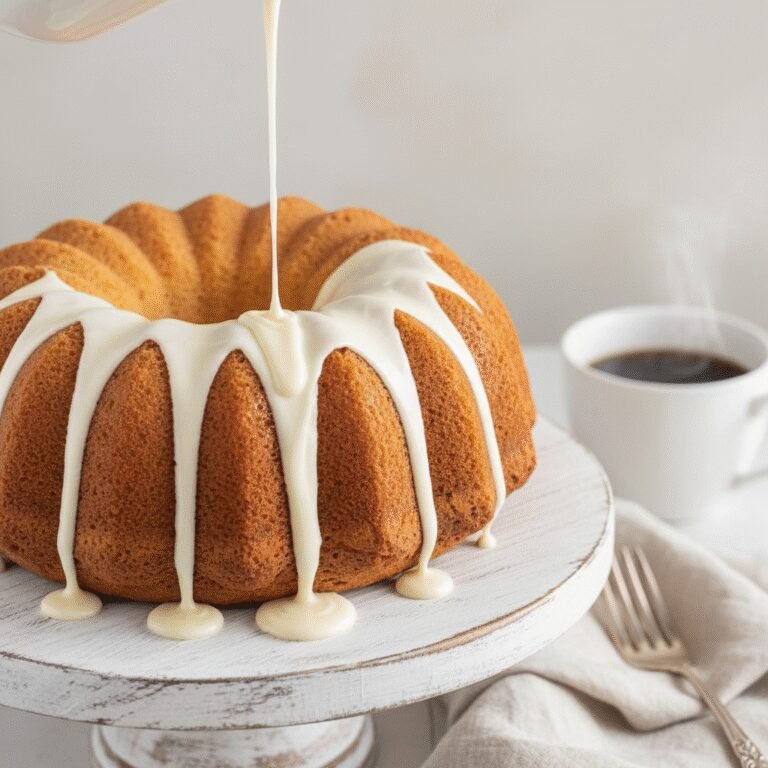
- Drizzle the glaze over the completely cooled cake, allowing it to drip down the sides. Let the glaze set for 15 minutes before slicing.
Expert Cooking Tips
- ✓Use pure pumpkin purée, not pumpkin pie filling, as the latter has added sugar and spices that will throw off the recipe.
- ✓Room temperature ingredients (eggs and pumpkin) mix more evenly, creating a better emulsion and texture.
- ✓Don’t rely solely on the timer; every oven is different. Start checking for doneness at the 50-minute mark.
- ✓Greasing the pan is the most critical step for a Bundt cake. Use a pastry brush to get the grease into every flute and curve.
- ✓If the top of the cake is browning too quickly before the inside is cooked, loosely tent the pan with aluminum foil.
- ✓Measure flour by spooning it into the cup and leveling it off, rather than scooping directly, to avoid a dense cake.
Substitutions and Variations
This recipe is quite versatile if you need to make swaps. For the flour, you can use a 1:1 gluten-free baking flour blend if you are avoiding gluten; look for one that contains xanthan gum for the best structure. If you want a slightly nuttier flavor and more fiber, you can substitute up to 1/2 cup of the all-purpose flour with whole wheat flour. Regarding the oil, while vegetable or canola oil provides the most neutral flavor, melted coconut oil works beautifully and adds a subtle tropical hint, or you can use a light olive oil for a more savory undertone. Applesauce can replace half of the oil to reduce fat, though the texture will be slightly more dense and less rich. For the spices, if you don’t have the individual spices on hand, you can substitute the cinnamon, ginger, nutmeg, and cloves with 1 tablespoon of pre-mixed pumpkin pie spice. Finally, for the glaze, if you dislike cream cheese, a simple vanilla glaze made with powdered sugar, milk, and vanilla, or a maple glaze using maple syrup instead of milk, are delicious alternatives.
Common Mistakes to Avoid
The most heartbreaking mistake with Bundt cakes is the ‘stick,’ where half the cake remains in the pan upon flipping. This usually happens because the pan wasn’t greased thoroughly enough or the cake wasn’t allowed to cool for the correct amount of time. Cooling for 10 minutes is the sweet spot; any longer and the sugars solidify and act like glue. Another common error is overmixing the batter once the flour is added. Overmixing develops gluten, which can turn a tender cake into a rubbery, tough loaf. Be gentle and stop mixing as soon as the flour disappears. Additionally, using an expired leavening agent (baking soda or powder) will result in a heavy, flat cake that doesn’t rise properly. Always check the dates on your tins. Lastly, confusing pumpkin purée with pumpkin pie filling is a frequent error; the pie filling is pre-sweetened and spiced, which will result in an overly sweet and oddly textured cake if used in this recipe.
Serving Suggestions
This cake is a showstopper on its own, but a few thoughtful additions can elevate the experience. Serve slices slightly warm or at room temperature. A dollop of freshly whipped cream lightly spiced with cinnamon or a scoop of vanilla bean ice cream pairs perfectly with the dense, spicy crumb. For a crunch element, sprinkle chopped toasted pecans or walnuts over the glaze before it sets. If you want to lean into the autumn theme, garnish the platter with cinnamon sticks and star anise for a beautiful presentation. For breakfast, this cake pairs exceptionally well with a dark roast coffee or a chai tea latte, as the bitterness of the coffee cuts through the sweetness of the glaze.
Storage and Reheating Tips
Because of the oil and pumpkin content, this cake stays moist for a long time. If the cake is unglazed, it can be stored at room temperature in an airtight container for up to 4 days. However, once you add the cream cheese glaze, the cake should be refrigerated to prevent the dairy from spoiling. Store the glazed cake in the refrigerator for up to 5 days; just be sure to bring it to room temperature before serving for the best flavor and texture, as cold cake can taste muted. This cake also freezes beautifully. You can freeze individual slices wrapped tightly in plastic wrap and aluminum foil for up to 3 months. Thaw them on the counter or in the microwave for a quick treat. If freezing the whole cake, it is best to do so without the glaze, then glaze it fresh after thawing.
Nutrition Facts (Estimated)
| Serving Size | 1 slice |
| Calories | 420 |
| Fat | 20g |
| Saturated Fat | 4g |
| Unsaturated Fat | 15g |
| Trans Fat | 0g |
| Cholesterol | 45mg |
| Sodium | 280mg |
| Carbohydrates | 58g |
| Fiber | 2g |
| Sugar | 32g |
| Protein | 4g |
Frequently Asked Questions
Can I use fresh pumpkin instead of canned?
Yes, you can use fresh pumpkin, but you must roast and purée it yourself. Be sure to strain the fresh purée through a cheesecloth for an hour to remove excess water, as fresh pumpkin is much wetter than canned, which can make the cake soggy.
Why did my cake sink in the middle?
Sinking usually happens if the cake was underbaked, the oven door was opened too early causing a temperature drop, or there was too much leavening agent. Ensure you bake it until a skewer comes out clean.
Can I make this in a regular cake pan or loaf pans?
Absolutely. This recipe yields enough batter for two 8×4 inch loaf pans or two 9-inch round cake pans. Adjust the baking time down to 30-40 minutes and keep a close eye on them.
My glaze is too runny, how do I fix it?
If your glaze is too thin, simply whisk in more powdered sugar, a tablespoon at a time, until it reaches the desired thickness. If it’s too thick, add a tiny splash of milk.
Do I have to use a mixer?
No, this recipe is actually better when mixed by hand! Using a whisk and spatula prevents overmixing, ensuring the cake remains tender. You only need a mixer for the glaze to get it smooth.
Can I add mix-ins like chocolate chips?
Yes! 1 cup of semi-sweet chocolate chips, dried cranberries, or chopped nuts makes a great addition. Toss them in a tablespoon of flour before folding them into the batter to prevent them from sinking to the bottom.
Is this cake dairy-free?
The cake batter itself is dairy-free naturally. To make the whole dessert dairy-free, simply skip the cream cheese glaze or use a simple icing made of powdered sugar and plant-based milk.
How do I know exactly when to flip the bundt pan?
Set a timer for 10 minutes as soon as you take it out of the oven. The cake needs to be firm enough to hold its shape but warm enough that the sugars haven’t glued it to the pan. 10 to 15 minutes is the golden window.
Conclusion
This Moist Pumpkin Bundt Cake is more than just a recipe; it is a reliable companion for the autumn season that promises to bring warmth and joy to your kitchen. With its foolproof preparation, intoxicating aroma, and texture that strikes the perfect balance between fluffy and fudgy, it is bound to become a requested favorite year after year. Whether you are baking for a holiday gathering, a school bake sale, or simply to treat yourself after a long week, this cake delivers comfort in every slice. So, grab your can of pumpkin, dust off your bundt pan, and get ready to fill your home with the irresistible scent of fall. Happy baking!