The Ultimate Moist Cinnamon Swirl Bundt Cake With Vanilla Glaze
Moist Cinnamon Swirl Bundt Cake With Vanilla Glaze Recipe
This incredibly moist cinnamon swirl bundt cake features a tender, buttery crumb with a ribbon of sweet cinnamon sugar running through every slice. Topped with a silky, drippy vanilla glaze, it is the perfect comforting dessert for brunch, holidays, or a cozy afternoon coffee break.
20 minutes
55 minutes
1 hour 15 minutes
12-14 servings
Dessert
Baking
American
Vegetarian
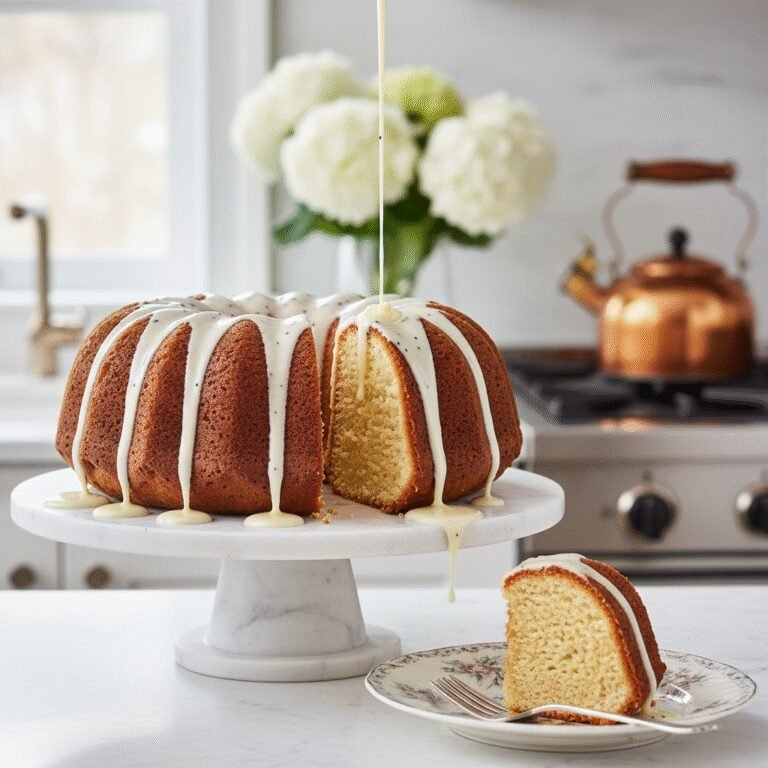
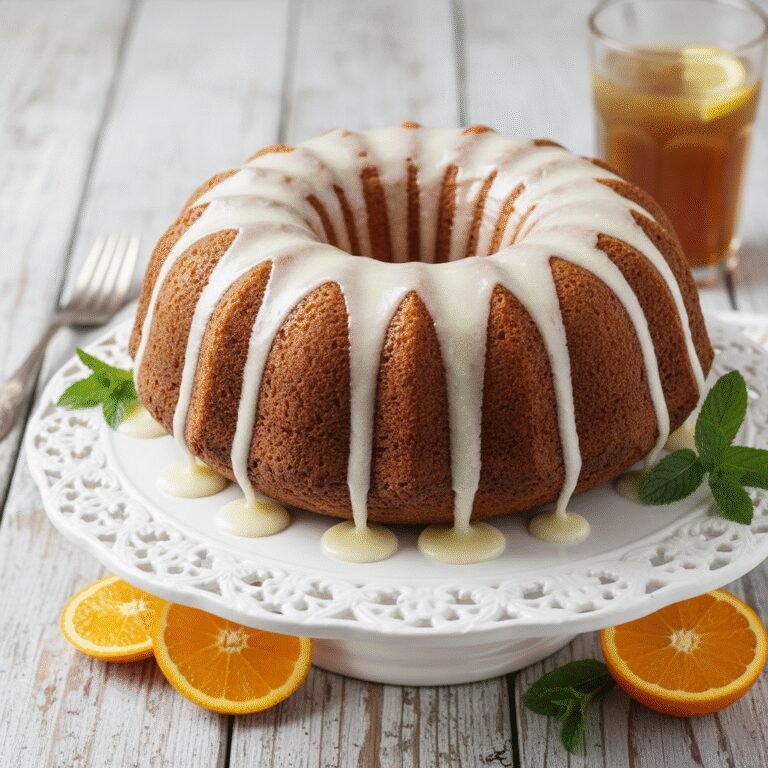
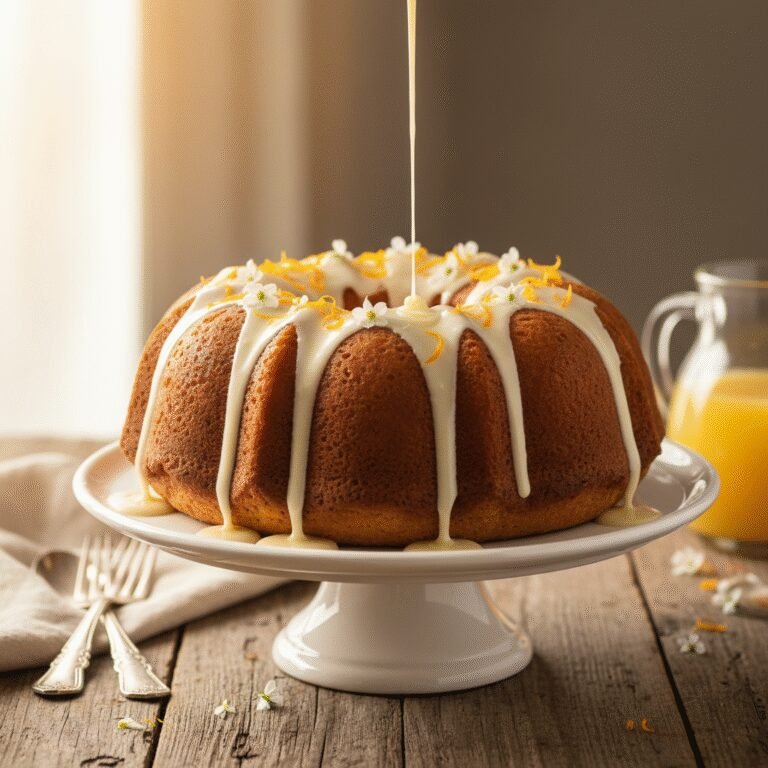
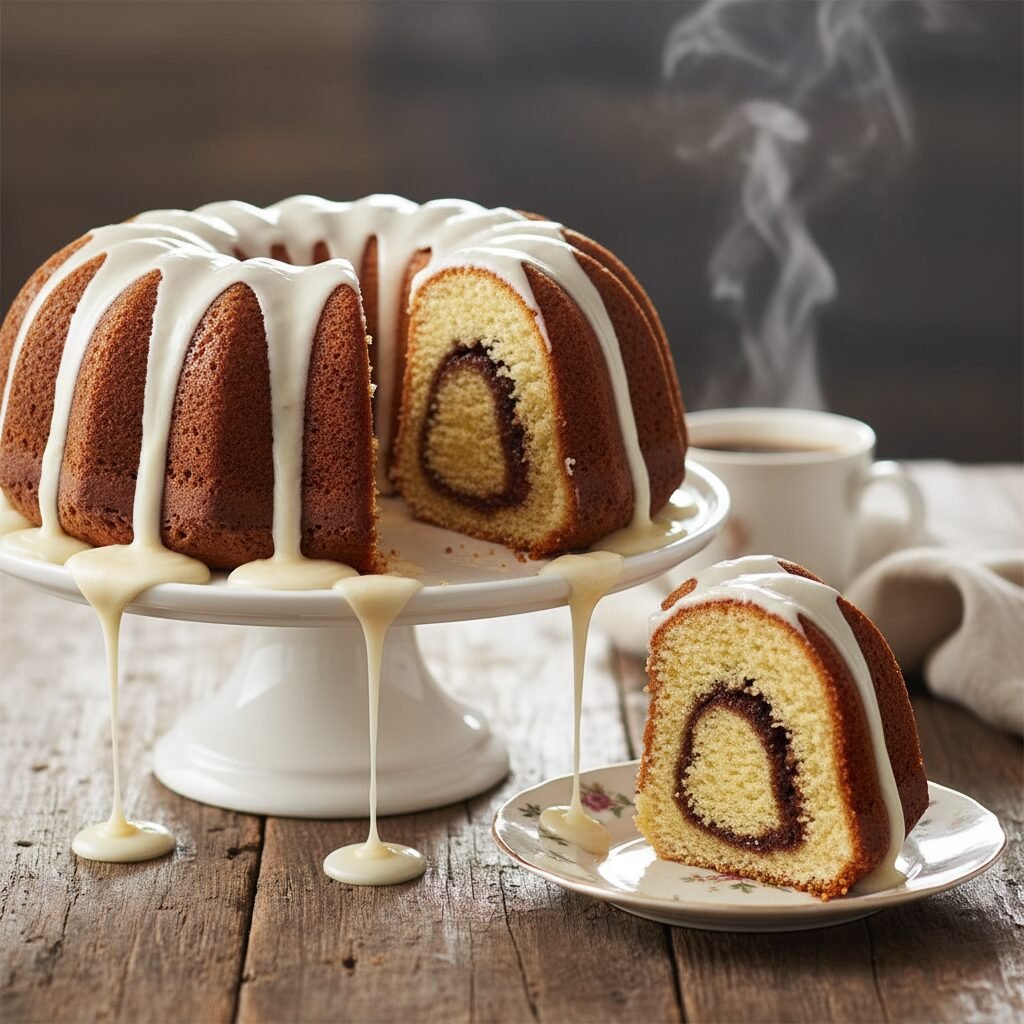
There is something undeniably nostalgic and comforting about a bundt cake. Unlike elaborate layer cakes that require precise frosting techniques and structural engineering, the bundt cake relies on the beauty of its shape and the quality of its crumb. This Moist Cinnamon Swirl Bundt Cake with Vanilla Glaze is the absolute pinnacle of coffee cake perfection. It addresses the most common complaint about bundt cakes—dryness—by incorporating rich sour cream and pure vanilla extract to ensure a texture that remains soft and tender for days. The magic, however, lies hidden inside: a thick, generous ribbon of cinnamon and brown sugar that caramelizes slightly as it bakes, creating a stunning visual contrast and a burst of warm spice in every bite. When you slice into this cake, the swirl acts as a beautiful surprise, elevating a simple vanilla cake into a show-stopping centerpiece. Whether you are hosting a holiday brunch, looking for a potluck winner, or simply craving a slice of something sweet to pair with your morning latte, this recipe delivers on all fronts. The vanilla glaze acts as the crowning glory, cascading down the ridges of the cake like snowy peaks, adding just the right amount of sweetness to balance the spice. It is a recipe that feels like home, smells like heaven while baking, and tastes like a professional bakery creation.
History & Origins
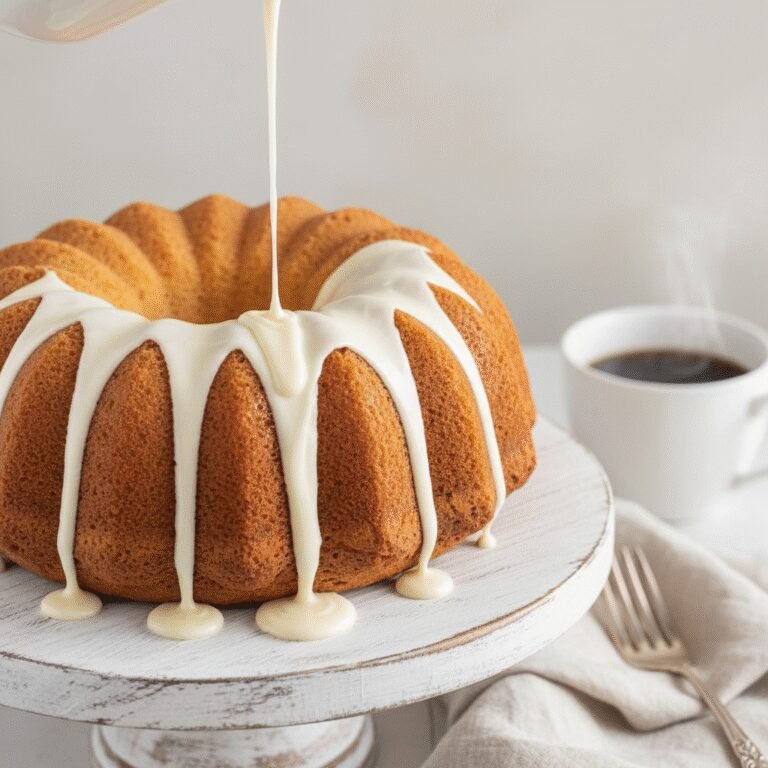
The history of the Bundt cake is a fascinating journey of American ingenuity meeting European tradition. The cake itself is a descendant of the European ‘Gugelhupf’ or ‘Kugelhopf,’ a brioche-style cake baked in a fluted, ring-shaped mold, popular in Germany, Austria, and Alsace for centuries. However, the dense, chemically leavened cake we know today is distinctly American. The story centers on H. David Dalquist, the founder of Nordic Ware, a kitchenware company based in Minneapolis. in 1950, a group of women from the local Hadassah society approached Dalquist asking if he could create a modern version of the heavy cast-iron Gugelhupf molds they remembered from the old country. Dalquist cast the pan in aluminum and trademarked the name ‘Bundt’—adding a ‘t’ to the German word ‘Bund’ (meaning an alliance or bond) to trademark the name and perhaps dissociate it from the German-American Bund. For over a decade, the pans sold poorly. It wasn’t until 1966, when Ella Helfrich of Houston, Texas, won second place in the Pillsbury Bake-Off with her ‘Tunnel of Fudge’ cake, that the Bundt pan became an overnight sensation. Since then, the Bundt cake has become a staple of American baking, celebrated for its ease of transport, stunning geometric shapes, and ability to feed a crowd. Cinnamon swirl variations, often reminiscent of coffee cakes, became popular in the 1980s and 90s as ‘coffee house culture’ began to rise in the United States, cementing this flavor profile as a timeless classic.
Why This Recipe Works
This recipe succeeds where many others fail due to a few key scientific principles regarding moisture retention and structural integrity. First and foremost, the inclusion of full-fat sour cream is non-negotiable. Sour cream is acidic, which tenderizes the gluten strands in the flour, resulting in a finer, softer crumb. Additionally, the high fat content in the sour cream and butter coats the flour proteins, preventing toughness and ensuring the cake stays moist long after it has cooled. Many bundt cakes turn out dry because they rely solely on milk; the thickness of sour cream adds body to the batter, which is crucial for suspending the cinnamon swirl. If the batter is too thin, the heavy sugar-cinnamon mixture will sink to the bottom of the pan during baking. This batter is thick and luscious, capable of holding that heavy swirl right in the center. Furthermore, we use a combination of granulated sugar for the cake structure and brown sugar for the swirl. The molasses in the brown sugar adds depth and moisture, creating a near-caramel consistency within the swirl. Finally, the baking temperature is set to 350°F, which allows the dense batter to rise evenly without burning the exterior before the interior is cooked through. The result is a cake that is structurally sound yet melt-in-your-mouth tender.
Why You’ll Love This Recipe
- ✓Incredibly moist texture thanks to sour cream and butter.
- ✓A thick, visible ribbon of cinnamon sugar in every slice.
- ✓Beautiful presentation with minimal decorating effort required.
- ✓Stays fresh and soft for several days at room temperature.
- ✓Perfect balance of sweet vanilla and warm cinnamon spice.
- ✓Freezes beautifully for make-ahead convenience.
Equipment You’ll Need
- ✓10-12 cup Bundt pan
- ✓Stand mixer or electric hand mixer
- ✓Large mixing bowl
- ✓Medium mixing bowl
- ✓Small bowl (for swirl)
- ✓Whisk
- ✓Rubber spatula
- ✓Wire cooling rack
- ✓Measuring cups and spoons
Ingredients
- ✓3 cups All-Purpose Flour
- ✓1 teaspoon Baking Powder
- ✓1/2 teaspoon Baking Soda
- ✓1/2 teaspoon Salt
- ✓1 cup Unsalted Butter, softened to room temperature
- ✓1 1/2 cups Granulated White Sugar
- ✓4 large Eggs, room temperature
- ✓2 teaspoons Pure Vanilla Extract
- ✓1 cup Full-Fat Sour Cream, room temperature
- ✓FOR THE SWIRL: 1/3 cup Light Brown Sugar, packed
- ✓FOR THE SWIRL: 1 tablespoon Ground Cinnamon
- ✓FOR THE GLAZE: 1 1/2 cups Powdered Sugar
- ✓FOR THE GLAZE: 2-3 tablespoons Whole Milk or Heavy Cream
- ✓FOR THE GLAZE: 1/2 teaspoon Pure Vanilla Extract
Instructions
- 1. Preheat your oven to 350°F (175°C). Thoroughly grease your Bundt pan with butter or non-stick baking spray (the kind with flour included works best) to ensure the cake releases perfectly later.
- 2. In a small bowl, whisk together the brown sugar and ground cinnamon for the swirl. Set aside.
- 3. In a medium bowl, whisk together the flour, baking powder, baking soda, and salt until well combined. Set this dry mixture aside.
- 4. In the bowl of a stand mixer fitted with the paddle attachment (or a large bowl with a hand mixer), cream the softened butter and granulated sugar together on medium-high speed for about 3-4 minutes. The mixture should look pale, fluffy, and aerated.
- 5. Add the eggs one at a time, beating well after each addition. Scrape down the sides and bottom of the bowl with a spatula to ensure everything is incorporated. Mix in the vanilla extract.
- 6. Reduce the mixer speed to low. Add half of the dry flour mixture to the butter mixture and mix just until combined. Add the sour cream and mix briefly. Add the remaining flour mixture and mix until just combined and no streaks of flour remain. Do not overmix.
- 7. Spoon about half of the cake batter into the prepared Bundt pan, smoothing the top with your spatula.
- 8. Evenly sprinkle the cinnamon-sugar mixture over the batter in the pan, trying to keep it away from the very edges to prevent sticking.
- 9. Spoon the remaining batter over the cinnamon layer. Gently smooth the top to cover the cinnamon completely.
- 10. Bake for 50-60 minutes, or until a toothpick inserted into the center comes out clean or with just a few moist crumbs attached. If the top browns too quickly, tent loosely with foil after 40 minutes.
- 11. Remove from the oven and let the cake cool in the pan for exactly 10 minutes. Then, invert the pan onto a wire cooling rack and lift the pan off. Allow the cake to cool completely before glazing.
- 12. To make the glaze, whisk the powdered sugar, vanilla, and 2 tablespoons of milk together until smooth. Add more milk one teaspoon at a time until you reach a thick but pourable consistency.
- 13. Drizzle the glaze over the cooled cake and let it set for 15 minutes before slicing.
Expert Cooking Tips
- ✓Room Temperature Ingredients: Ensure your butter, eggs, and sour cream are at room temperature. This creates an emulsion that traps air, resulting in a fluffier cake.
- ✓Greasing the Pan: Bundt pans are notorious for sticking. Use a baking spray that contains flour, or grease generously with shortening and dust with flour, tapping out the excess.
- ✓Don’t Overmix: Once the flour is added, mix only until combined. Overmixing develops gluten and will make the cake tough instead of tender.
- ✓The Swirl Layer: When adding the cinnamon sugar, try to keep it in the center of the batter ring. If the sugar touches the sides of the pan, it can caramelize and stick, making removal difficult.
- ✓Cooling Time: Let the cake cool in the pan for 10 minutes—no more, no less. Too hot and it might break; too cool and the sugars solidify, acting like glue.
- ✓Testing Doneness: Because of the dense batter, use a long skewer to test the cake. It should come out clean or with moist crumbs, but no raw batter.
Substitutions and Variations
This recipe is quite versatile if you need to make adjustments. If you do not have sour cream, plain full-fat Greek yogurt is the best 1:1 substitute and provides a very similar tang and moisture content. You can also use buttermilk, though the batter will be slightly thinner. For a dairy-free version, use a high-quality plant-based butter block (not tub margarine) and a thick dairy-free yogurt (like coconut or almond based), along with almond milk for the glaze. If you want to vary the flavor profile, try swapping the cinnamon in the swirl for pumpkin pie spice or cardamom for a chai-inspired twist. You can also add half a cup of chopped pecans or walnuts to the swirl mixture for added crunch. While all-purpose flour yields the best structure, you can substitute cake flour for an even lighter crumb, though the cake will be more delicate to handle.
Common Mistakes to Avoid
The most common mistake with Bundt cakes is improper pan preparation. Even non-stick pans need to be greased. Skipping this step often leads to a broken cake. Another mistake is opening the oven door too frequently; this can cause the cake to fall, especially in the center. Trust your timer and only check towards the end. Overbaking is also a culprit for dry cakes; remember that the cake continues to cook slightly as it cools in the hot pan. Finally, glazing the cake while it is still warm will cause the glaze to melt and slide right off into a puddle. Patience is key—wait until the cake is fully cool to touch.
Serving Suggestions
This Moist Cinnamon Swirl Bundt Cake is versatile enough for any time of day. For breakfast or brunch, serve thick slices alongside a hot cup of dark roast coffee or an Earl Grey tea. It pairs beautifully with fresh berries—strawberries, raspberries, or blueberries—which cut through the richness of the cake. For a more decadent dessert presentation, warm the slice slightly in the microwave and serve it with a scoop of vanilla bean ice cream or a dollop of freshly whipped cream. A dusting of extra cinnamon or a garnish of mint leaves adds a professional touch to the plating.
Storage and Reheating Tips
This cake stores exceptionally well due to its high moisture content. Store leftover cake in an airtight container or a cake dome at room temperature for up to 3-4 days. It actually often tastes better the next day as the flavors meld. If you live in a very hot or humid climate, you may prefer to store it in the refrigerator for up to a week, but allow it to come to room temperature before eating for the best texture. To freeze, wrap individual slices or the entire unglazed cake tightly in plastic wrap, then a layer of aluminum foil. It can be frozen for up to 3 months. Thaw overnight on the counter before glazing and serving.
Nutrition Facts (Estimated)
| Serving Size | 1 slice |
| Calories | 420 |
| Fat | 18g |
| Saturated Fat | 11g |
| Unsaturated Fat | 6g |
| Trans Fat | 0g |
| Cholesterol | 85mg |
| Sodium | 210mg |
| Carbohydrates | 58g |
| Fiber | 1g |
| Sugar | 32g |
| Protein | 5g |
Frequently Asked Questions
Why did my Bundt cake stick to the pan?
Sticking usually happens because the pan wasn’t greased thoroughly enough, or the cake was left to cool in the pan for too long. Sugar in the batter can harden and act like glue as it cools.
Can I use a tube pan instead of a Bundt pan?
Yes, a standard tube pan (like an angel food cake pan) works well. The baking time should be similar, but keep an eye on it.
Why did my cinnamon swirl sink to the bottom?
This happens if the batter is too thin or if the swirl mixture is too heavy. Using full-fat sour cream keeps the batter thick enough to suspend the sugar.
Can I make this cake ahead of time?
Absolutely. This cake stays moist for days. You can bake it the day before serving; just cover it tightly and glaze it on the day of serving for the freshest look.
My glaze is too runny, how do I fix it?
Simply add more powdered sugar, a tablespoon at a time, whisking until it reaches your desired thickness. If it’s too thick, add a tiny splash of milk.
Can I use oil instead of butter?
You can, but butter provides the best flavor. If you must use oil, use a neutral oil like vegetable or canola, but note the crumb will be slightly different.
Is it necessary to use a stand mixer?
No, a hand mixer works perfectly fine. You can even mix by hand if you have strong arms, but creaming the butter and sugar properly is much easier with an electric mixer.
How do I know exactly when the cake is done?
Insert a wooden skewer into the thickest part of the cake. It should come out clean or with a few moist crumbs. If you see wet batter, it needs more time.
Conclusion
There are few things in the culinary world as satisfying as pulling a perfect Bundt cake out of the oven. The golden crust, the aromatic waft of cinnamon filling the kitchen, and the anticipation of that first slice make the effort entirely worth it. This Moist Cinnamon Swirl Bundt Cake with Vanilla Glaze is more than just a recipe; it’s a reliable companion for celebrations, quiet mornings, and everything in between. By following the tips on temperature and mixing, you are guaranteed a dessert that looks as impressive as it tastes. So dust off that Bundt pan, grab your ingredients, and get ready to bake a cake that your family and friends will be requesting for years to come.